Artwork
Thusnelda at the Triumphal Entry of Germanicus into Rome
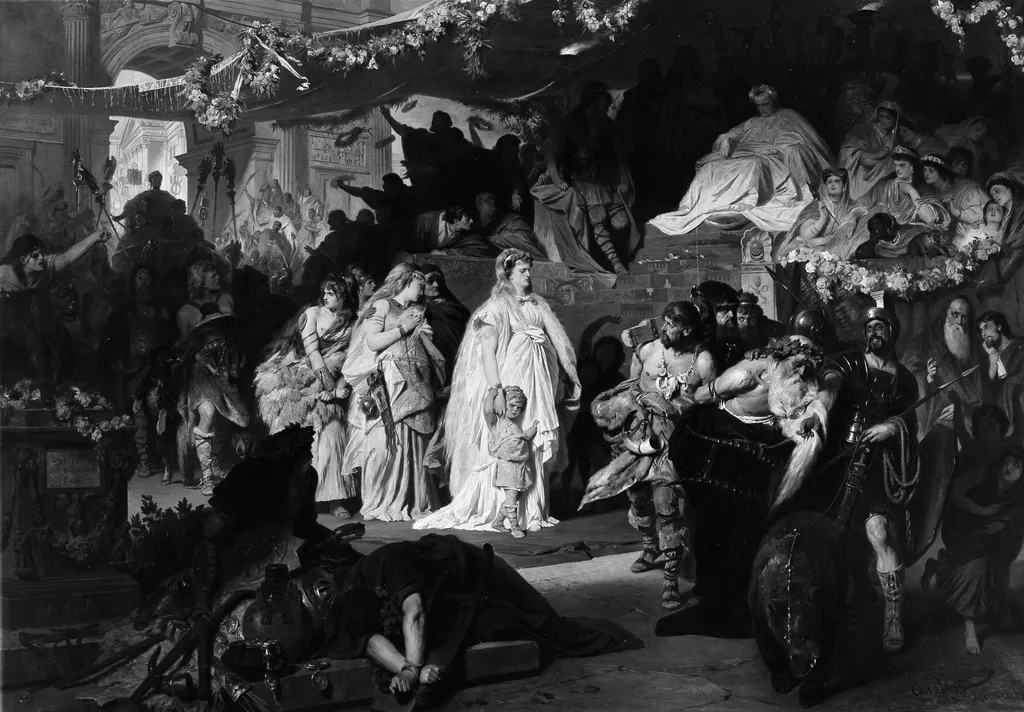
Thusnelda at the Triumphal Entry of Germanicus into Rome is an oil painting by the Realist artist Karl von Piloty. It dates from 1875 and is held in the collection of the Metropolitan Museum of Art.
About this work
Technique & Style
Executed in oil on canvas in 1875, the work exemplifies Piloty's academic handling, combining smooth modeling with controlled impasto in the drapery and armor to articulate form beneath strong raking light. The composition favors a low horizon and upward gaze, directing attention to the central seated woman and child, whose calm demeanor contrasts with the dynamic, densely packed crowd of soldiers and spectators. Figures are arranged in a shallow stage-like space, rendered through precise anatomical definition and a restrained palette dominated by earth tones enlivened by accents of crimson and gold.
The technique balances linear clarity with atmospheric recession, using fine brushwork for faces and broader, layered strokes for textures such as armor and textiles.
History & Provenance
Karl von Piloty created the oil-on-canvas painting Thusnelda at the Triumphal Entry of Germanicus into Rome in 1875.
Karl von Piloty created the oil-on-canvas painting Thusnelda at the Triumphal Entry of Germanicus into Rome in 1875. The work measures 134.6 cm in height and 196.2 cm in width. It depicts a scene featuring a woman, a child, a man, and a crowd.
The painting is currently held in the collection of the Metropolitan Museum of Art. No specific details regarding the original commission or the intermediate ownership chain prior to its presence in the museum are provided in the available records.
Overview
Karl von Piloty, a prominent German painter of the realistic school, completed Thusnelda at the Triumphal Entry of Germanicus into Rome in 1875. This large-scale oil painting depicts a dramatic historical event from ancient Rome, focusing on a captive woman and child amidst a bustling triumphal procession. The work exemplifies Piloty's commitment to detailed representation and historical narrative, characteristic of the realism movement of his era.
Subject & Meaning
The painting captures a poignant moment during the Roman general Germanicus's triumphal entry into Rome. At its center, the Germanic noblewoman Thusnelda, a captive, stands with her child on a raised platform. Her composed demeanor contrasts sharply with the surrounding crowd of Roman soldiers and officials, who observe her with a mix of curiosity and triumph. The scene underscores the power dynamics and human drama inherent in imperial conquest.
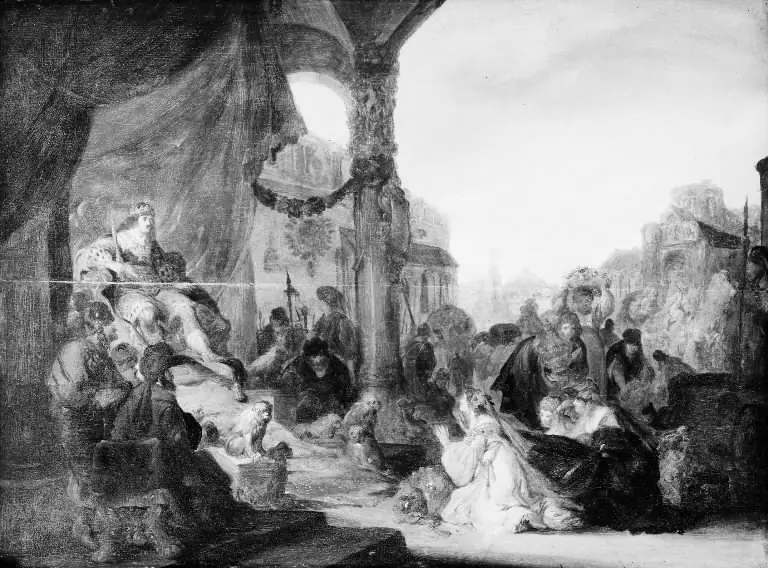
Own this work as a print
Artist & collection
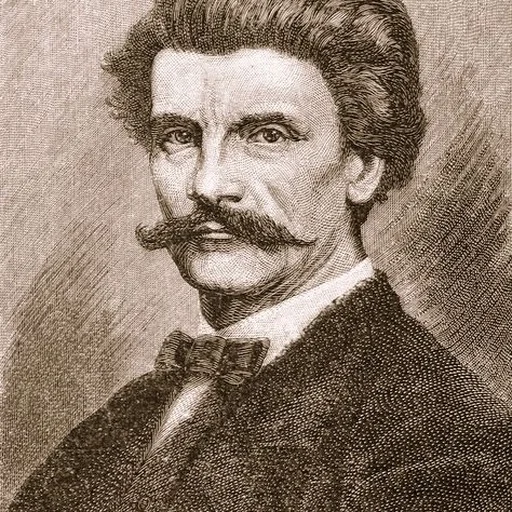
Artist
Karl Theodor von Piloty (1 October 1826 – 21 July 1886) was a German painter, noted for his historical subjects, and recognised as the foremost representative of the realistic school in Germany.

- The Queen of Sheba's Visit to Solomon
 The Queen of Sheba's Visit to Solomon
 Mardochæus og Haman
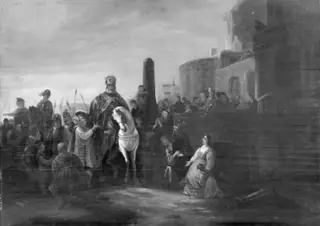 Mardochæus og Haman
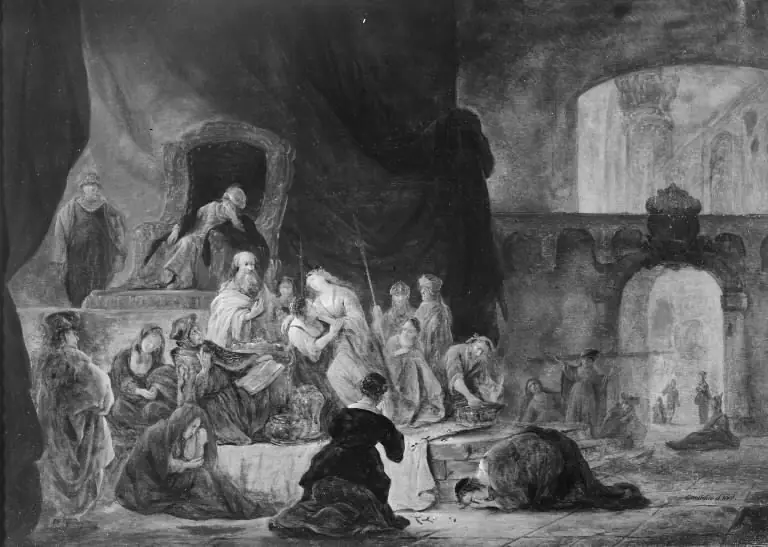 Jephta's Daughter Being Led to the Altar
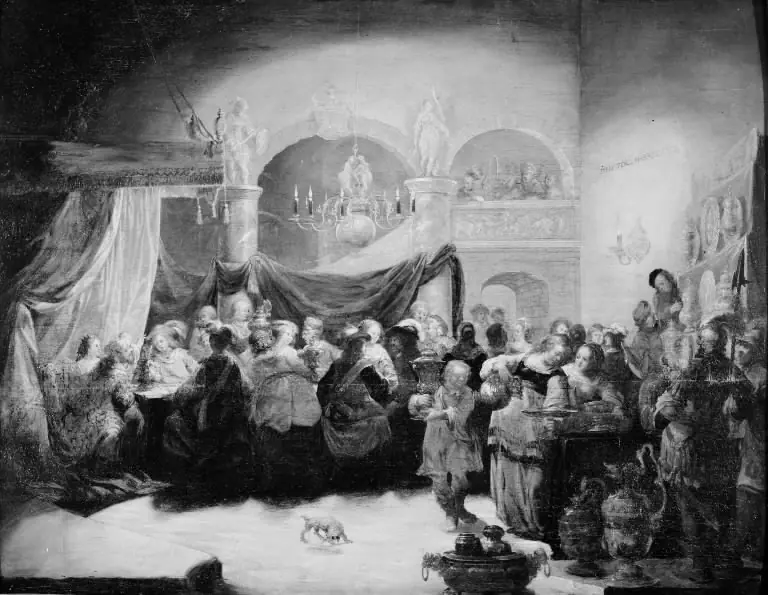 Belshazzar's Feast
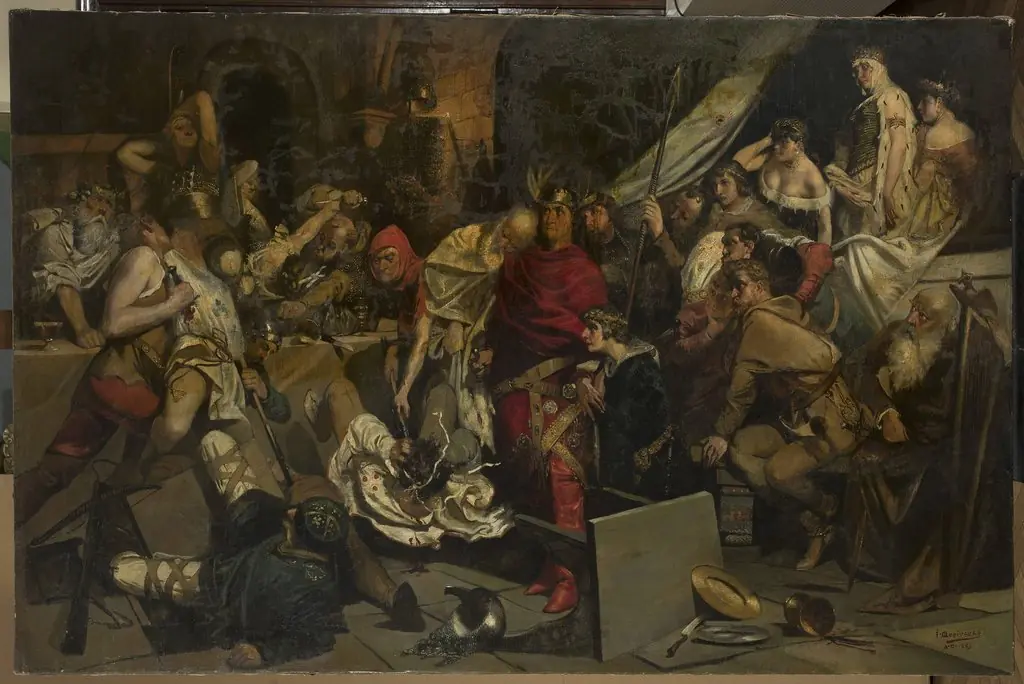 Bloody feast of Count Gero
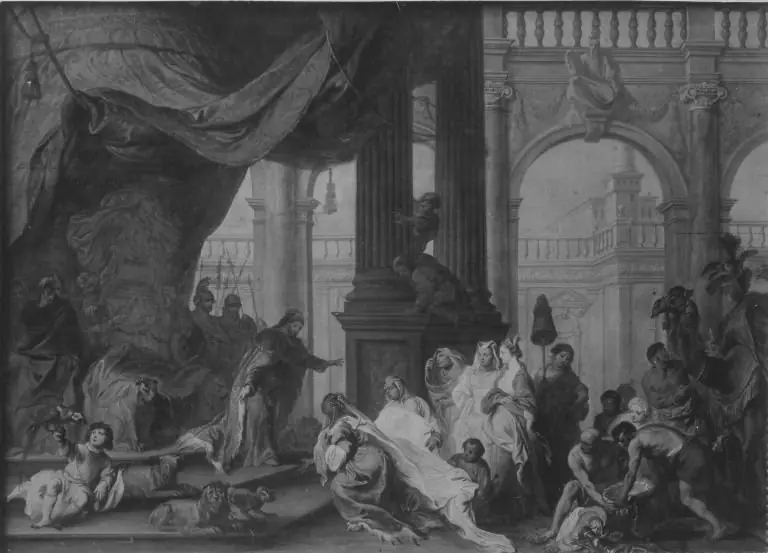 Salomon receives the Queen of Sheba
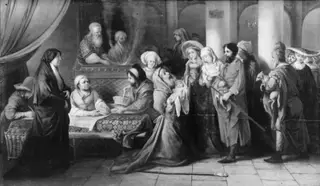 The Presentation at the Temple
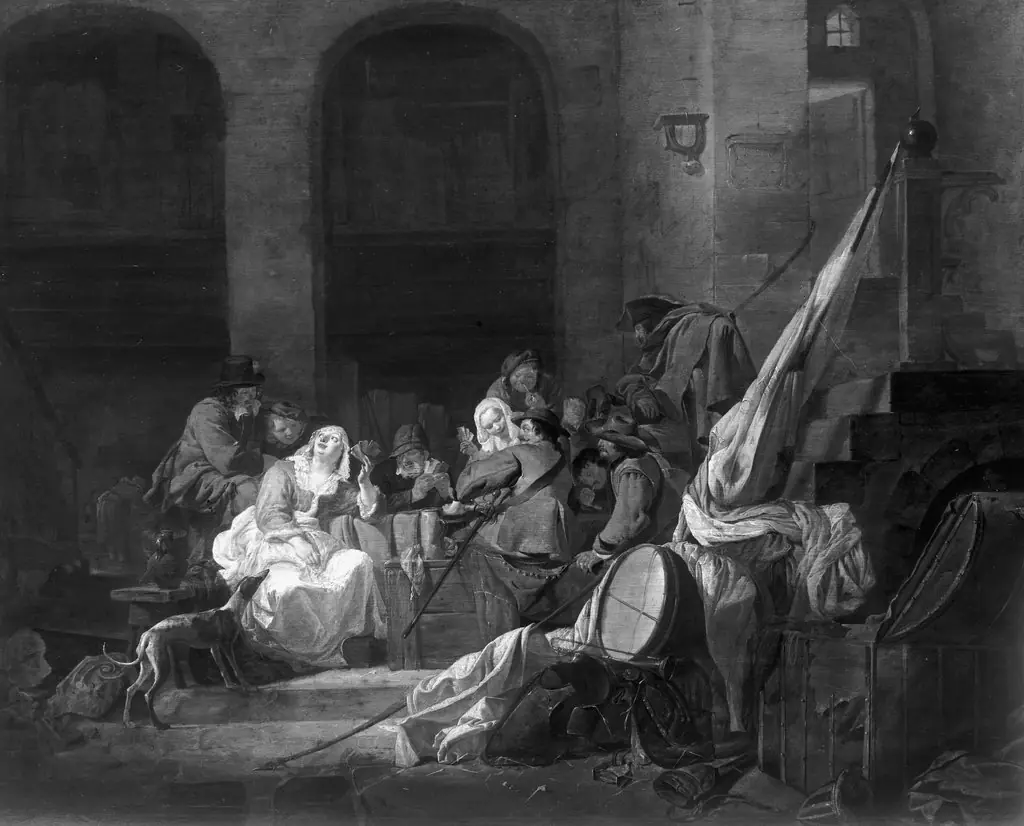 Guard room with soldiers and women
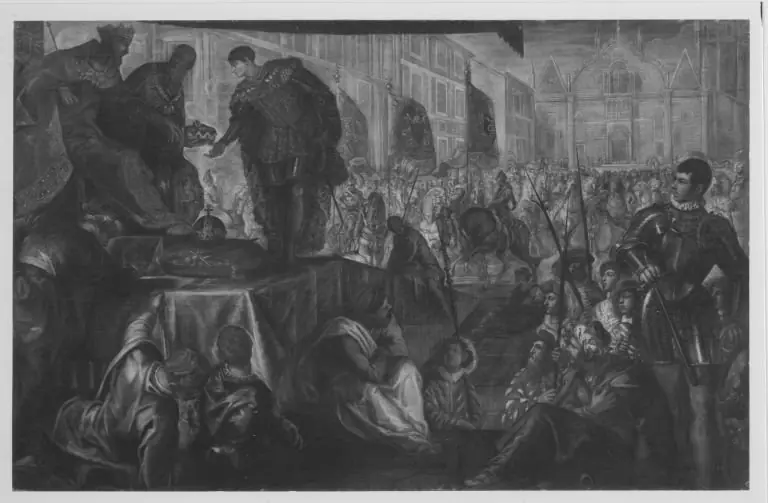 Gonzaga cycle
 The Presentation at the Temple