Artwork
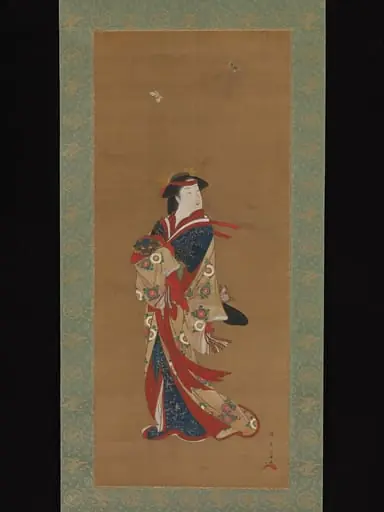
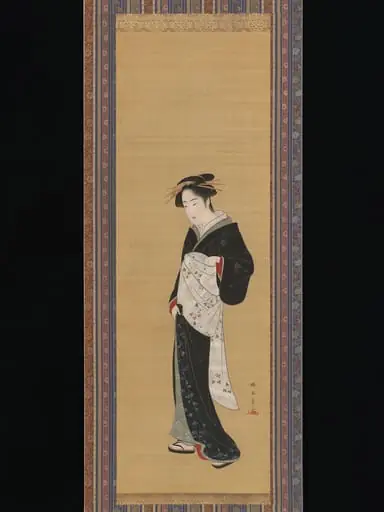
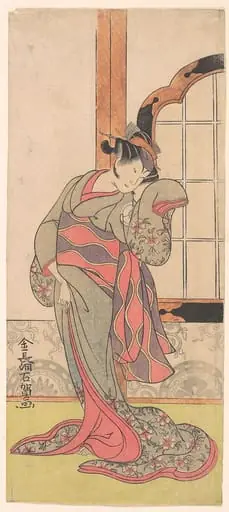
鳥高斎栄昌画 「丁子屋畧見世」|The First Nakamura Tomijuro as an Oiran Standing in a Room
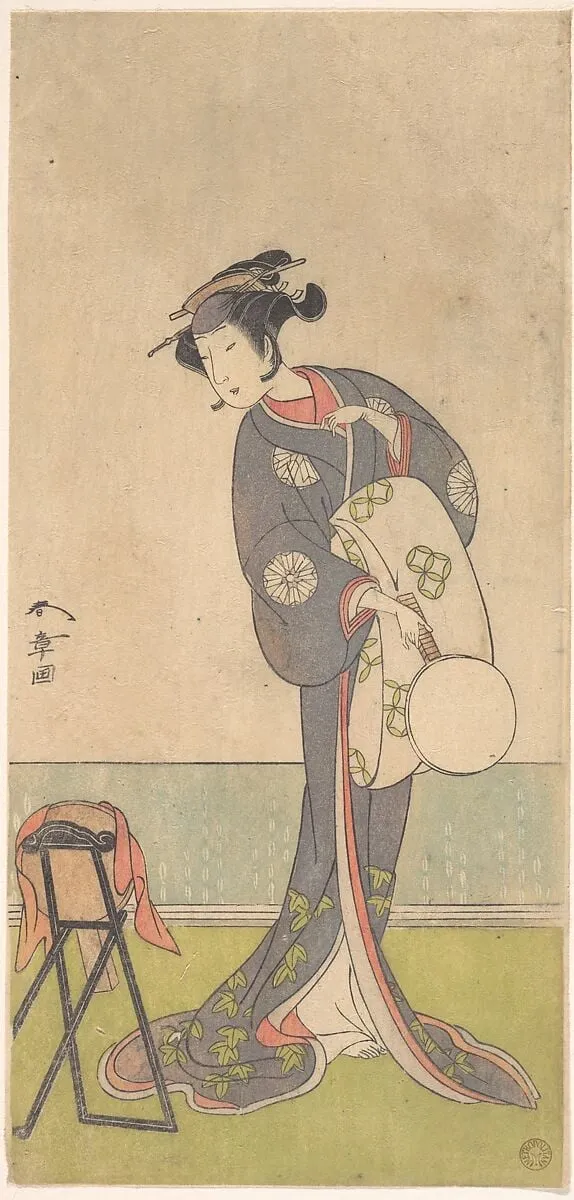
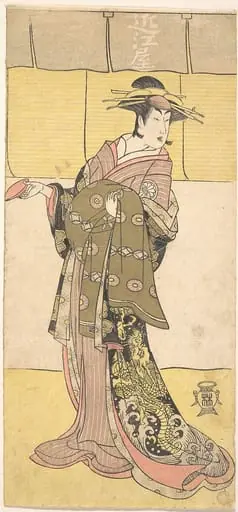
鳥高斎栄昌画 「丁子屋畧見世」|The First Nakamura Tomijuro as an Oiran Standing in a Room is an ink print by the Romanticist artist Katsukawa Shunshō. It dates from 1771 and is held in the collection of the Metropolitan Museum of Art.
About this work
Overview
This woodblock print, created in 1771 by Katsukawa Shunshō, depicts the first Nakamura Tomijuro in the role of an oiran, a high-ranking courtesan.
This woodblock print, created in 1771 by Katsukawa Shunshō, depicts the first Nakamura Tomijuro in the role of an oiran, a high-ranking courtesan. Rendered in nishiki-e, a multi-color printing technique, the image captures a moment of staged elegance within an interior setting. The work is part of the Metropolitan Museum of Art’s collection and exemplifies the ukiyo-e tradition’s engagement with theatrical and urban culture in late 18th-century Edo.
Subject & Meaning
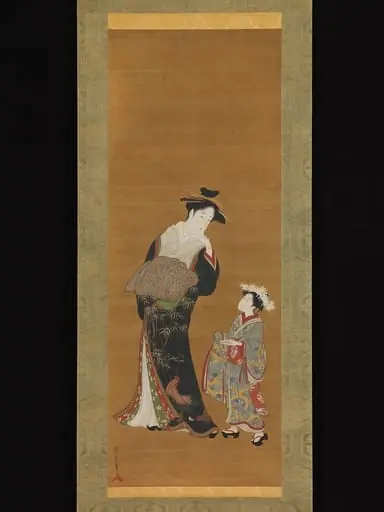
The print portrays a male actor in female attire, performing the role of an oiran, reflecting the kabuki theater’s convention of onnagata roles. The figure’s elaborate attire and poised stance suggest a ceremonial or public appearance, emphasizing status and artifice. The inclusion of a fan and handkerchief, along with the stylized interior, reinforces the performative nature of identity in Edo’s pleasure quarters and theatrical spaces.
Technique & Style
Shunshō employed fine lines and layered pigments to render the courtesan’s kimono with intricate gold leaf accents and red sashes, enhancing its luxurious texture. Cross-hatching defines folds in the fabric and adds subtle depth, while the green floor and wooden stool ground the figure in a tangible space. The use of mica and metallic pigments, though restrained, elevates the visual richness without overwhelming the composition’s clarity.
History & Provenance
Produced in 1771, the print emerged during a period of flourishing kabuki culture and demand for actor portraits. It was likely distributed as a single-sheet print for collectors and theater enthusiasts. The Metropolitan Museum of Art acquired it as part of its broader collection of Edo-period prints, preserving its historical and artistic significance within a global context.
Context
In late 18th-century Edo, ukiyo-e prints served as both art and ephemera, documenting the lives of actors and courtesans who occupied the margins of polite society. Shunshō’s work reflects the blurred boundaries between theater and pleasure districts, where identity was constructed through costume and performance. This print captures a cultural moment where gender, class, and spectacle intersected in public imagination.
Legacy
Shunshō’s portrayal of the onnagata role influenced later ukiyo-e artists in their depiction of theatrical figures. While not widely reproduced, this print remains a key example of early actor portraits that prioritized psychological nuance over mere likeness. Its preservation allows ongoing study of how Edo-period society negotiated identity through visual culture.
Artist & collection

Artist
Katsukawa Shunshō spent his life in Edo (now Tokyo), where the city’s teahouses and theaters buzzed with energy.