Artwork
Untitled
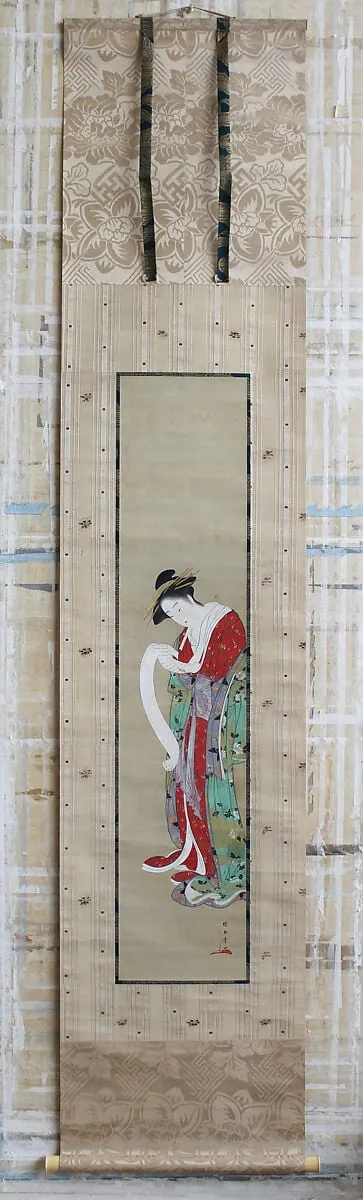
Untitled is an ink painting by the Baroque artist Katsukawa Shunshō. It dates from 1759 and is held in the collection of the Metropolitan Museum of Art.
About this work
Subject & Meaning
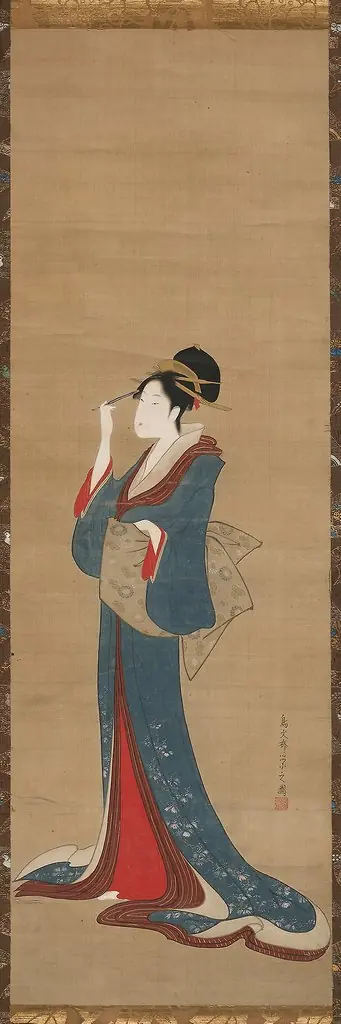
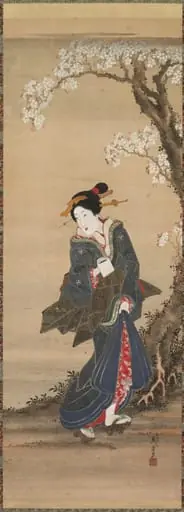
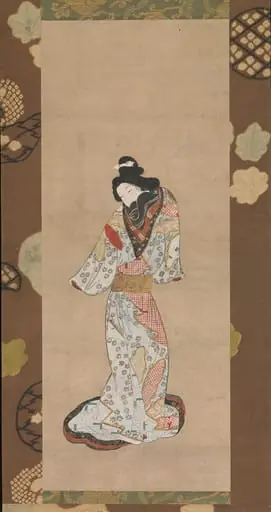
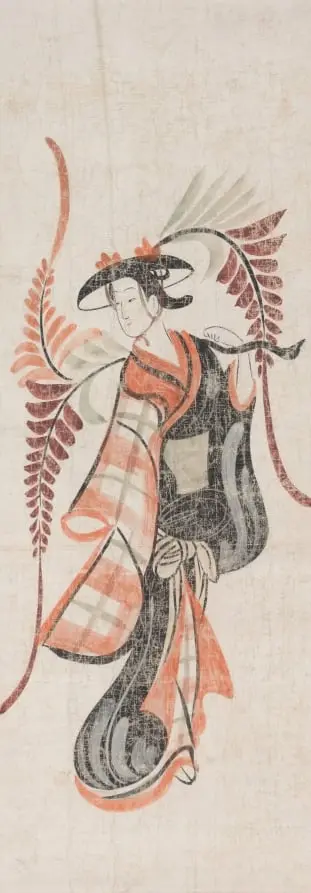
The figure is rendered in ink and color on silk as a hanging scroll, dating to 1759 and attributed to Katsukawa Shunshō.
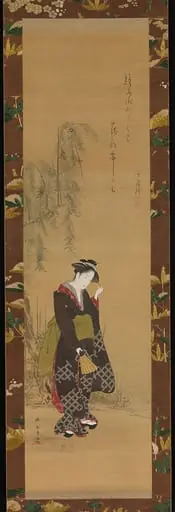
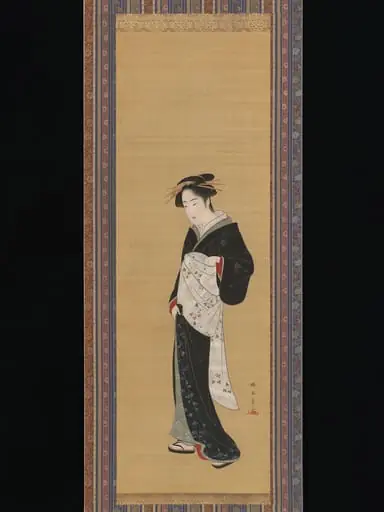
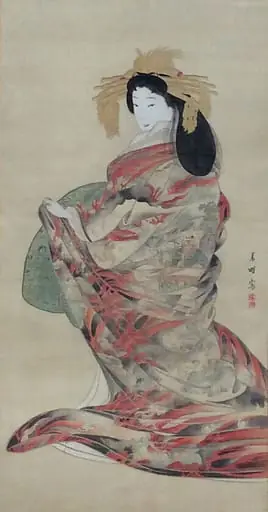
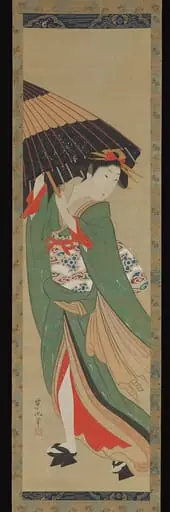
The painting shows a courtesan (yūjo) absorbed in reading a letter, a common motif in Edo-period ukiyo-e that conveys the fleeting intimacy of pleasure-quarter encounters. The figure is rendered in ink and color on silk as a hanging scroll, dating to 1759 and attributed to Katsukawa Shunshō. By focusing on the act of reading, the work suggests the transmission of desire through written communication, while the modest scale and elegant composition reflect the refined aesthetic of nikuhitsu-ga.
The depicted letter, though unspecified, serves as a symbolic conduit for private messages and fleeting affection, underscoring themes of transience characteristic of the period.
Technique & Style
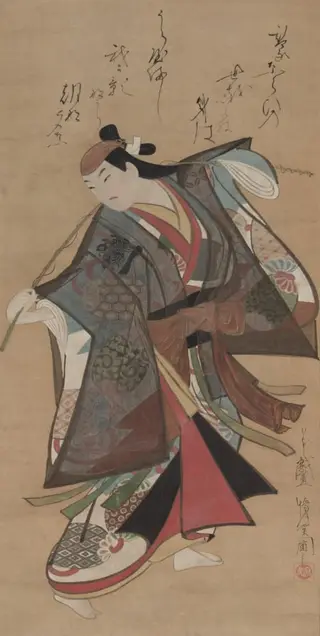
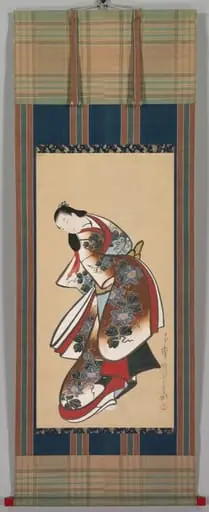
This hanging scroll by Katsukawa Shunshō is executed in ink and color on silk, a support characteristic of nikuhitsu-ga, the directly brushed ukiyo-e painting tradition. The work's elongated vertical format is reflected in its dimensions of 98.4 by 21 centimeters, a narrow ratio well suited to the hanging-scroll format. Shunshō's handling of ink and pigment directly on silk aligns with the painterly conventions of mid-eighteenth-century ukiyo-e, in which figural subjects were rendered with brushed color rather than woodblock printing.
The composition depicts a woman reading a letter, a subject treated with the refined brushwork typical of the genre.
History & Provenance
Created in 1759 by the Japanese artist Katsukawa Shunshō, this hanging scroll on silk originates from Japan. The work, classified as a nikuhitsu-ga painting within the ukiyo-e genre, depicts a woman reading a letter. While specific details regarding its original commission or intermediate ownership history are not provided in the available records, the piece is currently held in the collection of the Metropolitan Museum of Art, where it remains located. The artwork measures approximately 98.4 centimeters in height and 21 centimeters in width.
The hanging scroll painting Untitled by Katsukawa Shunshō, created in 1759, is held in the collection of the Metropolitan Museum of Art in New York. While the provided sources confirm the artwork's current location and its status as part of the museum's holdings, they do not specify a unique inventory or accession number for the piece. The available documentation for this ukiyo-e work, which depicts a woman reading a letter, contains no record of its exhibition history or past display dates.
Overview
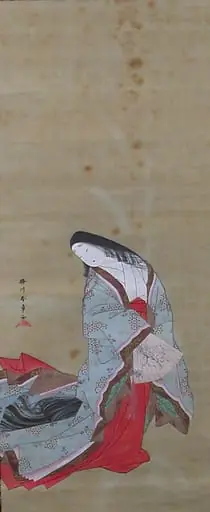
This untitled hanging scroll, executed in ink and color on silk by Shunshō, depicts a solitary woman engaged in a private moment. She is shown seated on the floor, her pale blue robe draped around her, as she reads a letter by the soft illumination cast from a paper screen. The artwork captures a quiet, intimate scene, characteristic of the artist's focus on everyday life.
Context
Created in the 1700s, this painting by Shunshō stands out against the broader artistic landscape of its time. While many contemporary artists focused on the dynamic world of the theater or the heroic narratives of warriors, Shunshō chose to explore the more subdued aspects of daily existence. This emphasis on quiet, personal moments distinguishes his work within the period's artistic output.
Artist & collection

Artist
Katsukawa Shunshō spent his life in Edo (now Tokyo), where the city’s teahouses and theaters buzzed with energy.