Artwork
Untitled
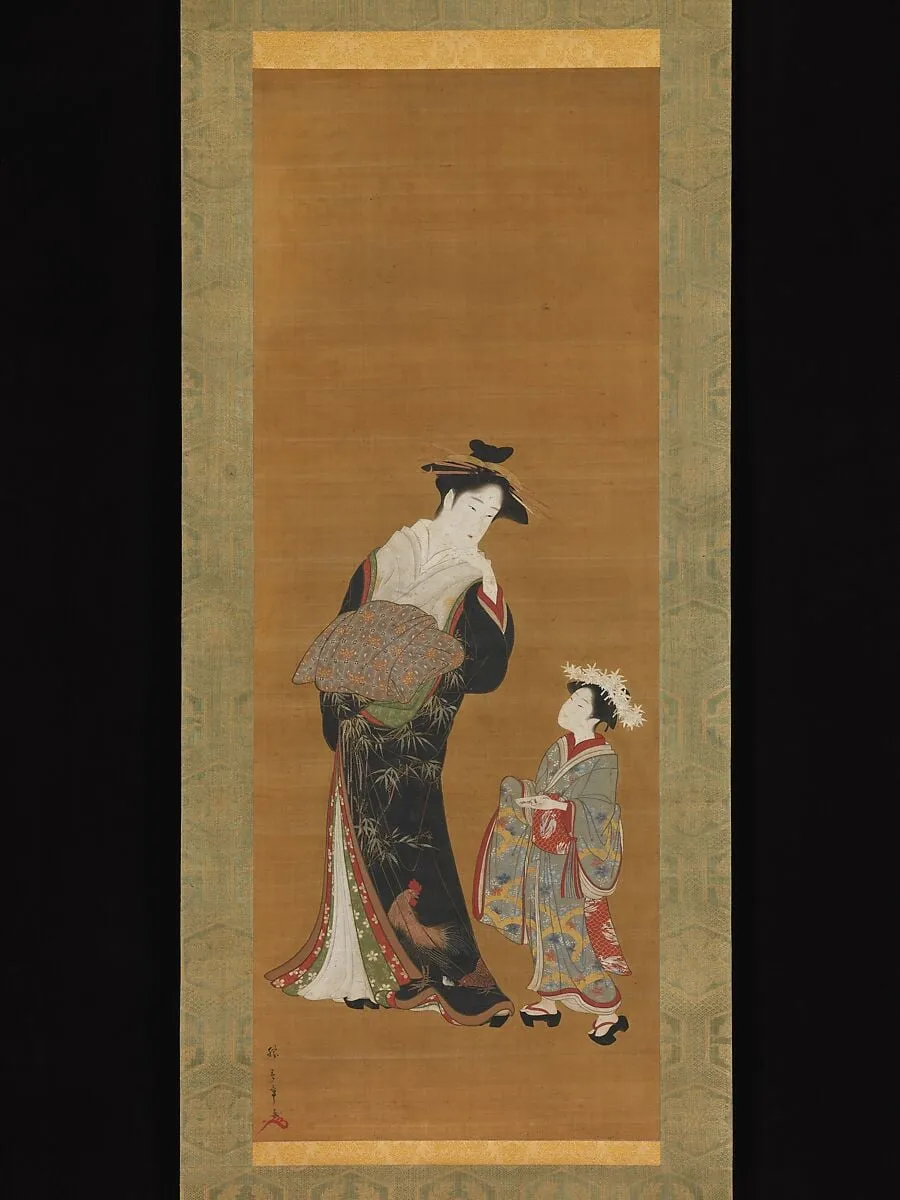
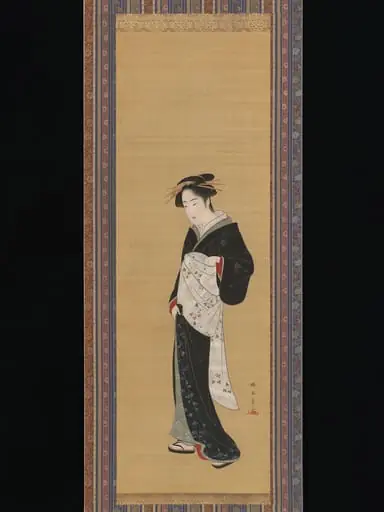
Untitled is an ink painting by the Baroque artist Katsukawa Shunshō. It dates from 1759 and is held in the collection of the Metropolitan Museum of Art.
About this work
Technique & Style
No losses or significant abrasions are indicated by the Metropolitan Museum’s record, suggesting stable condition and minimal restoration.
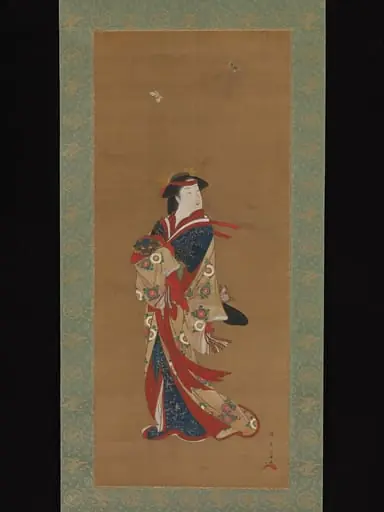
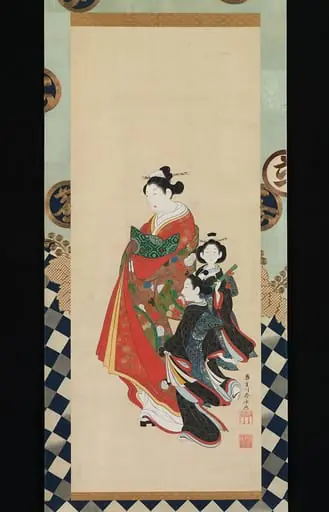
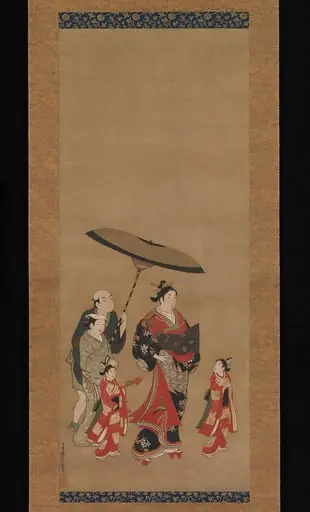
Executed in 1759, the hanging scroll employs ink and color on silk, aligning with the nikuhitsu-ga tradition of ukiyo-e painting. The vertical format measures 103.5 cm in height and 31.8 cm in width. The refined silk support and delicate application of mineral pigments yield a luminous surface, while controlled brushwork in the kamuro’s garments and hair conveys the era’s idealized feminine beauty.
No losses or significant abrasions are indicated by the Metropolitan Museum’s record, suggesting stable condition and minimal restoration.
History & Provenance
Created in 1759, this hanging scroll was executed by the Japanese ukiyo-e master Katsukawa Shunshō. The work is a nikuhitsu-ga portrait depicting a kamuro, a young female attendant, rendered in ink and color on silk. Originating in Japan, the painting measures 103.5 centimeters in height and 31.8 centimeters in width.
While specific details regarding the original commission or the initial owner are not recorded in the available documentation, the work's provenance chain leads to its current residence within the collection of the Metropolitan Museum of Art. The piece remains attributed to Shunshō and is classified as a significant example of his portraiture from the mid-eighteenth century.
Overview
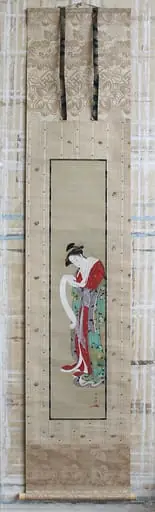
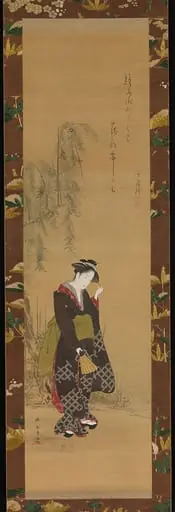
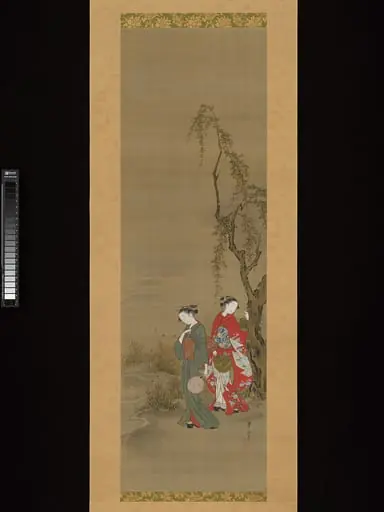
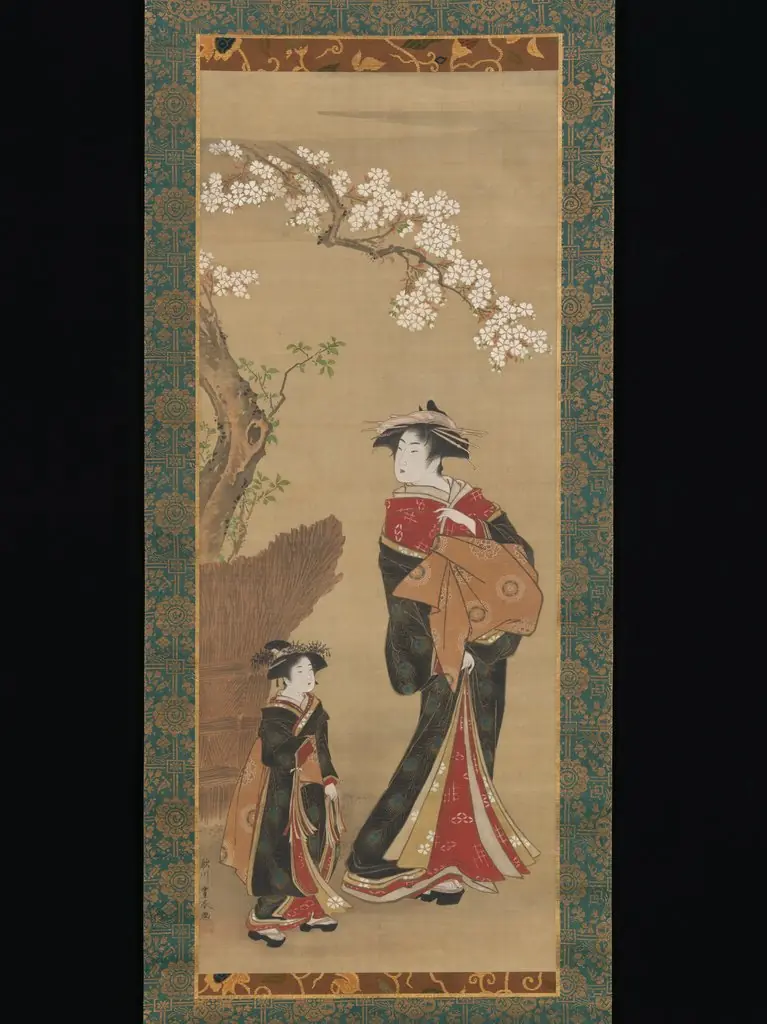
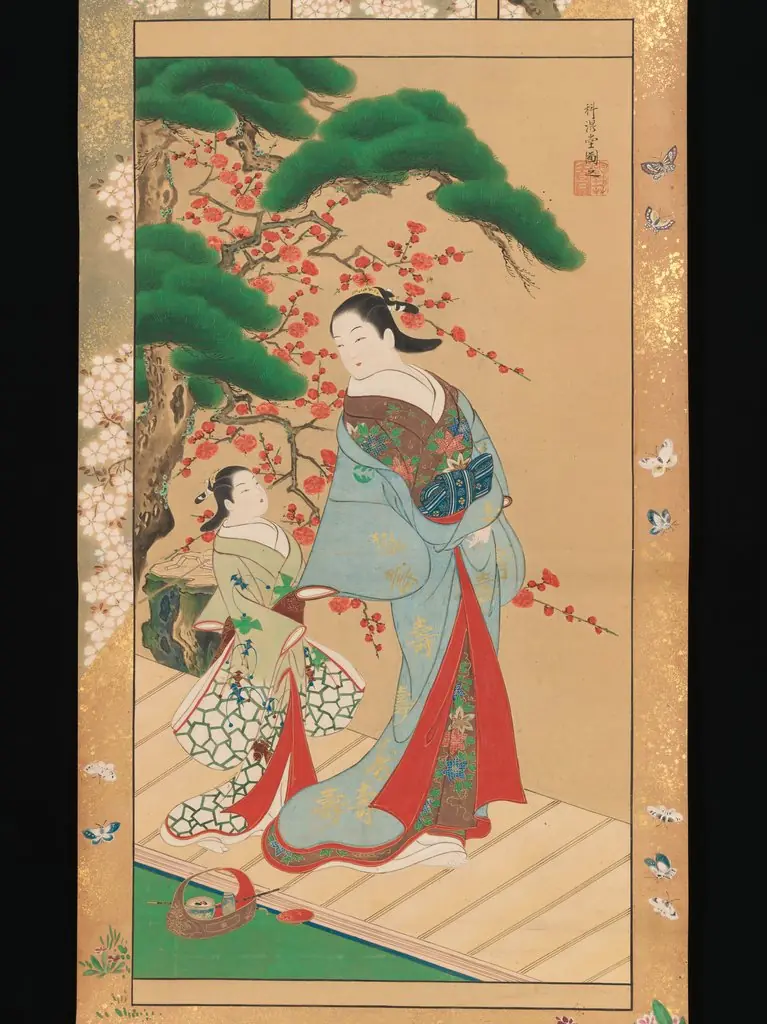
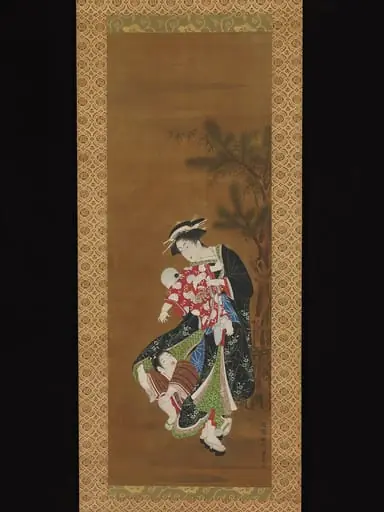
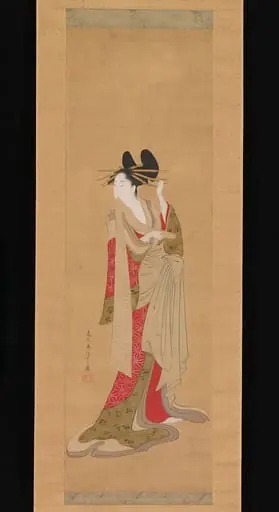
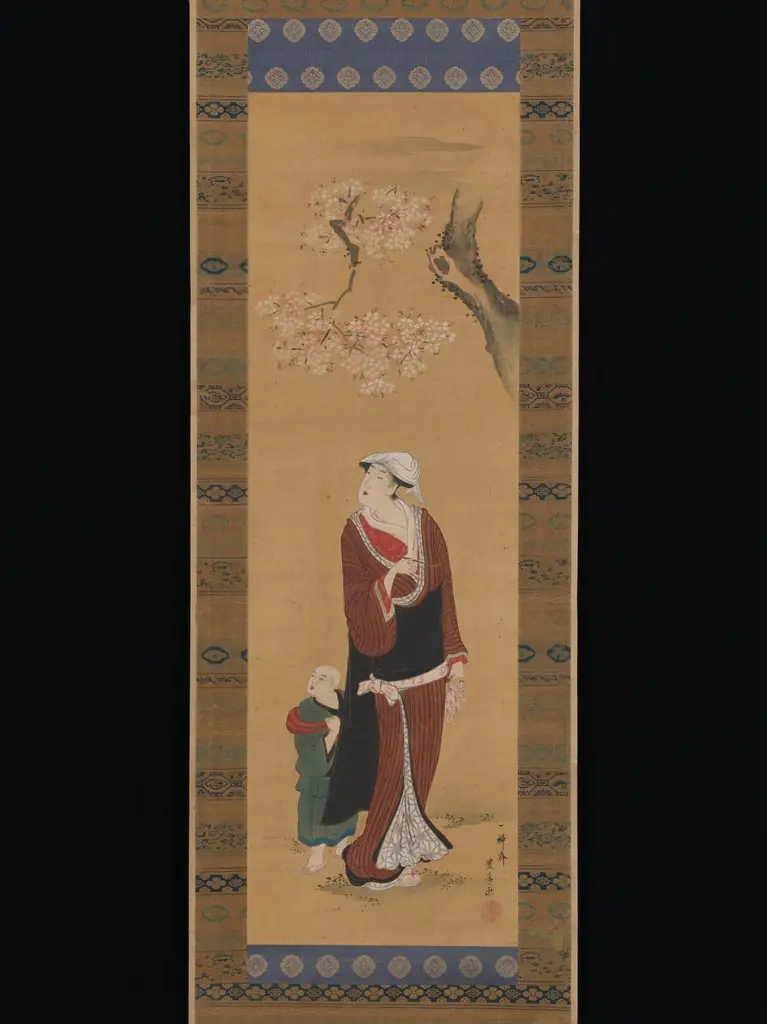
This untitled painting, rendered in ink and color on silk as a hanging scroll, depicts a central figure in a vibrant red robe, leaning against a bamboo screen. Her elaborate hairstyle is prominent. She is attended by two young girls in matching kimonos, one holding a fan and the other a tray. The scene portrays a kamuro, a child attendant undergoing training to become a courtesan.
Subject & Meaning
The artwork's central figures represent a kamuro, a young girl destined for a career as a courtesan. These attendants were typically children, undergoing an apprenticeship within the pleasure quarters. Their presence in such paintings reflects an interest in the social structures and daily life surrounding the courtesan world during the Edo period, often highlighting their early introduction to this specific societal role.
Context
Created by an artist active in Edo, the historical name for modern-day Tokyo, this painting emerged during a period when depictions of beautiful women were highly sought after. While woodblock prints often disseminated such imagery to a broad audience, this hand-painted scroll offers a distinct perspective within that popular genre. It reflects the era's fascination with figures from the entertainment world, a common theme in Edo period art.
Artist & collection

Artist
Katsukawa Shunshō spent his life in Edo (now Tokyo), where the city’s teahouses and theaters buzzed with energy.