Artwork
Untitled
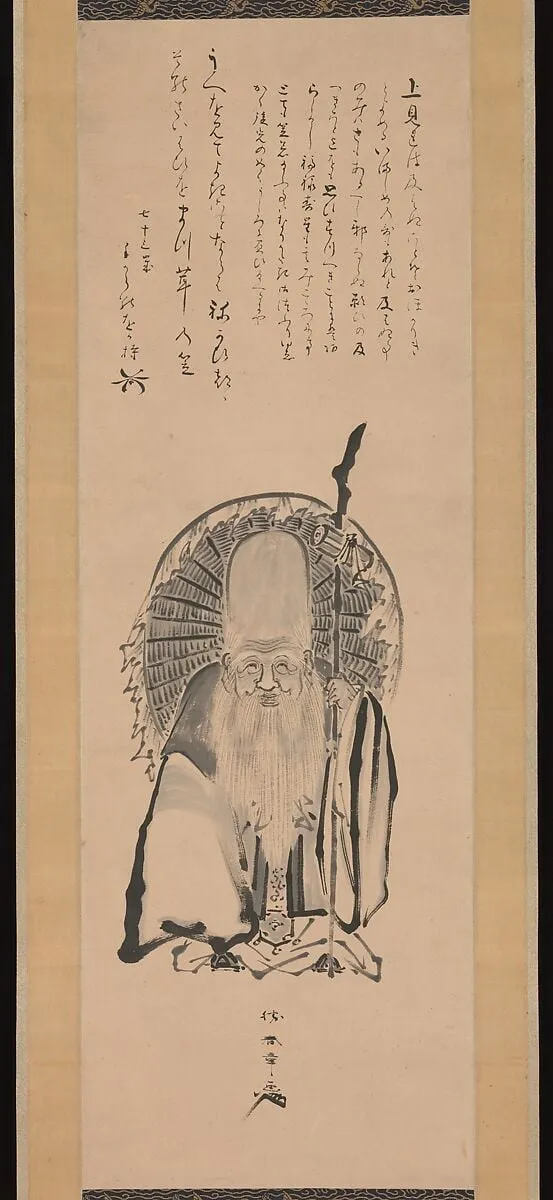
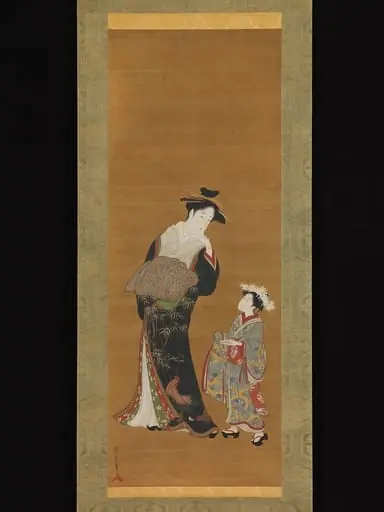
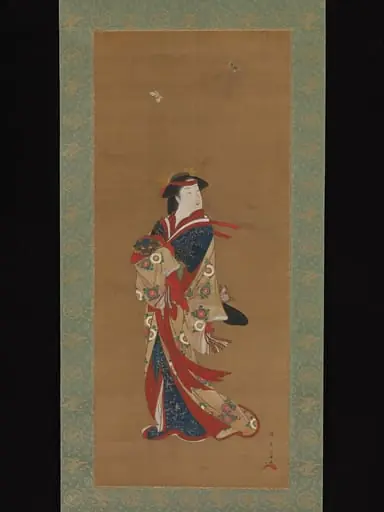
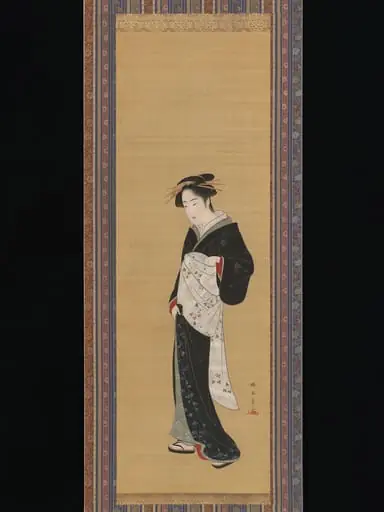
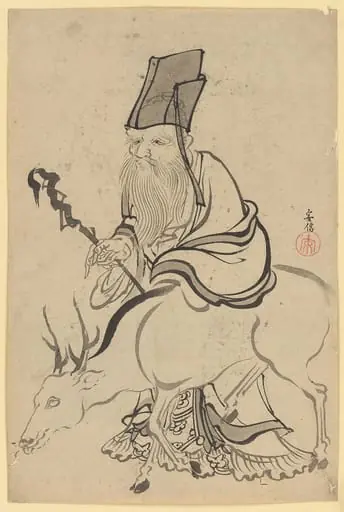
Untitled is an ink painting by the Romanticist artist Katsukawa Shunshō. It is held in the collection of the Metropolitan Museum of Art.
- Accession no.
- 1975.268.131
- Credit line
- The Harry G. C. Packard Collection of Asian Art, Gift of Harry G. C. Packard, and Purchase, Fletcher, Rogers, Harris Brisbane Dick, and Louis V. Bell Funds, Joseph Pulitzer Bequest, and The Annenberg Fund Inc. Gift, 1975
About this work
Subject & Meaning
As a nikuhitsu-ga (hand-painted work) executed in ink and color on washi paper, the piece functions as a portrait within the ukiyo-e tradition.
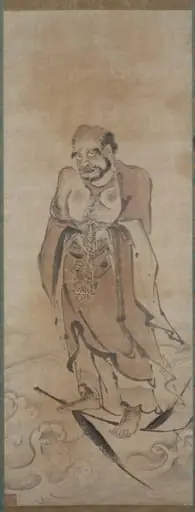
Created in 1798 by Katsukawa Shunshō, this ukiyo-e hanging scroll depicts Fukurokuju, one of the Seven Lucky Gods in Japanese folklore, alongside a human male figure. As a nikuhitsu-ga (hand-painted work) executed in ink and color on washi paper, the piece functions as a portrait within the ukiyo-e tradition. The inclusion of Fukurokuju, the deity associated with longevity, wisdom, and happiness, suggests the work carries symbolic meanings related to blessings and auspiciousness.
The specific iconography centers on the representation of this divine figure, likely intended to convey wishes for a long and wise life to the viewer or patron, a common thematic element in artworks featuring the Seven Lucky Gods.
Technique & Style
The work is executed as a hanging scroll, combining ink drawing with subtle polychrome washes on a sheet of Japanese washi paper. Its support consists of a lightweight paper substrate typical of ukiyo‑e nikuhitsu‑ga, allowing the piece to be displayed vertically and handled with care to preserve the delicate fibers. The composition depicts the deity Fukurokuju in a single‑figure portrait, rendered with restrained line work and muted tonal gradients that exemplify the portrait genre within the ukiyo‑e tradition.
The modest dimensions, approximately 85.7 cm in height and 28.8 cm in width, contribute to a balanced vertical format that emphasizes the figure’s elongated silhouette. No significant condition issues are recorded, though the paper’s fragility suggests careful environmental control.
Context
The painting entered scholarly discussion as an early example of ukiyo‑e portraiture that combines traditional narrative subjects with the emerging genre of nikuhitsu‑ga. Researchers highlight its role in illustrating how Katsukawa Shunshō adapted classical iconography of Fukurokuju for contemporary audiences, situating the work within the artist’s broader exploration of celebrated figures. Its inclusion in the Metropolitan Museum of Art’s collection underscores its recognized importance in the history of Japanese woodblock prints, while technical analysis of the washi support and ink pigments confirms its 1798 date and Japanese provenance.
Overview
This untitled painting, rendered in ink and color on paper as a hanging scroll, depicts a solitary figure. The subject, an elderly man with a prominent white beard and a high, furrowed brow, stands beneath a pine branch. He is clad in an intricately patterned robe and holds a scroll, his expression conveying a sense of serenity.
Artist & collection

Artist
Katsukawa Shunshō spent his life in Edo (now Tokyo), where the city’s teahouses and theaters buzzed with energy.

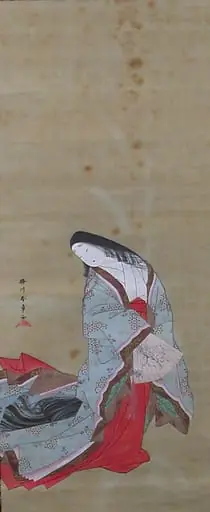
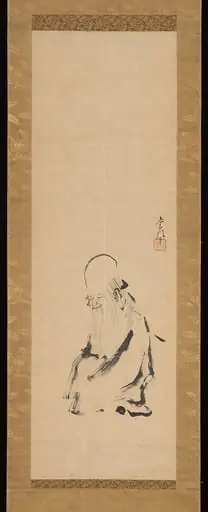 Untitled
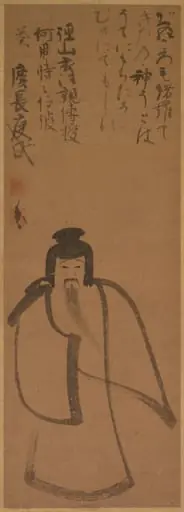
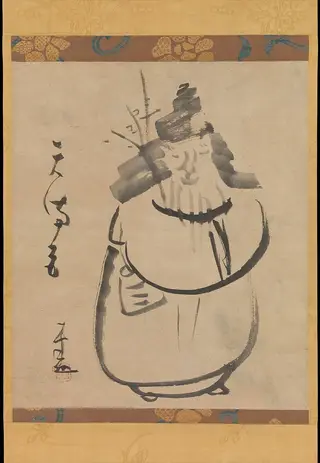 「天満宮」 渡唐天神図|“Tenmangū,” Sugawara no Michizane as Tenjin Traveling to China
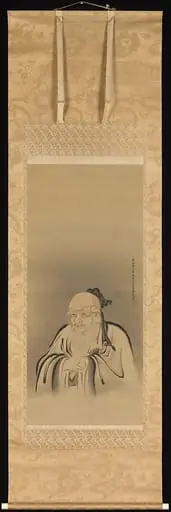 狩野探幽筆 神農・夏冬山水図|Portrait of Emperor Shennong
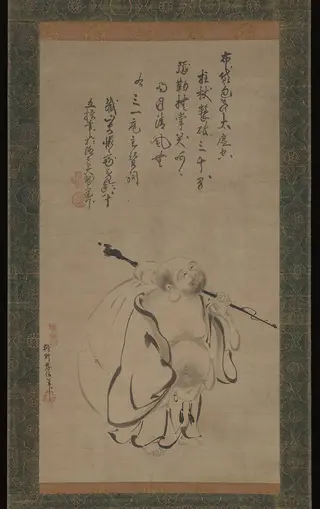 狩野孝信筆 布袋図「拄杖擊破三千界。彌勒撫掌笑呵呵,明月清風無。」|Hotei
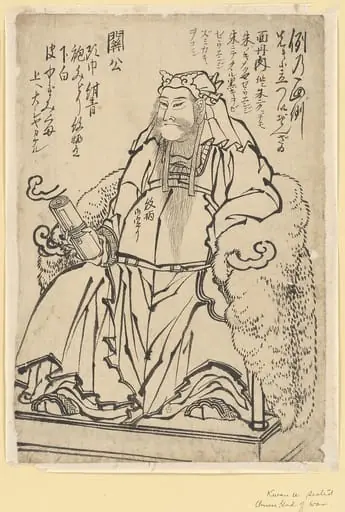 Untitled
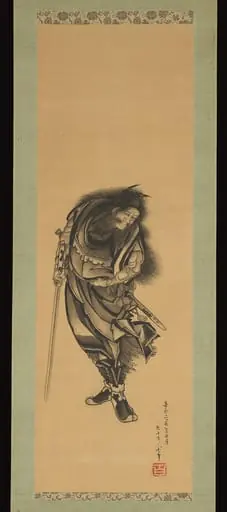 葛飾北斎筆 黒鍾馗|Black Shōki, the Demon Queller
 Tenjin Traveling to China
 Untitled
 Untitled
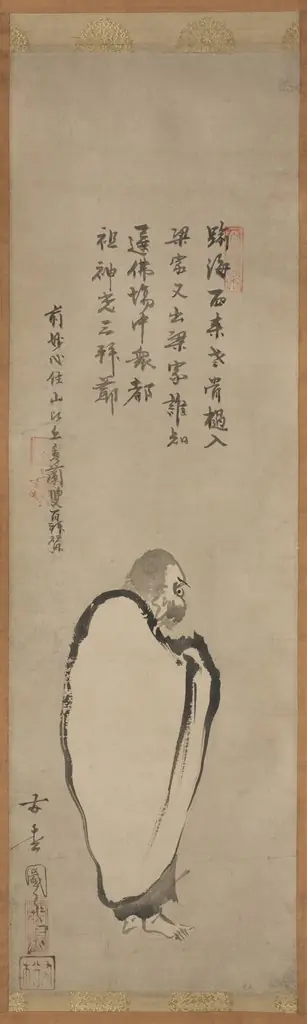 Figure of Daruma
 Bodhidharma on a Reed
- 明 陳洪綬 準提佛母法像圖 軸|Bodhisattva Guanyin in the Form of the Buddha Mother