Artwork
猿を襲う鷲図|Eagle Attacking a Monkey
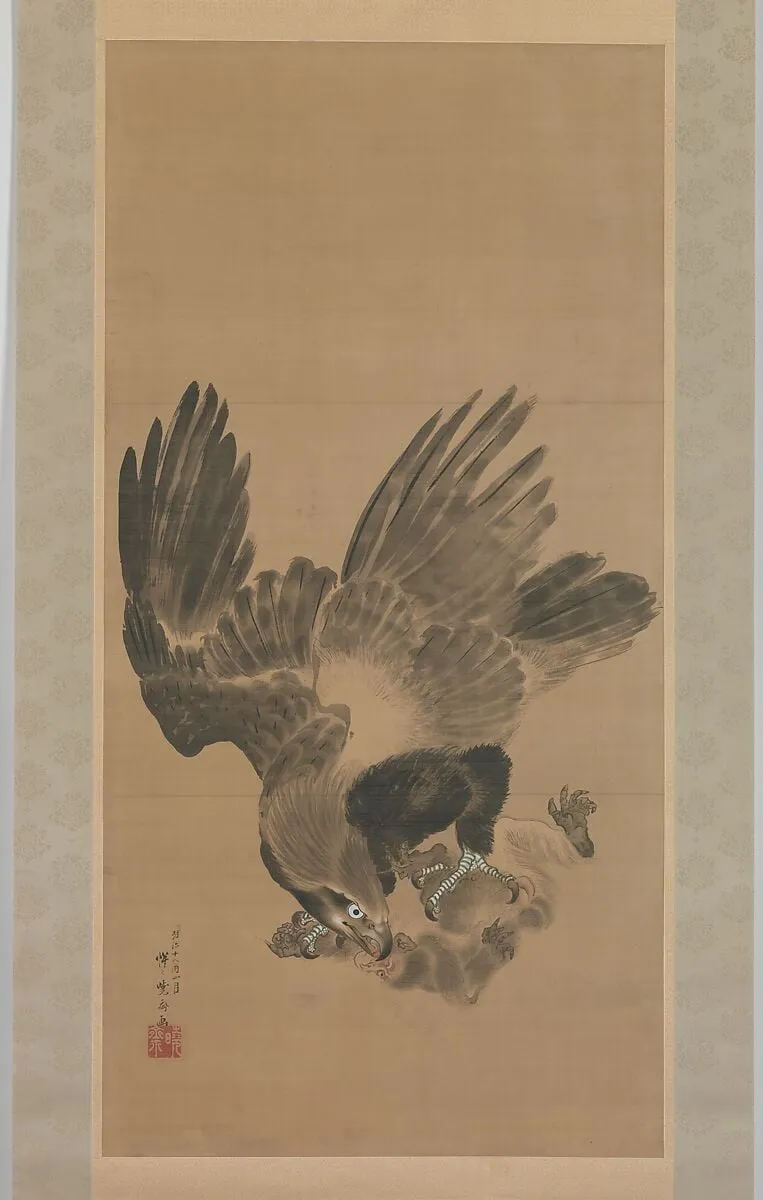
猿を襲う鷲図|Eagle Attacking a Monkey is an ink painting by the Impressionist artist Kawanabe Kyōsai 河鍋暁斎. It dates from 1885 and is held in the collection of the Metropolitan Museum of Art. Kawanabe Kyōsai's Eagle Attacking a Monkey, created in 1885, is an ink and color painting on a hanging scroll.
About this work
He mixed traditional ink with bright imported colors, something new at the time.
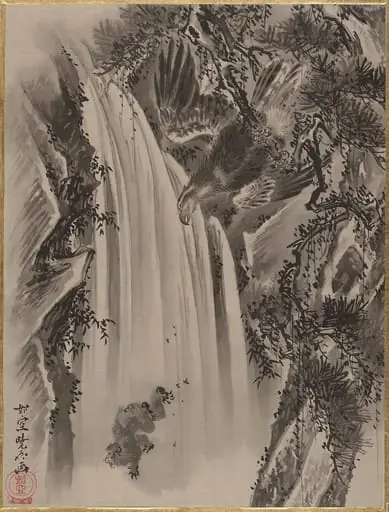
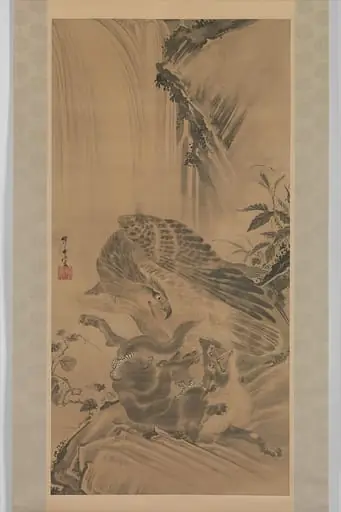
An eagle claws into a monkey’s back while the monkey clings to a branch. Feathers and fur bristle with quick brushstrokes.
Kyōsai painted this in 1885, when Japan was opening to the West. He mixed traditional ink with bright imported colors, something new at the time. The fight feels almost cartoonish, but the tension is real.
To see how other artists drew animal battles, look up Japanese ukiyo-e prints.
Subject & Meaning
The work depicts a dramatic confrontation between an eagle and a monkey, capturing the predator in mid-attack against its prey. Created by Kawanabe Kyōsai in 1885, the composition focuses entirely on this animal struggle, utilizing ink and color on paper to render the tension of the encounter. While the piece presents a literal scene of nature's violence, the specific iconography of an eagle assaulting a monkey often serves as a dynamic study of movement and power within the artist's oeuvre.
The subject matter highlights Kyōsai's interest in animal behavior and his ability to convey intense action through expressive brushwork. As a hanging scroll, the work frames this natural conflict as a standalone narrative event, emphasizing the raw energy of the moment without additional contextual elements or human figures.
Technique & Style
Executed in 1885, the hanging scroll employs ink and light mineral pigments on paper, relying on a fluid, rapid brushwork characteristic of Kyōsai’s late caricature-inflected manner. The eagle is rendered with bold, abbreviated strokes that suggest plumage while the monkey is defined by swift contour lines and minimal wash, creating a sense of dynamic motion. Thin, wet ink bleeds subtly at the monkey’s fur and the eagle’s talons, while brighter cinnabar and azurite accents punctuate the composition without obscuring the confident handling of the ground.
The overall tonality favors monochrome ink modulated by selective color, aligning with the artist’s playful yet incisive graphic style.
History & Provenance
The hanging scroll Eagle Attacking a Monkey (1885) is attributed to Kawanabe Kyōsai and was created in Japan. The work entered the collection of the Metropolitan Museum of Art, where it is currently held. No documented commission or earlier provenance beyond its 1885 creation date is recorded in available sources.
Overview
Kawanabe Kyōsai's Eagle Attacking a Monkey, created in 1885, is an ink and color painting on a hanging scroll. The work captures a dramatic confrontation between an eagle and a monkey, rendered with the artist's characteristic dynamism. Kyōsai was recognized for his distinctive style and deep understanding of traditional Japanese painting techniques, which he often infused with an independent and expressive approach, evident in this vivid depiction of animal conflict.
Context
Created in 1885, Eagle Attacking a Monkey emerged during a period when Japan was increasingly engaging with Western cultures. Kawanabe Kyōsai, known for both his traditional painting mastery and his work as a caricaturist, navigated this evolving artistic landscape. The painting aligns with the nihonga movement, reflecting an artistic commitment to Japanese traditions while embracing an individualistic perspective. Kyōsai's work often balanced historical forms with a contemporary, independent spirit.
Artist & collection
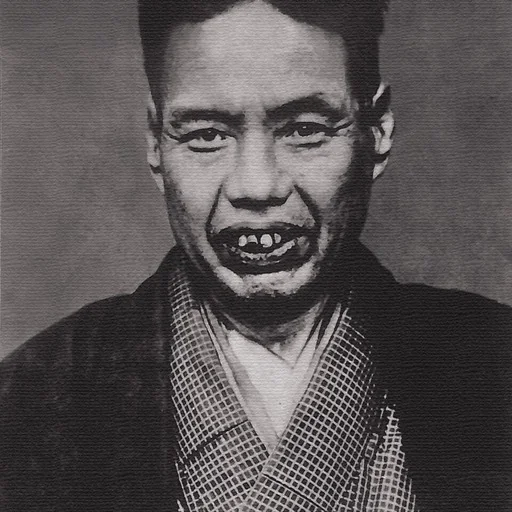
Artist
Kawanabe Kyōsai (河鍋 暁斎; May 18, 1831 – April 26, 1889) was a Japanese painter and caricaturist. In the words of art historian Timothy Clark, "an individualist and an independent, perhaps the last virtuoso in traditional Japanese painting".