Artwork
Untitled
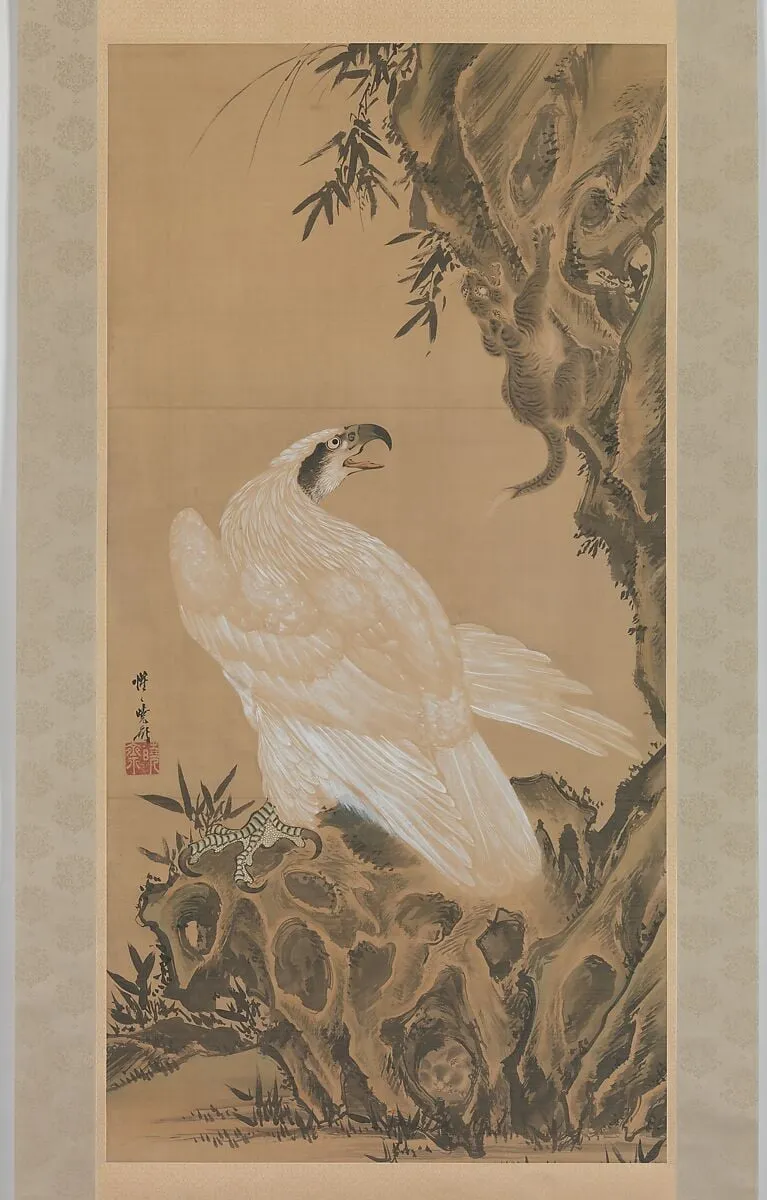
Untitled is an ink painting by the Impressionist artist Kawanabe Kyōsai 河鍋暁斎. It dates from 1885 and is held in the collection of the Metropolitan Museum of Art.
About this work
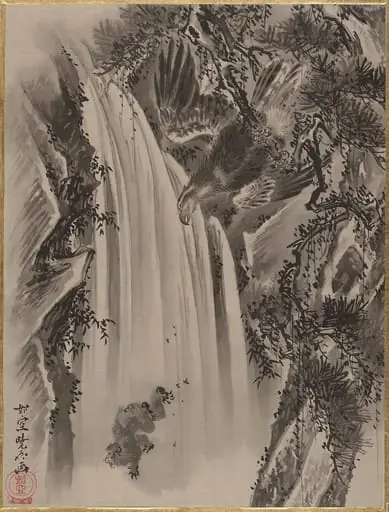
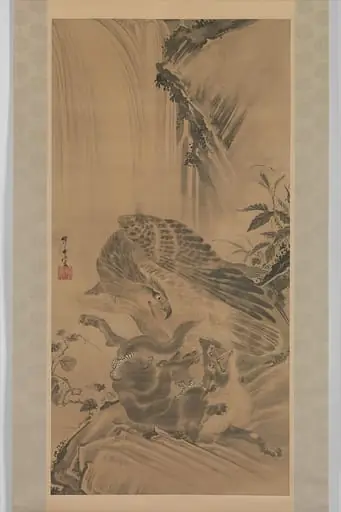
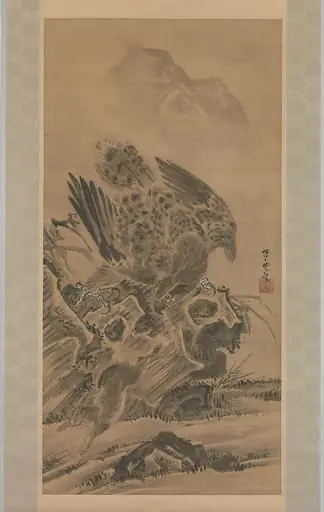
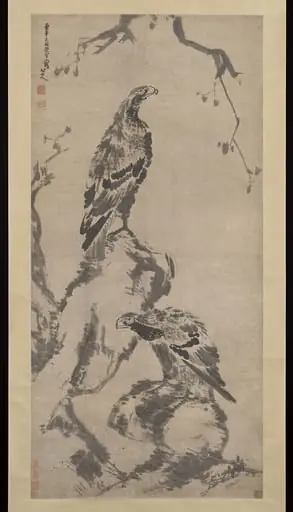
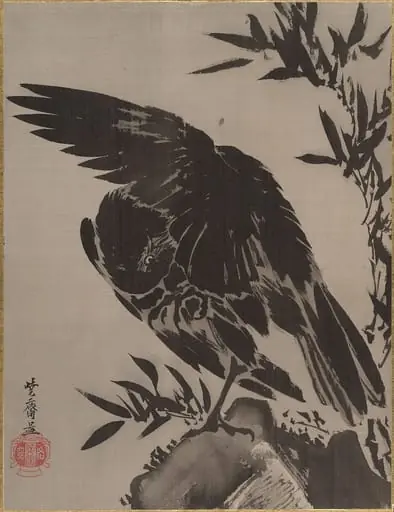
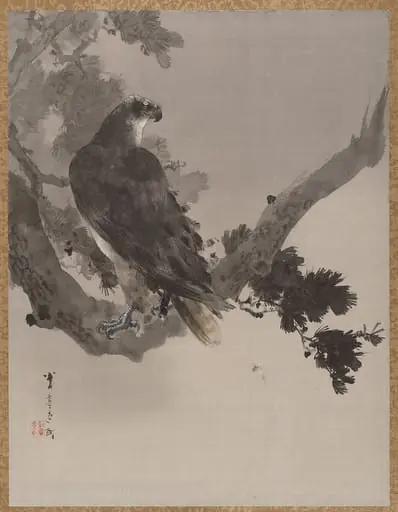
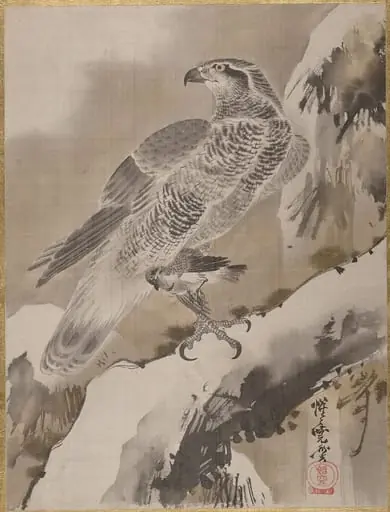
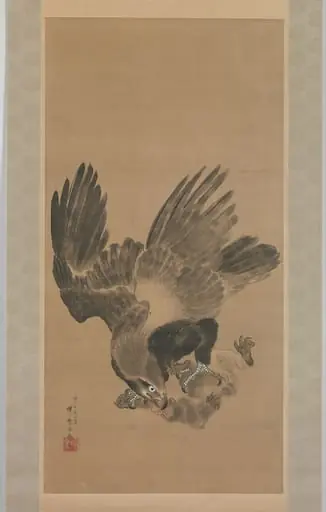
A fierce eagle grips a branch, wings half-spread, eyes fixed beyond the frame. Quick, bold strokes, some dark, some light, make the feathers look alive, the bird almost ready to fly. Kyosai painted it in 1885, as Japan opened to the West, mixing traditional ink work with a sharp, almost cartoonish energy that leaves the eagle both real and exaggerated.
Technique & Style
Executed in 1885, this hanging scroll by Kawanabe Kyōsai is rendered in ink and color on paper, a traditional East Asian format combining calligraphic brushwork with applied pigment. The work depicts an eagle, a subject that allowed the artist to demonstrate control of varied ink tones and fluid brush handling characteristic of his training in the Kanō and ukiyo-e lineages. The scroll format indicates the piece was designed to be displayed vertically and viewed as it was unrolled, a presentation suited to the dynamic, gestural qualities of ink painting.
Held in the Metropolitan Museum of Art's collection, the scroll exemplifies the combination of monochrome ink passages with selective color accents typical of late nineteenth-century Japanese painting practice.
History & Provenance
The work depicts an eagle and is currently held in the collection of the Metropolitan Museum of Art, where it is classified as a painting.
Created in 1885 in Japan, this hanging scroll titled Untitled was executed by the artist Kawanabe Kyōsai using ink and color on paper. The work depicts an eagle and is currently held in the collection of the Metropolitan Museum of Art, where it is classified as a painting. While the specific circumstances of its commission and the detailed chain of ownership prior to its museum acquisition are not provided in the available records, the piece is firmly attributed to Kyōsai with an inception date of 1885.
Overview
Created by the Japanese artist Kawanabe Kyōsai in 1885, Untitled is an ink and color painting on a hanging scroll. This work exemplifies the ukiyo-e movement, featuring a powerful depiction of an eagle. Kyōsai, active during the late Edo and early Meiji periods, was recognized for his distinctive style and profound skill in traditional Japanese painting techniques.
Subject & Meaning
The painting presents a formidable eagle, grasping a branch with its wings partially extended, its gaze fixed intently on an unseen point beyond the composition. Kyōsai rendered the bird's plumage with dynamic, confident brushstrokes, employing both dark and light tones to convey a sense of vitality. The creature appears poised for flight, embodying a blend of realistic observation and an almost mythical, exaggerated presence reminiscent of traditional narratives.
Context
Executed in 1885, Untitled dates to a pivotal era in Japanese history, as the nation was undergoing significant modernization and opening to Western influences. Kawanabe Kyōsai, often celebrated as the "last virtuoso in traditional Japanese painting" by scholars like Timothy Clark, navigated this period of change. His work reflects a deep engagement with established artistic practices while also demonstrating an inventive spirit that distinguished him from his contemporaries.
Artist & collection
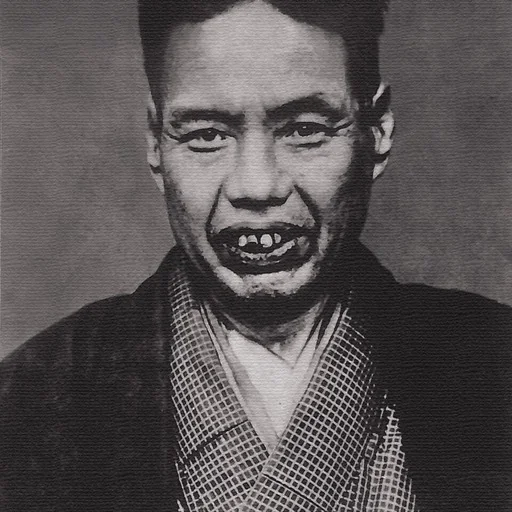
Artist
Kawanabe Kyōsai (河鍋 暁斎; May 18, 1831 – April 26, 1889) was a Japanese painter and caricaturist. In the words of art historian Timothy Clark, "an individualist and an independent, perhaps the last virtuoso in traditional Japanese painting".