Artwork
釈迦降魔図|Shakyamuni Subjugating Demons
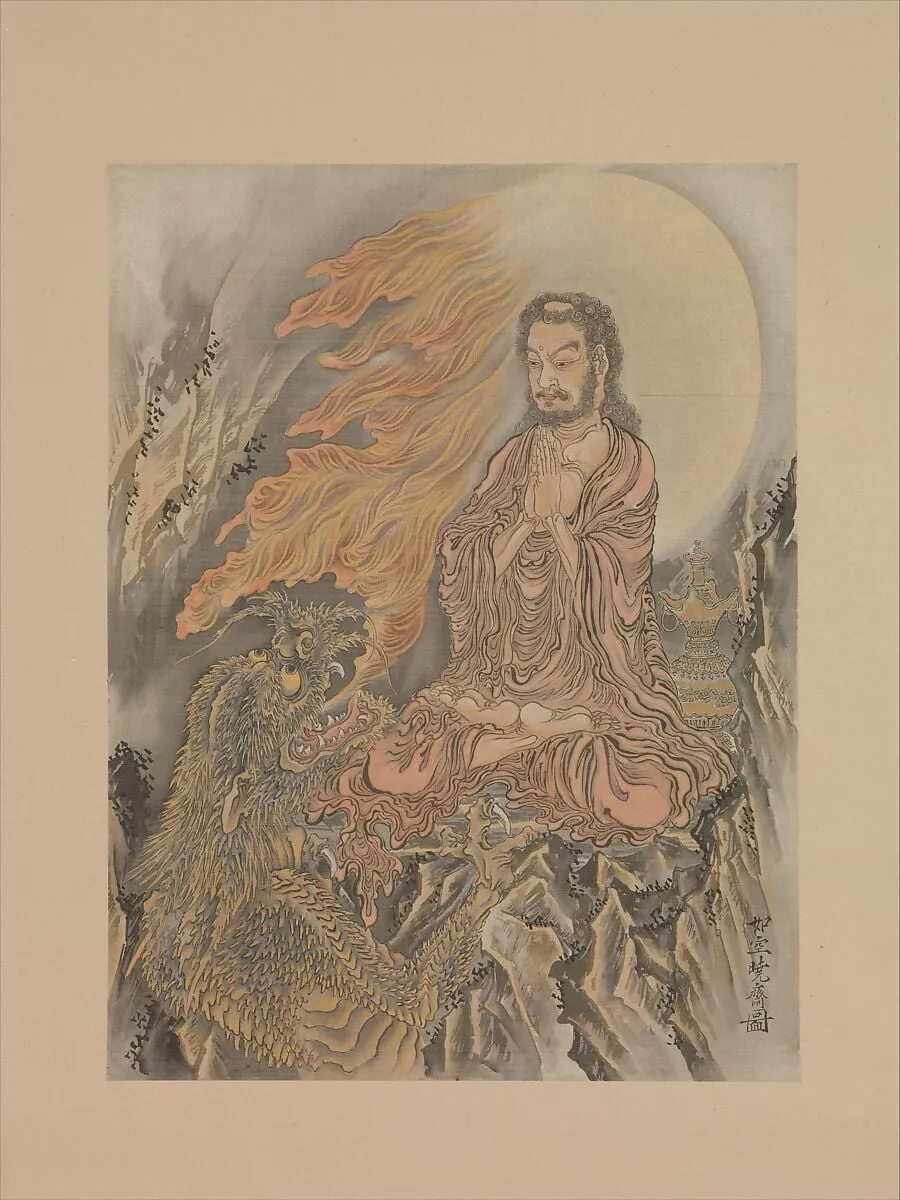
釈迦降魔図|Shakyamuni Subjugating Demons is an ink painting by the Impressionist artist Kawanabe Kyōsai 河鍋暁斎. It dates from 1888 and is held in the collection of the Metropolitan Museum of Art. Titled Shakyamuni Subjugating Demons, this painting by Kyōsai, executed in 1888, captures a pivotal moment in Buddhist narrative.
About this work
A figure in a golden robe sits on a rock among snarling demons and flying dragons, his hands forming a calm circle, one finger to his knee. He is the Buddha at the moment of enlightenment, the demons his own doubts and fears made monstrous. Kyosai painted it in 1888, as Japan opened to the West, yet kept to the old ink-and-silk manner.
Subject & Meaning
The painting depicts the historical Buddha, Shakyamuni, seated in meditation beneath a protective naga (dragon) while subduing a host of demons.
The painting depicts the historical Buddha, Shakyamuni, seated in meditation beneath a protective naga (dragon) while subduing a host of demons. Kyōsai follows an established iconographic tradition in which the Buddha’s right hand touches the earth, invoking the earth goddess to witness his enlightenment and repel the forces of Mara. The dragon, coiled protectively above, symbolizes the sheltering power of the natural world and the Buddha’s mastery over cosmic forces.
The writhing demons personify illusion and temptation, underscoring the triumph of spiritual insight over worldly delusion. Together, these elements convey the work’s religious meaning: the Buddha’s victory over suffering and the affirmation of meditative power as a path to liberation.
Technique & Style
Executed in 1888 by Kawanabe Kyōsai, this work takes the form of an album leaf remounted as a hanging scroll, a traditional Japanese adaptation that allows a small-format painting to be displayed vertically. The support is silk, and the medium is ink combined with color, applied in the painterly manner characteristic of Kyōsai's religious imagery. The modest format, 36.8 cm in height by 27.9 cm in width, reflects its origin as an album page rather than a purpose-made hanging scroll.
The composition centers on the Buddha subduing demonic forces, with a dragon included among the depicted elements, rendered through ink line and colored washes on the silk ground.
History & Provenance
Created in 1888 by the Japanese artist Kawanabe Kyōsai, Shakyamuni Subjugating Demons is a religious painting executed in ink and color on silk. The work was originally produced as an album leaf and was subsequently mounted as a hanging scroll. Measuring 36.8 cm in height and 27.9 cm in width, the piece originates from Japan and depicts the Buddha alongside a dragon.
While the specific commission details and the chain of ownership prior to its current location are not detailed in the available records, the work is currently held in the collection of the Metropolitan Museum of Art. The creation date is established as January 1, 1888, placing it in the final year of Kyōsai's life.
Overview
Titled Shakyamuni Subjugating Demons, this painting by Kyōsai, executed in 1888, captures a pivotal moment in Buddhist narrative. Rendered with ink and color on silk, originally an album leaf and now a hanging scroll, the work portrays the Buddha's serene resolve as he confronts a host of monstrous figures. The composition emphasizes the spiritual triumph over internal and external obstacles on the path to enlightenment.
Context
Created in 1888, this painting emerged during a transformative period in Japan, marked by increasing engagement with Western cultures and rapid modernization. Despite these societal shifts, Kyōsai consciously adhered to established artistic practices, employing the traditional medium of ink and color on silk to tell a classic Buddhist story. His choice reflects a dedication to preserving indigenous narrative and aesthetic forms amidst an era of significant change.
Artist & collection
Artist
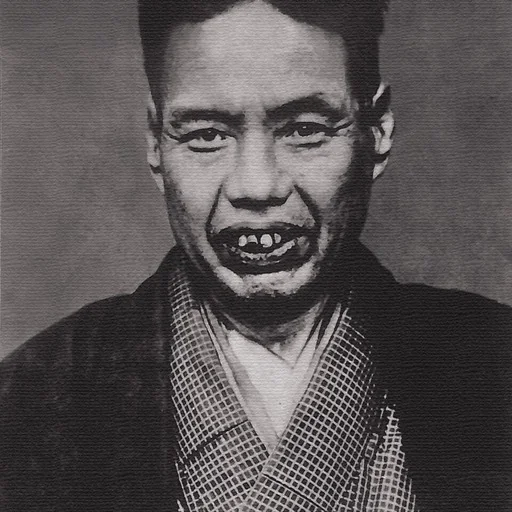
Kawanabe Kyōsai (河鍋 暁斎; May 18, 1831 – April 26, 1889) was a Japanese painter and caricaturist. In the words of art historian Timothy Clark, "an individualist and an independent, perhaps the last virtuoso in traditional Japanese painting".