Artwork
Untitled
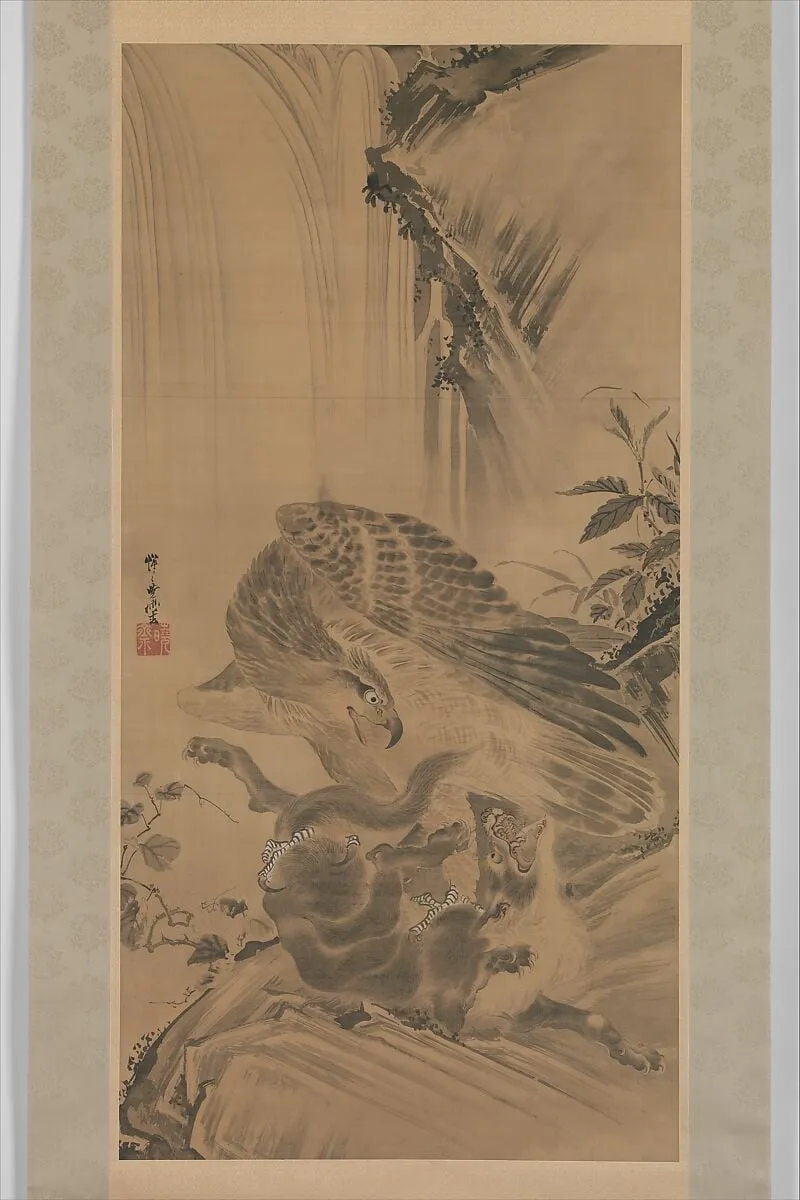
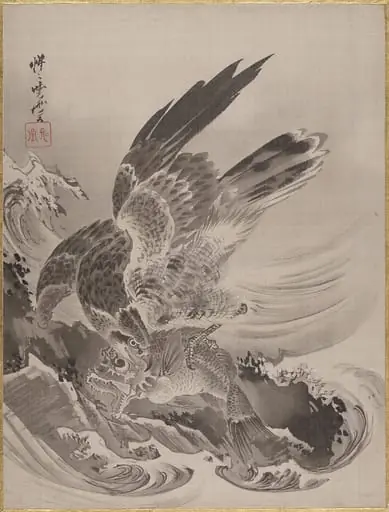
Untitled is an ink painting by the Impressionist artist Kawanabe Kyōsai 河鍋暁斎. It dates from 1885 and is held in the collection of the Metropolitan Museum of Art.
About this work
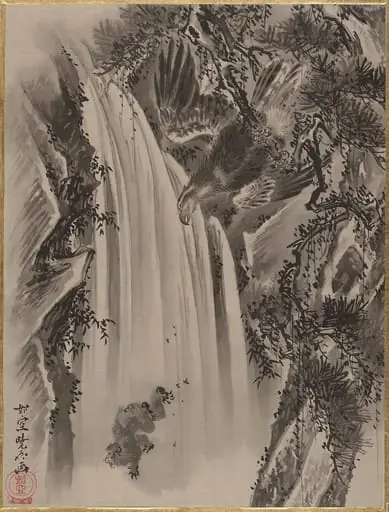
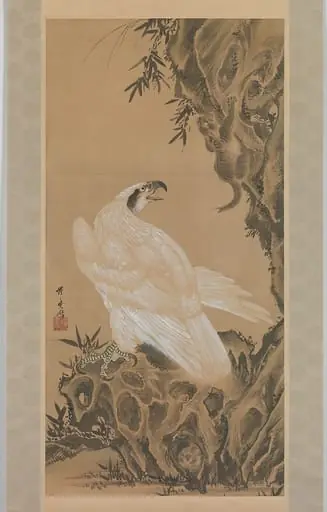
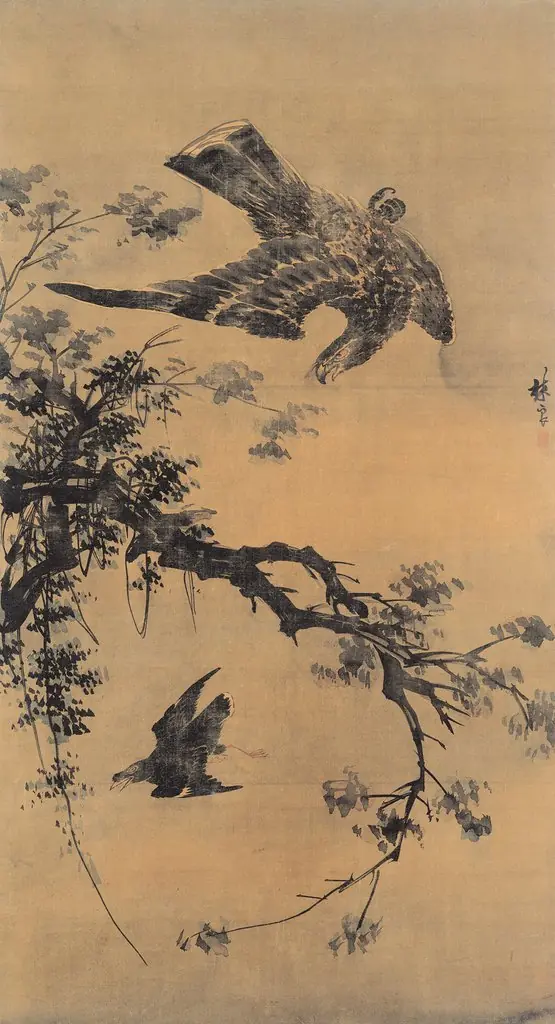
A fierce eagle clutches a dead rabbit in its talons, wings half-spread, sharp eyes glaring out, feathers ruffled by wind. Kyosai painted it in 1885, as Japan was opening to the West, blending old Japanese ink methods with European shading that gives the bird volume. The rabbit's limp body against the tense grip feels almost alive.
Subject & Meaning
No additional narrative context or deeper symbolic representation beyond the depiction of the eagle is documented in the available records.
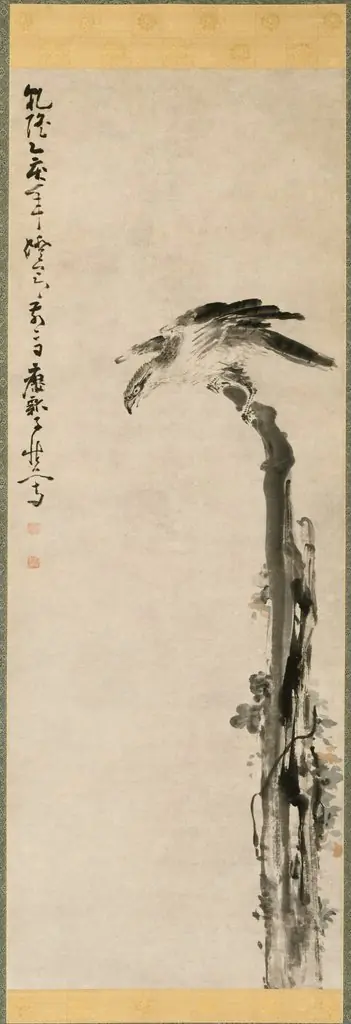
Kawanabe Kyōsai's 1885 hanging scroll, titled Untitled, depicts a single eagle rendered in ink and color on paper. The work's subject is strictly zoological, focusing on the bird of prey classified under Animalia. While the painting captures the physical form of the eagle, the provided sources do not elaborate on specific iconographic traditions, symbolic meanings, or allegorical interpretations associated with the bird within this particular composition.
The artwork stands as a representation of the animal itself, created in Japan during the late Edo period. No additional narrative context or deeper symbolic representation beyond the depiction of the eagle is documented in the available records.
Technique & Style
The work is a hanging scroll executed in ink and color on paper, dated to 1885. Kyōsai’s handling combines fluid ink washes with delicate mineral pigments, building up tonal gradations to convey the eagle’s plumage and musculature. The composition is anchored by confident, calligraphic brushwork in the bird’s defining contours, while finer details, such as feather texture and talons, are rendered with controlled, linear precision.
The scroll’s format and layered application suggest a synthesis of traditional nihonga technique with the expressive immediacy characteristic of late nineteenth-century Japanese painting.
History & Provenance
The hanging scroll is held in the collection of the Metropolitan Museum of Art, as recorded in the Wikidata entry for the work. It was created in 1885 by Kawanabe Kyōsai and is classified as a painting executed in ink and color on paper, depicting an eagle. The provided sources do not specify an accession or inventory number, nor do they document any exhibition history for this work.
Overview
Kawanabe Kyōsai, a Japanese painter celebrated for his distinctive artistic vision and command of established methods, created this "Untitled" work in 1885. Executed with ink and color on a hanging scroll, the piece depicts a powerful eagle. Kyōsai worked during a period of significant cultural transformation in Japan, and his art often reflects a synthesis of traditional and emerging styles, earning him recognition as a pivotal figure in late 19th-century Japanese painting.
Context
Created in 1885, this work emerged during a pivotal era when Japan was undergoing profound modernization and increased engagement with Western cultures. Kyōsai, often regarded as the final master of traditional Japanese painting techniques, navigated this transitional landscape by integrating new artistic ideas while maintaining a strong foundation in established practices. His individualist approach reflects the broader cultural shifts occurring as Japan opened its borders.
Artist & collection
Artist
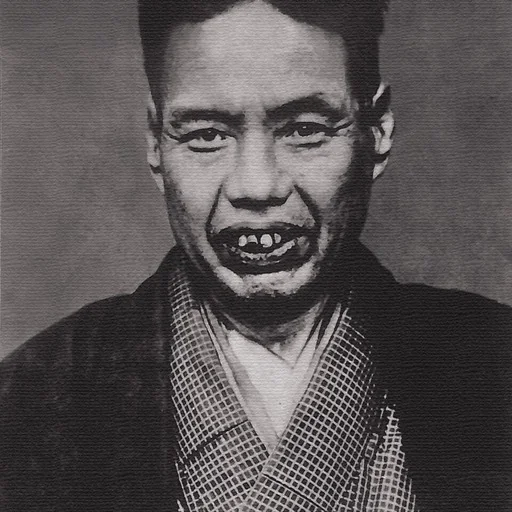
Kawanabe Kyōsai (河鍋 暁斎; May 18, 1831 – April 26, 1889) was a Japanese painter and caricaturist. In the words of art historian Timothy Clark, "an individualist and an independent, perhaps the last virtuoso in traditional Japanese painting".