Artwork
竹に鴉図|Crow on a Bamboo Branch
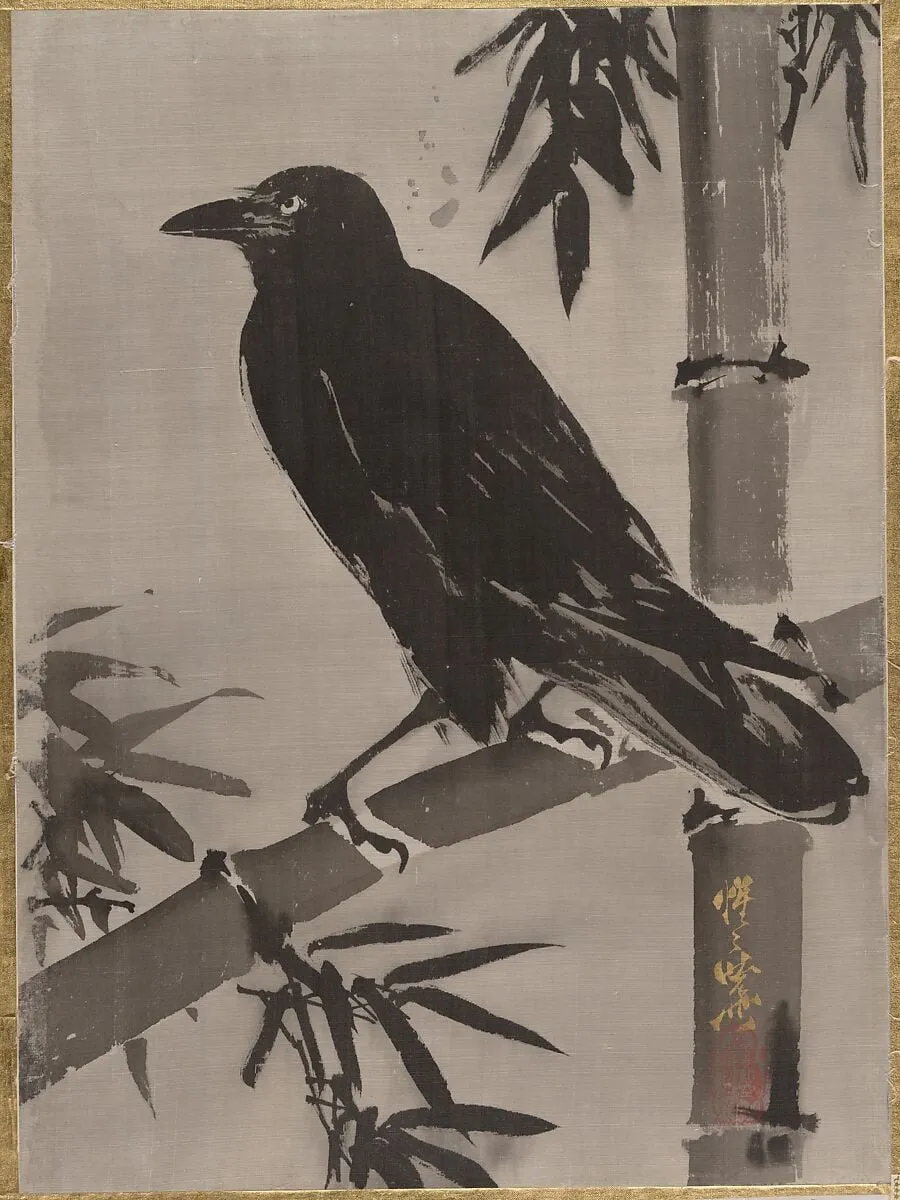
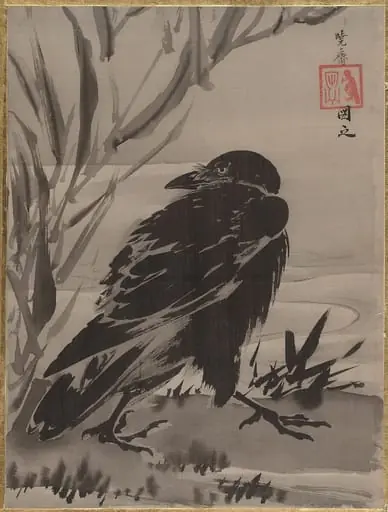
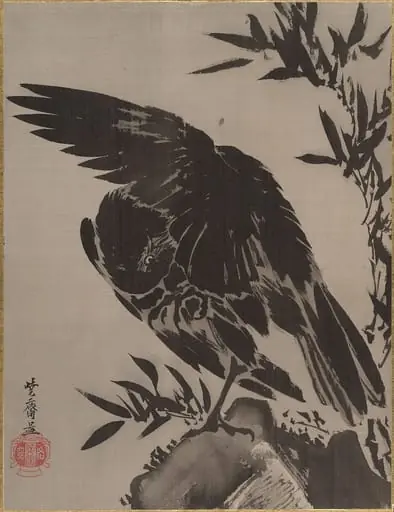
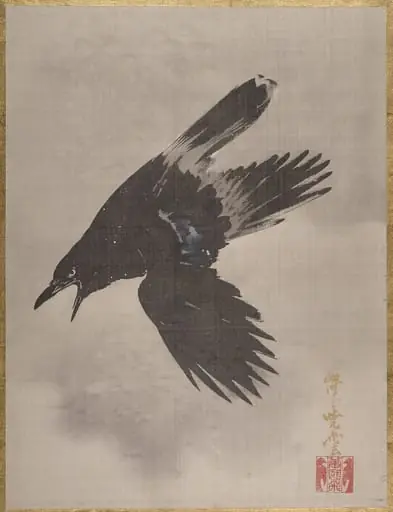
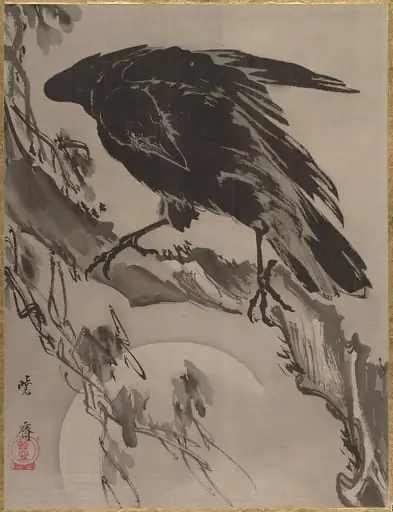
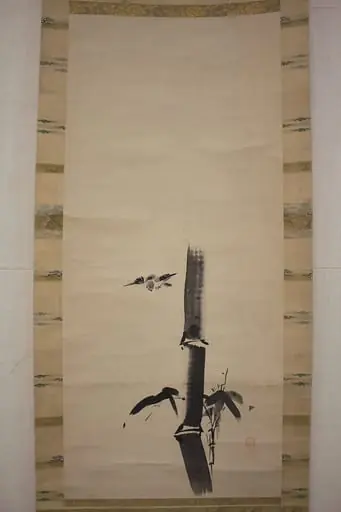
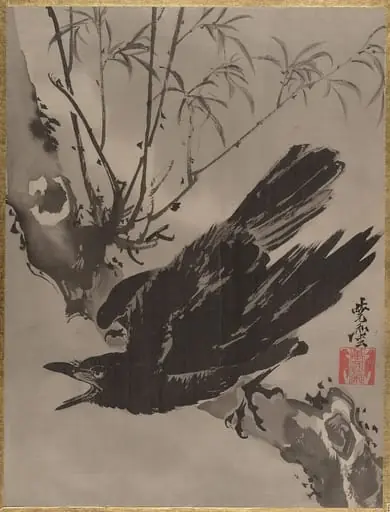
竹に鴉図|Crow on a Bamboo Branch is an ink painting by the Impressionist artist Kawanabe Kyōsai 河鍋暁斎. It dates from 1887 and is held in the collection of the Metropolitan Museum of Art. Kawanabe Kyōsai created Crow on a Bamboo Branch around 1887, rendering the scene in ink and color on silk as an album leaf.
About this work
Technique & Style
Executed as an album leaf, the work is painted on silk using ink with subtle color washes, a technique typical of late‑19th‑century Japanese album paintings.
Executed as an album leaf, the work is painted on silk using ink with subtle color washes, a technique typical of late‑19th‑century Japanese album paintings. The support is a thin silk sheet measuring 36.2 cm in height by 26.7 cm in width, produced in Japan in 1887. Kawanabe Kyōsai renders a bamboo branch (Bambusoideae) with a perched crow, employing fine brush lines and a balanced composition that emphasizes negative space and naturalistic detail.
The formal qualities reflect a landscape genre, combining delicate line work with restrained tonal modulation, while the medium’s silk support contributes to a smooth, luminous surface.
History & Provenance
Created in 1887 by the Japanese artist Kawanabe Kyōsai, this album leaf titled Crow on a Bamboo Branch was produced in Japan. The work, executed in ink and color on silk, depicts a bird perched among bamboo. While the specific circumstances of its commission and the detailed chain of ownership prior to its current location are not recorded in the available sources, the piece is presently held in the collection of the Metropolitan Museum of Art.
The artwork's inception is specifically dated to January 1, 1887, marking its place within the artist's late period output.
Context
Kawanabe Kyōsai produced 竹に鴉図|Crow on a Bamboo Branch in 1887, an album leaf rendered in ink and color on silk that falls within the landscape genre and portrays Bambusoideae alongside a bird. The work, measuring 36.2 × 26.7 cm, was created in Japan and entered the collection of the Metropolitan Museum of Art, where it is displayed as part of the museum’s holdings of Japanese paintings. Its subject matter reflects the enduring motif of solitary avian figures on bamboo in East Asian art, while its inclusion in a prominent Western museum illustrates scholarly recognition of Kyōsai’s contribution to the bird‑and‑flower tradition during the Meiji period.
Overview
Kawanabe Kyōsai created Crow on a Bamboo Branch around 1887, rendering the scene in ink and color on silk as an album leaf. This work exemplifies the nihonga style, depicting a solitary crow perched on a slender bamboo stalk. The composition captures a common motif in East Asian art, reinterpreted through Kyōsai's distinctive artistic lens, showcasing his command of traditional Japanese painting techniques.
Subject & Meaning
The depiction of a crow on bamboo is a recurring theme in East Asian art, often symbolizing resilience or solitude. Kyōsai, known for imbuing animals with human-like qualities, presents this crow with a subtle humor. Its ruffled feathers and precarious balance on the bent stalk suggest a momentary, almost comical, struggle against an unseen wind, transforming a simple natural observation into a character study.
Artist & collection
Artist
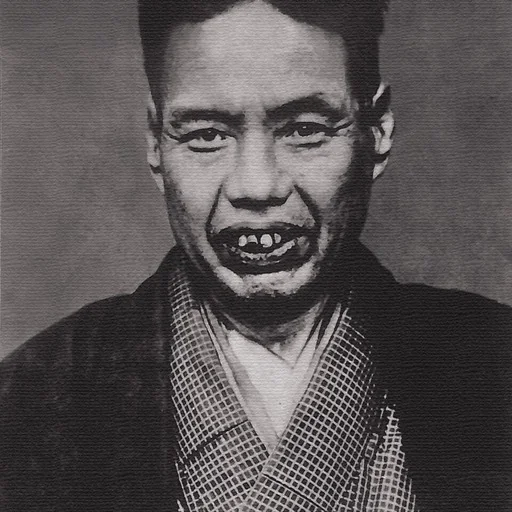
Kawanabe Kyōsai (河鍋 暁斎; May 18, 1831 – April 26, 1889) was a Japanese painter and caricaturist. In the words of art historian Timothy Clark, "an individualist and an independent, perhaps the last virtuoso in traditional Japanese painting".