Artwork
Man on a Balcony
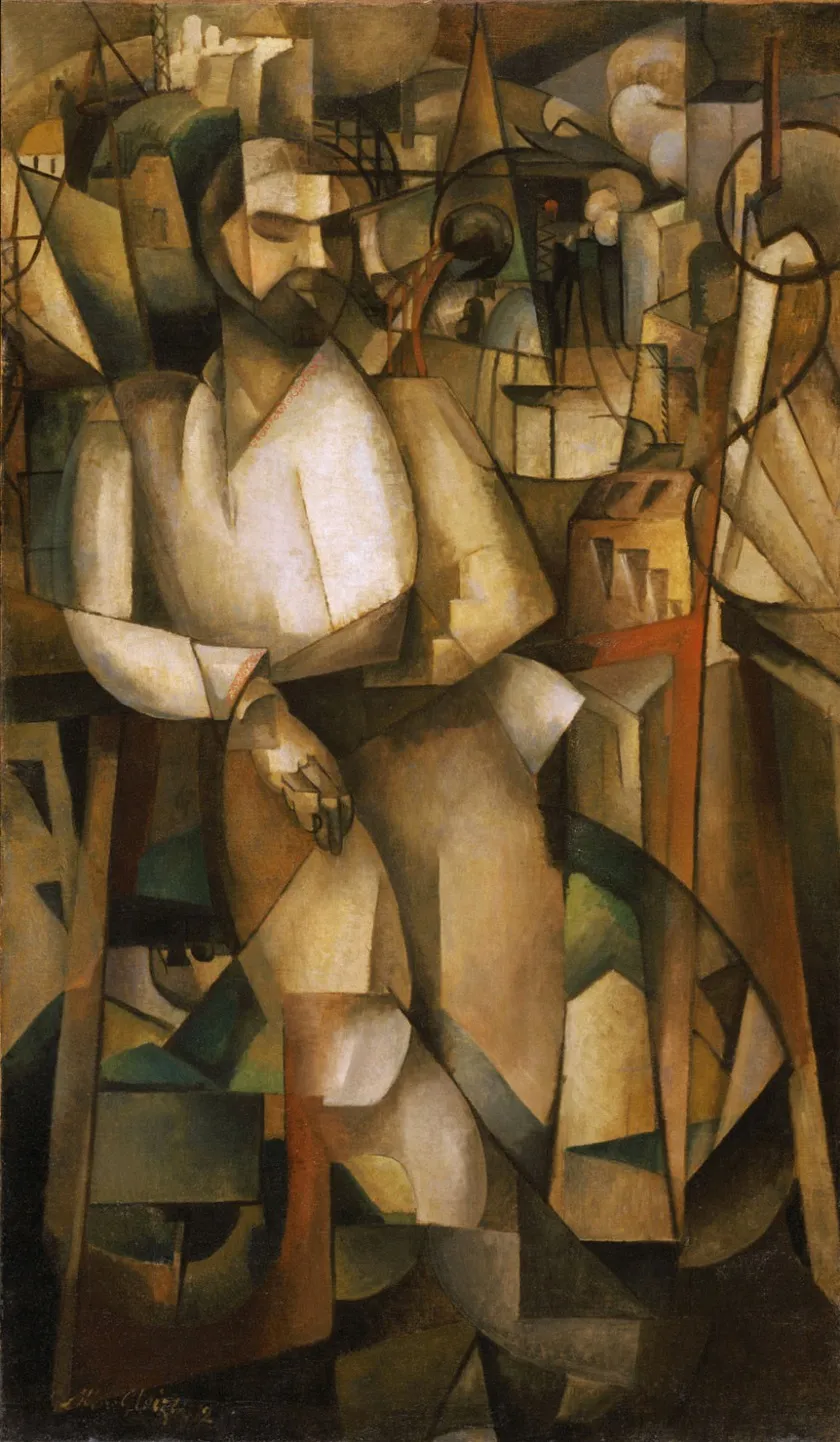
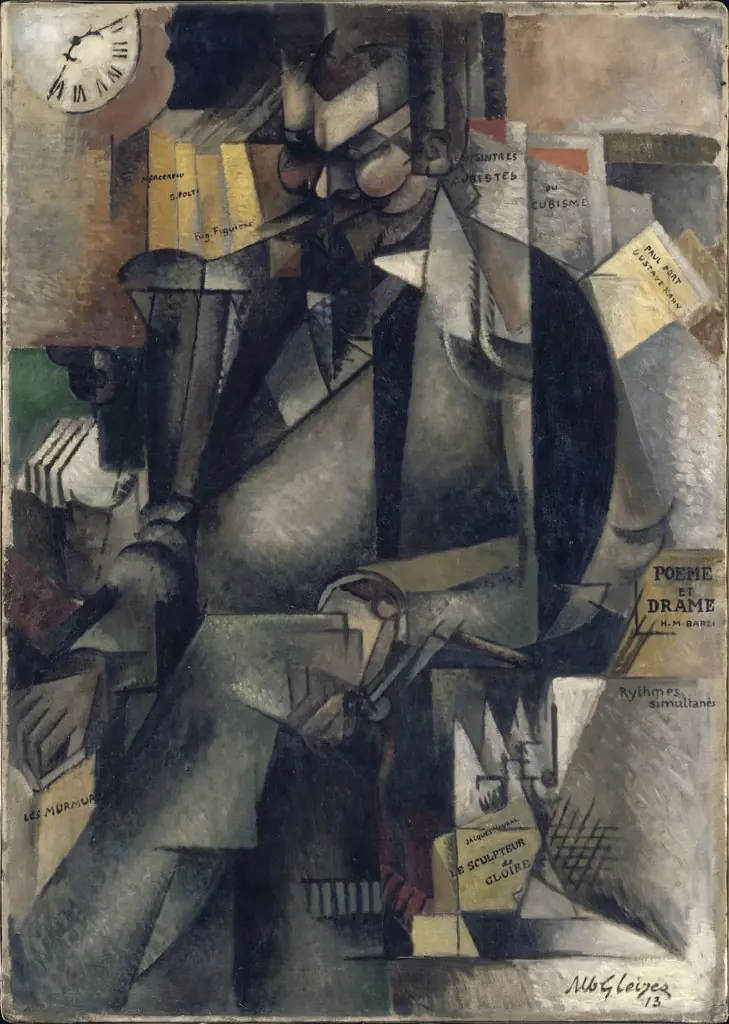
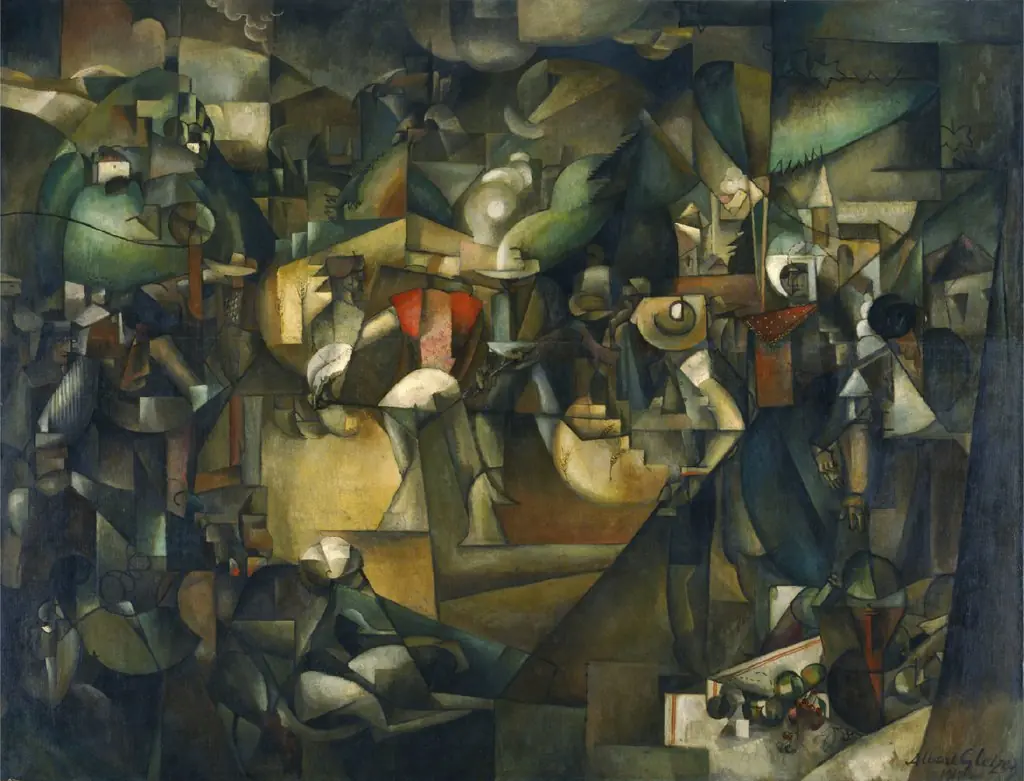
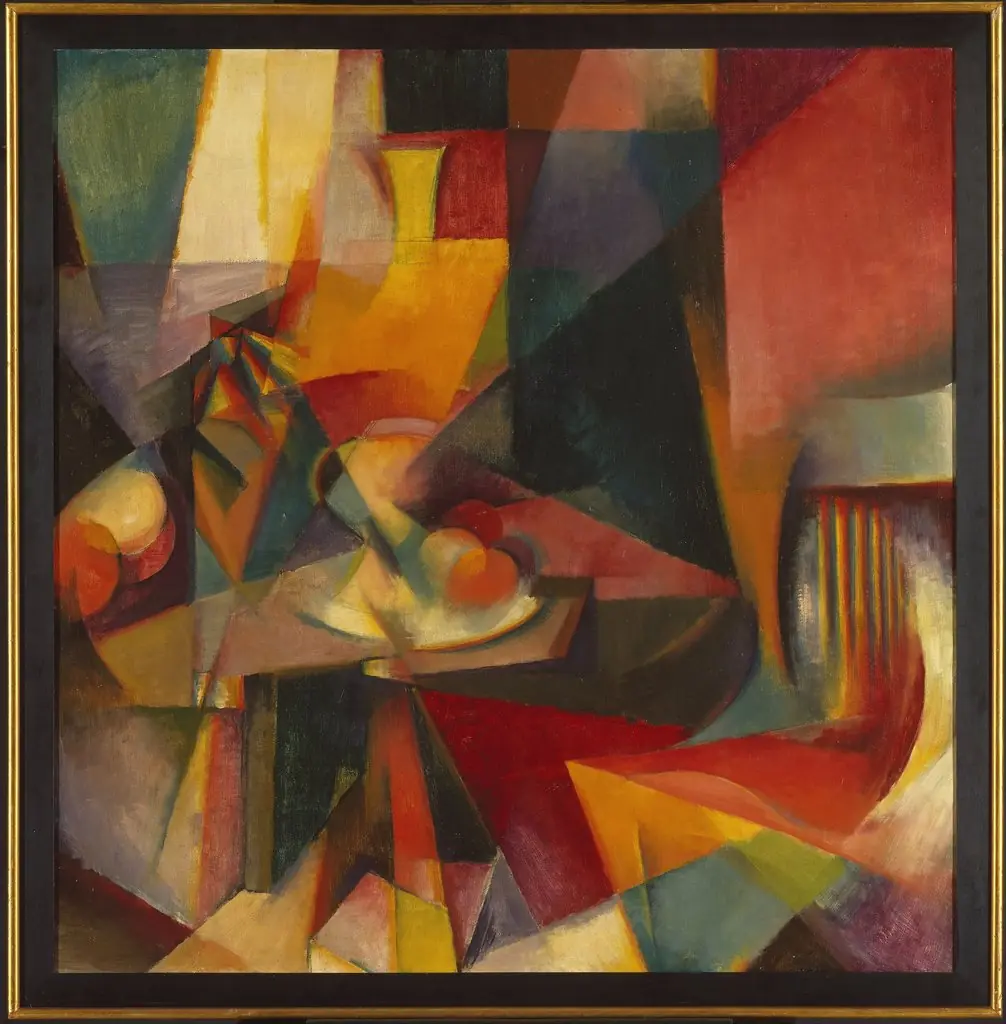
Man on a Balcony is an oil painting by the Cubism Synthetic artist Albert Gleizes. It dates from 1912 and is held in the collection of the Philadelphia Museum of Art.
About this work
Overview
Man on a Balcony, created by French artist Albert Gleizes in 1912, is a large-scale oil painting measuring over six feet tall. The work embodies the principles of Cubism, a movement Gleizes helped found.
Subject & Meaning
The painting depicts a contemplative man, identified as Dr. Théo Morinaud, standing on a balcony with arms crossed, gazing outward with a serious expression. His introspective pose contrasts with the dynamic, geometric background.
Technique & Style
Gleizes employs characteristic Cubist techniques: projecting planes, fragmented lines, and a composition of intersecting geometric shapes in varied colors. These elements transform the urban backdrop into a complex, multi-angled visual field.
History & Provenance
Exhibited at the 1912 Salon d'Automne in Paris (no. 689), the painting sparked controversy, prompting parliamentary debate over the use of public funds for 'barbaric art'. It was later shown at the 1913 Armory Show in the US (no. 196), introducing Cubism to American audiences.
Context
Completed concurrently with Gleizes' co-authorship of the seminal treatise 'Du Cubisme' (1912), the painting reflects the artist's dual role as practitioner and theorist of the Cubist movement.
Legacy
Reproduced in key publications of the time, including L'Excelsior (1912) and Apollinaire's 'Les Peintres Cubistes' (1913), Man on a Balcony remains a significant example of early Cubism's innovative spirit and its global dissemination.
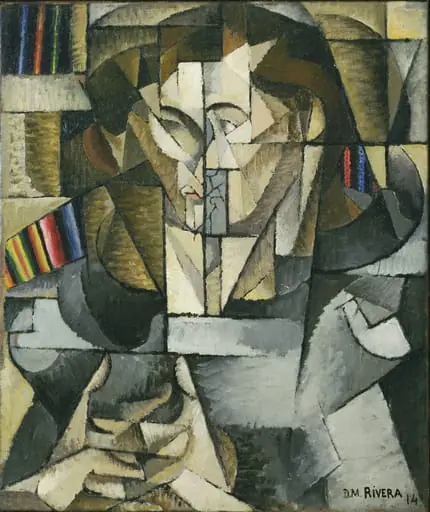
Artist & collection
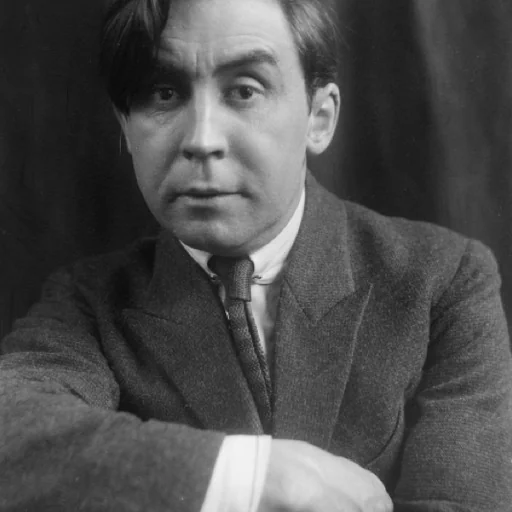
Artist
Albert Gleizes was a French artist, theoretician, philosopher, a self-proclaimed founder of Cubism and an influence on the School of Paris.