Artwork
Design for United States Currency
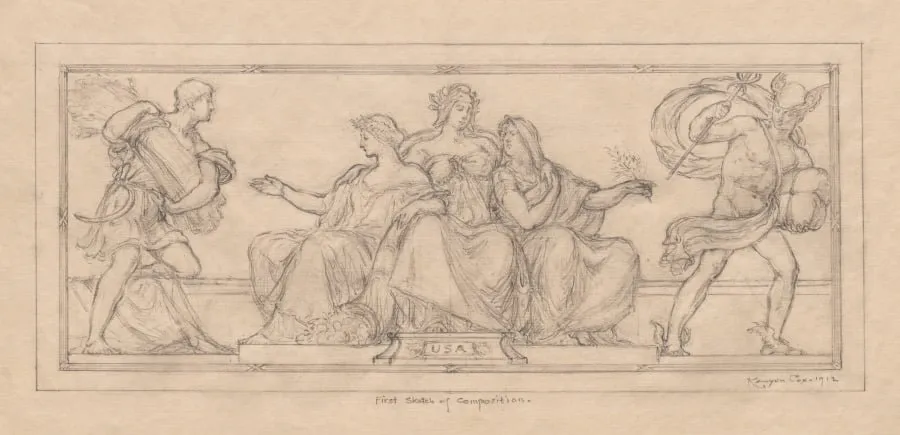
Design for United States Currency is a drawing by Kenyon Cox. It dates from 1912 and is held in the collection of the Cleveland Museum of Art.
- Accession no.
- 1916.1069
- Credit line
- Gift of J. D. Cox
About this work
This 1912 sketch shows a man in a toga holding a fasces. His face looks like Cox’s brother, a Cleveland leader. The fasces, a bundle of rods with an axe, symbolizes strength through unity.
Cox planned this design carefully. The government rejected it, so it never became real money. He wanted to honor America’s classical roots.
Look up the artist who inspired Cox: Kenyon Cox (American, 1856–1919).
Overview
Created in 1912, this pencil and ink drawing by Kenyon Cox was a proposed design for U.S. currency, ultimately declined by federal authorities. It reflects his commitment to classical aesthetics and his belief in art’s moral and civic function. Though never circulated, the work reveals his meticulous approach to composition and his desire to anchor American identity in ancient symbolism.
Subject & Meaning
Cox, wears a Roman toga and holds a fasces, a bundle of rods bound around an axe, an emblem of authority and collective strength from republican Rome.
The central figure, modeled after Cox’s brother J. D. Cox, wears a Roman toga and holds a fasces, a bundle of rods bound around an axe, an emblem of authority and collective strength from republican Rome. The imagery was intended to evoke civic virtue and unity, aligning the young American republic with the ideals of classical antiquity. The choice of attire and symbol signals a deliberate rejection of modern visual language in favor of timeless forms.
Technique & Style
Executed in precise pencil and ink, the drawing demonstrates Cox’s academic training and his reverence for Renaissance draftsmanship. Contours are clean, proportions are carefully measured, and shading is subtle yet deliberate to define volume without ornamentation. The composition is balanced and frontal, echoing classical sculpture and fresco traditions he admired.
History & Provenance
The design was submitted to the U.S. Treasury in 1912 but rejected for its overt classical references, deemed too foreign for modern currency. After Cox’s death, his brother J. D. Cox donated three of his works, including this drawing, to the Cleveland Museum of Art, which he helped found. The piece remained in the family’s possession until its transfer to the museum.
Context
At the turn of the 20th century, American art was divided between traditionalism and emerging modernism. Cox, a vocal critic of avant-garde movements, sought to elevate public art through historical continuity. His currency proposal was part of a broader effort to embed classical motifs in national symbols, a stance that increasingly stood against the tide of contemporary artistic change.
Legacy
Though unused in currency, the drawing endures as a testament to Cox’s ideological convictions and his role in preserving classical ideals in American art. It illustrates the tension between tradition and modernity in early 20th-century visual culture and remains a rare example of how artistic ideals were considered for national iconography.
Artist & collection

Artist
Kenyon Cox was an American painter, illustrator, muralist, writer, and teacher. Cox was an influential and important early instructor at the Art Students League of New York. He was the designer of the League's logo,…



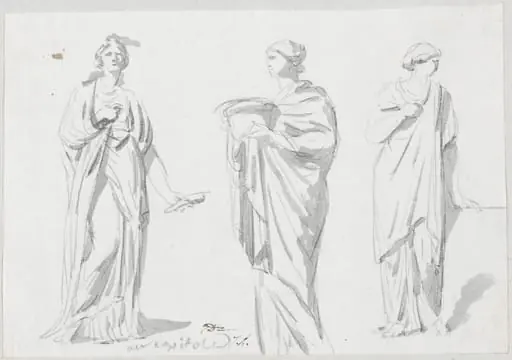 A Muse and Two Female Figures
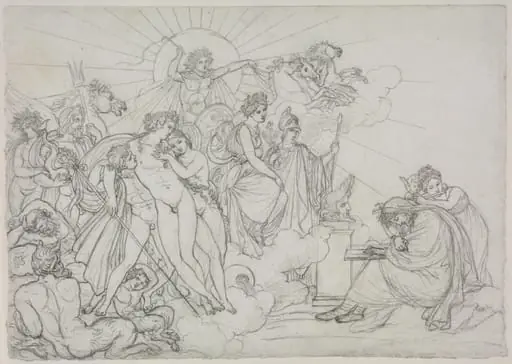 Invocation to the Divinities who preside over Agriculture from Virgil's "Georgics"
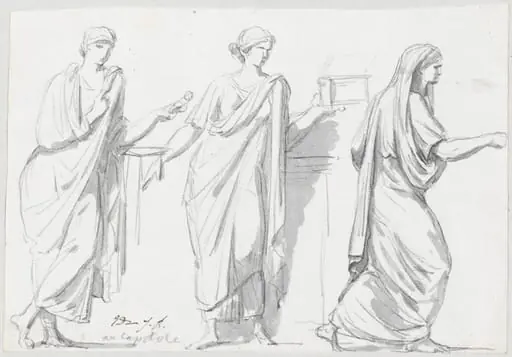 Figures from the Sarcophagus of the Muses
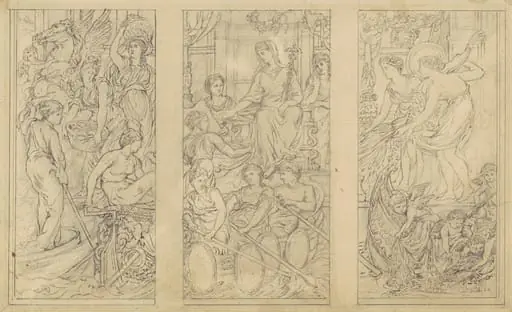 Study for "Commerce"
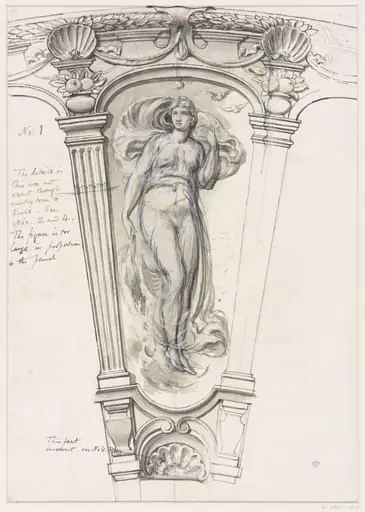 Measured drawing of a section of the design, E. 5303-1919
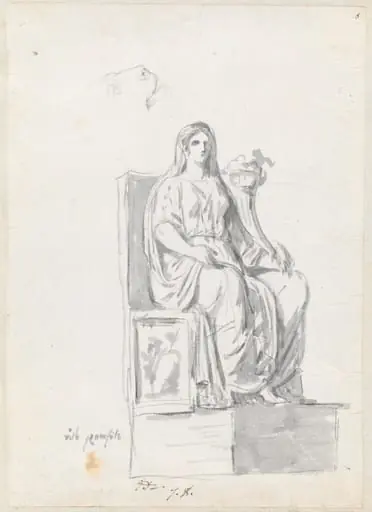 Abundance and the Face of a Lion, from the Villa Pamphili
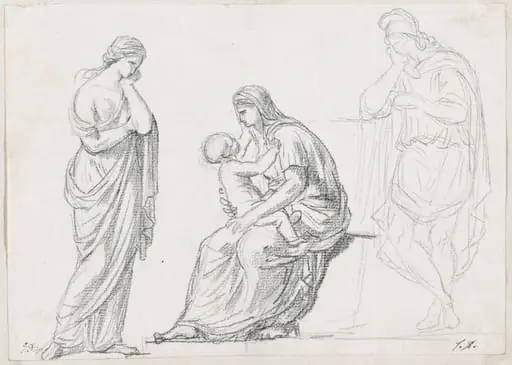 Mother and Child Flanked by Two Standing Figures
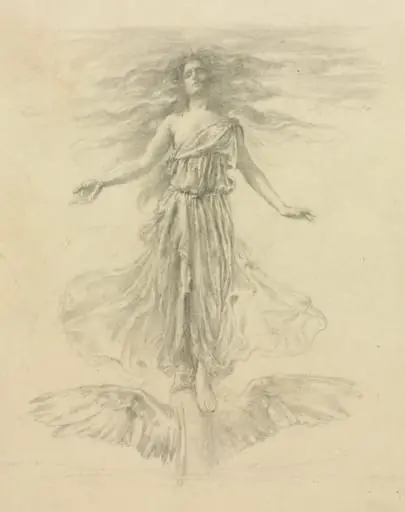 Fortune
 Fragments d'Architecture, Sculpture et Peinture dans le Style antique
 Bacchus and Ariadne