Artwork
Muhammad Ali Khan, Nawab of Arcot
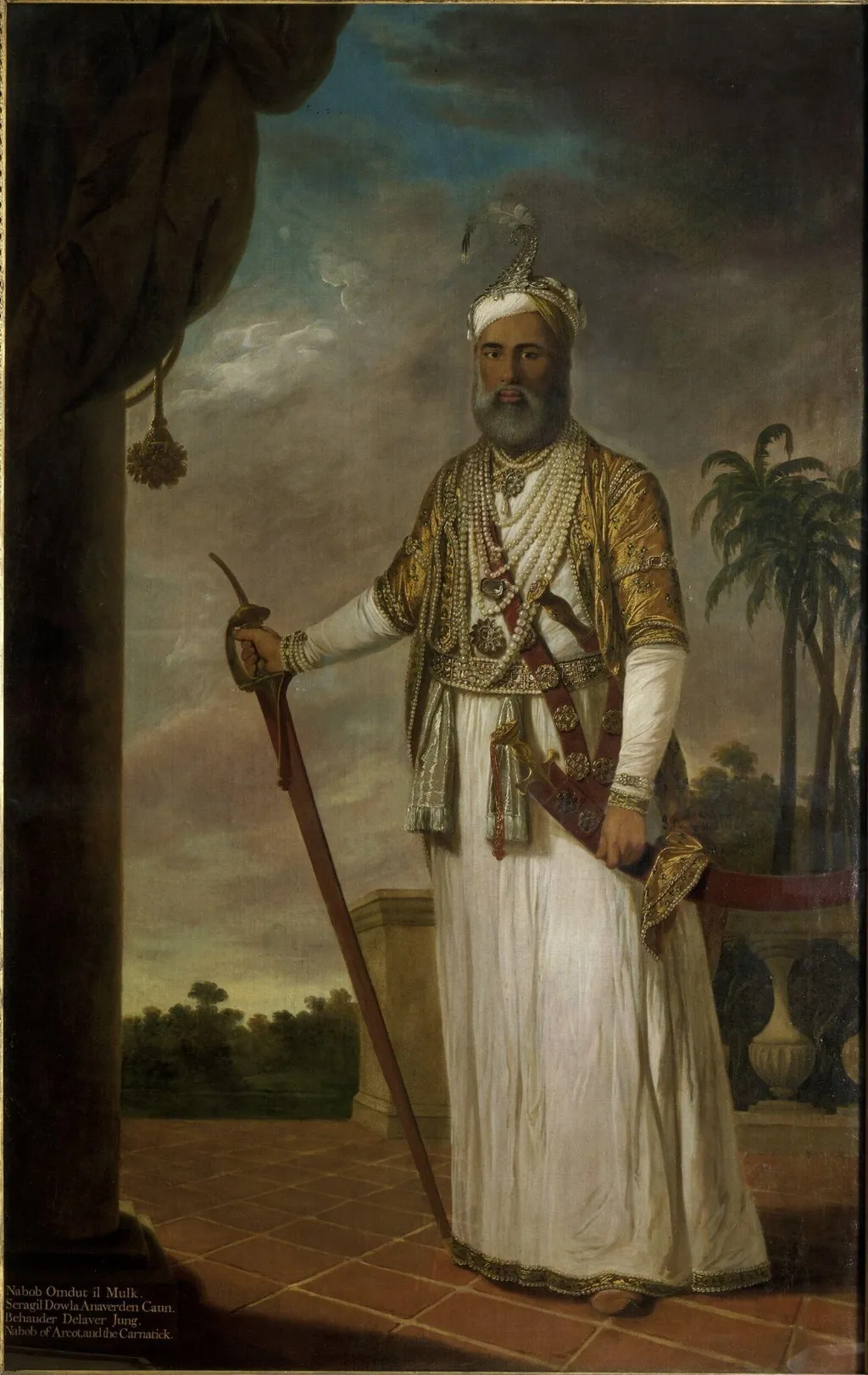
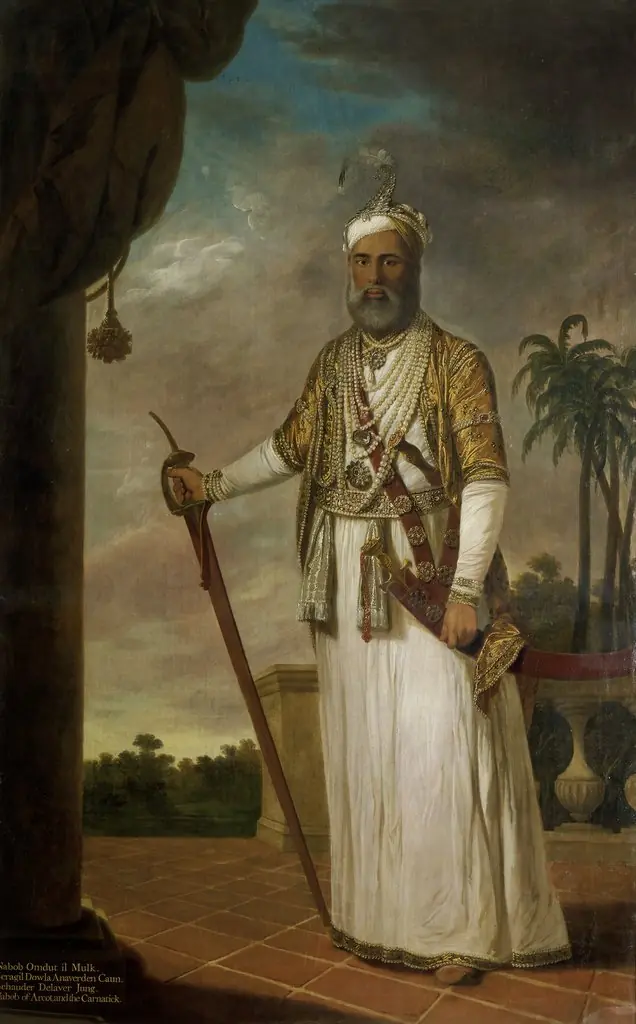
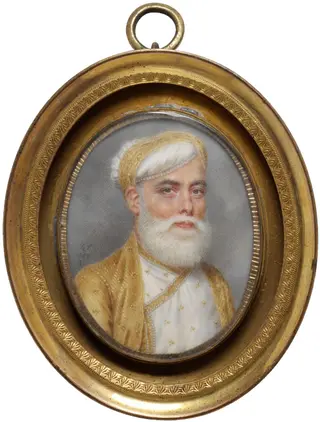
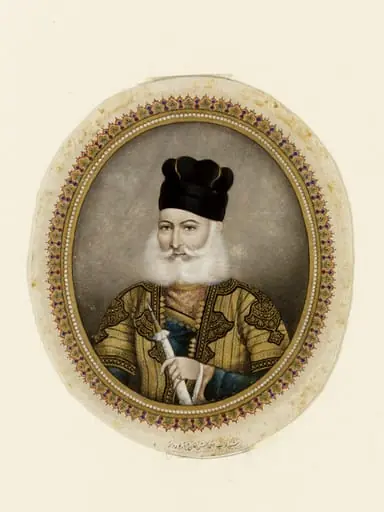
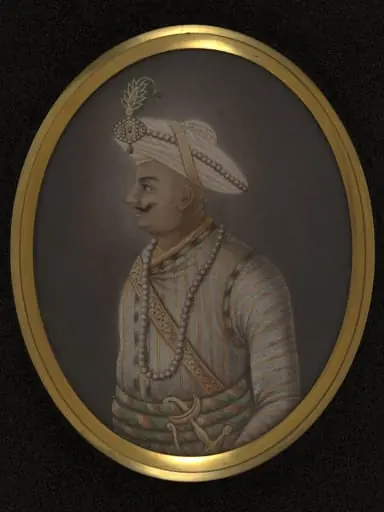
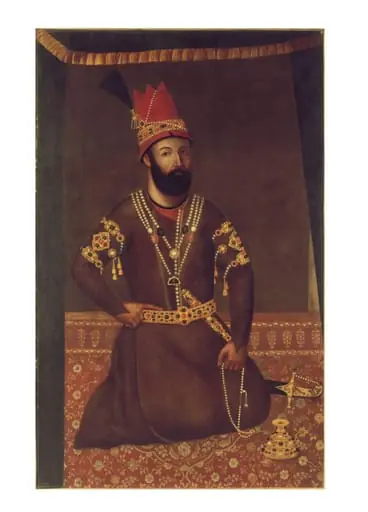
Muhammad Ali Khan, Nawab of Arcot is a paint painting by the Patna School of Painting artist Tilly Kettle. It dates from 1774 and is held in the collection of the Victoria and Albert Museum.
About this work
Overview
This portrait depicts Muhammad Ali Khan, Nawab of Arcot, in a formal pose, exemplifying the early influence of Western painting on Indian courts.
Subject & Meaning
The subject, Muhammad Ali Wallajah, was installed as Nawab by the British in 1749. His reign was marked by financial struggles, ultimately leading to the surrender of much of his kingdom to the East India Company.
Technique & Style
The artist, Tilly Kettle, employed chiaroscuro to capture the textures and colors of the Nawab's attire and surroundings, creating a detailed and nuanced representation.
History & Provenance
Tilly Kettle, a British portrait painter, arrived in Madras in 1769 and gained success among East India Company officials, leading to the commission for this portrait.
Own this work as a print
Artist & collection
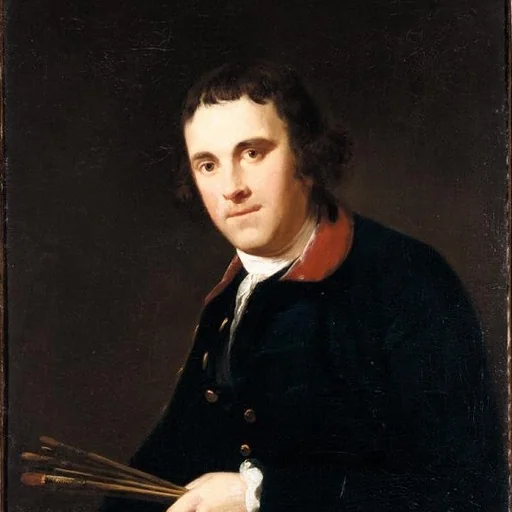
Artist
Tilly Kettle (1735 – 1786) was an English painter who specialised in portrait painting. He was the first British painter to operate in Colonial India.