Artwork
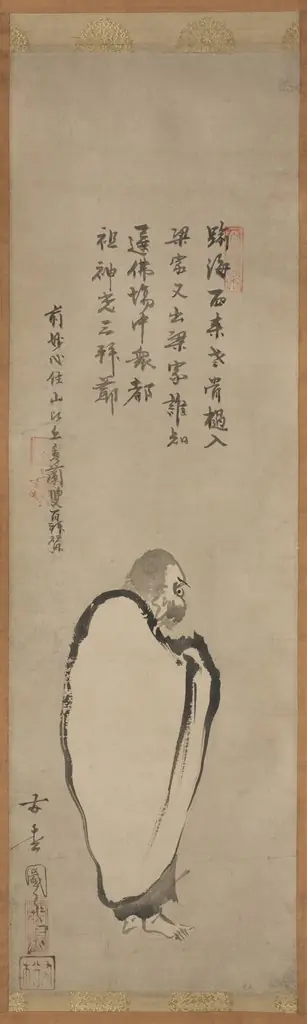
Tenjin Traveling to China
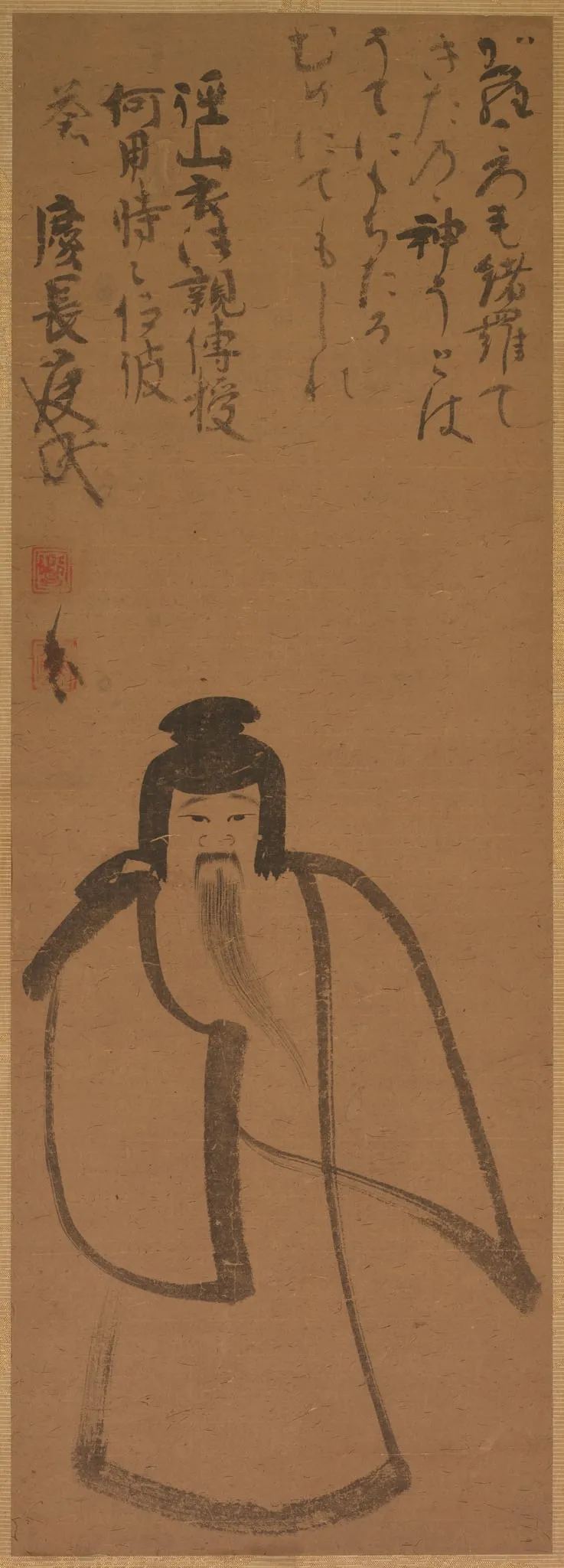
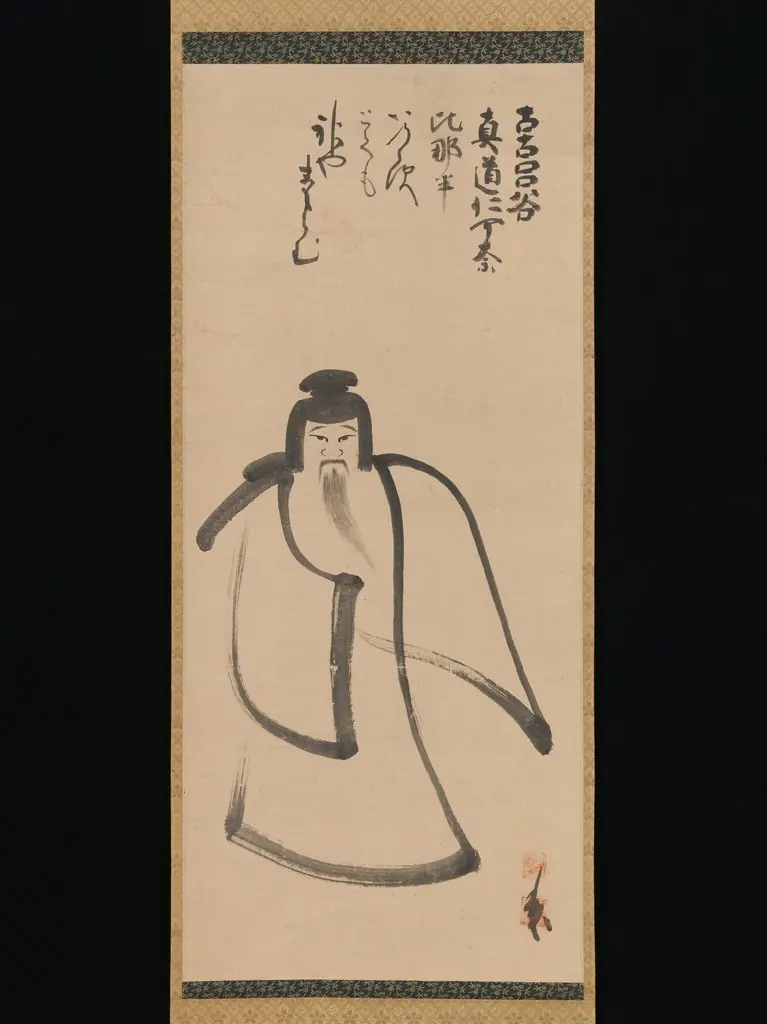
Tenjin Traveling to China is an unspecified painting by the Baroque artist Konoe Nobutada. It dates from 1610 and is held in the collection of the Cleveland Museum of Art.
- Accession no.
- 2015.456
- Credit line
- Gift from the Collection of George Gund III
About this work
Overview
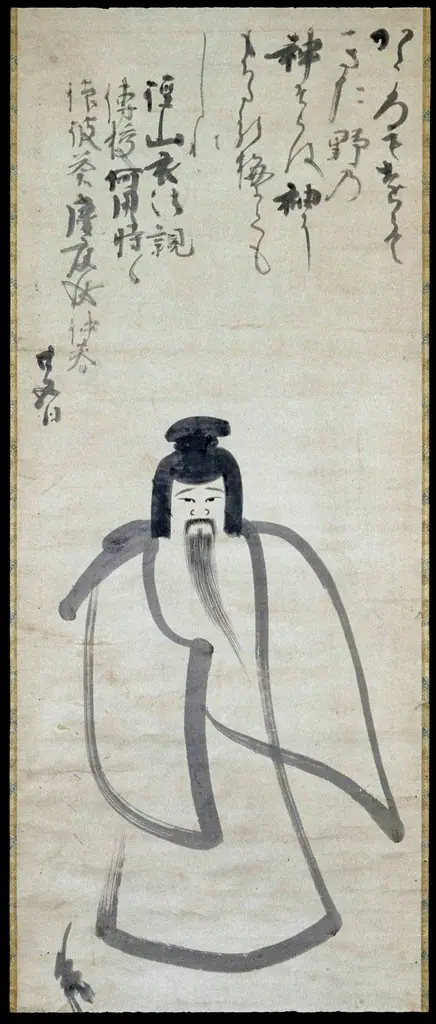
Created in 1610 by Konoe Nobutada, this ink painting depicts a solitary figure associated with the deified scholar Sugawara no Michizane, known as Tenjin.
Created in 1610 by Konoe Nobutada, this ink painting depicts a solitary figure associated with the deified scholar Sugawara no Michizane, known as Tenjin. Executed during the Momoyama period, the work reflects a tradition of spiritual portraiture in Japanese ink painting. The composition is deliberately sparse, emphasizing the figure’s presence through minimal background elements and calligraphic inscriptions.
Subject & Meaning
The figure represents Tenjin, the deified form of Sugawara no Michizane, a 9th-century court scholar and poet. According to legend, after his death, he was believed to have traveled to China as a spirit. The curved sword and scholarly attire suggest his dual identity as both intellectual and divine protector. The plain background underscores his transcendence, isolating him as a figure beyond earthly concerns.
Technique & Style
The painting employs bold, unmodulated ink brushwork typical of Momoyama-era ink painting. Strong black outlines define the figure’s form, while the robes and beard are rendered with swift, confident strokes. The background remains largely untouched, allowing the calligraphic text to function as both inscription and compositional element. The restrained palette and absence of color emphasize monochrome elegance and spiritual focus.
History & Provenance
Commissioned during the early 17th century, the work was likely created for a religious or scholarly context, possibly linked to Tenjin worship. It entered the collection of The Cleveland Museum of Art in the 20th century, having passed through private Japanese collections prior. Its preservation reflects its status as a rare surviving example of Konoe Nobutada’s religious portraiture.
Context
Produced in the Momoyama period, a time of political unification and cultural synthesis, the painting draws from Chinese ink traditions while asserting Japanese spiritual identity. The depiction of Tenjin’s journey to China resonates with contemporary interest in Sino-Japanese cultural exchange and the blending of Buddhist, Shinto, and Confucian ideals. Such works served both devotional and intellectual purposes among elite circles.
Legacy
This painting exemplifies the Momoyama period’s shift toward expressive, individualized portraiture in ink. Though not widely reproduced, it influenced later depictions of deified scholars in Japanese art. Its minimalist aesthetic and spiritual tone continue to inform modern interpretations of Japanese ink painting, preserving a quiet but enduring connection between historical belief and visual form.
Artist & collection