Artwork
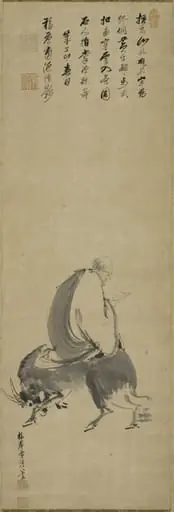
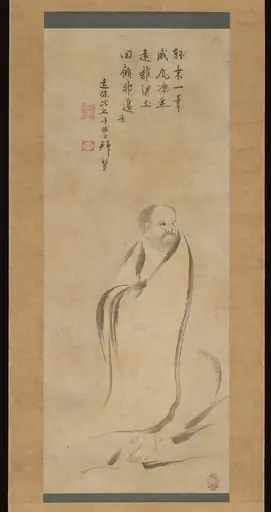
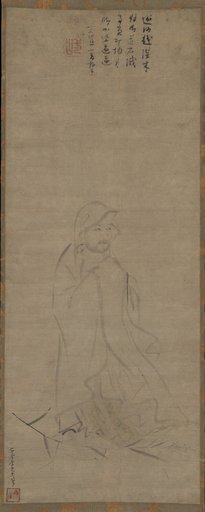
元 李堯夫,一山一寧題贊 達摩渡江圖 軸|Bodhidharma crossing the Yangzi River on a reed
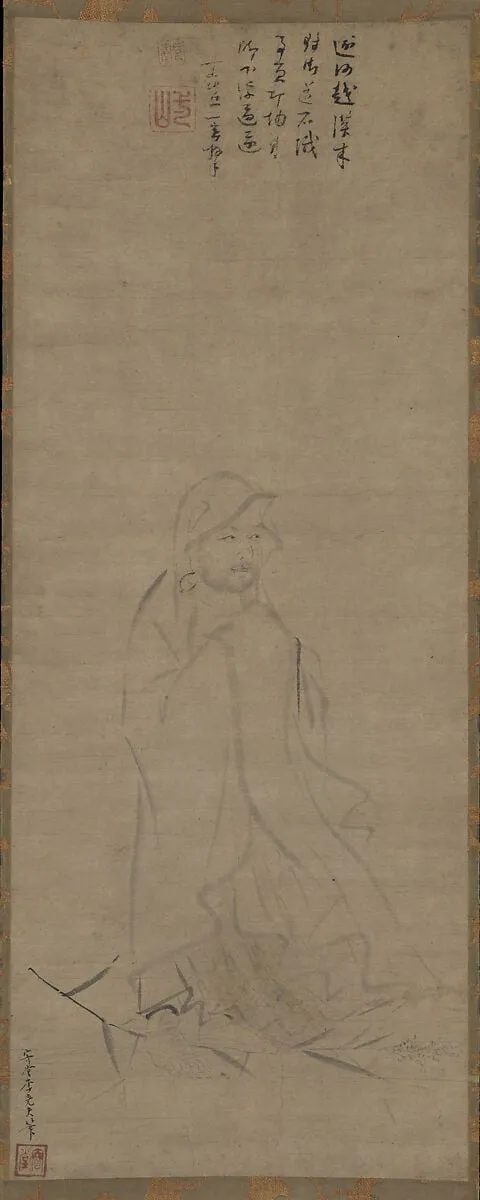
元 李堯夫,一山一寧題贊 達摩渡江圖 軸|Bodhidharma crossing the Yangzi River on a reed is an ink painting by the Song dynasty landscape artist Li Yaofu. It dates from 1317 and is held in the collection of the Metropolitan Museum of Art.
About this work
Subject & Meaning
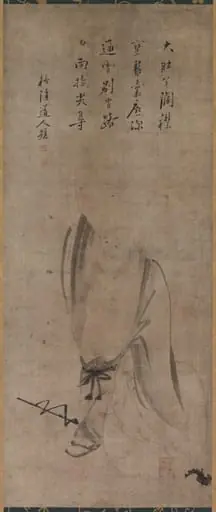
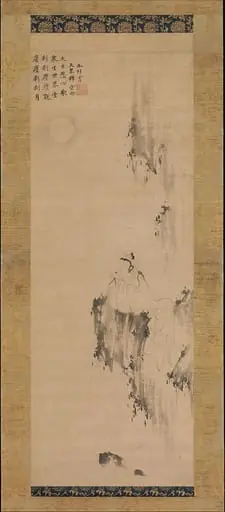
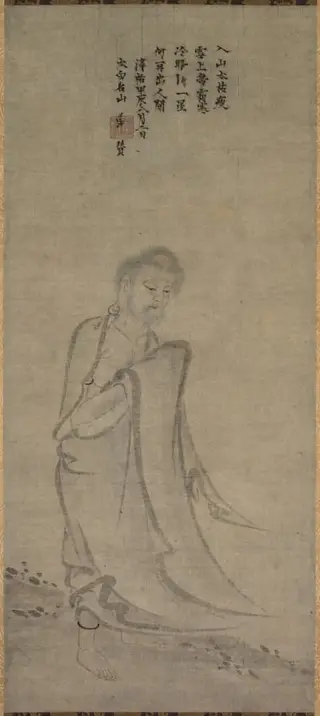
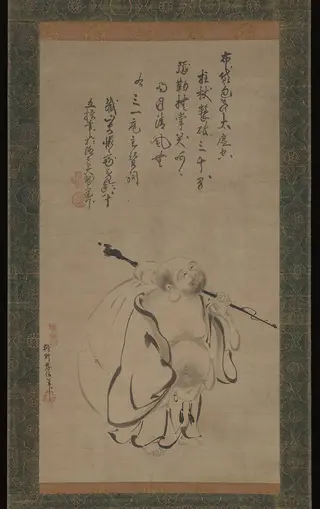
The hanging scroll portrays the Buddhist patriarch Bodhidharma traversing the Yangzi River on a reed, a scene that symbolizes the transmission of Zen doctrine across water, a metaphor for spiritual passage and the crossing of worldly bounds. Rendered in ink on paper in 1293 by Li Yaofu, the work belongs to the religious art genre and depicts a solitary man engaged in a contemplative act, emphasizing the monk's role as a conduit of enlightenment. The composition draws on traditional iconography of the wandering sage, using the river as a visual allegory for the journey of teaching from India to China, thereby embodying the spread and adaptation of Buddhist thought in Song‑era China.
Technique & Style
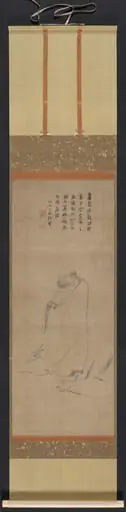
The work is executed as a hanging scroll in monochrome ink on paper, a traditional East Asian format suited to vertical display.
The work is executed as a hanging scroll in monochrome ink on paper, a traditional East Asian format suited to vertical display. Li Yaofu employs the brush-and-ink technique characteristic of Yuan-dynasty religious painting, rendering the Buddhist subject with restrained tonal modulation rather than color. The composition adheres to the conventions of Chan iconography, presenting the figure of Bodhidharma in a vertical axis that emphasizes the solitary, contemplative narrative of his legendary river crossing.
The paper support and ink medium are consistent with the period's monastic and literati painting practices, in which calligraphic brushwork conveys both form and spiritual presence.
History & Provenance
Created in 1293 during the Yuan dynasty, this hanging scroll on paper was executed by the artist Li Yaofu in China. The work depicts the Buddhist figure Bodhidharma crossing the Yangzi River on a reed and features inscribed praise by the monk Yishan Yining. Currently held in the collection of the Metropolitan Museum of Art, the piece is classified as a religious painting.
While the specific commission details and the full chain of ownership prior to its arrival at the museum are not detailed in the available records, the work's inception is firmly dated to the year 1293. It represents a significant example of Yuan dynasty religious art produced in China, linking the visual depiction with textual commentary from the period.
The hanging scroll by Li Yaofu titled “Bodhidharma Crossing the Yangzi River on a Reed” is housed in the Metropolitan Museum of Art in New York. It belongs to the museum’s collection of Asian paintings and is recorded in the institution’s inventory of works acquired from Chinese sources. The piece dates to 1293, is classified as a religious painting, and depicts the Buddhist patriarch Bodhidharma.
No exhibition history is documented in the available sources, and the accession number has not been publicly disclosed.
Overview
This ink on paper hanging scroll, titled Bodhidharma crossing the Yangzi River on a reed, was created by Li Yaofu in 1317. The work is a religious painting that illustrates a pivotal narrative from Buddhist tradition. It captures the legendary figure of Bodhidharma, a monk credited with introducing Zen Buddhism to China, as he performs a miraculous journey across water.
Artist & collection
Artist
Li Yaofu painted bold ink-on-paper scrolls in the early Yuan dynasty, balancing sharp lines against empty space.