Artwork
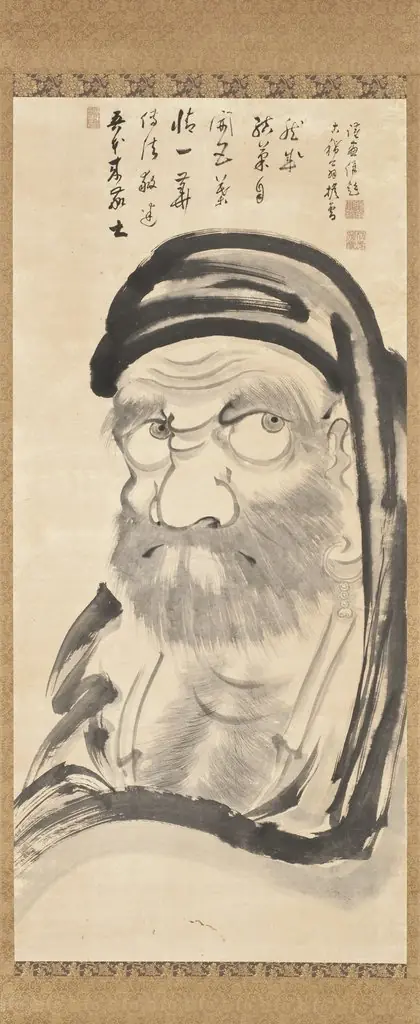
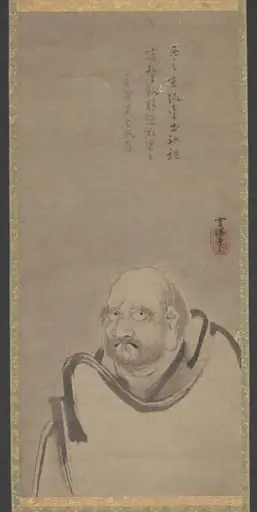
白隠慧鶴筆 達磨像|Portrait of Bodhidharma
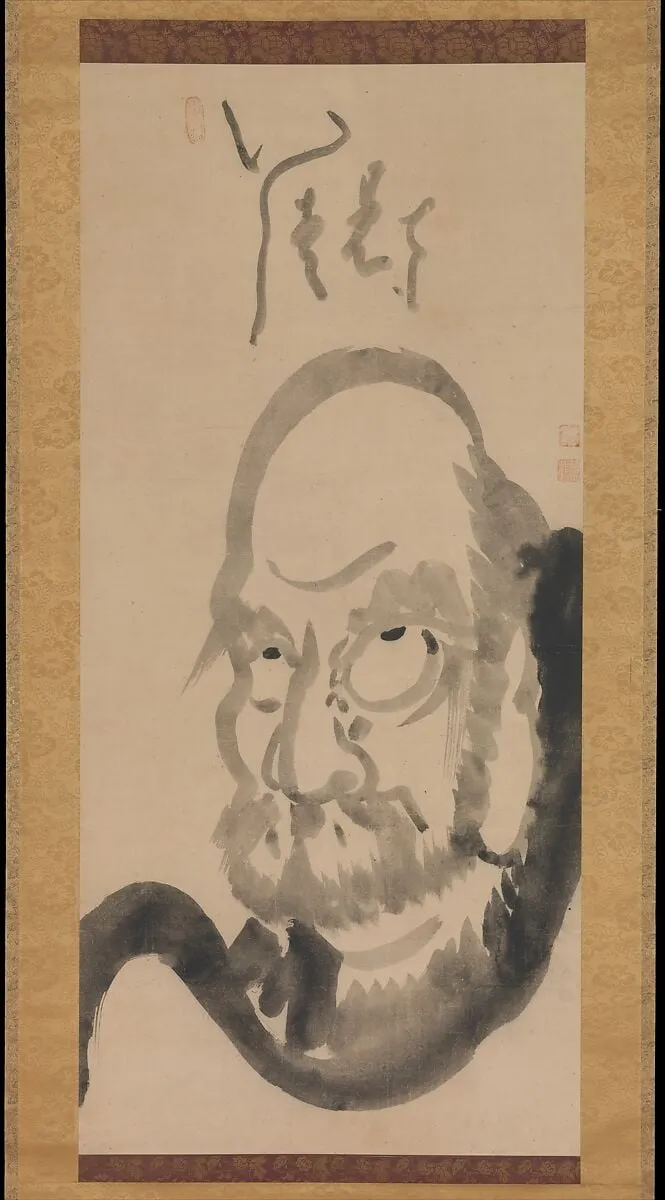
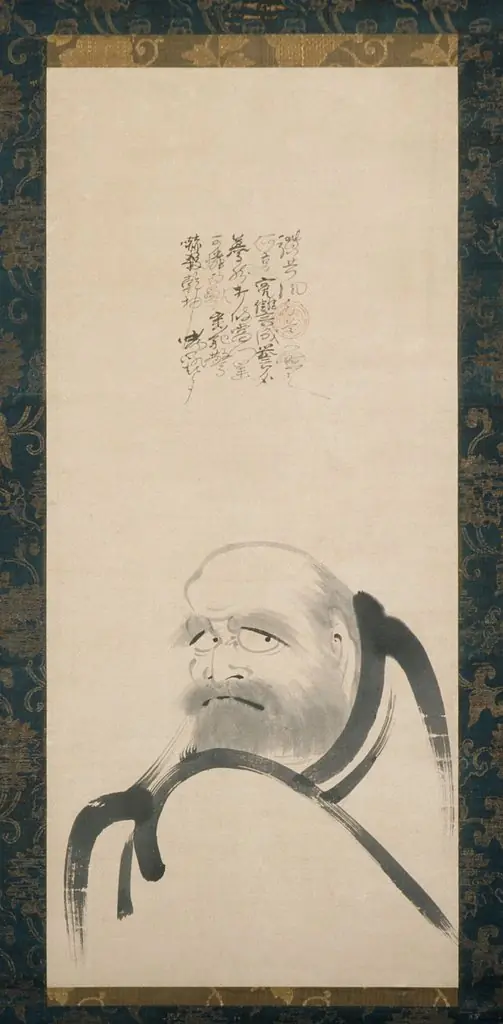
白隠慧鶴筆 達磨像|Portrait of Bodhidharma is an ink painting by the Baroque artist Hakuin Ekaku. It dates from 1750 and is held in the collection of the Metropolitan Museum of Art.
About this work
Technique & Style
The handling of the ink on the paper support reflects the traditional formats associated with Japanese painting of the mid-18th century.
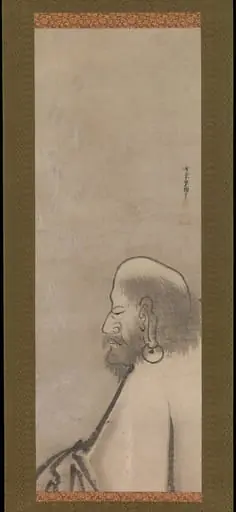
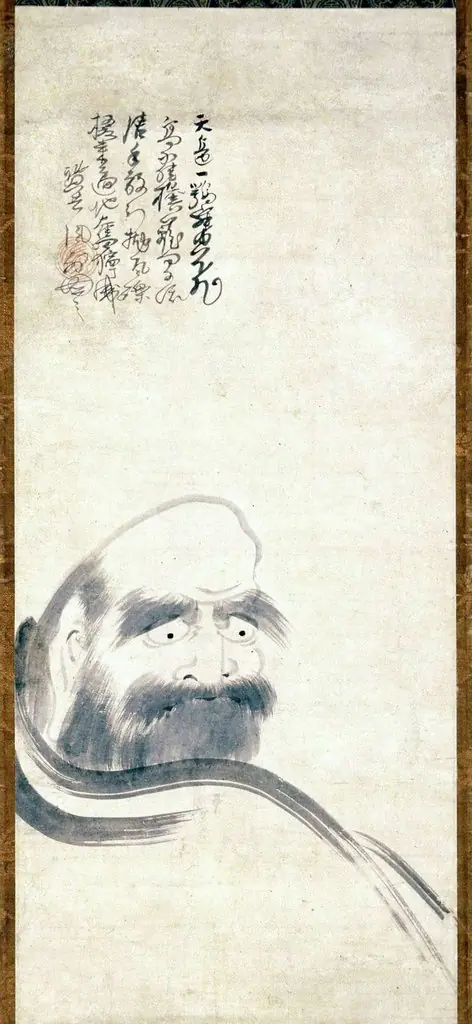
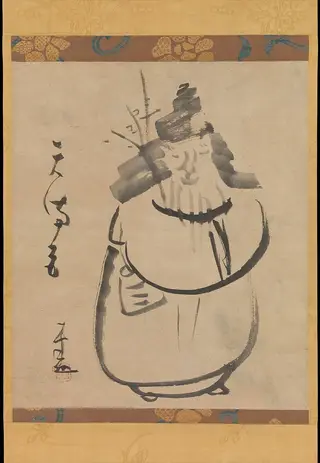
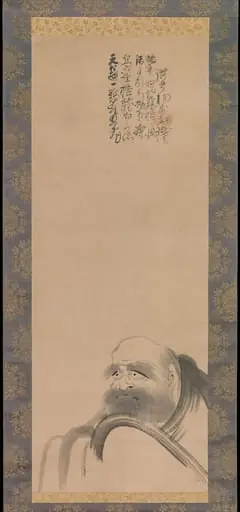
Created in 1750 by the Japanese artist Hakuin Ekaku, this portrait of Bodhidharma is executed as a hanging scroll. The work uses ink applied directly onto paper as its primary medium and support. Stylistically, the piece functions within the genre of portraiture, depicting a male figure through monochromatic means.
The handling of the ink on the paper support reflects the traditional formats associated with Japanese painting of the mid-18th century. While specific details regarding the current physical condition or the precise brushwork techniques are not elaborated upon in the available records, the formal classification remains consistent with ink wash paintings intended for vertical display.
History & Provenance
Portrait of Bodhidharma, executed in 1750 by the Japanese Zen master and painter Hakuin Ekaku, is a hanging scroll in ink on paper. The work belongs to the Paintings genre and depicts a man, reflecting Hakuin's portrait tradition. It entered the collection of the Metropolitan Museum of Art, where it remains, having been acquired through the museum's documented acquisition process. The painting's creation took place in Japan, consistent with the artist's activity during the mid-Edo period.
Overview
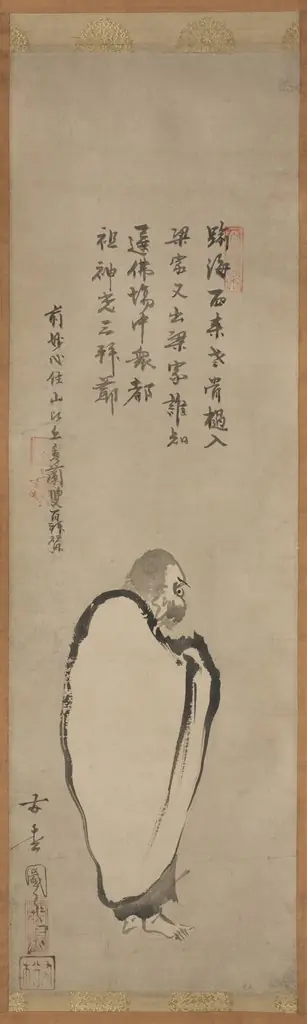
Created in 1750 by the Japanese Zen master Hakuin Ekaku, this hanging scroll depicts Bodhidharma, the semi-legendary Indian monk credited with transmitting Chan (Zen) Buddhism to China. Executed in ink on paper, the work exemplifies Hakuin's signature style of spontaneous, vigorous brushwork known as 'quick, bold portraits.' The composition centers on the figure of Bodhidharma, rendered with a scowling expression, wild eyebrows, and a thick beard, set against an expansive void of blank paper that emphasizes the subject's intense spiritual presence.
Hakuin produced hundreds of such portraits throughout his career, using them as teaching tools to convey Zen principles directly through visual form rather than text. Each iteration varies in detail and energy, reflecting the immediacy of the artist's hand. This specific work from 1750 demonstrates the master's mature technique, where wet ink creates dynamic textures and the minimalism of the background focuses the viewer's attention entirely on the monk's fierce determination.
The piece stands as a quintessential example of Edo-period Zen art, bridging religious devotion with expressive calligraphic painting.
Subject & Meaning
The central figure in this scroll is Bodhidharma, revered as the patriarch who introduced Zen Buddhism to East Asia. His image often symbolizes the rigorous discipline and profound insight central to Zen practice. Hakuin's portrayal, with its intense gaze and formidable presence, captures the monk's legendary resolve and spiritual power, serving as both a devotional image and an embodiment of Zen principles for practitioners.
Context
Hakuin Ekaku, a pivotal figure in the revival of Rinzai Zen in Japan, created hundreds of these Bodhidharma portraits throughout his career. Each rendition, while depicting the same subject, possesses individual characteristics, reflecting the artist's continuous engagement with the figure's spiritual significance. These works were often distributed to his students and followers, serving as teaching tools, spiritual reminders, and expressions of his own enlightened understanding.
Artist & collection