Artwork
River Village in a Rainstorm
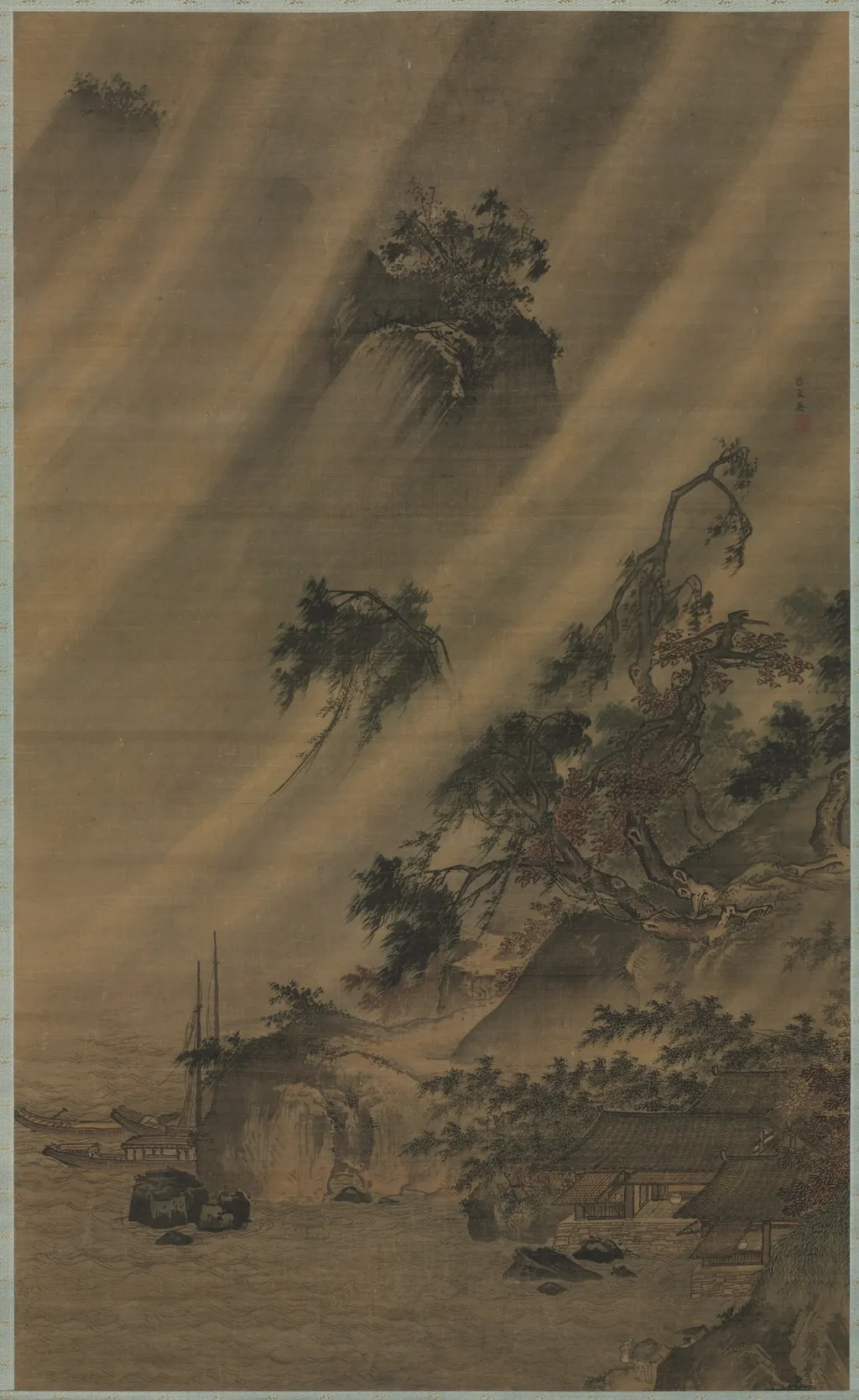
River Village in a Rainstorm is an unspecified painting by the Ming dynasty painting artist Lu Wenying. It dates from 1496 and is held in the collection of the Cleveland Museum of Art.
About this work
Technique & Style
The work is executed in ink and wash on paper, employing delicate brushwork to render atmospheric depth and the subtle gradations of a storm-laden sky.
The work is executed in ink and wash on paper, employing delicate brushwork to render atmospheric depth and the subtle gradations of a storm-laden sky. Lü Wenying’s handling of line emphasizes the fluid movement of rain, while compositional balance guides the eye through the village scene toward the distant horizon. The formal qualities combine restrained tonal modulation with a sense of spatial recession, reflecting traditional Chinese painting techniques of the late Ming period.
History & Provenance
River Village in a Rainstorm is a painting by Lü Wenying created in 1491 in China and is held by the Cleveland Museum of Art.
The work was collected by the Cleveland Museum of Art and remains in its collection.
Its creation date of 1491 is recorded in the source documentation.
The painting is classified as a work of art.
River Village in a Rainstorm is held by the Cleveland Museum of Art, which houses the painting in its collection. The work was created in China in 1491 by Lü Wenying.
No specific inventory or accession number is recorded in the available sources, and no exhibition history beyond its presence in the Cleveland Museum of Art's holdings is documented.
Overview
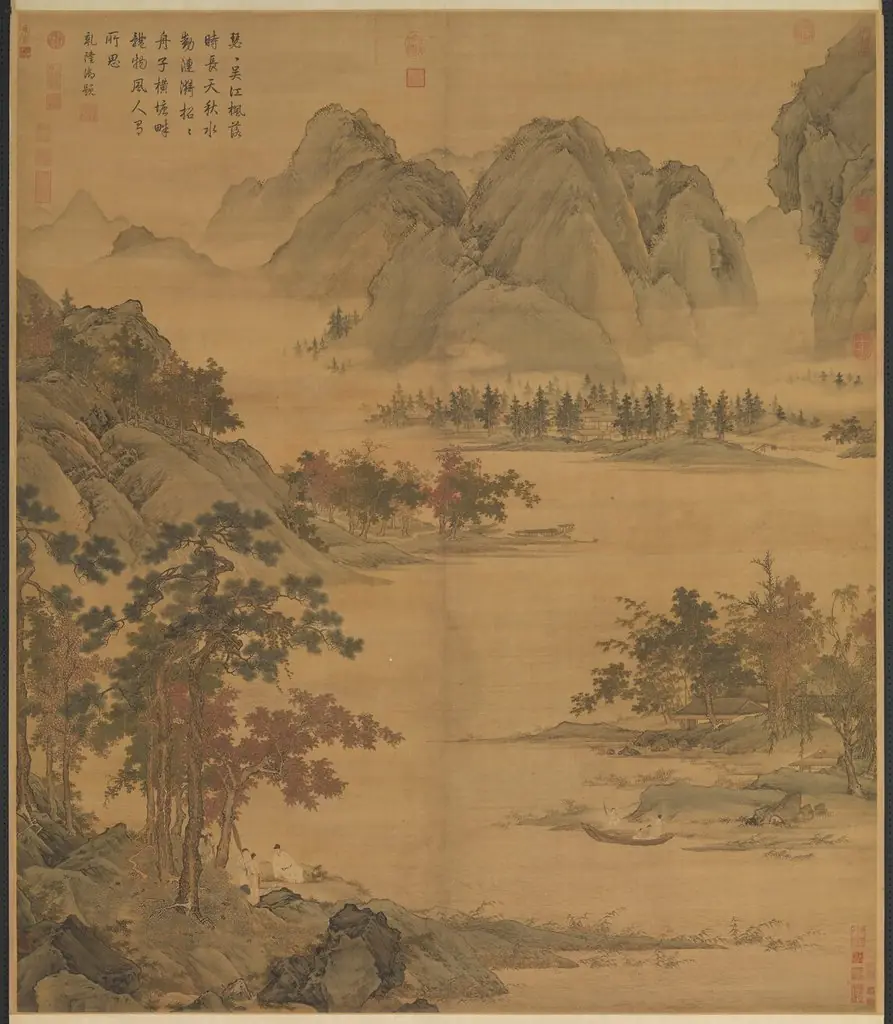
River Village in a Rainstorm, painted by Lü Wenying in 1496, is part of the collection at the Cleveland Museum of Art. The work depicts a small settlement situated alongside a river during a downpour, rendered with a muted palette that emphasizes the overcast atmosphere.
Subject & Meaning
The composition centers on a riverside community under heavy clouds, where a solitary tree arches its limbs over the water and a boat is secured to its trunk. Beyond this focal point, houses cling to a sloping hillside, suggesting a harmonious yet vulnerable relationship between human habitation and the natural elements.
Own this work as a print
Artist & collection

- Searching for Plum Blossoms
 Waiting for the Ferry on an Autumn River
 Landscape
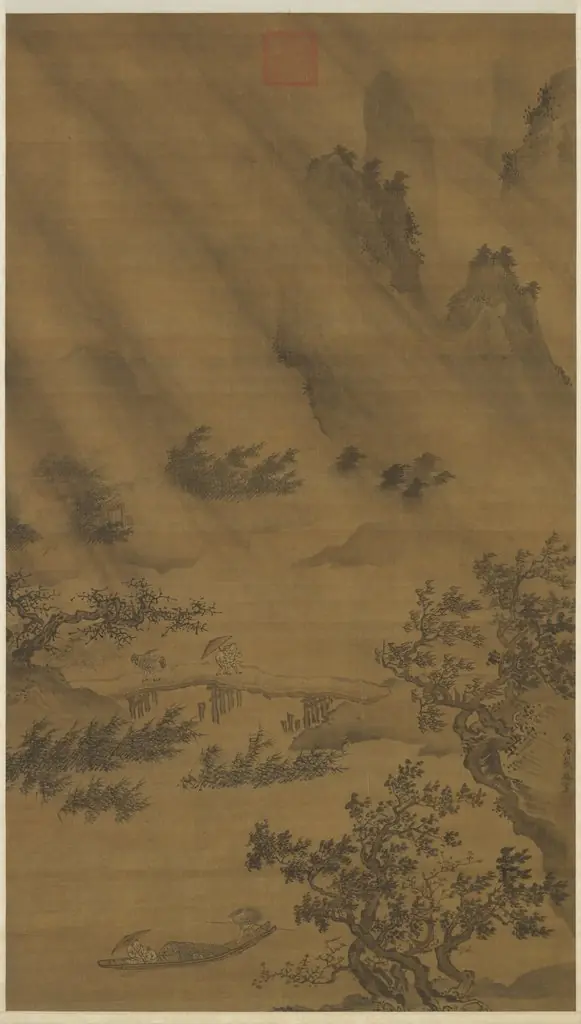 Boat Returing in Wind and Rain
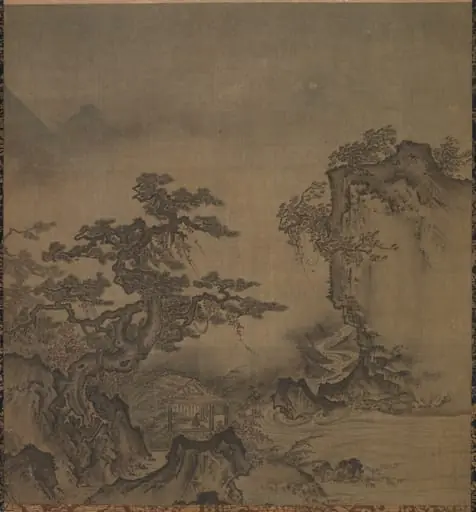 Landscape
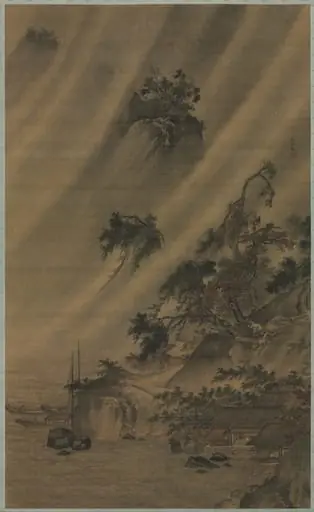 River Village in a Rainstorm
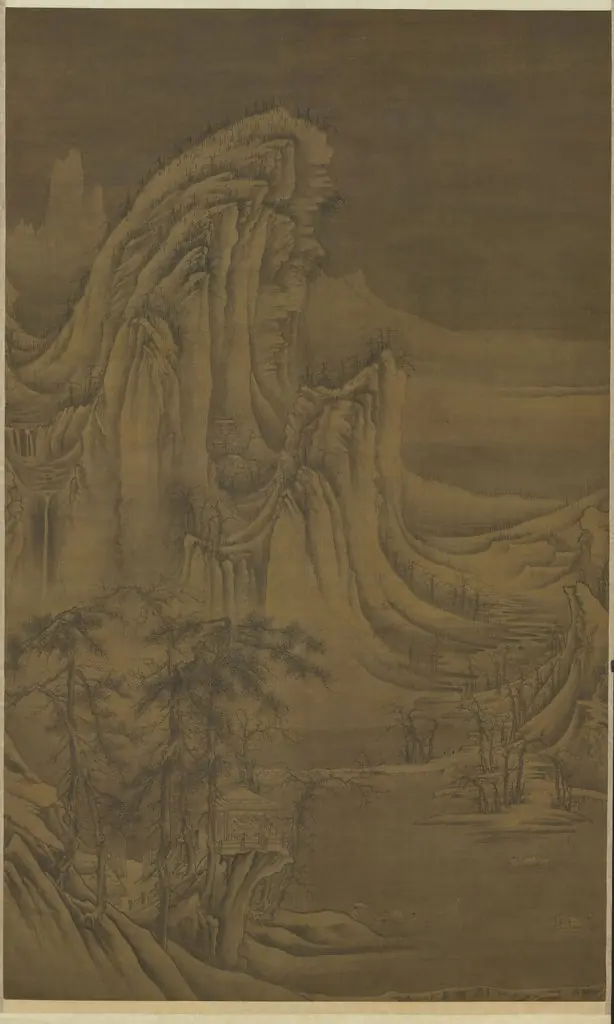 宋許道寧畫雪景 軸
 Mountain Market, Clear with Rising Mist
 Landscape
 Fishing Boat on a Wintry River
 Sunset Glow over a Fishing Village, from Eight Views of Xiao-Xiang
 明仇英秋江待渡 軸