Artwork
Cleopatra at Philae
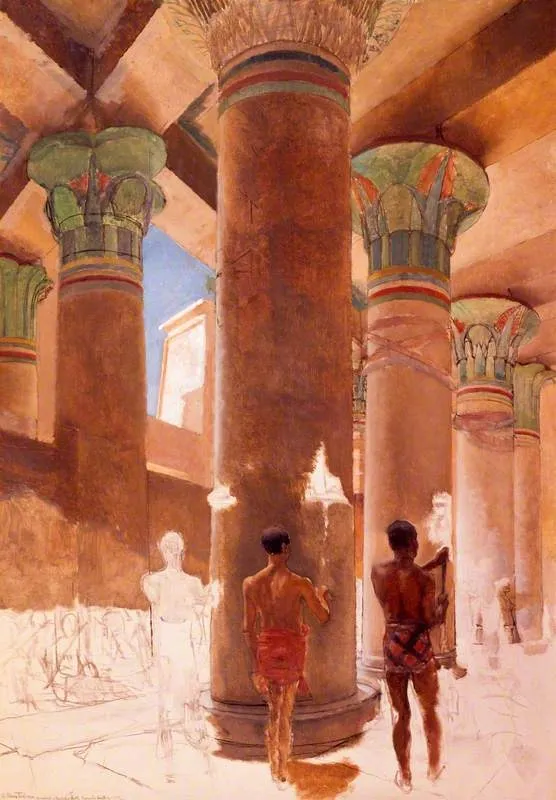
Cleopatra at Philae is an oil painting by the Aestheticist artist Lawrence Alma-Tadema. It dates from 1884 and is held in the collection of the Victoria and Albert Museum.
About this work
Overview
Sir Lawrence Alma‑Tadema’s oil painting Cleopatra at Philae, executed around 1884, presents a staged view of the Egyptian queen within an imagined classical sanctuary. The work is part of the Victoria and Albert Museum’s collection and exemplifies the Aesthetic movement’s fascination with historical romance and visual pleasure.
Subject & Meaning
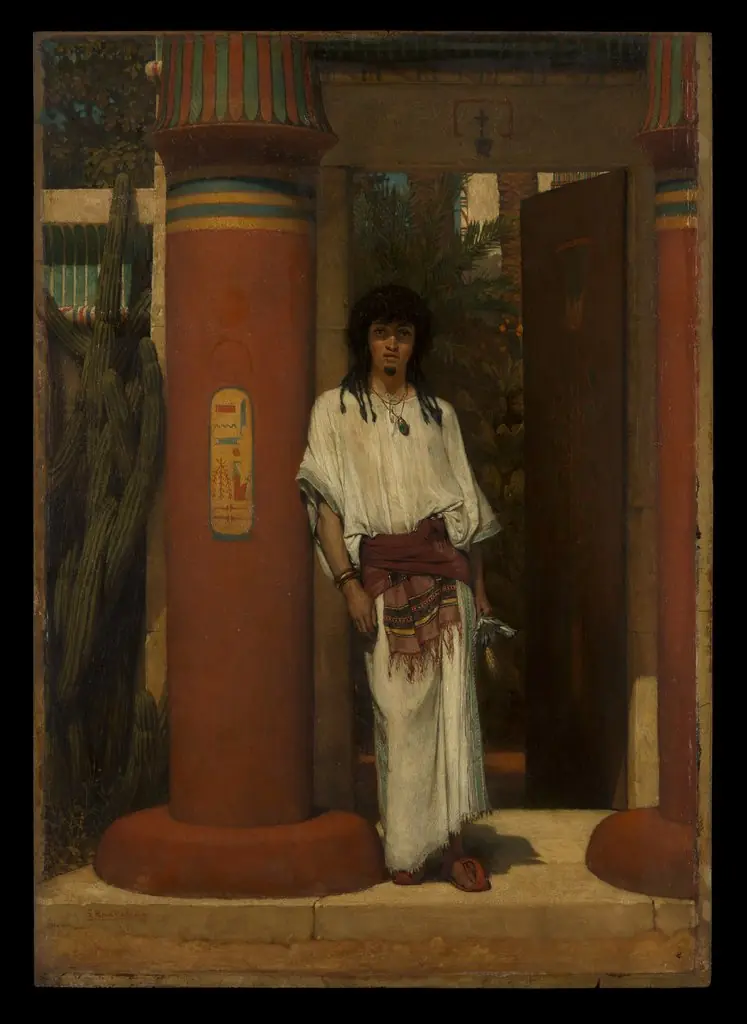
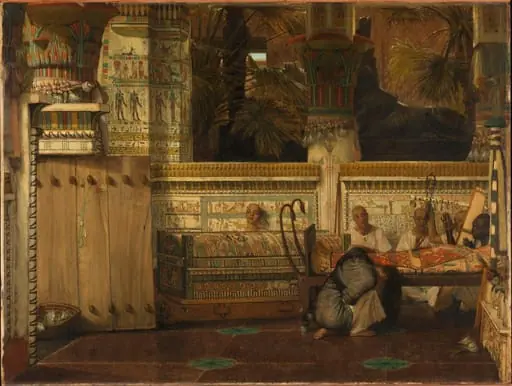
The composition centers on Cleopatra, suggested by the opulent surroundings rather than a direct portrait, as two male figures in patterned loincloths move away from the viewer. The setting, a temple with striped columns and a luminous doorway, evokes the mythic aura of Philae, linking the queen’s legendary allure to a timeless, exotic landscape.
Technique & Style
Alma‑Tadema employs a meticulous, almost photographic approach to architectural detail, rendering the columns in warm, earthen hues while allowing a bright blue sky to filter through the entrance. The contrast between the richly textured fabrics and the smooth stone surfaces creates depth, and the soft, diffused light from the left enhances the scene’s serene, staged quality.
History & Provenance
Born in the Netherlands in 1836, Alma‑Tadema trained at the Royal Academy of Antwerp before establishing his career in London in 1870. Known for historically precise depictions of ancient Rome and Egypt, he produced Cleopatra at Philae during the height of his popularity. The painting entered the Victoria and Albert Museum’s holdings in the early 20th century, where it remains on display.
Context
The work reflects the late‑19th‑century Aesthetic movement’s emphasis on beauty and decorative elegance over narrative drama. Alma‑Tadema’s fascination with archaeological discoveries of the period informed his careful rendering of Egyptian motifs, while his preference for tranquil, balanced compositions aligns the piece with contemporary tastes for refined, historically imagined scenes.
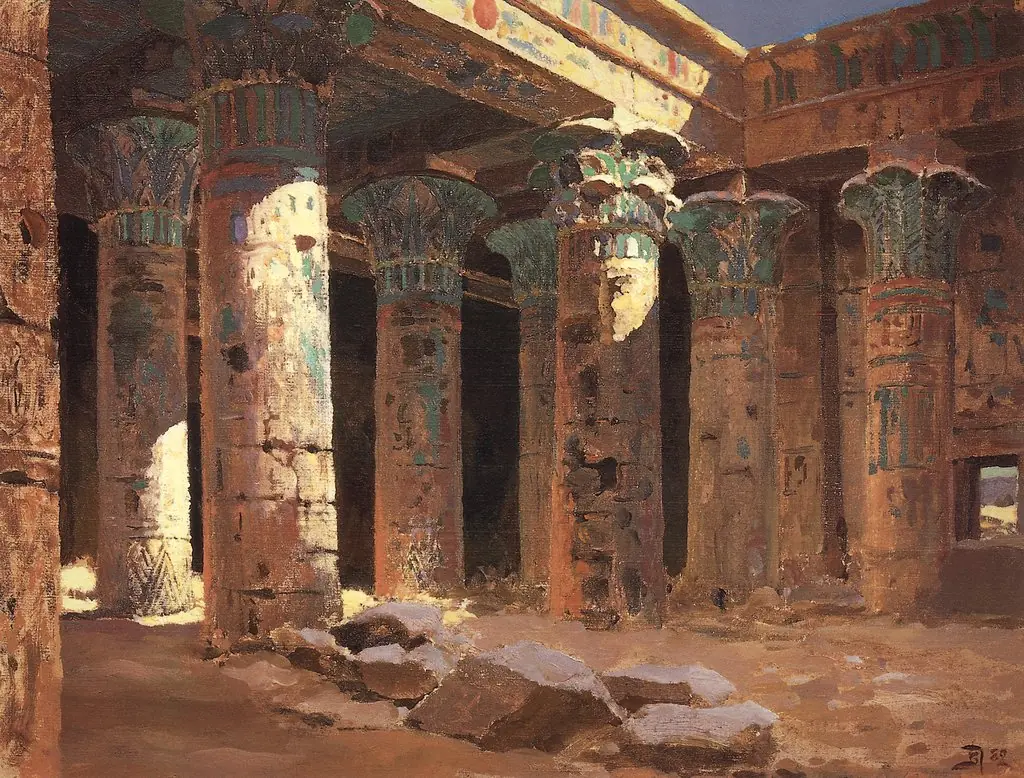
Artist & collection
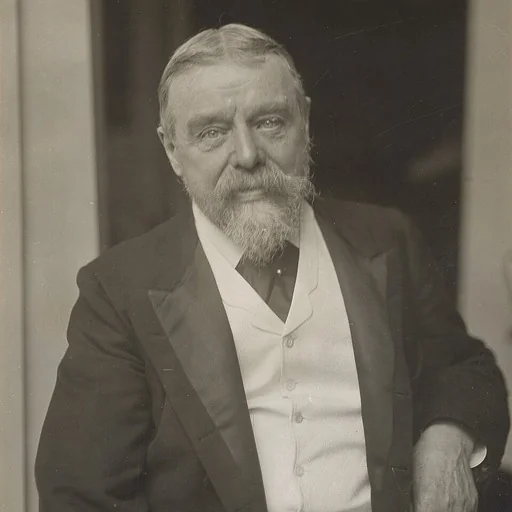
Artist
Sir Lawrence Alma-Tadema ( AL-mə TAD-ay-mə; born Lourens Alma Tadema, Dutch:; 8 January 1836 – 25 June 1912) was a Dutch painter who later settled in the United Kingdom, becoming the last officially recognised denizen in 1873.

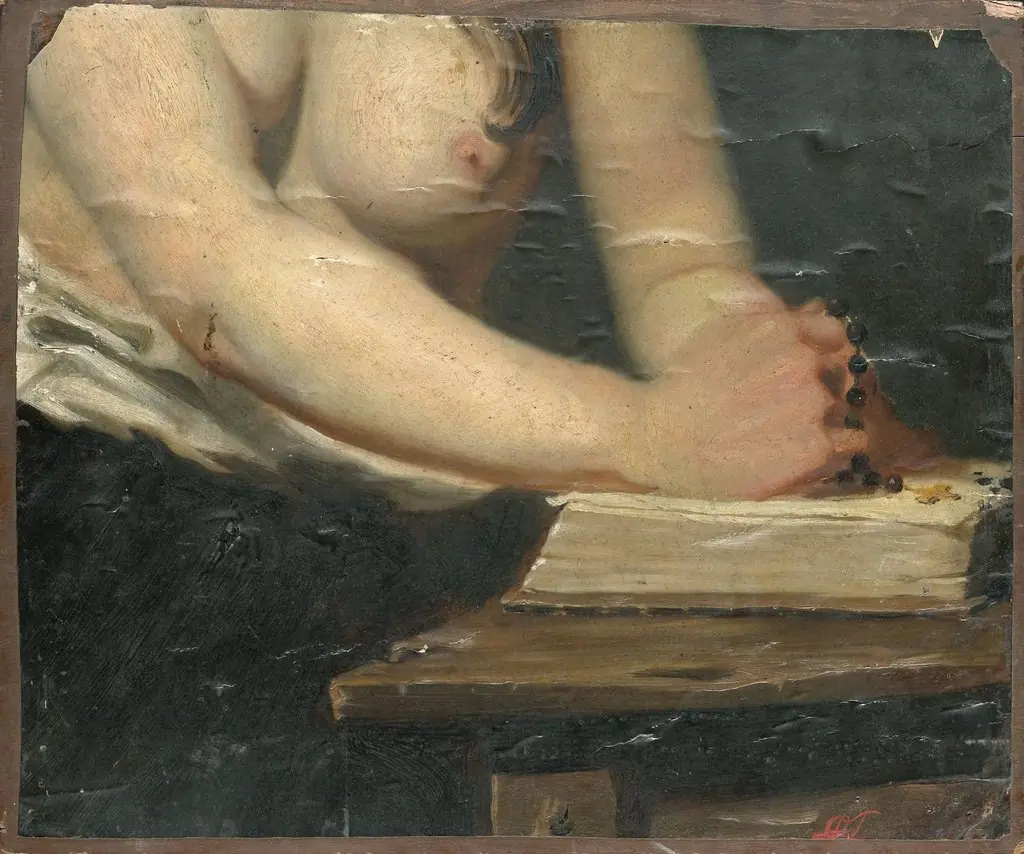
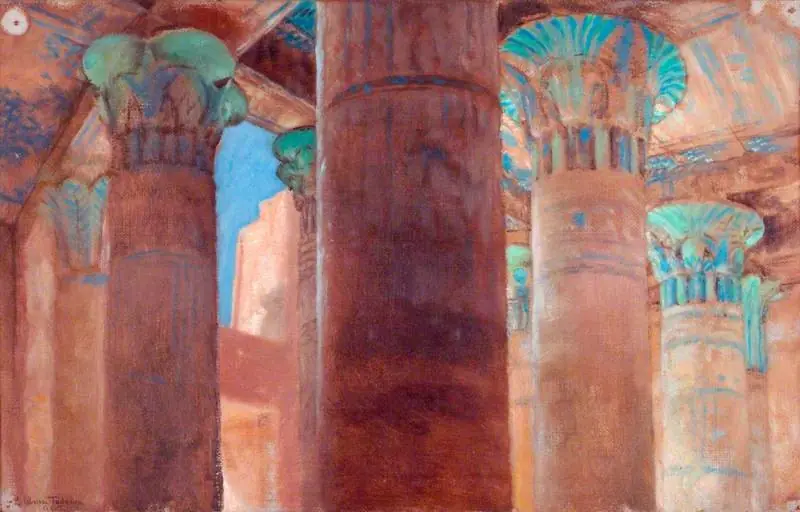 Study of Columns at Philae
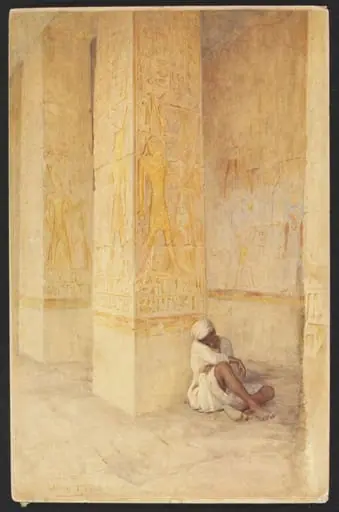 The Temple of Hatshepsoo at Thebes
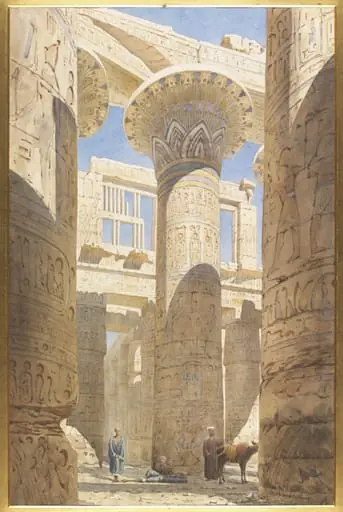 Karnac - Gt Hall of Columns View across central avenue
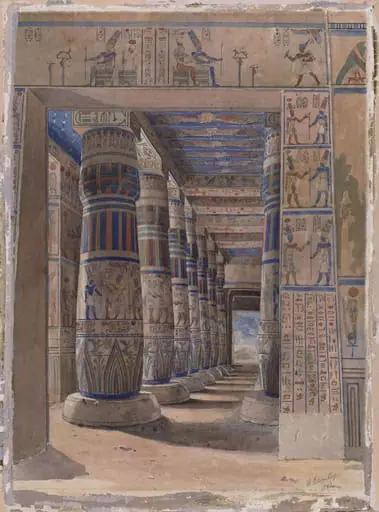 Interior of Crystal Palace, Egyptian Court, columns from the Temple of Karnak
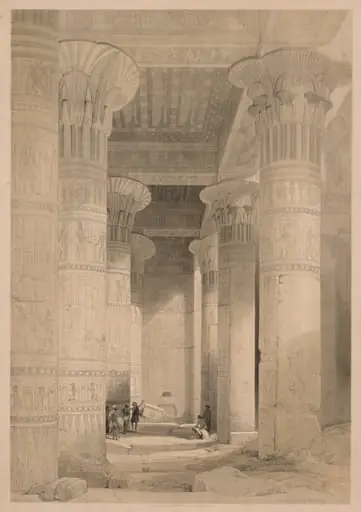 Egypt and Nubia: Volume I - Frontispiece, View under the Grand Portico, Philae
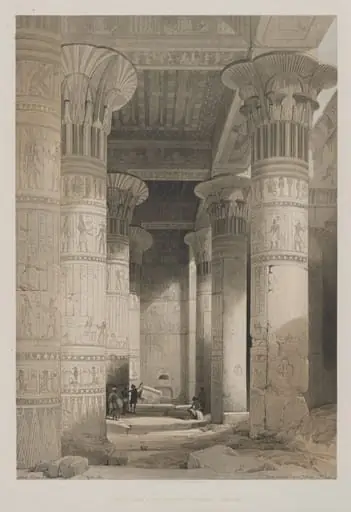 Egypt and Nubia, Volume I: View Under the Grand Portico of the Temple, Philae
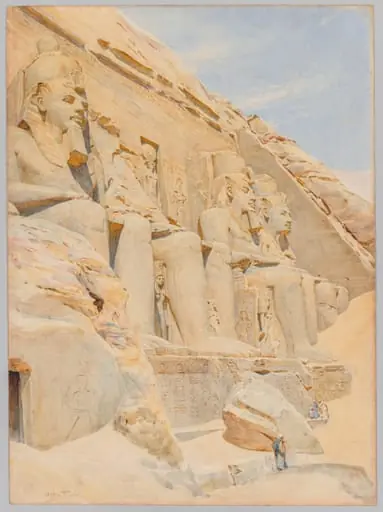 The Great Temple of Abu Simbel
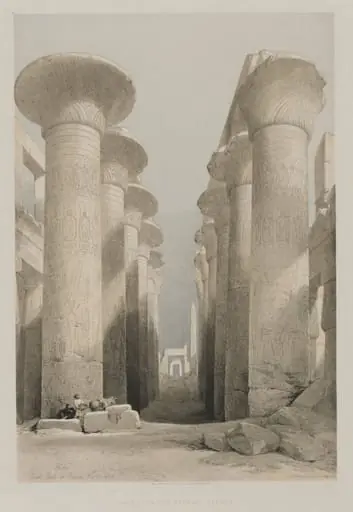 Egypt and Nubia, Volume I: Thebes, Great Hall at Karnac
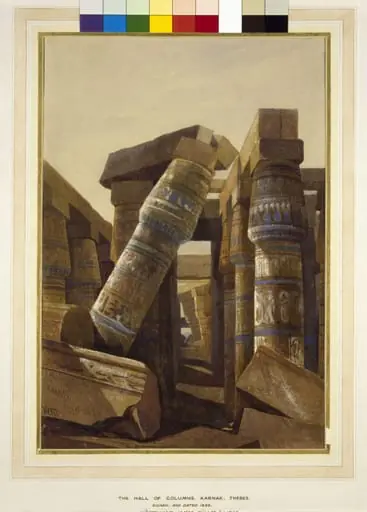 The Hall of Columns at Karnak, Thebes