Artwork
Death of the Pharaoh's Firstborn Son
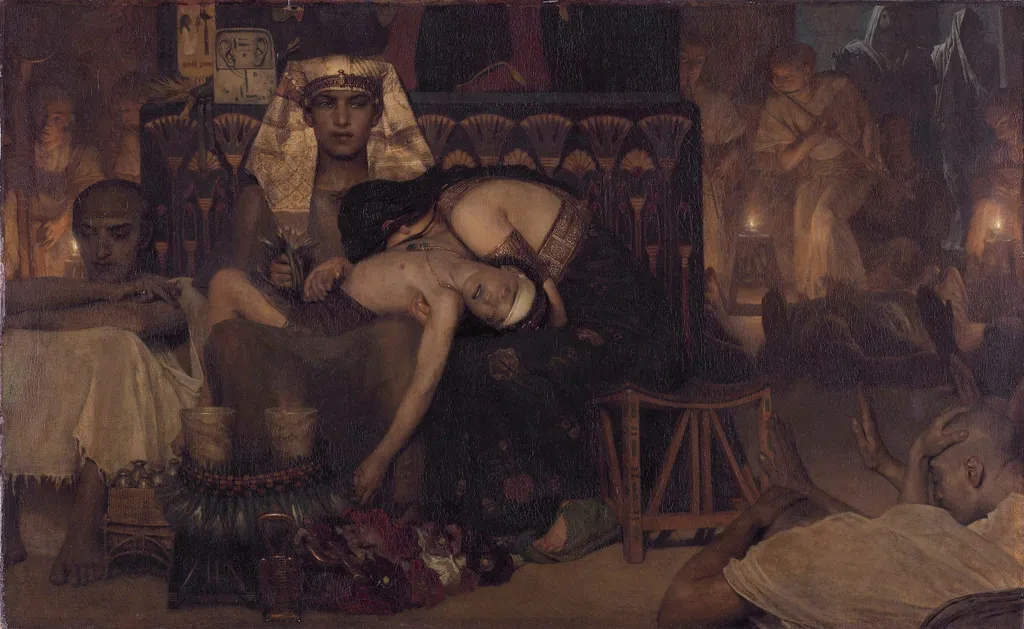
Death of the Pharaoh's Firstborn Son is an oil painting by Lawrence Alma-Tadema. It dates from 1872 and is held in the collection of the Rijksmuseum.
About this work
Subject & Meaning
The painting depicts the aftermath of the tenth plague of Egypt, where God strikes down the firstborn of the Pharaoh, as described in the Book of Exodus.
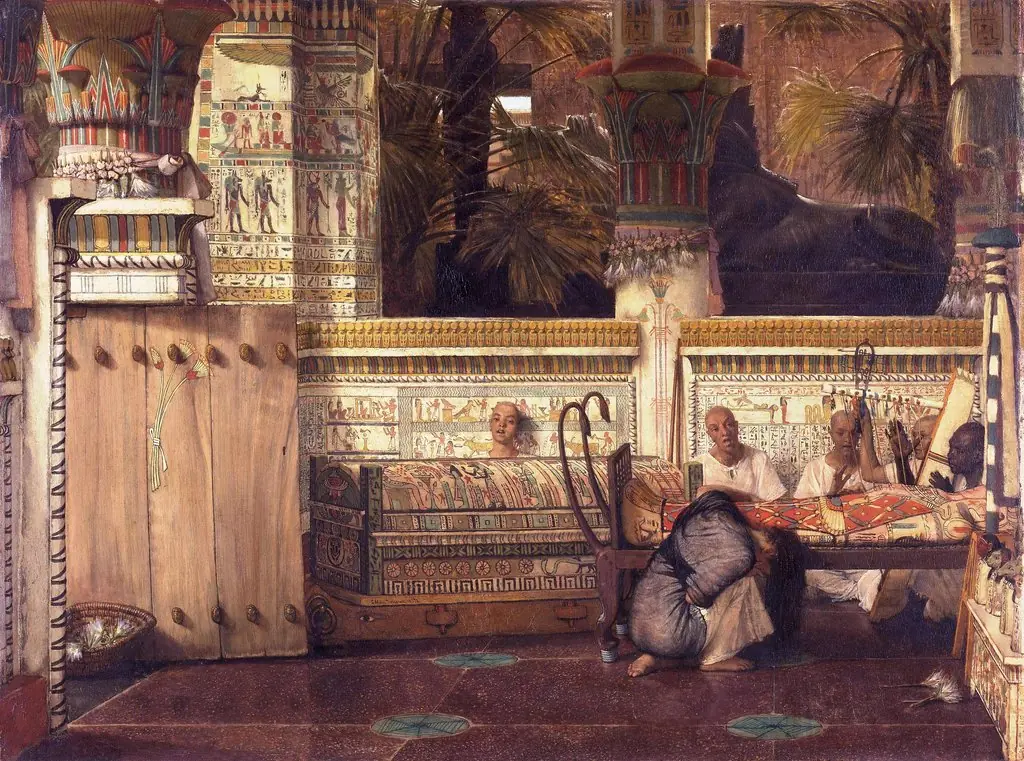
The painting depicts the aftermath of the tenth plague of Egypt, where God strikes down the firstborn of the Pharaoh, as described in the Book of Exodus. The scene focuses on the personal tragedy of the Egyptian royal family rather than the victory of Moses and Aaron, who appear in the background. The Pharaoh stares motionless like a granite statue while his wife grieves over their dying son, whose amulet has failed to protect him. This composition creates an atmosphere of silence and resignation, described by biographer Percy Cross Standing as a "conception of silent horror."
Technique & Style
Executed in 1872, *Death of the Pharaoh's Firstborn Son* is an oil painting on canvas measuring 77 by 124.5 centimeters. The work exemplifies the aesthetic style of the "Olympian" variant of Pre-Raphaelitism, characterized by a restrained atmosphere of silence and resignation rather than overt pathos. Alma-Tadema integrated extensive archaeological knowledge into the composition, incorporating authentic details such as a cartouche of Ramesses II and artifacts resembling those held in the British Museum, including an ear-stele. The handling of color and chiaroscuro is strictly governed by the somber mood of the interior setting and the tragic subject matter. This meticulous attention to historical accuracy and psychological depth reflects the artist's reliance on scholarly texts and personal correspondence with Egyptologists.
History & Provenance
Lawrence Alma-Tadema painted Death of the Pharaoh's Firstborn Son in 1872 as an oil on canvas work commissioned by his regular dealer, Ernest Gambart. The painting was immediately acclaimed, named the work of the year by the Pall Mall Gazette that same year, and later earned a gold medal at the 1878 Paris World's Fair and the Salon. In 1879, Alma-Tadema repurchased the piece from Gambart, retaining it as his personal favorite until his death. By the terms of his will, the artist bequeathed the work to the Rijksmuseum in Amsterdam, expressing a desire that a masterpiece by the Dutch-born painter reside in his native country's collection. The work depicts the tenth plague of Egypt, utilizing authentic archaeological details such as a cartouche of Ramses II to situate the biblical narrative in the thirteenth century BCE.
The painting is held in the collection of the Rijksmuseum in Amsterdam. Alma-Tadema created it in 1872 for his regular dealer Ernest Gambart, and in 1879 he bought it back, keeping it as his favorite work for the rest of his life. By his will he bequeathed it to the Rijksmuseum, wishing at least one of his paintings to enter an important collection in his native Netherlands.
The work was shown at the Paris Salon of 1874, where it won a gold medal, and again at the Paris Universal Exhibition of 1878, where it received another gold medal. In the year of its creation the Pall Mall Gazette named it painting of the year.
Context
Alma-Tadema’s *Death of the Pharaoh’s Firstborn Son* (1872) was praised at its debut, winning a gold medal at the Paris Salon of 1878 and being named painting of the year by *Pall Mall* in 1872. Critics such as Carel Vosmaer emphasized the work’s psychological depth, noting the restrained depiction of the pharaoh’s grief as a “silent horror.”
The painting aligns Alma-Tadema’s archaeological rigor with a rare biblical subject, grounding the scene in Exodus while populating it with authentic Egyptian artifacts he studied at the British Museum. His inclusion of Ramses II’s cartouche situates the Exodus in the thirteenth century BCE, reflecting his reliance on Wilkinson’s *The Manners and Customs of the Ancient Egyptians* and friendships with Egyptologists like Georg Ebers. Exhibited at the Salon of 1874, the work’s classical poise within a preraffaellite aesthetic positioned it within broader Victorian debates on realism and historical reconstruction.
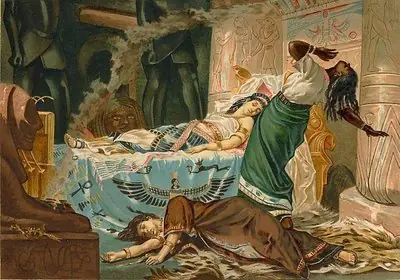
Own this work as a print
Artist & collection
Artist
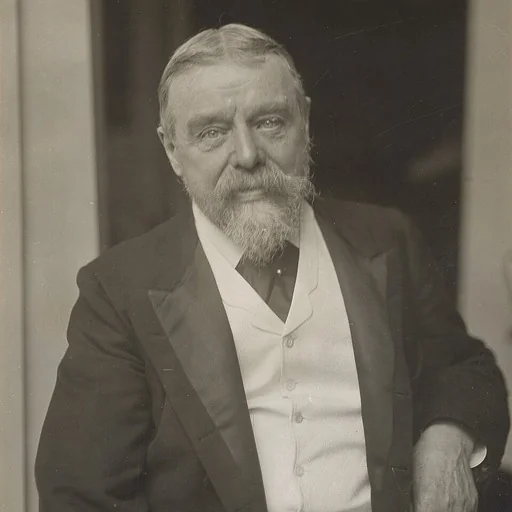
Sir Lawrence Alma-Tadema ( AL-mə TAD-ay-mə; born Lourens Alma Tadema, Dutch:; 8 January 1836 – 25 June 1912) was a Dutch painter who later settled in the United Kingdom, becoming the last officially recognised denizen in 1873.

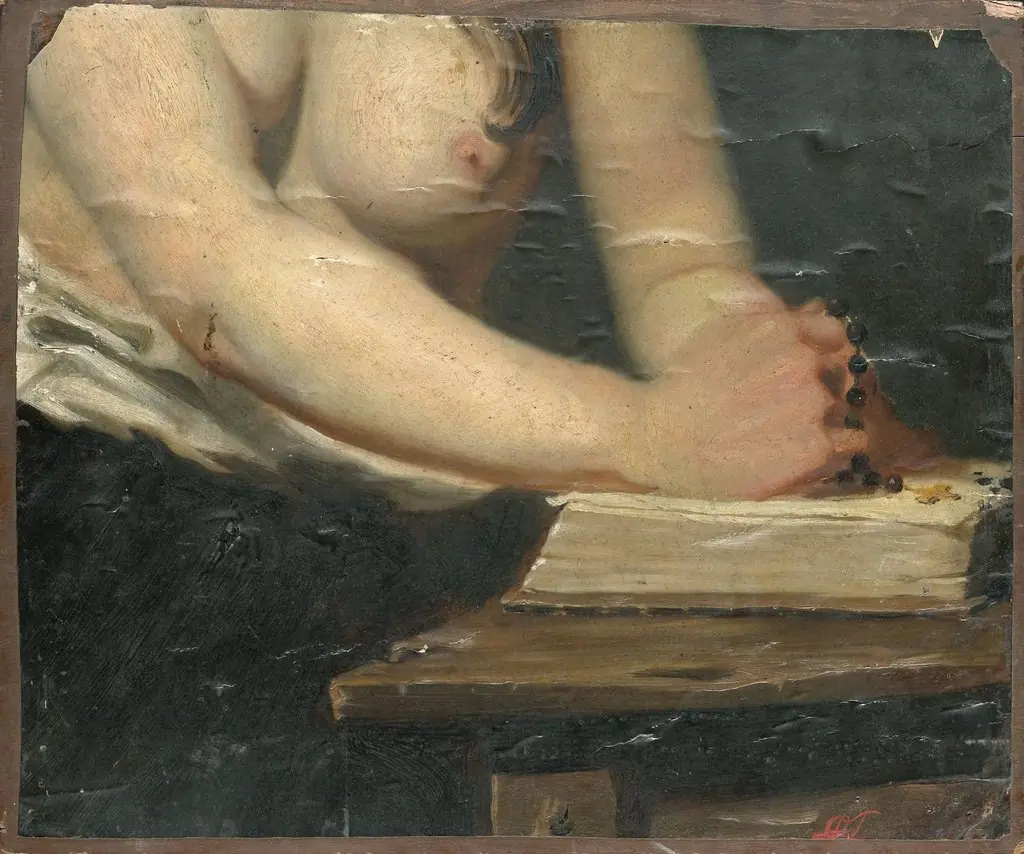
 An Egyptian Fellah Woman with her Baby
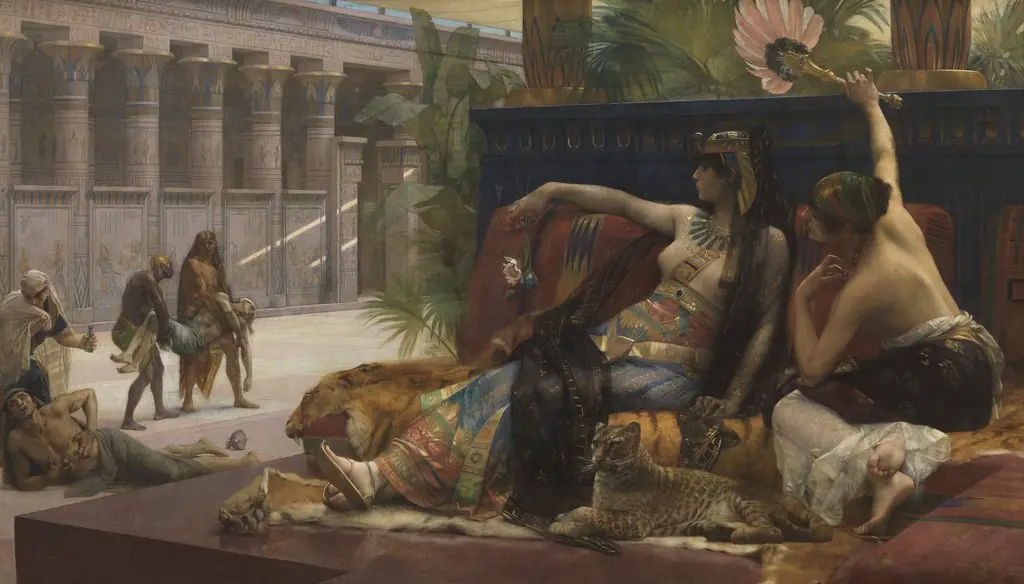 Cleopatra Testing Poisons on Condemned Prisoners
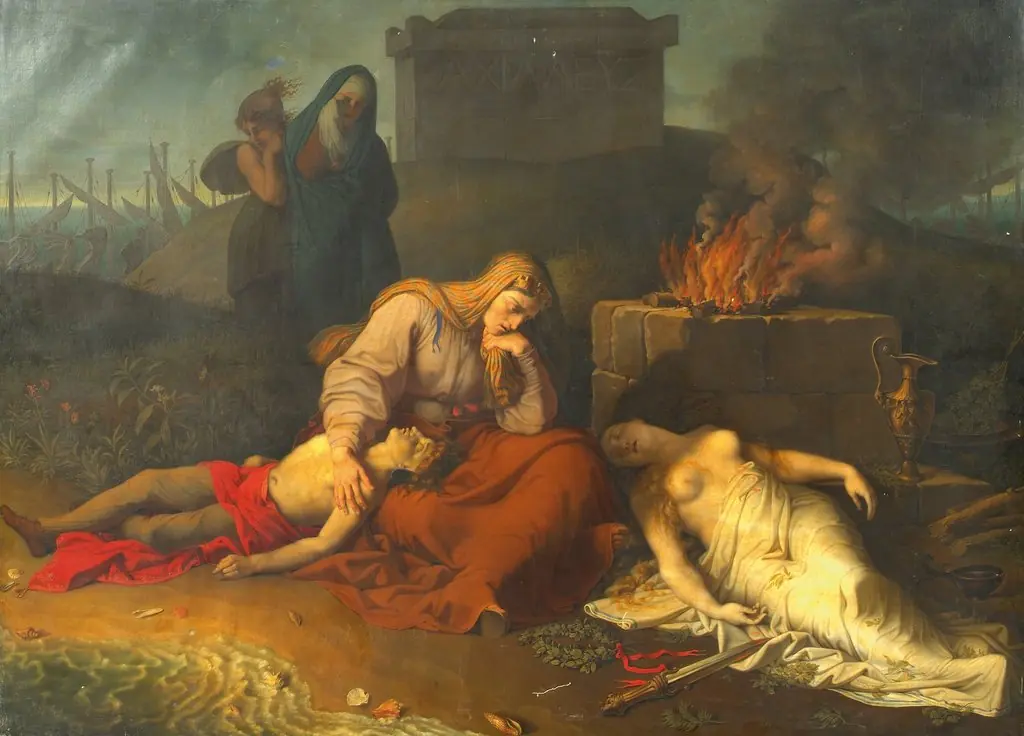 Hecabe mit den Leichnamen ihrer Kinder Polyxena und Polydoros am Grab des Achill
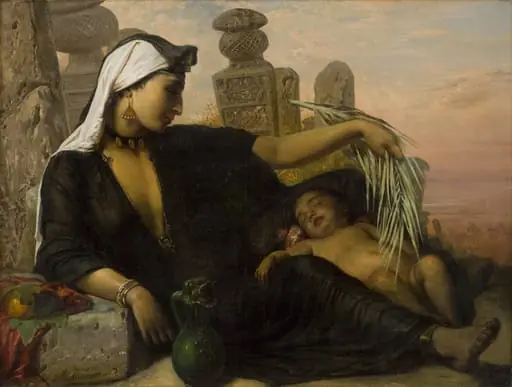 An Egyptian Fellah Woman with her Baby
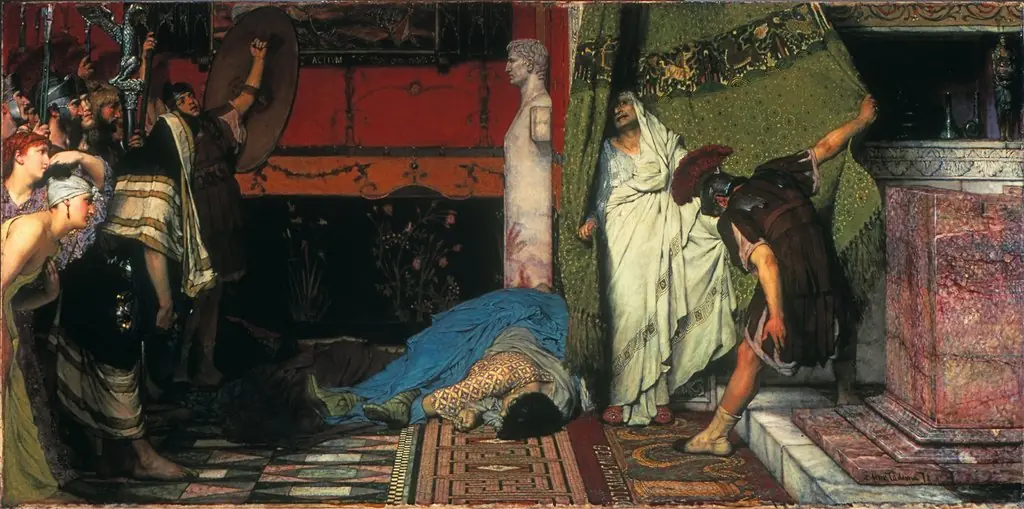 A Roman Emperor (Claudius)
 Job and His Friends
 Death of Dido
 Joosef ja hänen veljensä
 Job and His Friends
- The Death of Cleopatra