Artwork
The Egyptian Widow
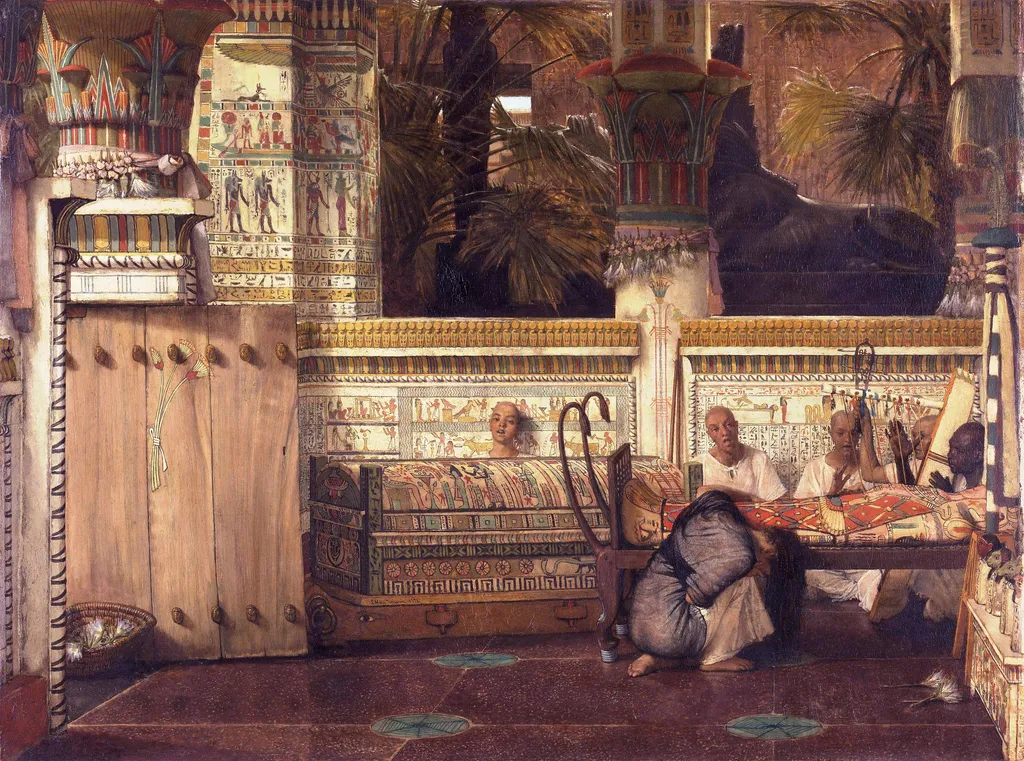
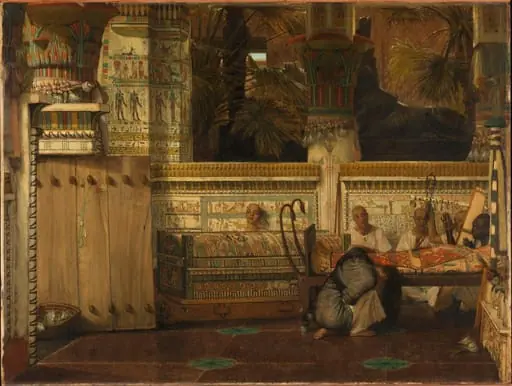
The Egyptian Widow is an oil painting by the Impressionist artist Lawrence Alma-Tadema. It dates from 1872 and is held in the collection of the Rijksmuseum.
About this work
Technique & Style
1 cm, contributes to the intimate, polished finish typical of Alma-Tadema’s cabinet pictures of the early 1870s.
Executed in oil on panel in 1872, The Egyptian Widow presents a refined handling characteristic of Lawrence Alma-Tadema’s genre interiors, with smooth, precise brushwork that articulates small details and textures without visible impasto.
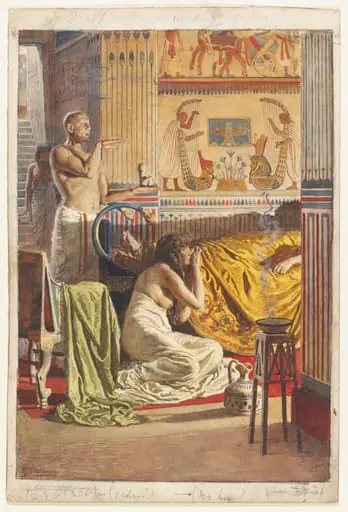
The composition centers on a seated woman draped in muted tones, her posture and the attenuated modeling of her hands and face aligning with the artist’s academic classicism. The subdued palette and controlled lighting emphasize stillness, while the inclusion of Egyptianizing props, such as a lotus motif and draped textiles, anchors the scene in a reconstructed antiquity. The panel support, measuring 74.9 cm by 99.1 cm, contributes to the intimate, polished finish typical of Alma-Tadema’s cabinet pictures of the early 1870s.
History & Provenance
The painting now titled The Egyptian Widow was created by Lawrence Alma-Tadema in 1872, as indicated by both the artist’s inscription and the work’s catalogued date. It is an oil on panel depicting a domestic scene within an ancient Egyptian setting.
The work entered the collection of Jean Charles Joseph Drucker before passing to the Rijksmuseum, where it has been held since. The painting’s dimensions are recorded as 74.9 cm in height and 99.1 cm in width.
The Egyptian Widow is held in the collection of the Rijksmuseum in Amsterdam. The painting, created by Lawrence Alma-Tadema in 1872, is executed in oil on panel. While specific accession numbers and a detailed exhibition chronology are not provided in the available records, the work's provenance includes ownership by Jean Charles Joseph Drucker prior to its acquisition by the museum.
The artwork measures 74.9 cm in height and 99.1 cm in width. It remains a significant example of genre art within the Rijksmuseum's holdings, representing the artist's historical focus on ancient subjects.
Overview
The Egyptian Widow is a 1872 oil painting by Lawrence Alma-Tadema, a Dutch-born artist who later settled in London. It is part of the Rijksmuseum's collection.
Subject & Meaning
The painting depicts a scene of mourning in ancient Egypt, featuring two women in a cluttered, dimly lit room filled with hieroglyphs and symbolic carvings. The artist blended historical accuracy with imaginative elements, such as a cat with a human face on the bed's carvings.
Own this work as a print
Artist & collection
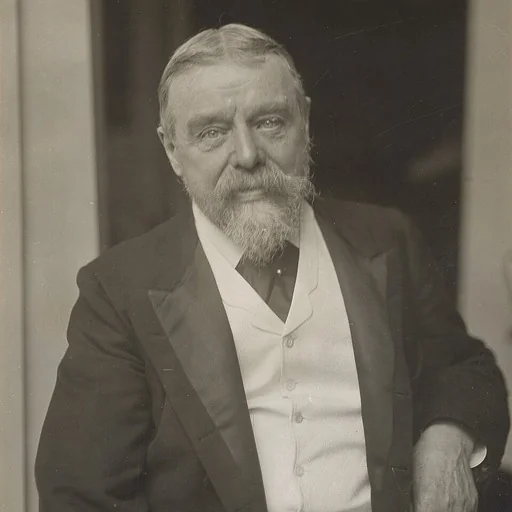
Artist
Sir Lawrence Alma-Tadema ( AL-mə TAD-ay-mə; born Lourens Alma Tadema, Dutch:; 8 January 1836 – 25 June 1912) was a Dutch painter who later settled in the United Kingdom, becoming the last officially recognised denizen in 1873.