Artwork
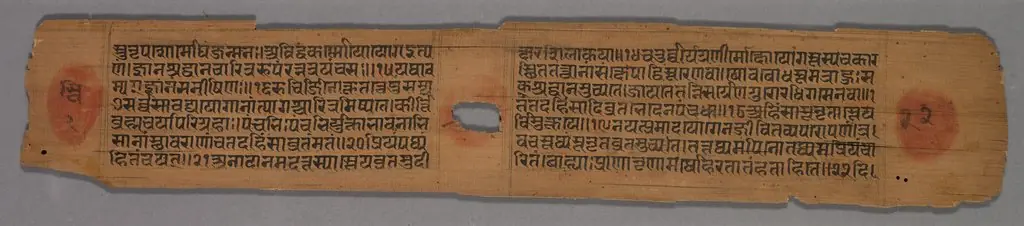
Leaf from a Jain Manuscript: Yoga-shastra: Text (recto); Leaf from a Jain Manuscript: Yoga-shastra: Jain monk with Disciple and Two Laymen, Two Nuns and a Laywoman below (verso)
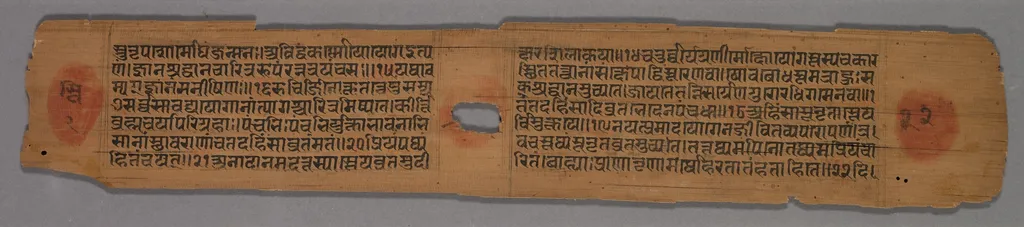
Leaf from a Jain Manuscript: Yoga-shastra: Text (recto); Leaf from a Jain Manuscript: Yoga-shastra: Jain monk with Disciple and Two Laymen, Two Nuns and a Laywoman below (verso) is an unspecified painting by the Yōga artist Hemachandra. It dates from 1290 and is held in the collection of the Cleveland Museum of Art.
About this work
Overview
Housed at The Cleveland Museum of Art, it features a textual passage from the Yoga-shastra on its recto side.
This manuscript leaf, created by Hemachandra in 1290, is a significant example of Jain religious art. Housed at The Cleveland Museum of Art, it features a textual passage from the Yoga-shastra on its recto side. The verso presents an intricate illustration depicting a Jain monk with his disciple, flanked by laymen, alongside two nuns and a laywoman, offering a visual narrative complement to the sacred text.
Subject & Meaning
The illustrated verso side of the leaf portrays a central Jain monk engaged with a disciple, surrounded by two laymen. Below this primary group, two nuns and a laywoman are depicted, suggesting a communal setting for spiritual instruction and devotion. This visual content likely relates to the ethical and spiritual teachings found in the Yoga-shastra, a foundational text on Jain philosophy and practice, emphasizing the path to liberation.
Technique & Style
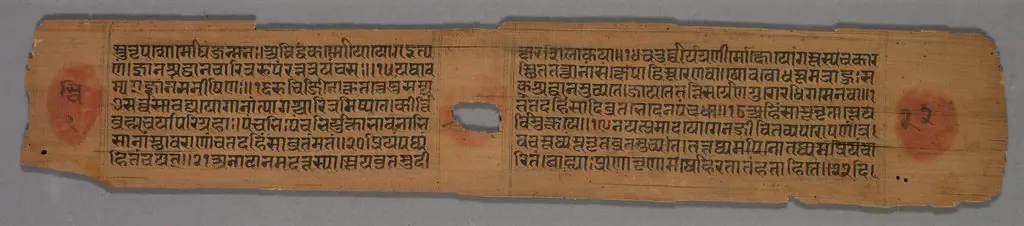
The recto of the manuscript displays text from the Yoga-shastra, meticulously inscribed in black ink on a light-brown surface. The script exhibits a formal, cursive style, characterized by intricate flourishes. Red markings punctuate the left margin, likely indicating important passages or section headings.
The text is arranged in two distinct columns, with a small central hole, a common feature in palm-leaf manuscripts, designed for binding the leaves together.
Context
Created in 1290, this leaf exemplifies the rich tradition of illustrated Jain manuscripts, which served as vital vehicles for disseminating religious knowledge and artistic expression. Hemachandra, the named artist, contributed to this cultural practice, producing works that combined scholarly text with devotional imagery. Such manuscripts were often commissioned by wealthy patrons and housed in Jain monastic libraries, playing a crucial role in the preservation and propagation of Jain tenets across generations.
Artist & collection
Artist
Hemachandra made delicate manuscript pages for a Jain text called the Yoga-shastra in 1279.

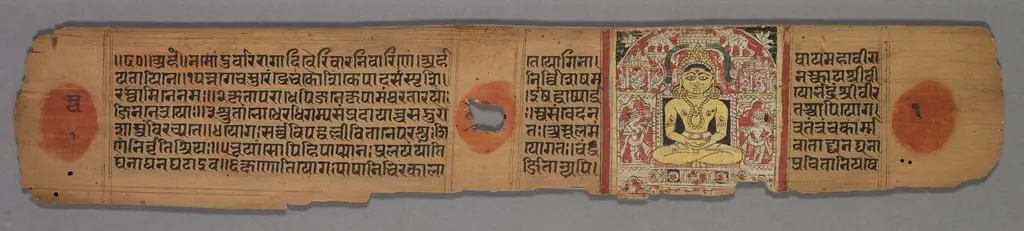 Seated Rishabha Enthroned, Folio 1 verso of a Yoga-shastra of Hemachandra
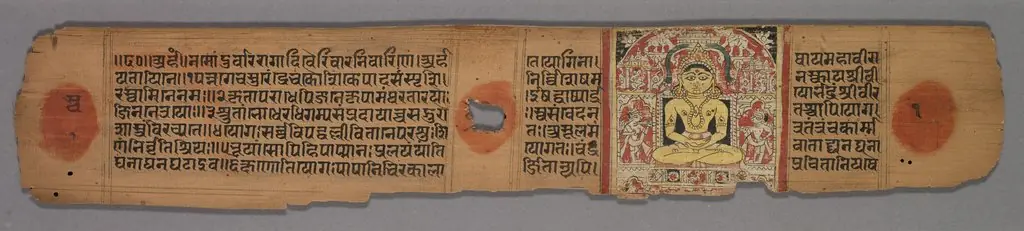 Seated Rishabha Enthroned, Folio 1 verso of a Yoga-shastra of Hemachandra
- Leaf from a Jain Manuscript: Yoga-shastra: Text (recto)
 Rishabha enthroned, folio 1 (verso) from a Yoga-shastra of Hemachandra
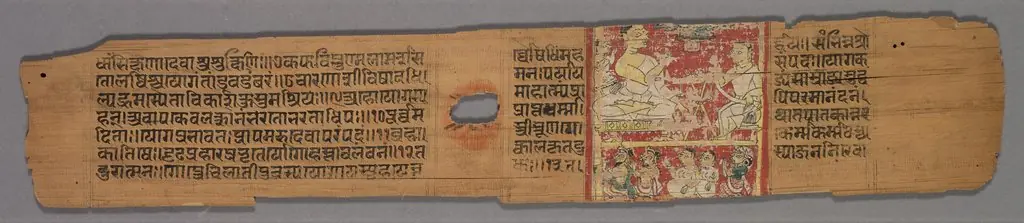 Leaf from a Jain Manuscript: Yoga-shastra: Jain monk with Disciple and Two Laymen, Two Nuns and a Laywoman below (verso)
 Leaf from a Jain Manuscript: Kalpa-sutra: Enthroned Monk (recto); Leaf from a Jain Manuscript: Kalpa-sutra: Text (verso)
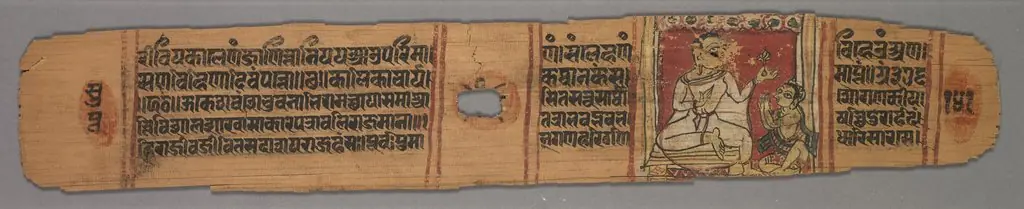 Leaf from a Jain Manuscript: The Story of Kalakacharya: Colophon Page, Text (recto)
 Leaf from a Jain Manuscript: Kalpa-sutra: The Monk Gautama, Enthroned (recto)
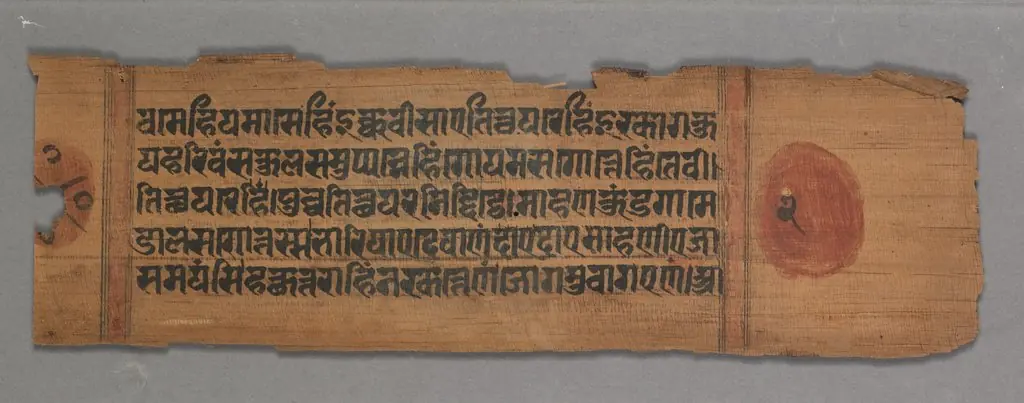 Leaf from a Jain Manuscript: Kalpa-sutra: A Monk Preaching (recto); Leaf from a Jain Manuscript: Kalpa-sutra: text (verso)
 Leaf from a Jain Manuscript: Kalpa-sutra: Text (verso)
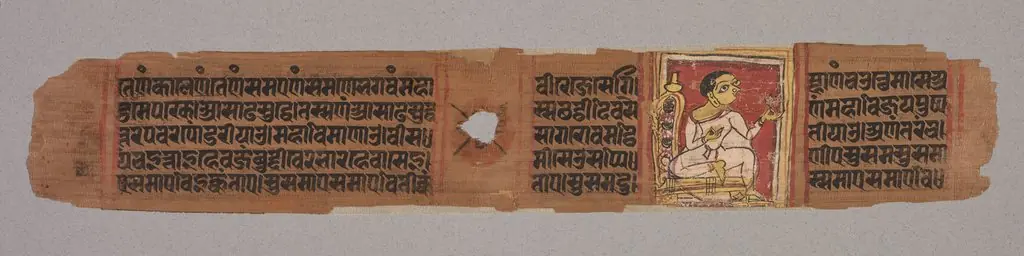 Leaf from a Jain Manuscript: Kalpa-sutra: Monk Holding a Flower (recto); Leaf from a Jain Manuscript: Kalpa-sutra: text describing descent of Mahavira into the womb of the Brahman woman Devananda (verso)
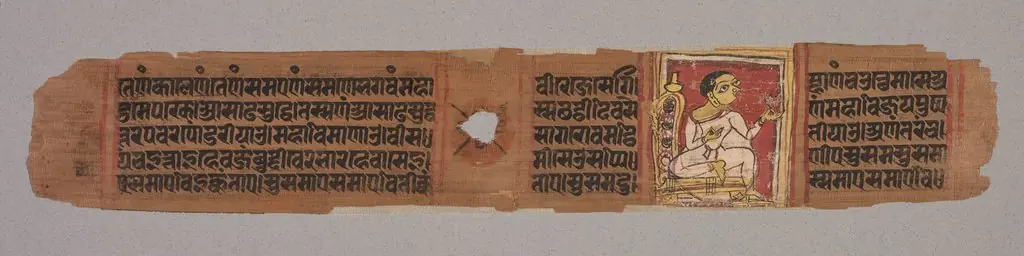 Leaf from a Jain Manuscript: Kalpa-sutra: Monk Holding a Flower (recto)
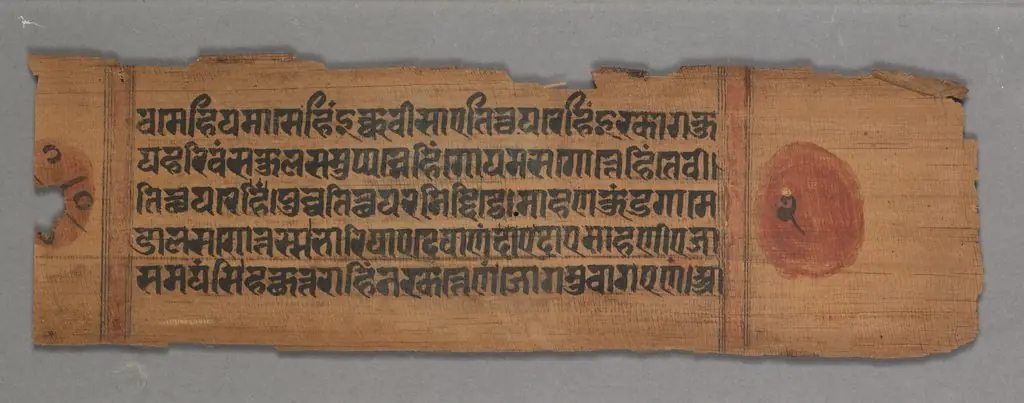 Leaf from a Jain Manuscript: Kalpa-sutra: A Monk Preaching (recto)
 Leaf from a Jain Manuscript: page from a Great Poem about Twos (Dvyashraya Mahakavya) of Hemachandra, with commentary by Abhayatilaka: Text (recto)
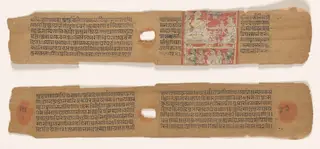 Folio 22 from a Yoga-shastra of Hemachandra: Jain Monk with disciple and two laymen, two Nuns, and a laywoman (recto); Text (verso)