Artwork
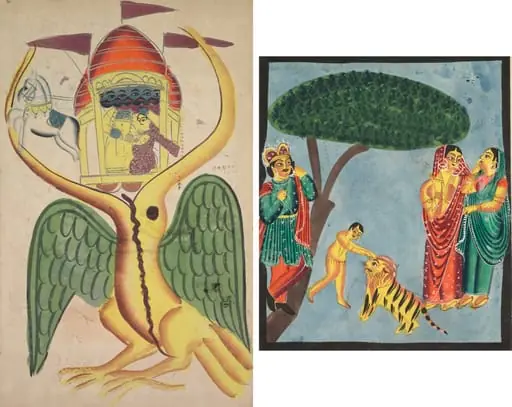
Leaf from a Kalighat album: Jatayu hinders Ravana’s chariot, trying to prevent the abduction of Sita (recto); Dushyanta watching his son Bharat playing with the tiger at the end of the Abhijnanashakuntalam (verso)
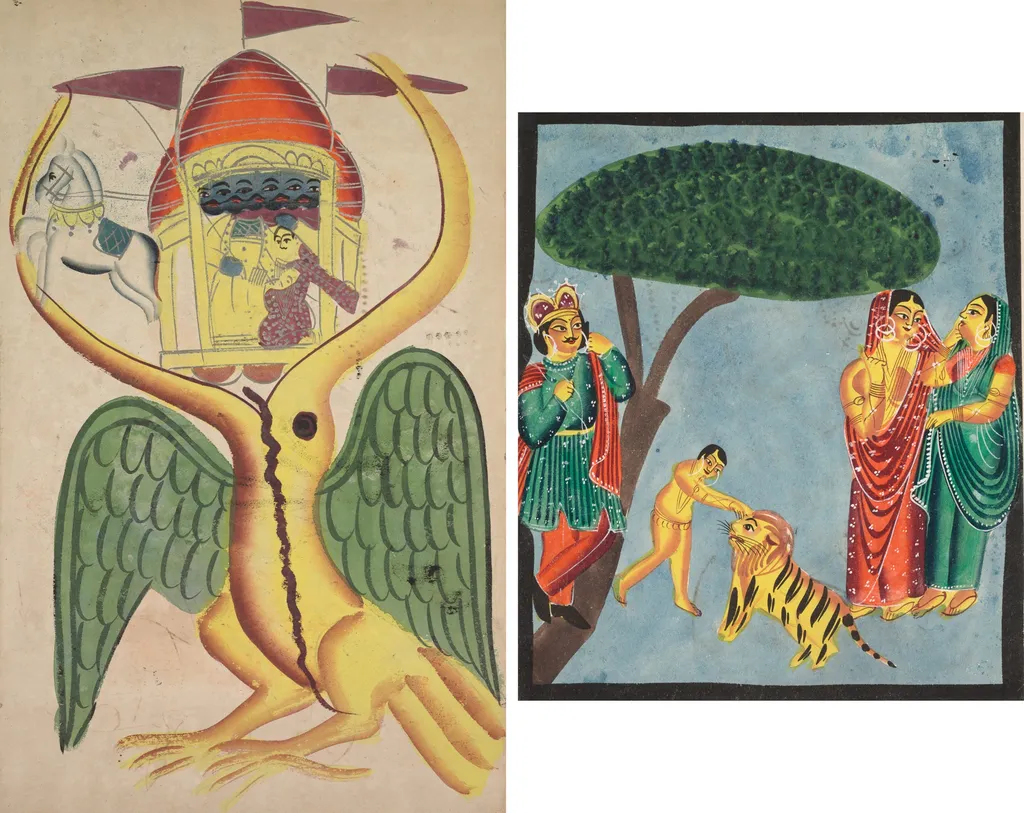
Leaf from a Kalighat album: Jatayu hinders Ravana’s chariot, trying to prevent the abduction of Sita (recto); Dushyanta watching his son Bharat playing with the tiger at the end of the Abhijnanashakuntalam (verso) is an unspecified painting. It dates from 1896 and is held in the collection of the Cleveland Museum of Art. The work is a double‑sided painting from the Kalighat tradition, each side presenting a separate narrative scene.
About this work
Subject & Meaning
This scene represents the moment of recognition and reunion at the conclusion of the drama, emphasizing themes of familial bond and royal destiny.
The recto depicts a scene from the Ramayana where the bird-king Jatayu attempts to stop Ravana's chariot to prevent the abduction of Sita. This imagery illustrates the epic struggle between loyalty and evil, highlighting Jatayu's heroic, albeit futile, intervention. The verso presents a narrative from Kālidāsa's play Abhijnanashakuntalam, showing King Dushyanta observing his son Bharata playing with a tiger.
This scene represents the moment of recognition and reunion at the conclusion of the drama, emphasizing themes of familial bond and royal destiny. Together, the two sides of the leaf juxtapose stories of divine conflict and human reconciliation from major Indian literary traditions.
Technique & Style
The leaf is a painted paper support typical of Kalighat works, created with watercolor and ink on thin paper. The recto depicts Jatayu confronting Ravana’s chariot to stop the abduction of Sita, while the verso shows King Dushyanta observing his son Bharat playing with a tiger, drawn from the Abhijnanashakuntalam narrative. The sheet measures 30 × 23 cm and was produced in Kolkata around 1890.
Its handling reflects the album format, with minimal wear and stable pigment layers, preserving the bold outlines and flat color fields characteristic of the style.
History & Provenance
The leaf was created in 1890 in Kolkata, where the Kalighat painting tradition flourished during the late nineteenth century. It is classified as a painting and is held in the collection of the Cleveland Museum of Art, where it is catalogued under accession number 2003.109.
No information about the original commissioner, the artist, or earlier owners is recorded in the available sources.
Overview
The work is a double‑sided painting from the Kalighat tradition, each side presenting a separate narrative scene. The recto illustrates a mythic episode in which a bird‑like figure with green wings and a yellow body intervenes in Ravana’s chariot to thwart the abduction of Sita. The verso shows a man dressed in green observing his son Bharat as the child plays with a tiger, a moment drawn from the conclusion of the play Abhijñānaśakuntalam.
Context
Kalighat paintings emerged from the vicinity of the Kalighat temple, where artists catered to pilgrims and urban patrons. Their subjects often merged Hindu epics with contemporary theatrical motifs, as seen in the juxtaposition of a Ramayana episode with a scene from Abhijñānaśakuntalam. This synthesis reflects the period’s cultural exchange between traditional religious narratives and the popular stage.
Artist & collection

- Leaf from a Kalighat album: Jatayu hinders Ravana’s chariot, trying to prevent the abduction of Sita (recto); Dushyanta watching his son Bharat playing with the tiger at the end of the Abhijnanashakuntalam (verso)
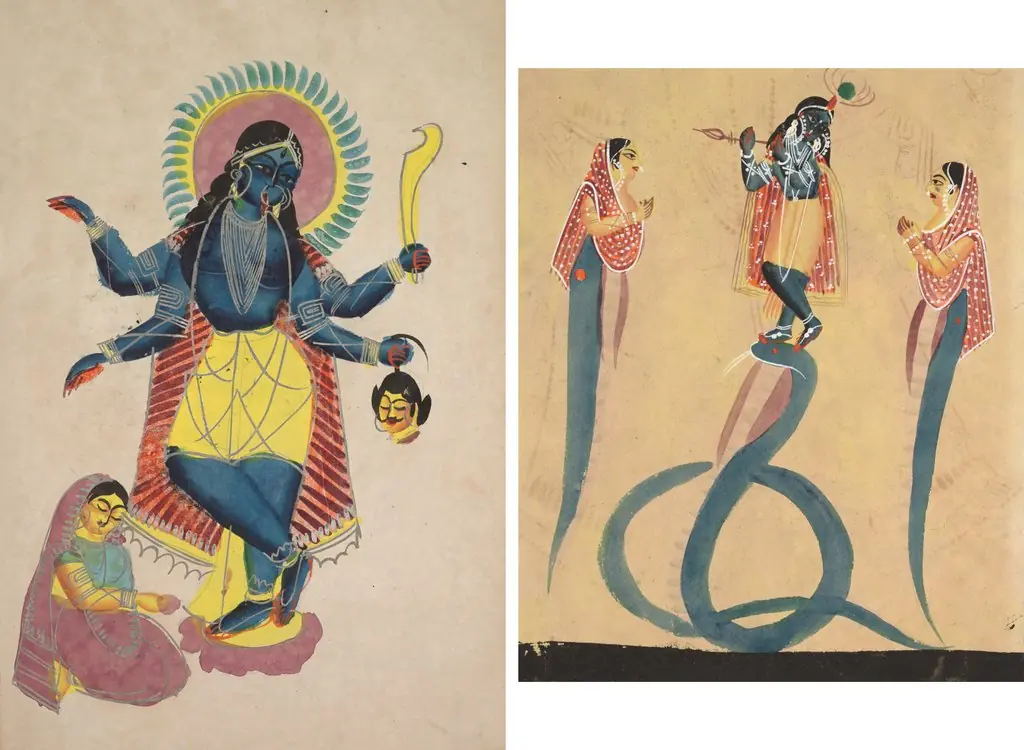 Leaf from a Kalighat album: Krishna as Kali worshipped by Radha (recto); Krishna quells the serpent Kaliya (verso)
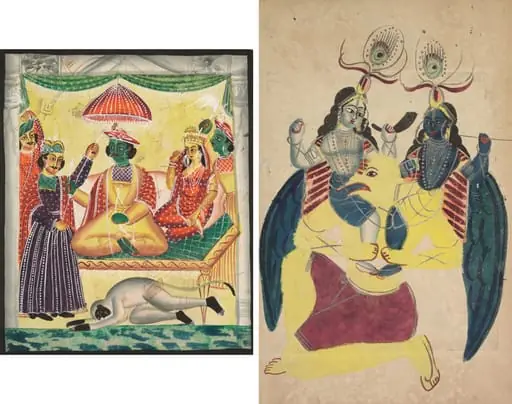 Leaf from a Kalighat album: Rama and Sita enthroned (recto); Garuda carrying Balarama and Krishna (verso)
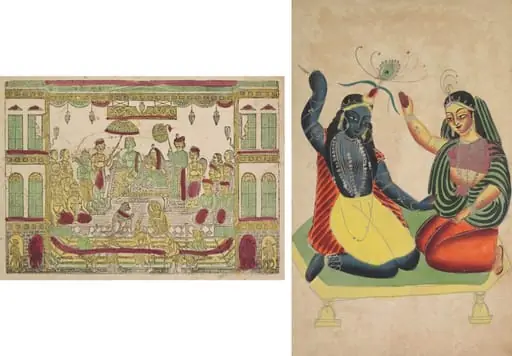 Leaf from a Kalighat album: Rama and Sita in the Royal Palace (recto); Radha and Krishna (verso)
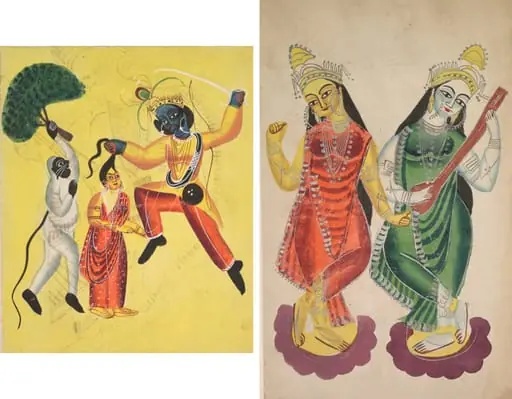 Leaf from a Kalighat album: Hanuman attacks Indrajit holding an apparition of Sita by the hair (recto); Goddesses Lakshmi and Sarasvati (verso)
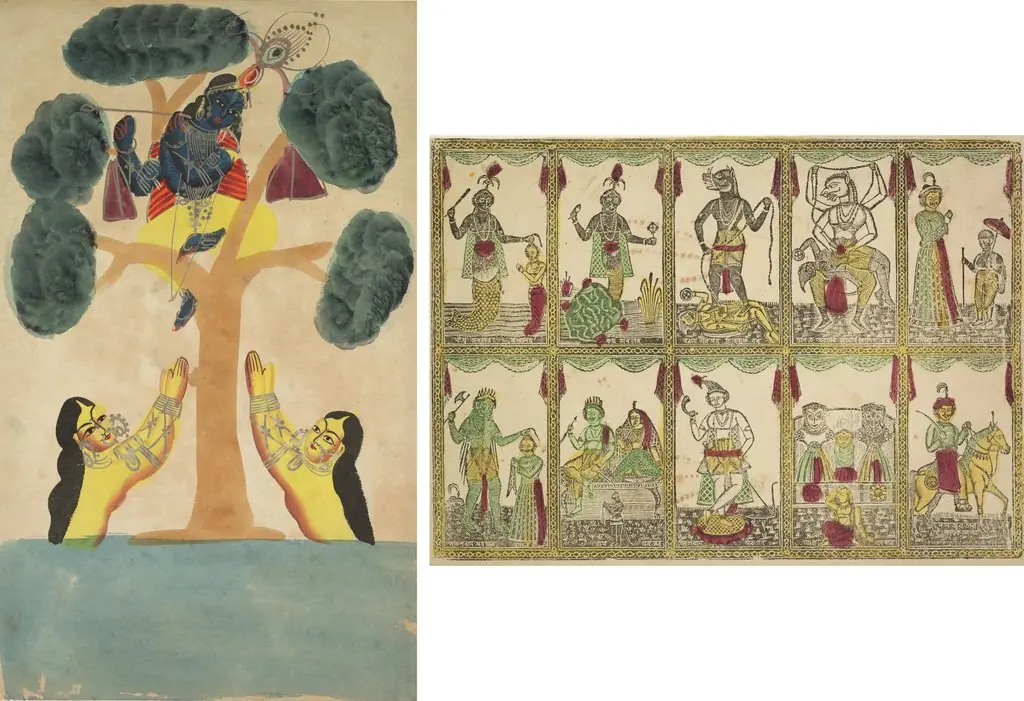 Leaf from a Kalighat album: Krishna Steals the Clothes of the Cowgirls (Gopis) (recto); Das Avataras, Ten Incarnations of Vishnu (verso)
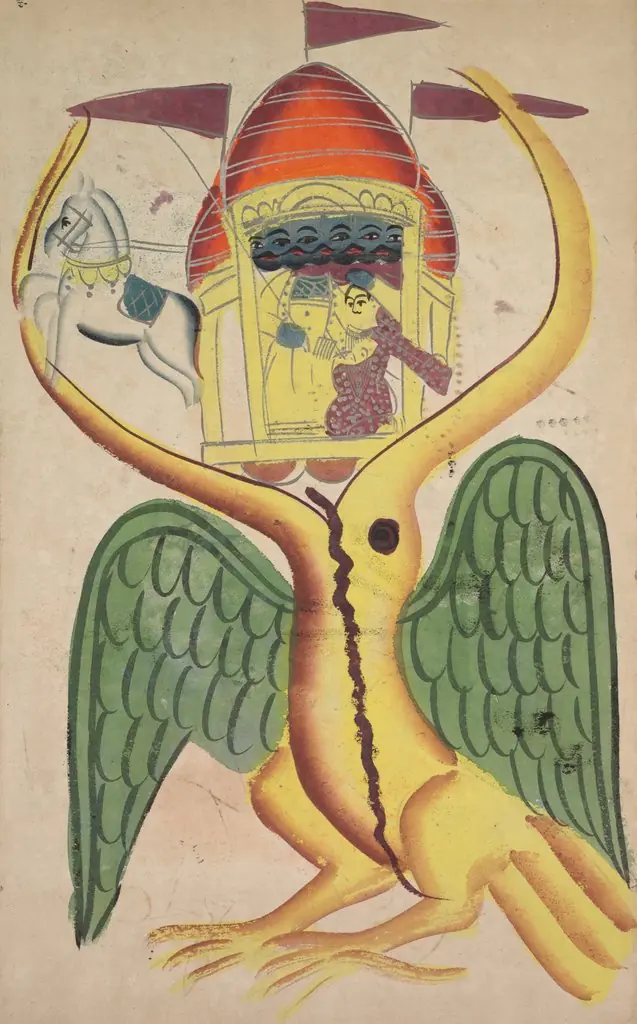 Jatayu hinders Ravana’s chariot, trying to prevent the abduction of Sita (recto), from a Kalighat album
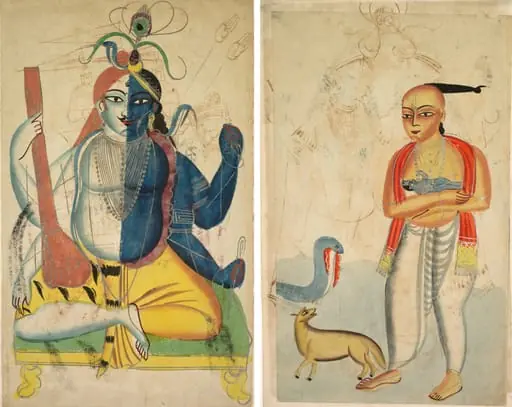 Leaf from a Kalighat album: Hari-Hara (recto); Vasudeva (Krishna's Father) Fleeing with Krishna Encounters a Cobra and a Jackal (verso)
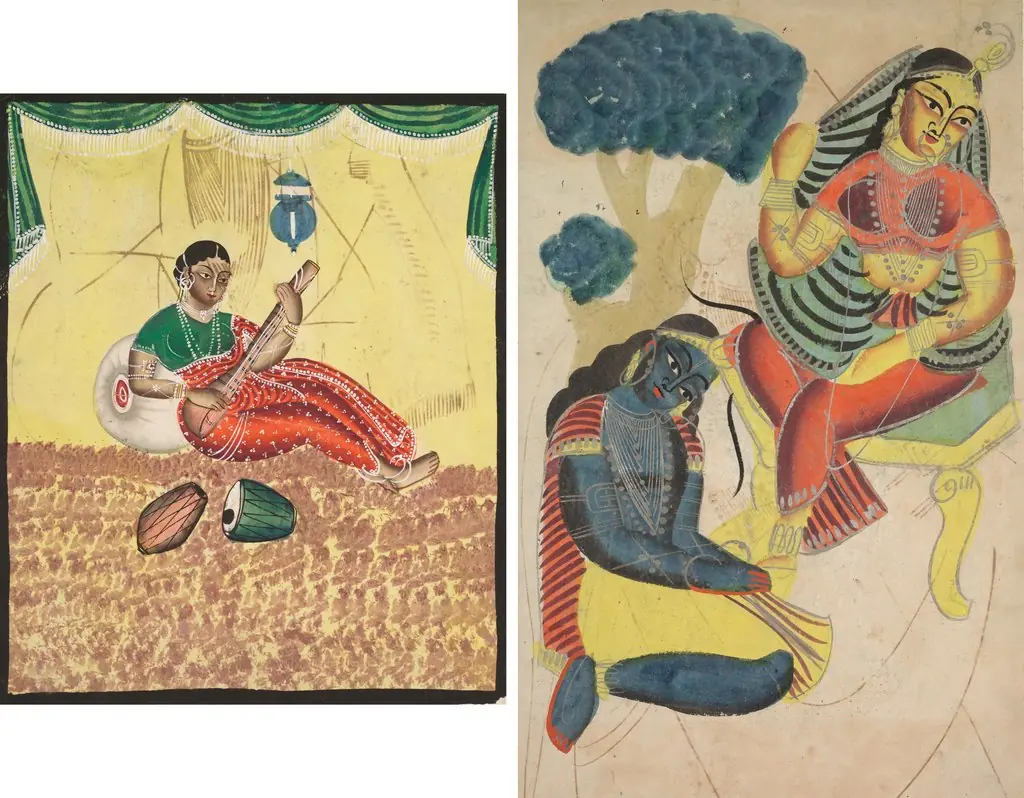 Leaf from a Kalighat album: Woman Playing Music (recto); Krishna Stroking Radha's Feet (verso)
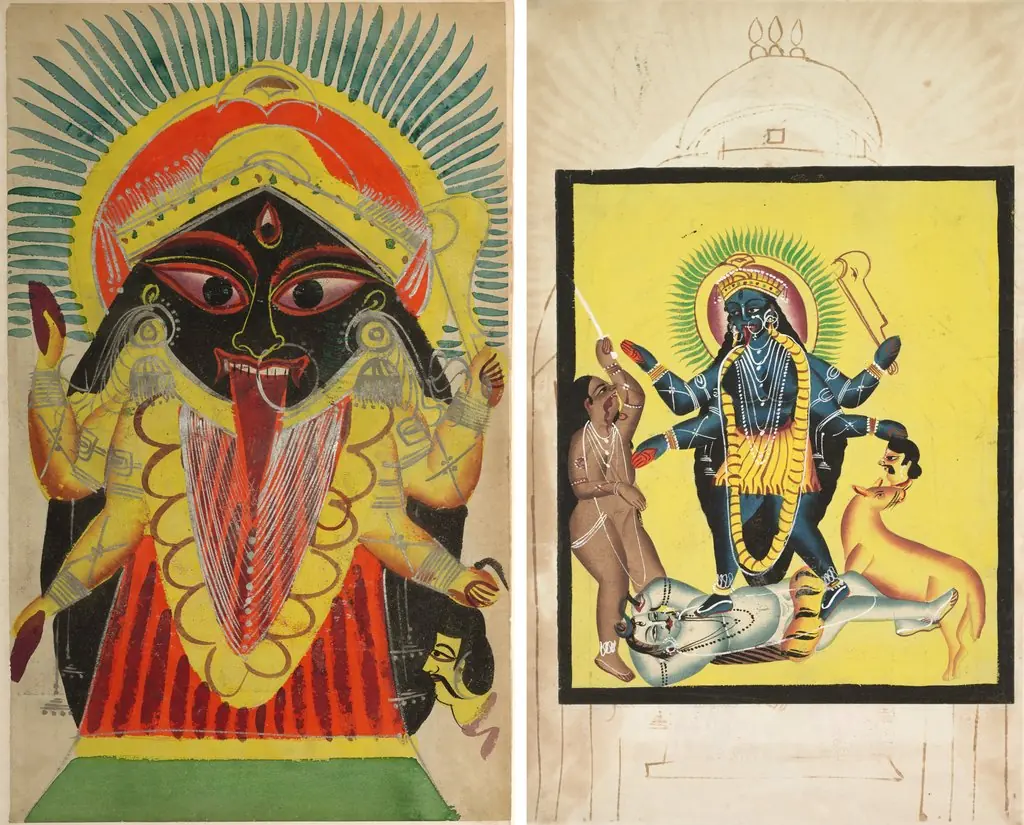 Leaf from a Kalighat album: The Goddess Kali (recto); Kali Standing on Shiva (verso)
 Leaf from a Kalighat album: Woman Playing Music (recto); Krishna Stroking Radha's Feet (verso)
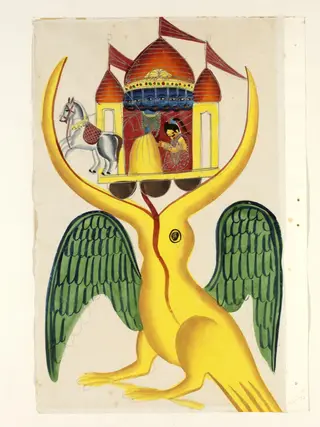 Jatayu, Sita and Ravana