Artwork
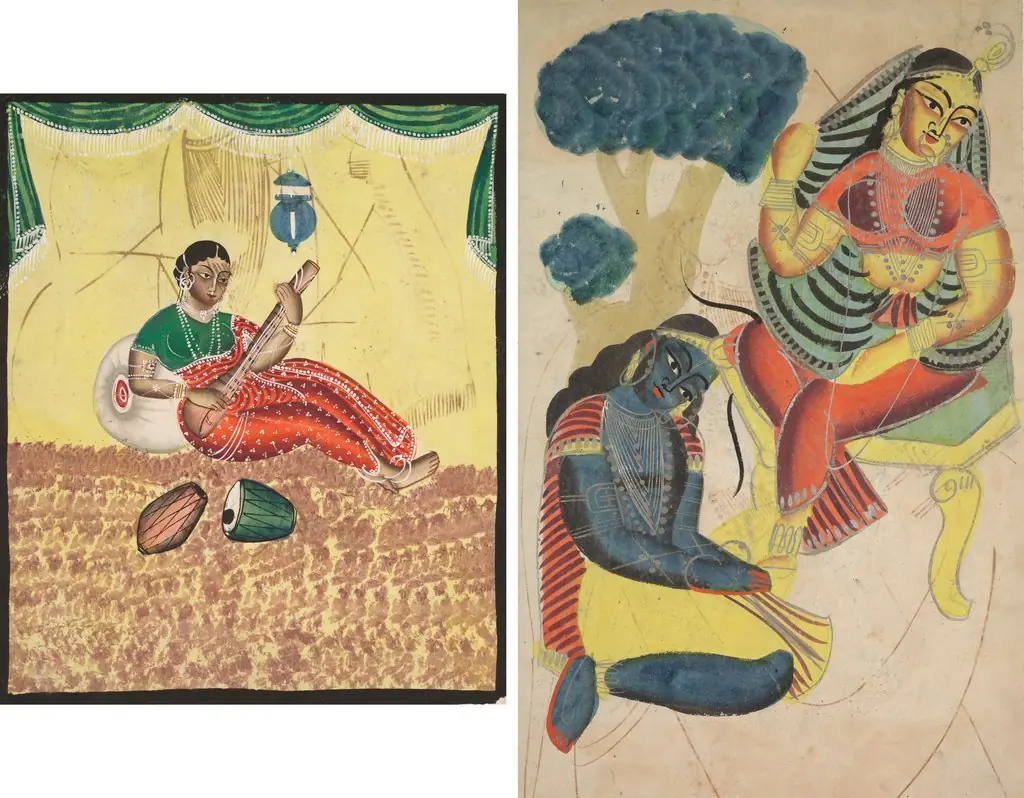
Leaf from a Kalighat album: Woman Playing Music (recto); Krishna Stroking Radha's Feet (verso)
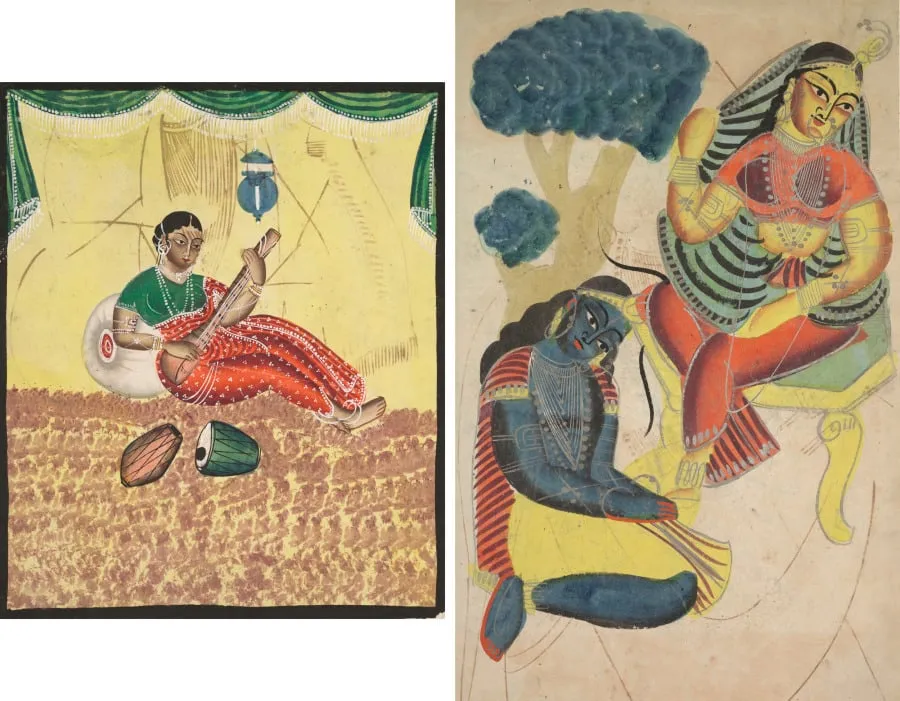
Leaf from a Kalighat album: Woman Playing Music (recto); Krishna Stroking Radha's Feet (verso) is an unspecified painting by the Bengal School artist Unknown. It dates from 1890 and is held in the collection of the Cleveland Museum of Art. This double‑sided sheet presents two distinct vignettes typical of Kalighat album art.
- Accession no.
- 2003.133
About this work
Overview
The verso shows a blue‑skinned male figure, kneeling as a woman in a striped red‑and‑black sari leans forward to touch his head.
This double‑sided sheet presents two distinct vignettes typical of Kalighat album art. The recto depicts a seated woman in a green blouse and red skirt, cross‑legged and playing a stringed instrument, accompanied by a fan and a coconut on a textured, yellow‑brown ground. The verso shows a blue‑skinned male figure, kneeling as a woman in a striped red‑and‑black sari leans forward to touch his head.
Subject & Meaning
The left scene captures a domestic musical performance, suggesting leisure and cultural ritual, while the right tableau illustrates a mythological encounter, likely referencing the devotional narrative of Krishna attending to Radha. The juxtaposition of everyday life and sacred legend reflects the Kalighat tradition of blending popular and religious themes for a broad audience.
Technique & Style
Executed in vivid pigments, the figures are outlined with bold, black strokes that stand out against a loosely rendered, sketch‑like background. The use of flat areas of color, simplified forms, and decorative patterns, such as the striped sari, exemplify the characteristic aesthetic of Kalighat paintings, which favored immediacy and visual impact over detailed realism.
History & Provenance
Kalighat paintings originated in the 19th‑century Kalighat temple precinct of Kolkata, where itinerant artists produced inexpensive sheets for sale to pilgrims and urban patrons. This particular leaf, part of a larger album, would have been bound with other sheets illustrating a range of subjects, serving both as devotional material and as popular visual entertainment.
Context
The work emerges from a period of cultural exchange under British colonial rule, when traditional Indian artisans adapted to new markets and tastes. Kalighat artists responded to the influx of printed media and changing patronage by adopting a more graphic, accessible style while retaining indigenous iconography.
Legacy
Kalighat album sheets like this one have informed later Indian modernist movements, influencing artists who sought to merge folk visual language with contemporary concerns. The sheet’s vivid coloration and narrative economy continue to be studied as a key example of vernacular art that bridges popular culture and religious storytelling.
Artist & collection









- Leaf from a Kalighat album: Woman Playing Music (recto); Krishna Stroking Radha's Feet (verso)
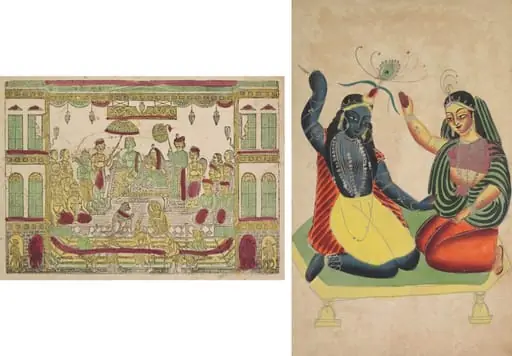 Leaf from a Kalighat album: Rama and Sita in the Royal Palace (recto); Radha and Krishna (verso)
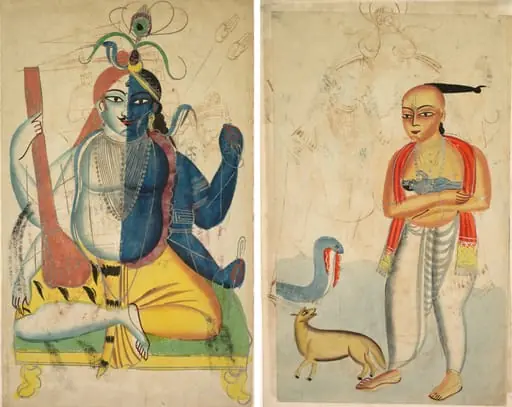 Leaf from a Kalighat album: Hari-Hara (recto); Vasudeva (Krishna's Father) Fleeing with Krishna Encounters a Cobra and a Jackal (verso)
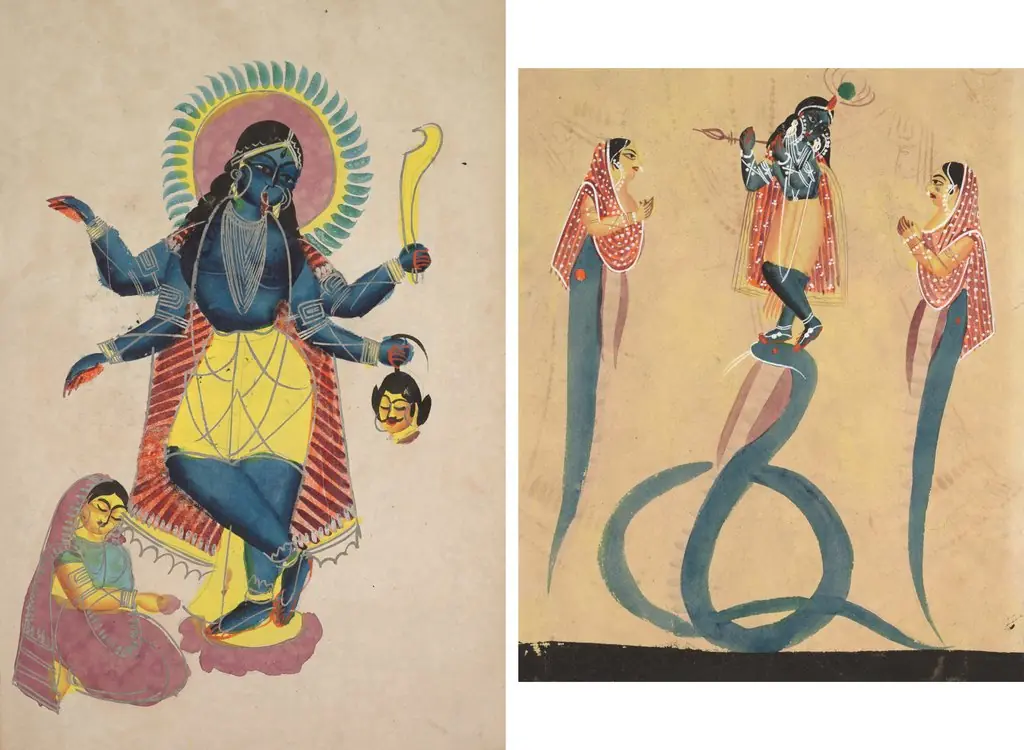 Leaf from a Kalighat album: Krishna as Kali worshipped by Radha (recto); Krishna quells the serpent Kaliya (verso)
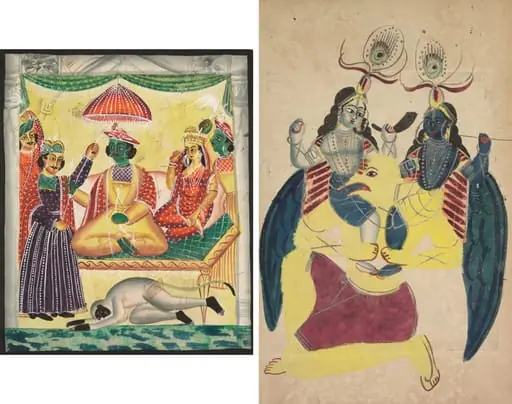 Leaf from a Kalighat album: Rama and Sita enthroned (recto); Garuda carrying Balarama and Krishna (verso)
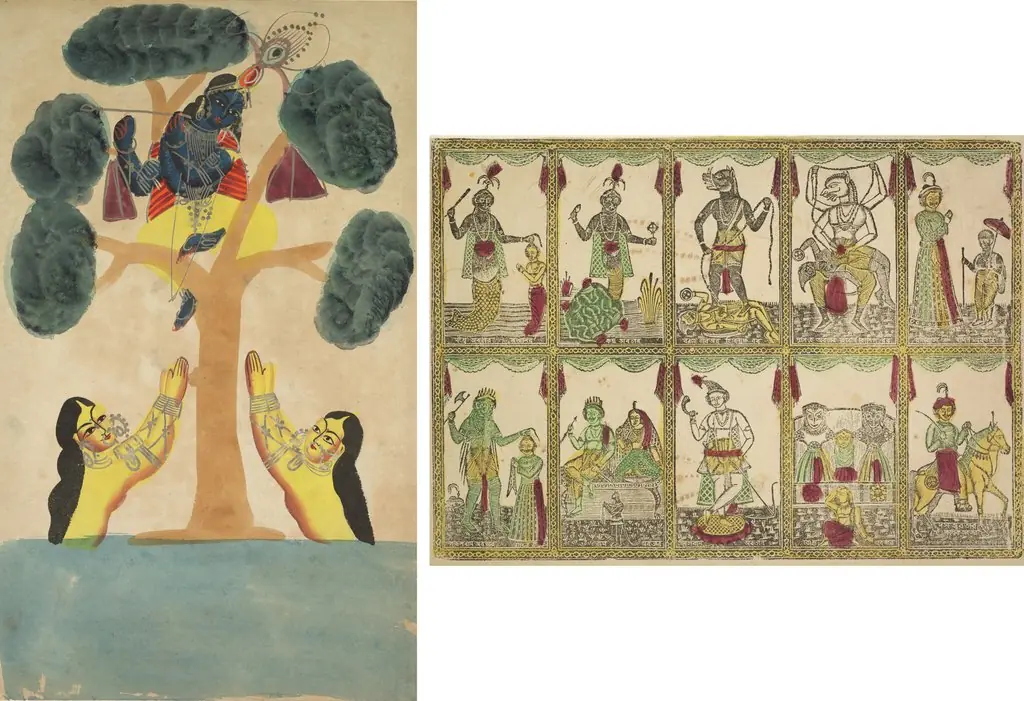 Leaf from a Kalighat album: Krishna Steals the Clothes of the Cowgirls (Gopis) (recto); Das Avataras, Ten Incarnations of Vishnu (verso)
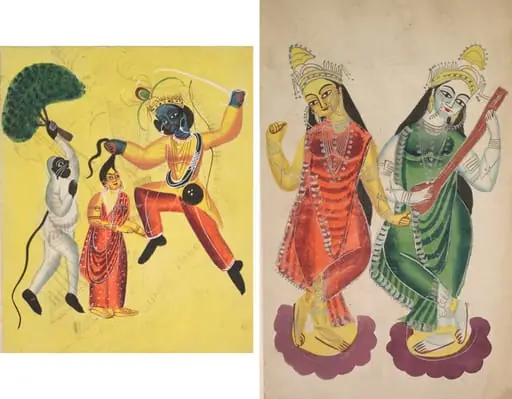 Leaf from a Kalighat album: Hanuman attacks Indrajit holding an apparition of Sita by the hair (recto); Goddesses Lakshmi and Sarasvati (verso)
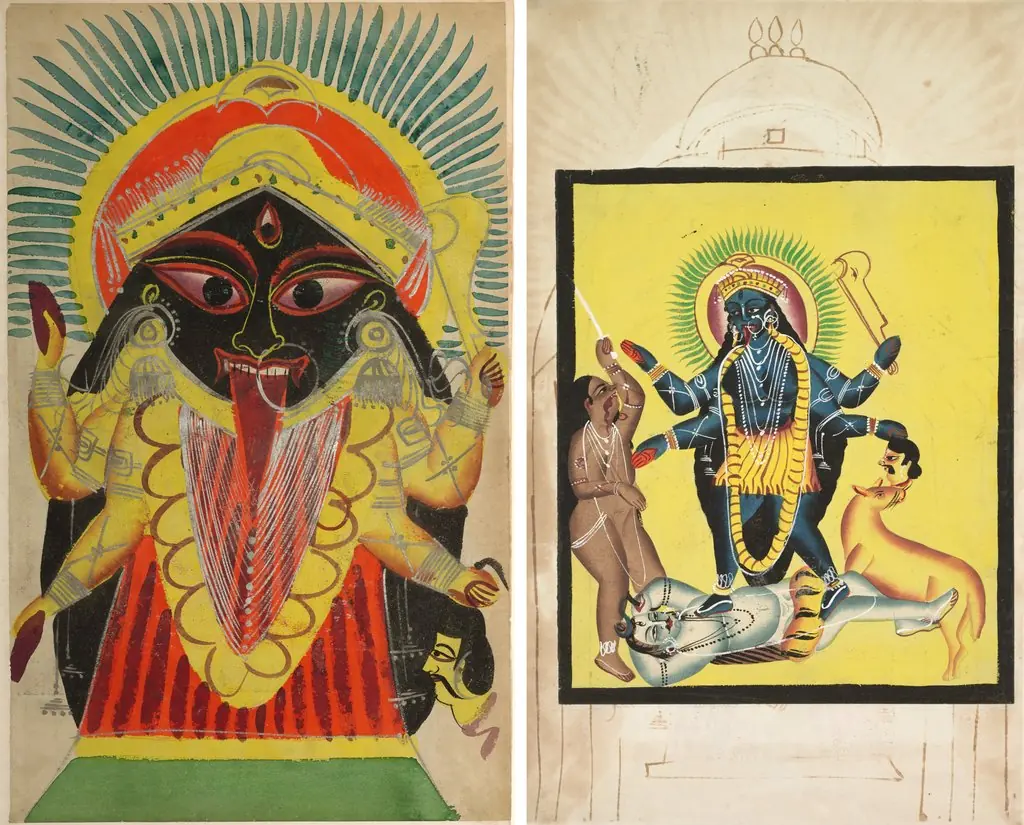 Leaf from a Kalighat album: The Goddess Kali (recto); Kali Standing on Shiva (verso)
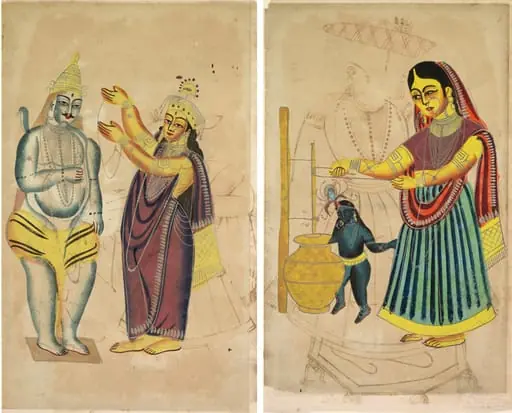 Leaf from a Kalighat album: Parvati Placing a Wedding Garland on Shiva (recto); Yasoda Churning Butter (verso)
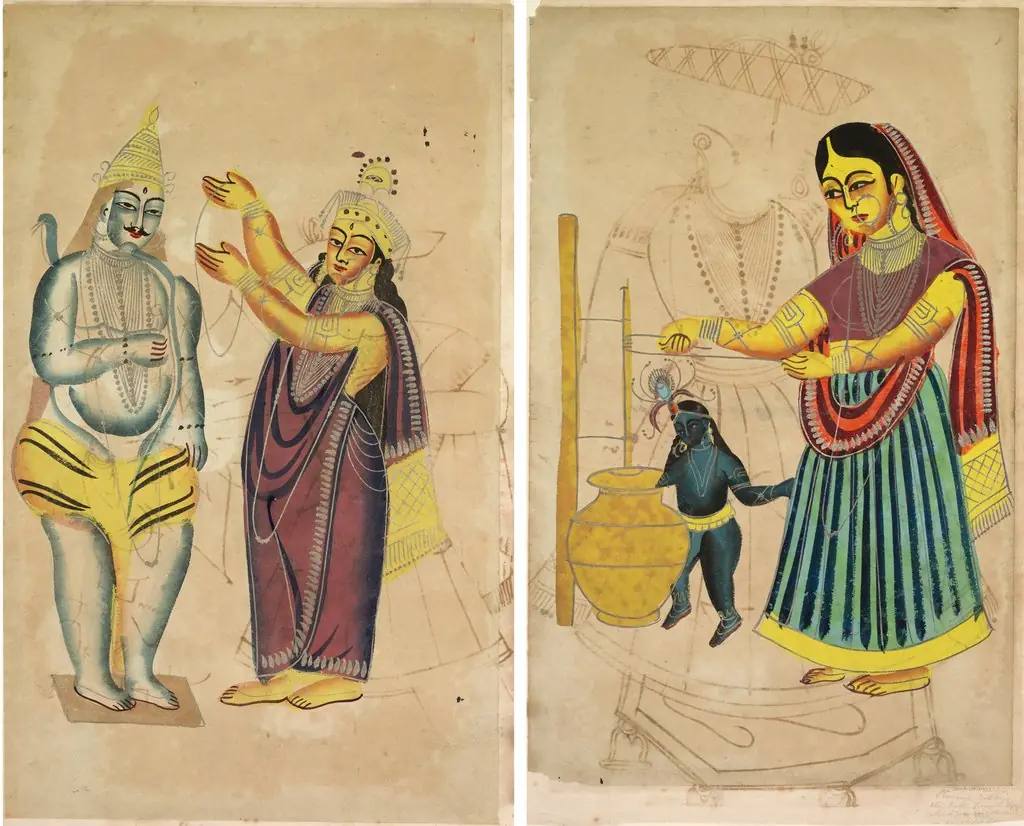 Leaf from a Kalighat album: Parvati Placing a Wedding Garland on Shiva (recto); Yasoda Churning Butter (verso)
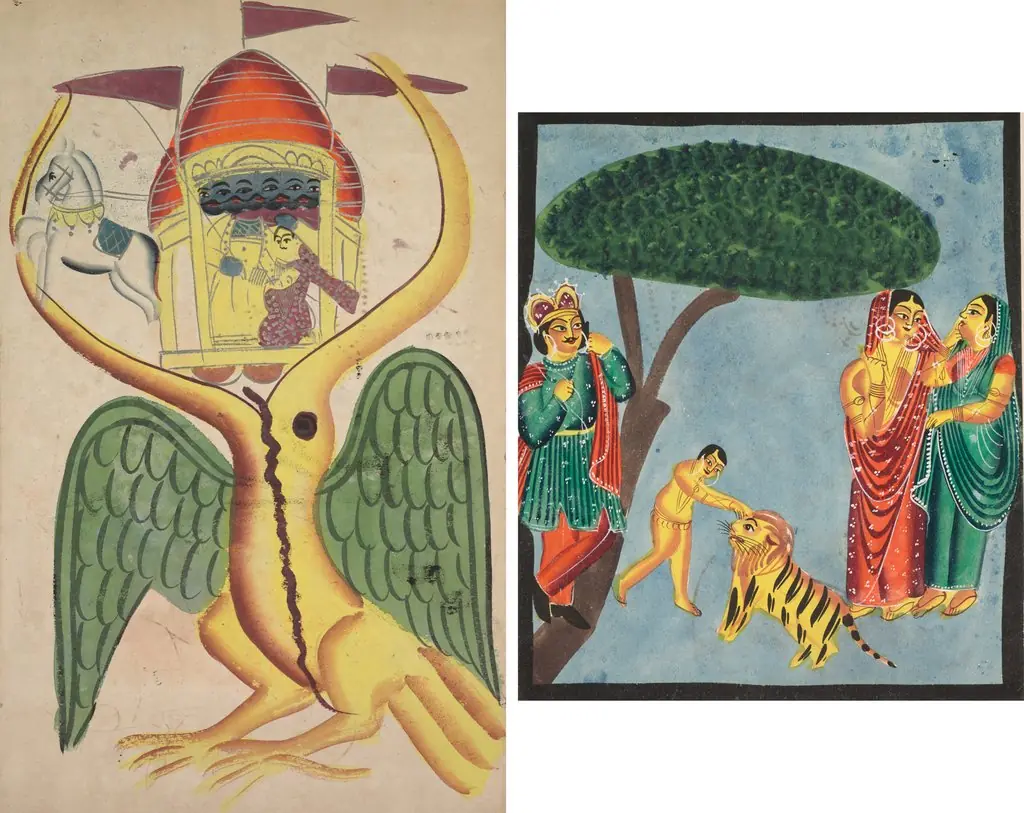 Leaf from a Kalighat album: Jatayu hinders Ravana’s chariot, trying to prevent the abduction of Sita (recto); Dushyanta watching his son Bharat playing with the tiger at the end of the Abhijnanashakuntalam (verso)
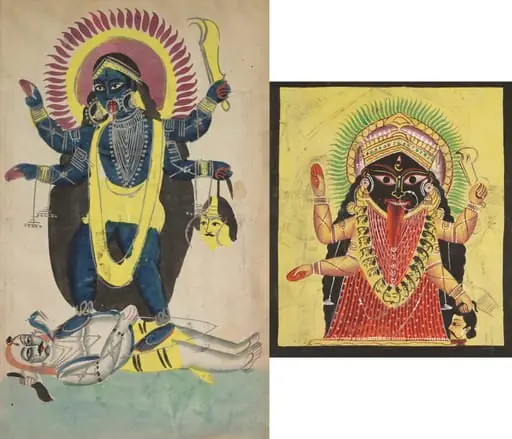 Leaf from a Kalighat album: Two Aspects of Kali