Artwork
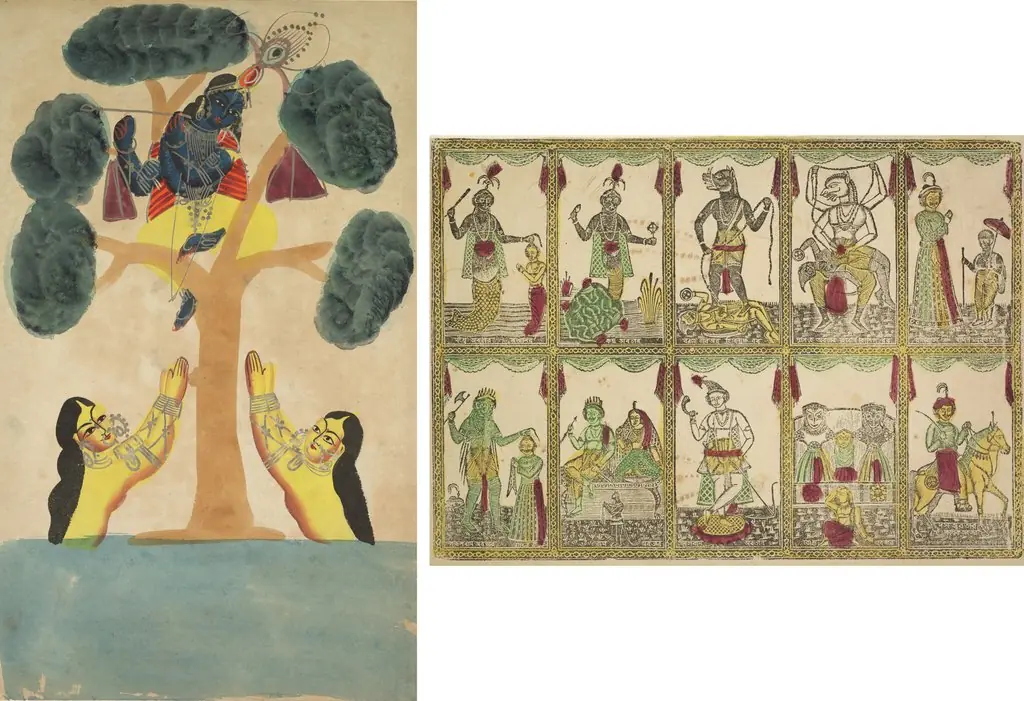
Leaf from a Kalighat album: Krishna Steals the Clothes of the Cowgirls (Gopis) (recto); Das Avataras, Ten Incarnations of Vishnu (verso)
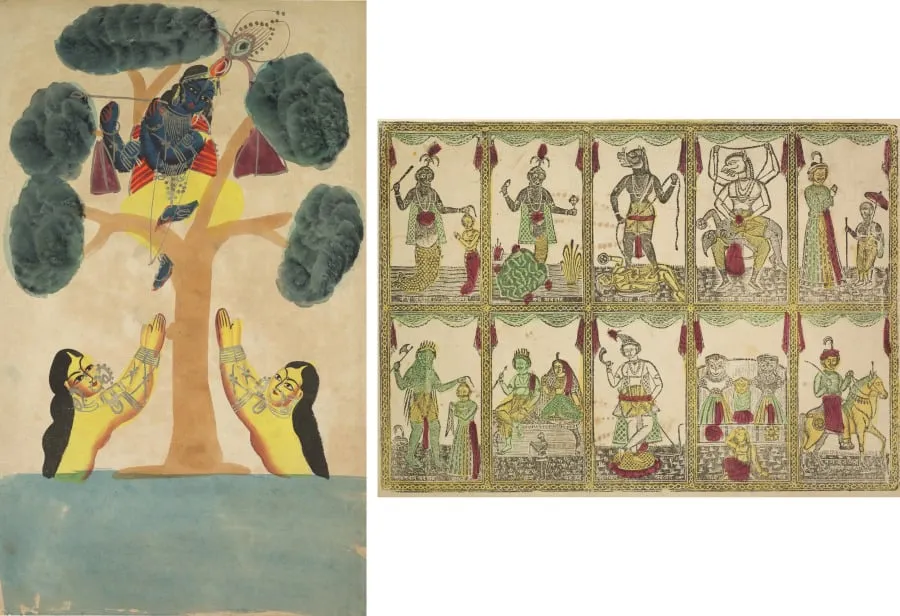
Leaf from a Kalighat album: Krishna Steals the Clothes of the Cowgirls (Gopis) (recto); Das Avataras, Ten Incarnations of Vishnu (verso) is an unspecified painting by the Bengal School artist Unknown. It dates from 1890 and is held in the collection of the Cleveland Museum of Art. The work is a two‑sided Kalighat painting, a popular folk art from Kolkata’s Kalighat district.
- Accession no.
- 2003.114
About this work
Overview
The work is a two‑sided Kalighat painting, a popular folk art from Kolkata’s Kalighat district. The recto depicts the mythic episode in which the deity Krishna, portrayed as a blue‑skinned youth, seizes the garments of bathing gopis on the Yamuna River. The verso presents a series of ten icons representing the avatars of Vishnu.
Subject & Meaning
In the foreground, Krishna clutches a flute and holds the stolen saris aloft from a tree branch, demanding the women’s obeisance. The gopis, partially draped in wet cloth, are shown retreating toward the riverbank, embodying the playful, devotional interaction between the divine lover and his devotees as described in the Bhagavata Purana.
Technique & Style
Executed in the characteristic Kalighat manner, the composition relies on flat areas of vivid color, bold outlines, and a lack of chiaroscuro. Figures are rendered with simplified anatomy and stylised gestures, emphasizing narrative clarity over naturalistic depth.
History & Provenance
Kalighat artists of the 19th‑century produced inexpensive prints for pilgrims visiting the nearby shrine. This sheet, likely created for the devotional market, reflects the commercial art practices of the area, where religious motifs were reproduced quickly for a broad audience.
Context
The scene merges a canonical Hindu legend with everyday riverine life, showing women in contemporary dress and a youthful Krishna in a familiar, approachable guise. Such works served both as visual aids for religious storytelling and as popular souvenirs for travelers.
Legacy
Kalighat paintings, including this piece, have been studied for their role in democratizing religious imagery and for influencing later modern Indian artists who drew on folk visual vocabularies to explore national identity.
Artist & collection









- Leaf from a Kalighat album: Krishna Steals the Clothes of the Cowgirls (Gopis) (recto); Das Avataras, Ten Incarnations of Vishnu (verso)
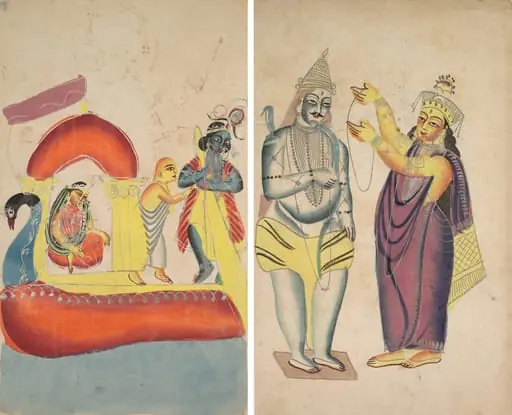 Krishna Ferrying Radha Across the Yamuna River (recto); Parivati Placing a Wedding Garland on Shiva (verso)
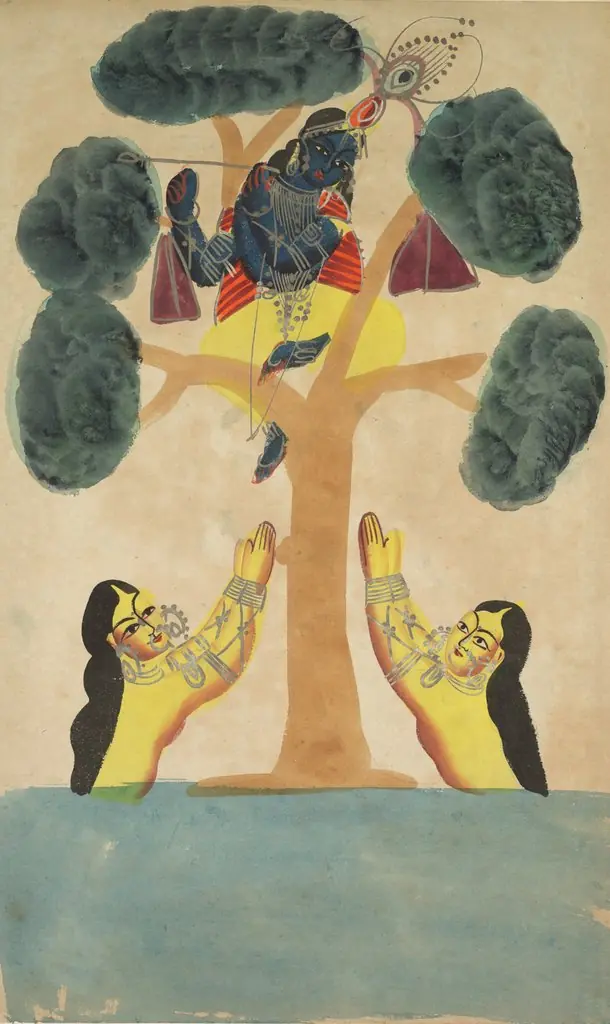 Krishna Steals the Clothes of the Cowgirls (Gopis) (recto), from a Kalighat album
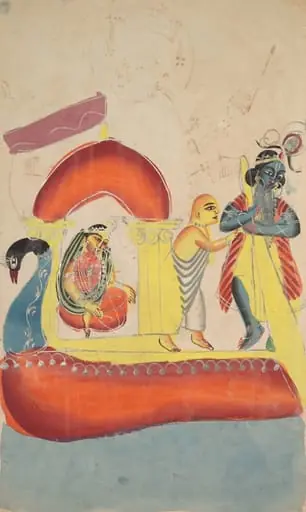 Krishna Ferrying Radha Across the Yamuna River (recto)
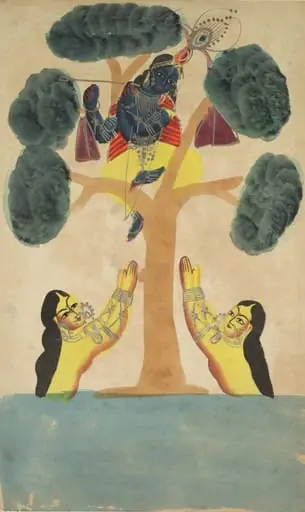 Krishna Steals the Clothes of the Cowgirls (Gopis) (recto), from a Kalighat album
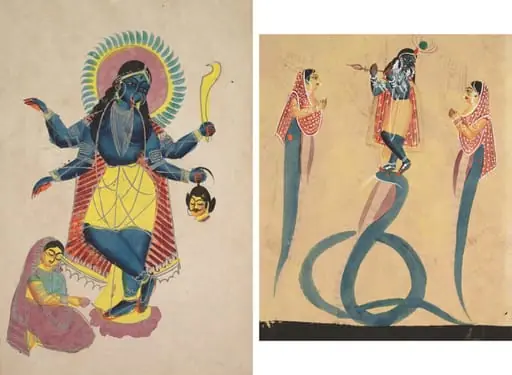 Leaf from a Kalighat album: Krishna as Kali worshipped by Radha (recto); Krishna quells the serpent Kaliya (verso)
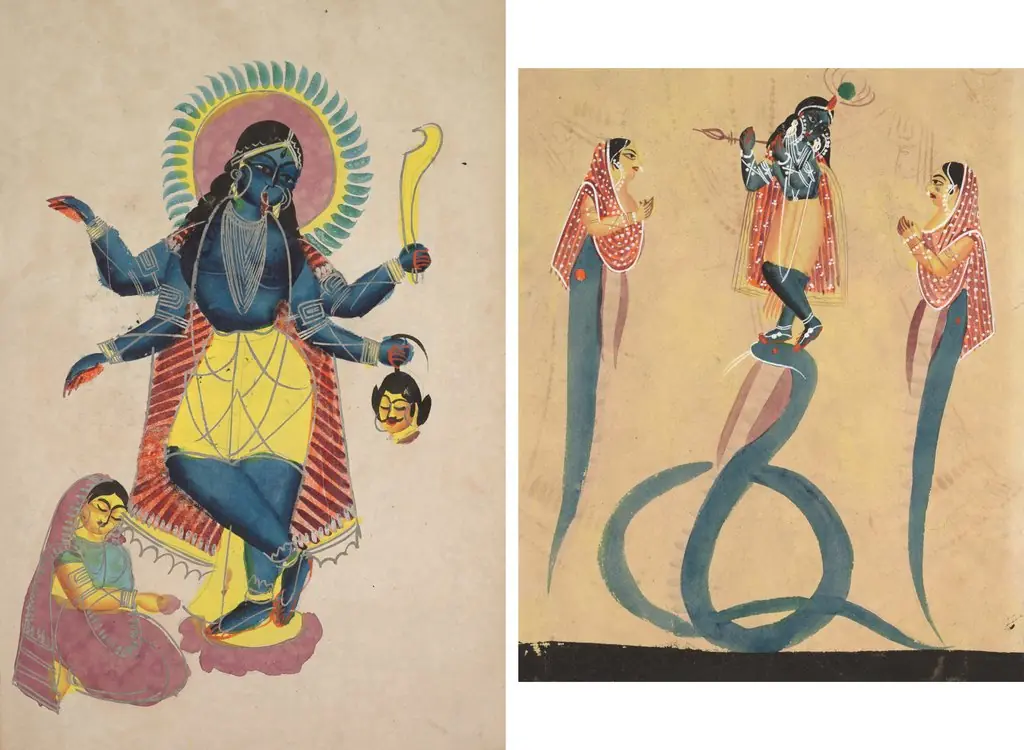 Leaf from a Kalighat album: Krishna as Kali worshipped by Radha (recto); Krishna quells the serpent Kaliya (verso)
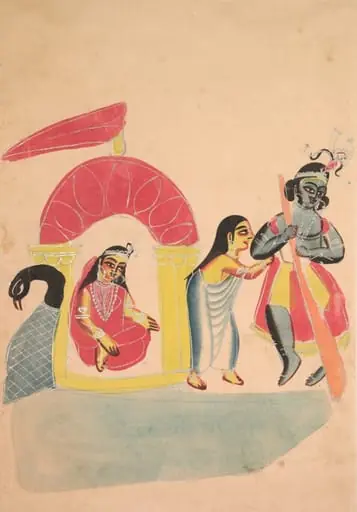 Krishna Ferrying Radha Across the Yamuna River
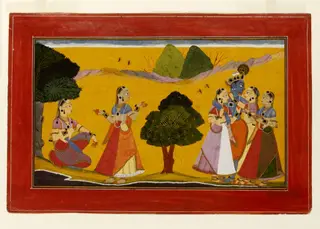 Radha and Krishna