Artwork
Winged Apsara with a Horn (recto); Jagannatha Trio (verso)
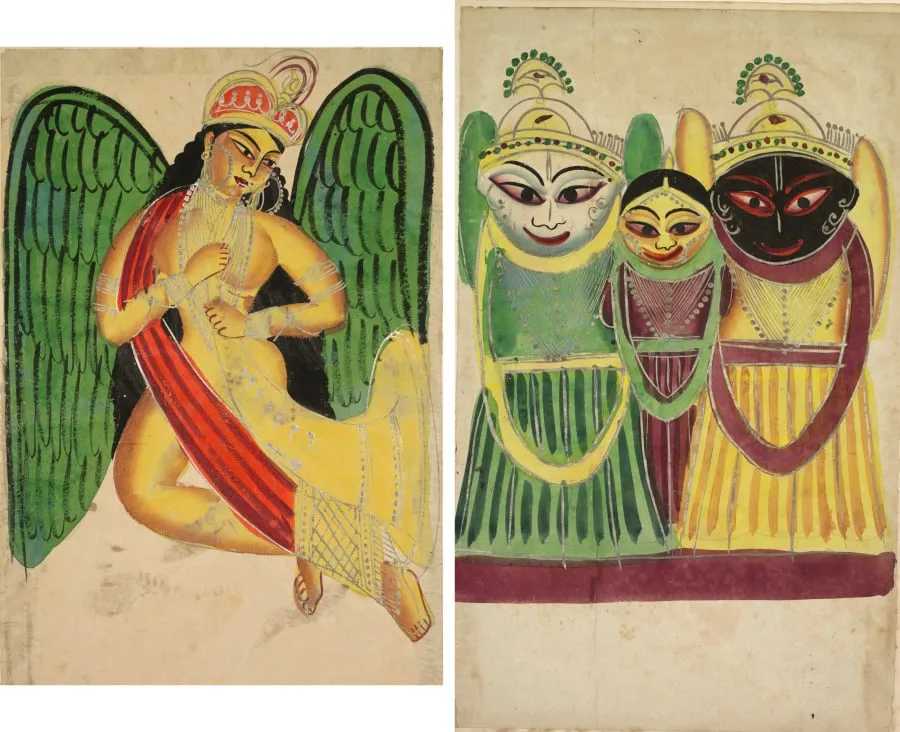
Winged Apsara with a Horn (recto); Jagannatha Trio (verso) is an unspecified painting by the Impressionist artist Unknown. It dates from 1890 and is held in the collection of the Cleveland Museum of Art. The work is a double-sided painted panel, presenting two separate compositions on its recto and verso.
- Accession no.
- 2003.135
About this work
Overview
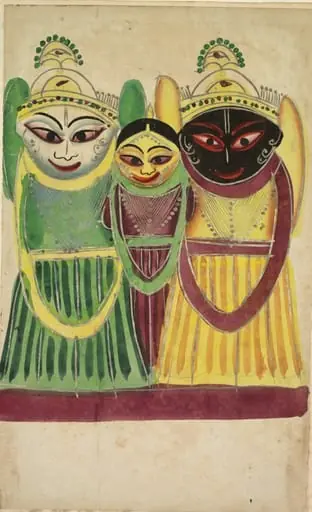
The reverse side displays three crowned individuals distinguished by skin tones, white, yellow, and black, and varied facial features.
The work is a double-sided painted panel, presenting two separate compositions on its recto and verso. The front side portrays a winged, likely female, figure with dark hair, a red sash, a horn‑adorned crown, and expansive green wings, her right hand resting on her chest and her left grasping a yellow cloth. The reverse side displays three crowned individuals distinguished by skin tones, white, yellow, and black, and varied facial features.
Subject & Meaning
The recto figure appears to be an apsara, a celestial dancer common in South Asian and Southeast Asian iconography, suggested by the wings, crown and graceful pose. The presence of a horn on the crown may indicate a specific mythological attribute. The verso grouping of three crowned persons of differing complexions could represent a triadic deity ensemble or a symbolic representation of diversity within a religious or courtly context.
Technique & Style
The painting combines elements of Impressionist brushwork with realist detailing. Broad, expressive strokes convey the vivid coloration, deep reds, bright yellows, and rich greens, while the rendering of facial features and garments retains a degree of naturalistic precision. The juxtaposition of bold color fields and more defined forms creates a visual tension between atmospheric effect and figurative clarity.
History & Provenance
The panel’s origin, date, and previous ownership are not documented in the supplied information, leaving its provenance uncertain. Its dual-sided format and eclectic stylistic blend suggest it may have been produced for a private devotional or decorative purpose, possibly within a cultural milieu where both impressionistic and realistic influences were accessible.
Context
Apsaras are traditionally linked to Hindu and Buddhist mythologies, serving as celestial entertainers. The inclusion of a horned crown and the triadic figures on the reverse may reflect syncretic artistic trends where local religious motifs were merged with contemporary European painting techniques, a pattern observed in colonial-era artworks from regions interacting with Western artistic education.
Artist & collection









- Jagannatha Trio (verso)
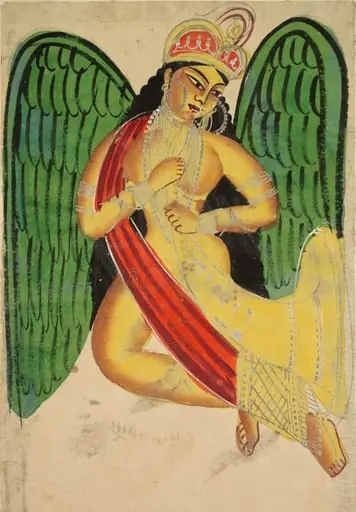 Winged Apsara with a Horn (recto)
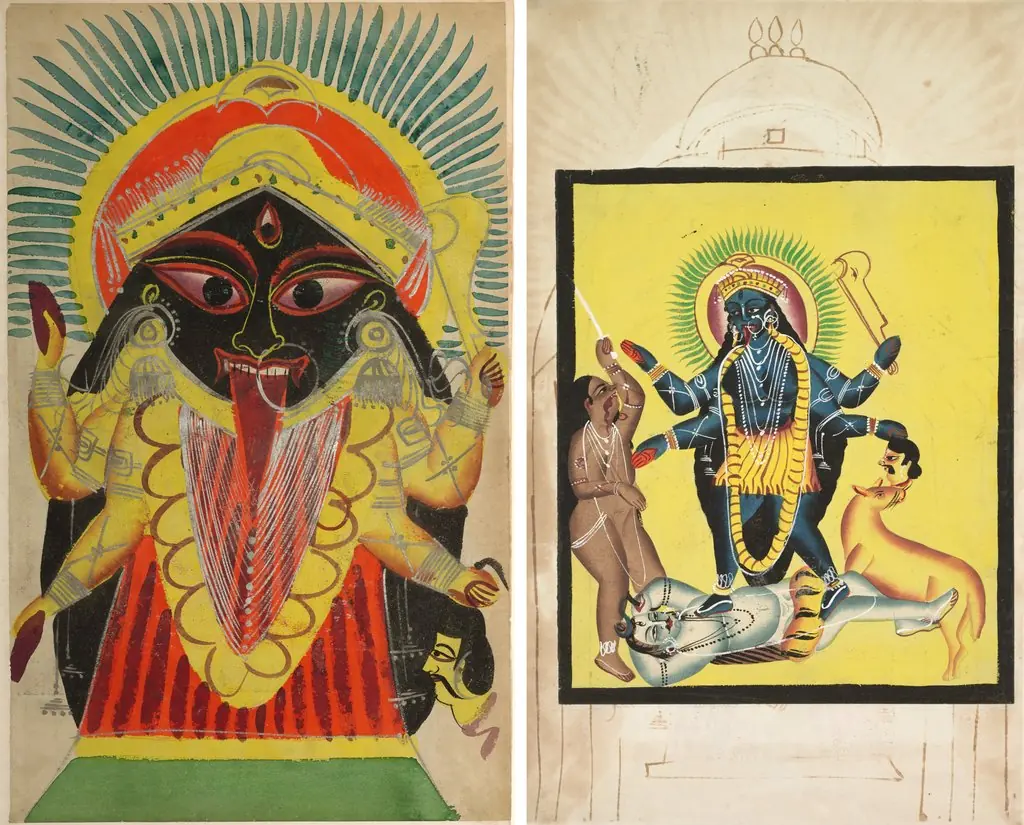 Leaf from a Kalighat album: The Goddess Kali (recto); Kali Standing on Shiva (verso)
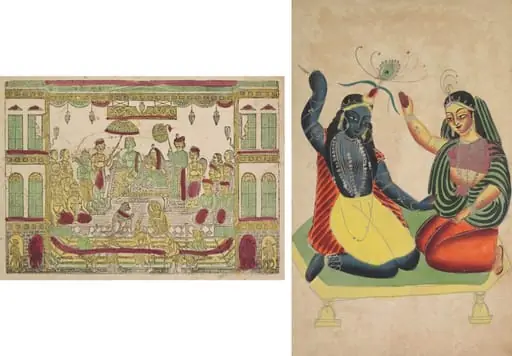 Leaf from a Kalighat album: Rama and Sita in the Royal Palace (recto); Radha and Krishna (verso)
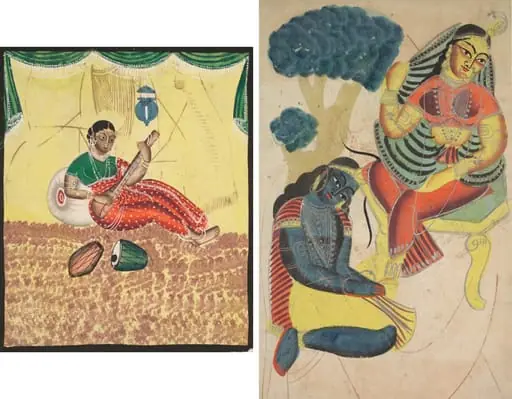 Leaf from a Kalighat album: Woman Playing Music (recto); Krishna Stroking Radha's Feet (verso)
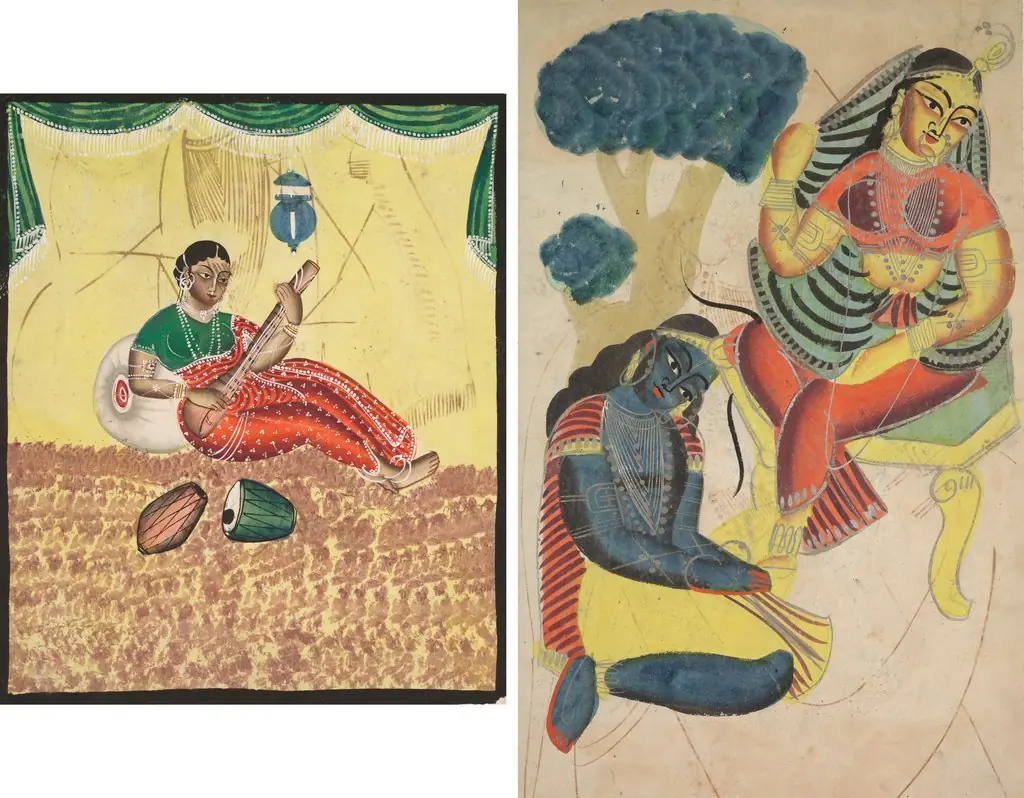 Leaf from a Kalighat album: Woman Playing Music (recto); Krishna Stroking Radha's Feet (verso)
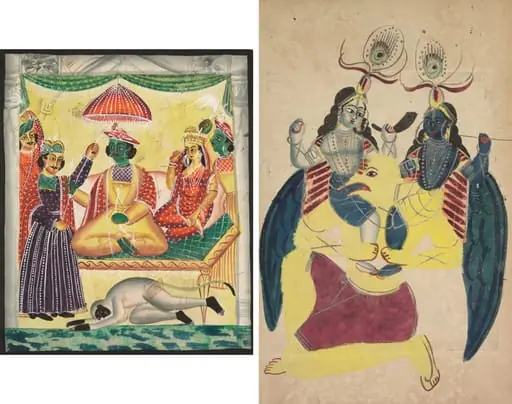 Leaf from a Kalighat album: Rama and Sita enthroned (recto); Garuda carrying Balarama and Krishna (verso)
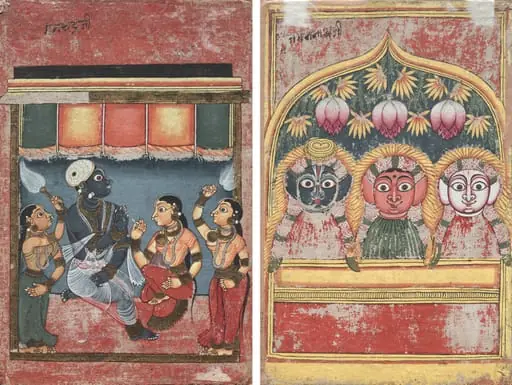 Krishna with Radha and Two Attendants (recto); Jagannath, Subhadra and Balarama in an Arch (verso)
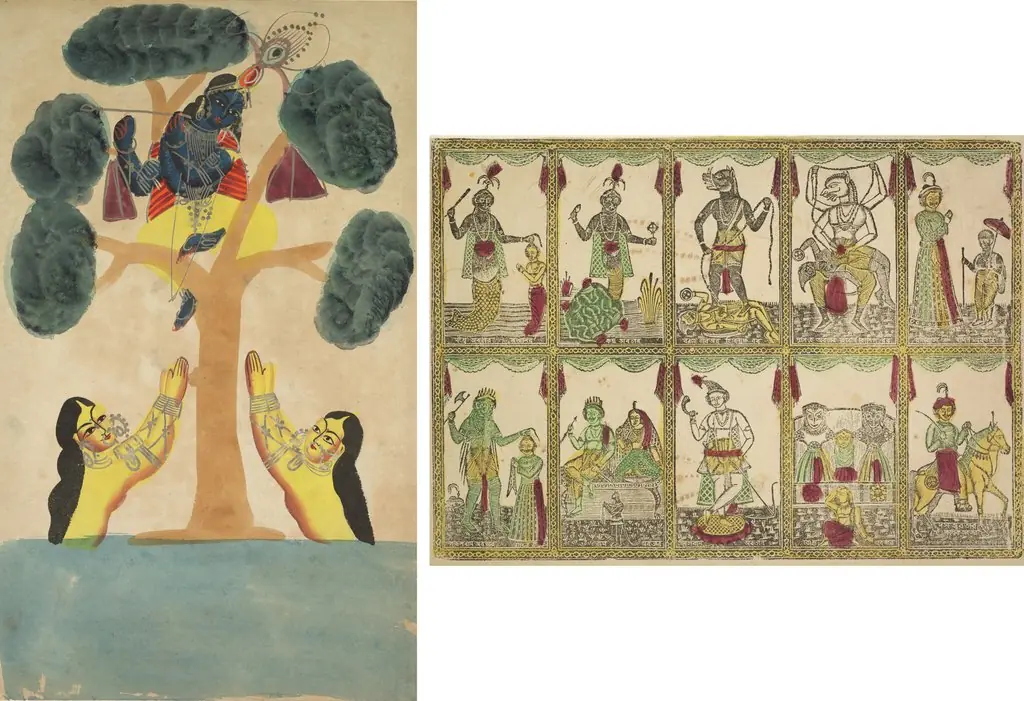 Leaf from a Kalighat album: Krishna Steals the Clothes of the Cowgirls (Gopis) (recto); Das Avataras, Ten Incarnations of Vishnu (verso)
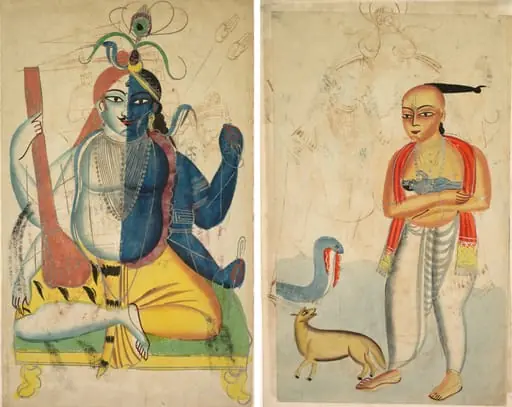 Leaf from a Kalighat album: Hari-Hara (recto); Vasudeva (Krishna's Father) Fleeing with Krishna Encounters a Cobra and a Jackal (verso)