Artwork
Leaf from a Kalighat album: The Goddess Kali (recto); Kali Standing on Shiva (verso)
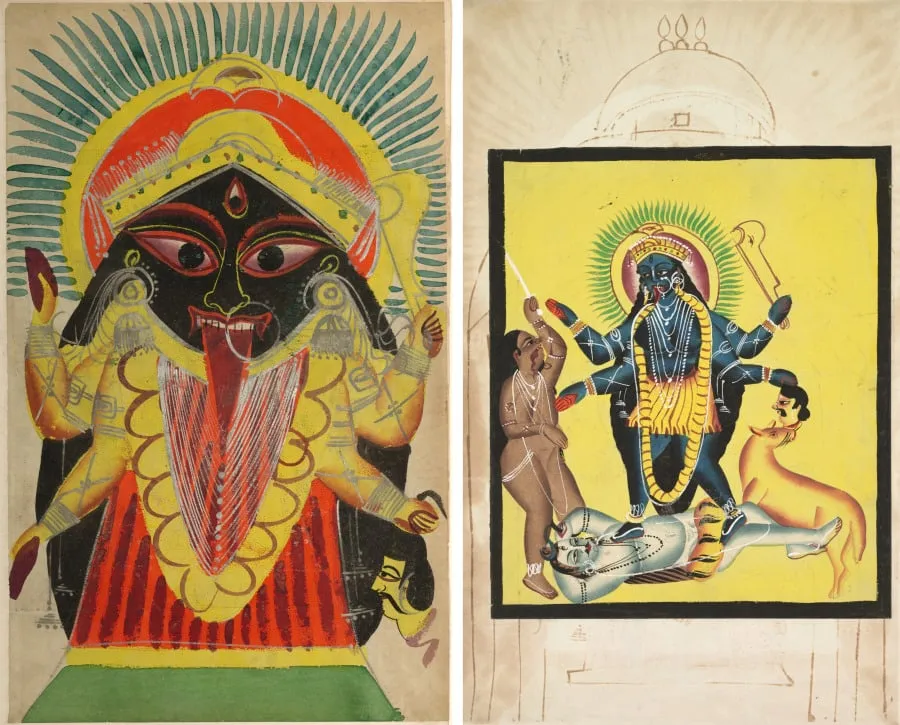
Leaf from a Kalighat album: The Goddess Kali (recto); Kali Standing on Shiva (verso) is an unspecified painting by the Bengal School artist Unknown. It dates from 1890 and is held in the collection of the Cleveland Museum of Art. This small paper painting depicts the Hindu goddess Kali in a vivid, folk‑art style.
- Accession no.
- 2003.110
About this work
Overview
This small paper painting depicts the Hindu goddess Kali in a vivid, folk‑art style. She is rendered with dark skin, four arms, a protruding red tongue, and a garland of skulls, while standing atop the chest of a reclining, pale figure. The composition is bold and colorful, typical of the portable devotional images produced for pilgrims at Kolkata’s Kalighat temple.
Subject & Meaning
Kali is shown with a third eye on her forehead, a sword in one hand and a severed demon’s head in another, while the remaining hands offer gestures of protection and blessing. The fierce expression, blood‑stained mouth and outstretched tongue convey her role as a destructive force, yet the protective mudras underscore her function as a guardian deity.
Technique & Style
Executed on thin paper with rapid brushwork, the image employs flat areas of saturated pigment and stark outlines characteristic of Kalighat school prints. The stylized anatomy, exaggerated features, and simplified background reflect a mass‑produced aesthetic designed for quick replication and affordability, while still retaining recognizable iconographic details.
History & Provenance
Created in the 19th‑century marketplace surrounding the Kalighat temple in Kolkata, the work served as a low‑cost souvenir for both Indian pilgrims and visiting British residents. Its format mirrors the larger idol housed within the temple, allowing travelers to acquire a portable version of the deity’s image for personal devotion or curiosity.
Context
During the Victorian era, images of Kali resonated with British audiences fascinated by the exotic and the terrifying aspects of Indian religion. The painting’s graphic intensity aligned with contemporary colonial narratives, making it a popular object for display among curious or shocked observers back in England.
Artist & collection









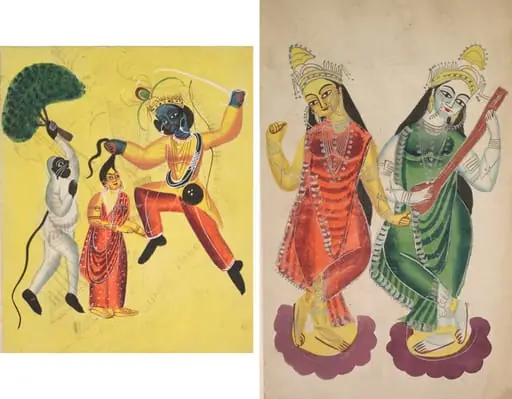
- Leaf from a Kalighat album: Hanuman attacks Indrajit holding an apparition of Sita by the hair (recto); Goddesses Lakshmi and Sarasvati (verso)
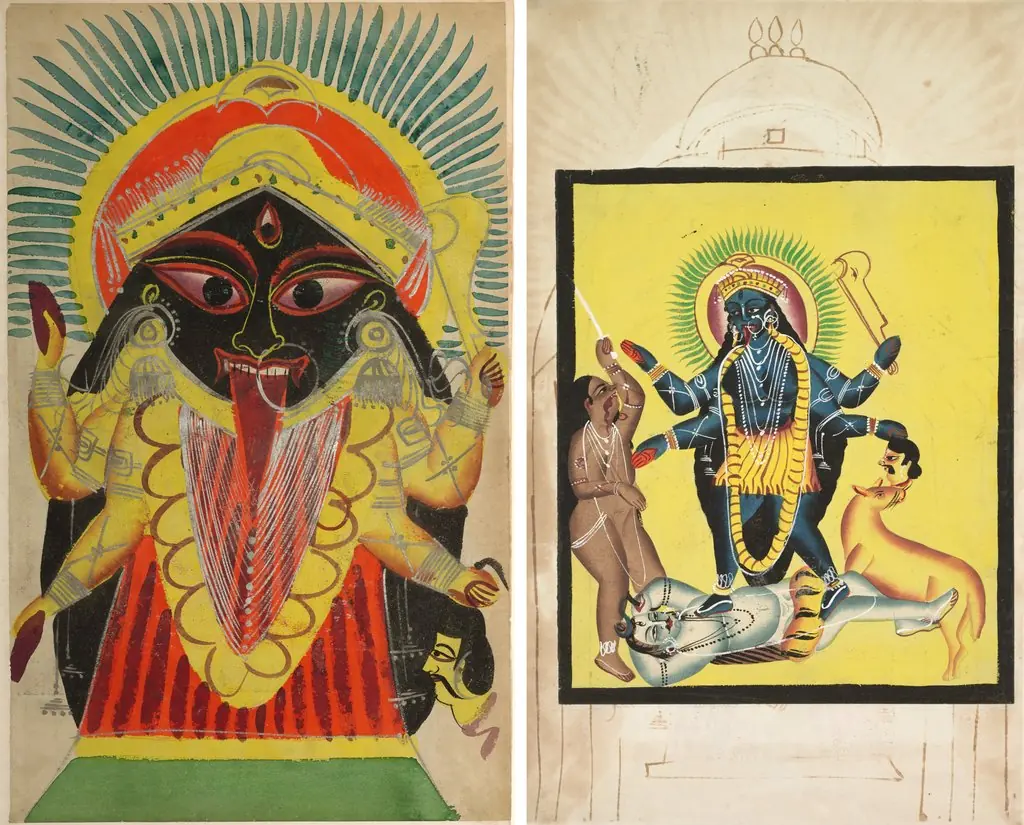 Leaf from a Kalighat album: The Goddess Kali (recto); Kali Standing on Shiva (verso)
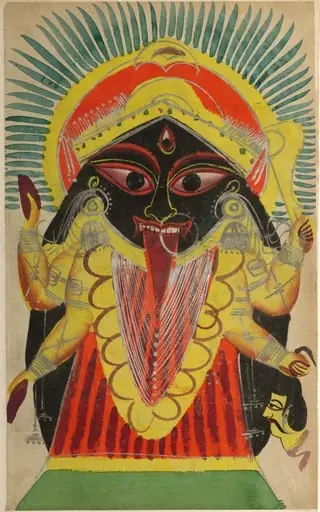 The Goddess Kali (recto), from a Kalighat album
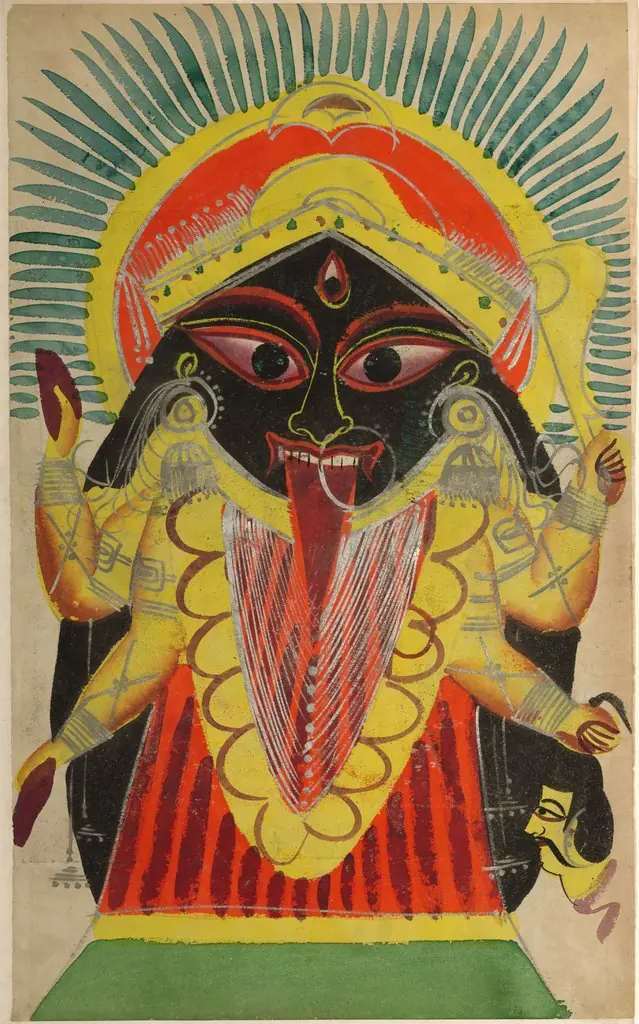 The Goddess Kali (recto), from a Kalighat album
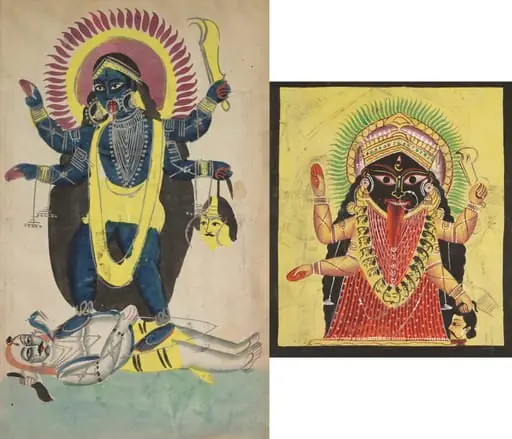 Leaf from a Kalighat album: Two Aspects of Kali
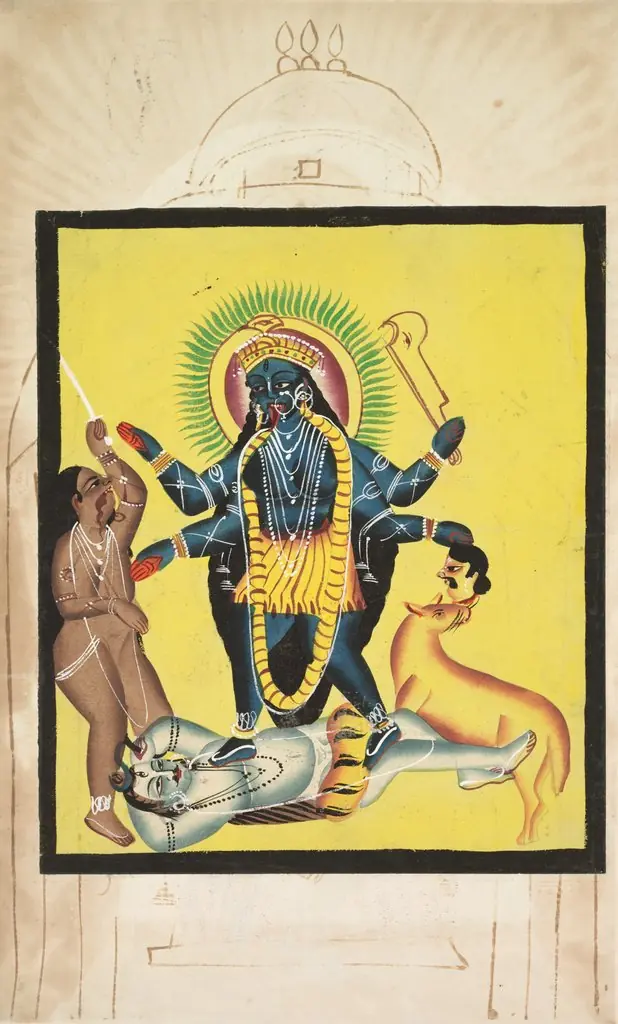 Kali Standing on Shiva (verso), from a Kalighat album
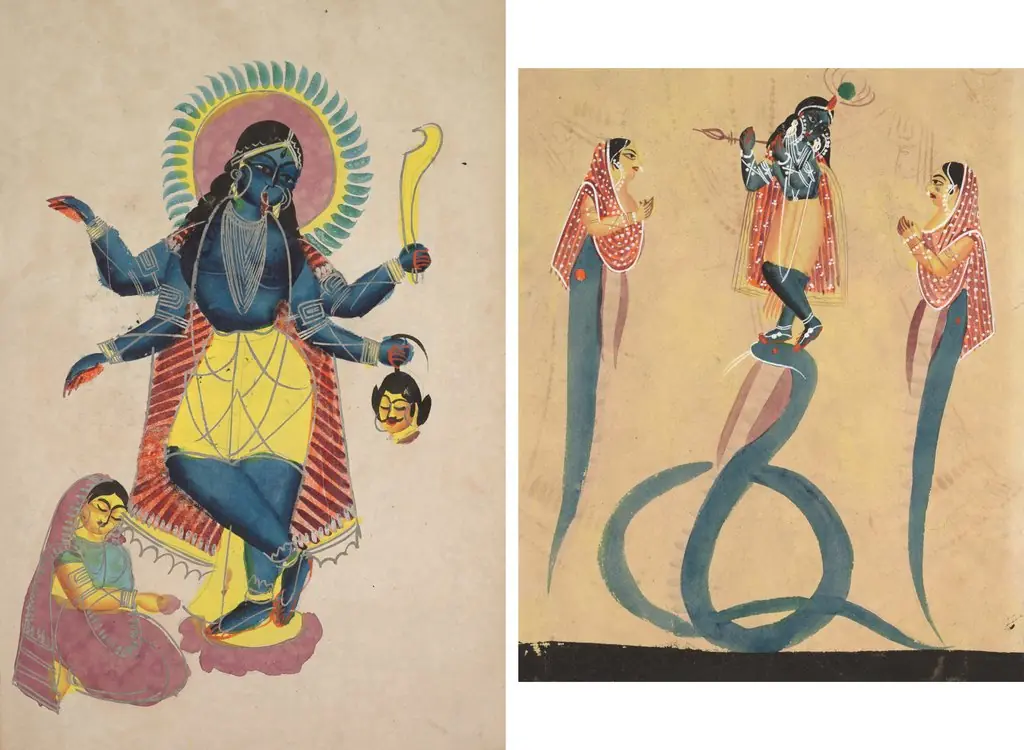 Leaf from a Kalighat album: Krishna as Kali worshipped by Radha (recto); Krishna quells the serpent Kaliya (verso)
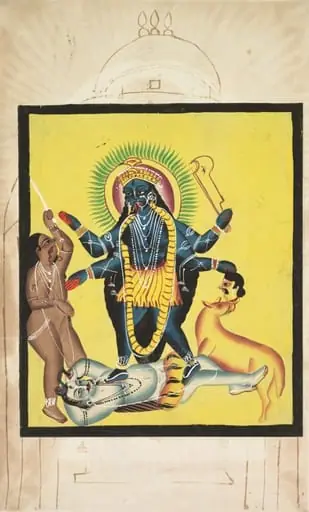 Kali Standing on Shiva (verso), from a Kalighat album
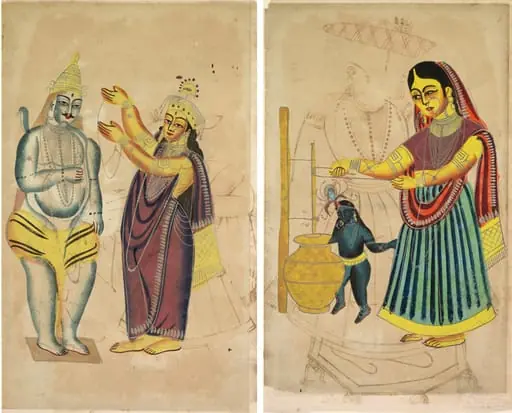 Leaf from a Kalighat album: Parvati Placing a Wedding Garland on Shiva (recto); Yasoda Churning Butter (verso)
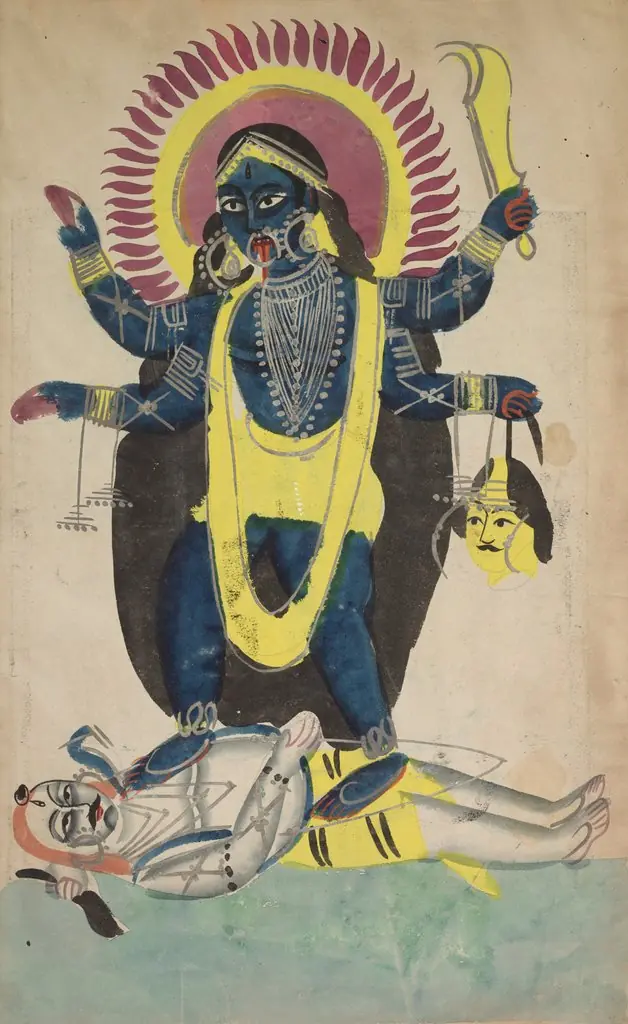 Leaf from a Kalighat album: Two Aspects of Kali
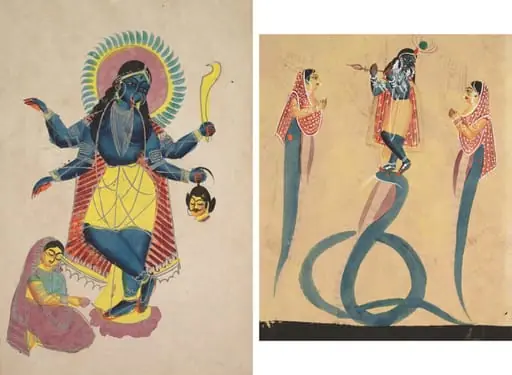 Leaf from a Kalighat album: Krishna as Kali worshipped by Radha (recto); Krishna quells the serpent Kaliya (verso)