Artwork
The Waterfall in the Ravine
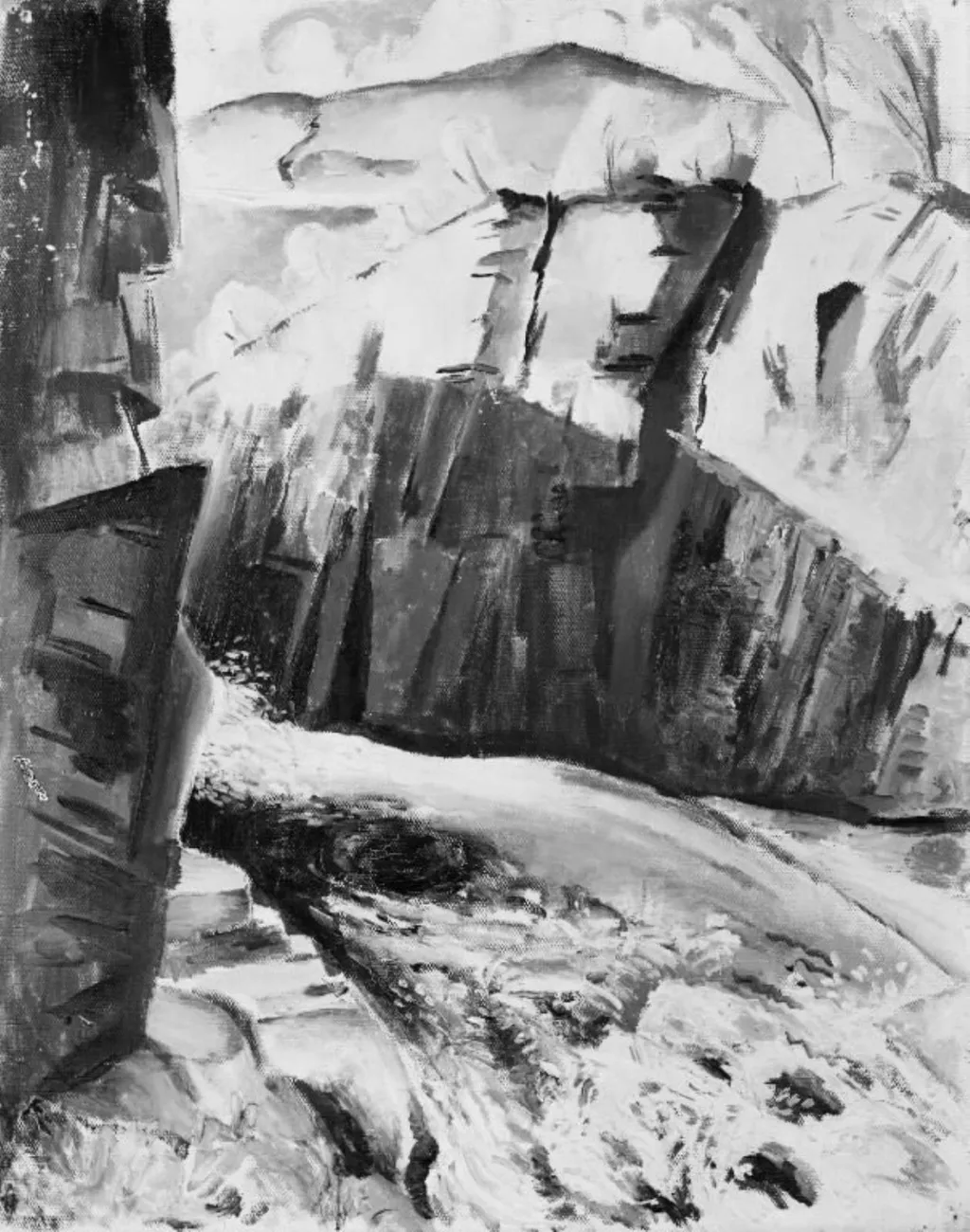
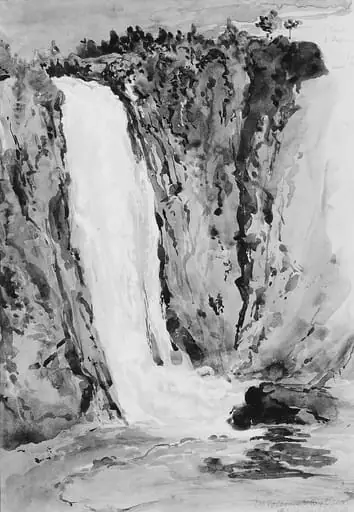
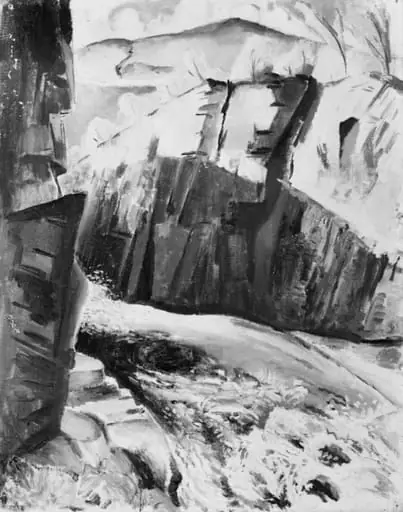
The Waterfall in the Ravine is an oil painting by the Nanga artist Leander Engström. It dates from 1917 and is held in the collection of the Statens Museum for Kunst.
About this work
Overview
Painted in 1917 by Leander Engström, The Waterfall in the Ravine is an oil-on-canvas landscape that captures a secluded natural setting. Engström, influenced by East Asian ink traditions and Expressionist sensibilities, rendered the scene with quiet intensity. The work resides in the collection of Statens Museum for Kunst, reflecting its significance within early 20th-century Scandinavian art.
Subject & Meaning
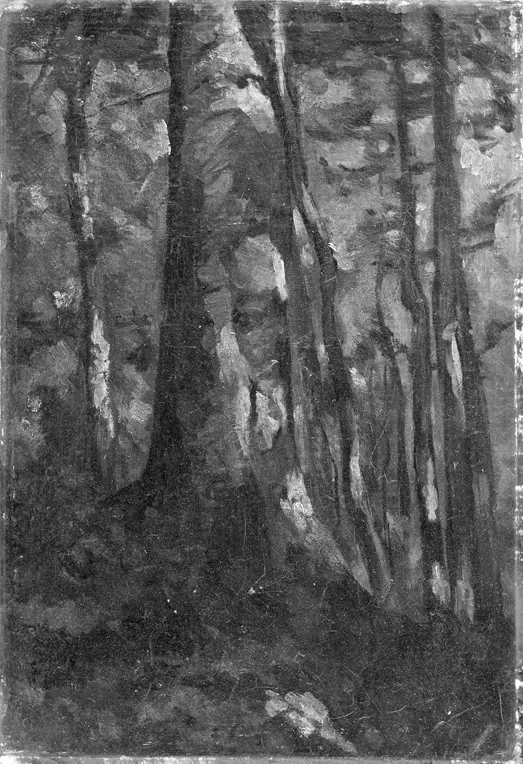
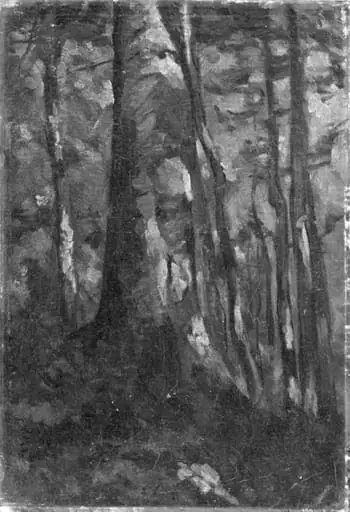
The painting centers on a waterfall descending through a dense, rocky ravine, surrounded by thick vegetation. Rather than dramatizing the force of water, Engström emphasizes stillness and solitude. The composition invites contemplation, suggesting a spiritual connection to nature, a theme common in nanga bunjinga aesthetics, where landscape becomes a vessel for inner reflection.
Technique & Style
Engström employed a restrained palette of earthy greens and browns, avoiding bright contrasts to sustain a meditative mood. Light filters subtly through the canopy, creating soft, dappled shadows that model form without harsh definition. His brushwork is deliberate yet fluid, blending tonal gradations to suggest depth and atmosphere, echoing chiaroscuro principles without overt theatricality.
History & Provenance
Engström’s reputation as a bridge between Nordic realism and Asian-inspired brush traditions helped secure institutional recognition.
Completed in 1917, the painting entered the collection of Statens Museum for Kunst shortly after its creation. Engström’s reputation as a bridge between Nordic realism and Asian-inspired brush traditions helped secure institutional recognition. The work has remained in public ownership since, with no documented private transactions, underscoring its status as a stable part of Denmark’s national art heritage.
Context
In early 20th-century Denmark, artists increasingly turned to nature as a counterpoint to industrialization. Engström’s work aligned with this trend while drawing from Japanese ink painting’s emphasis on simplicity and spontaneity. His fusion of these influences with Expressionist emotional tone distinguished him from contemporaries focused on urban or social themes.
Legacy
Though not widely known outside Scandinavia, Engström’s approach to landscape, calm, introspective, and technically refined, has influenced later generations of Danish painters seeking to reconcile naturalism with emotional resonance. The Waterfall in the Ravine remains a quiet exemplar of his synthesis of Eastern and Western traditions, valued for its restraint and atmospheric depth.
Own this work as a print
Artist & collection
Artist
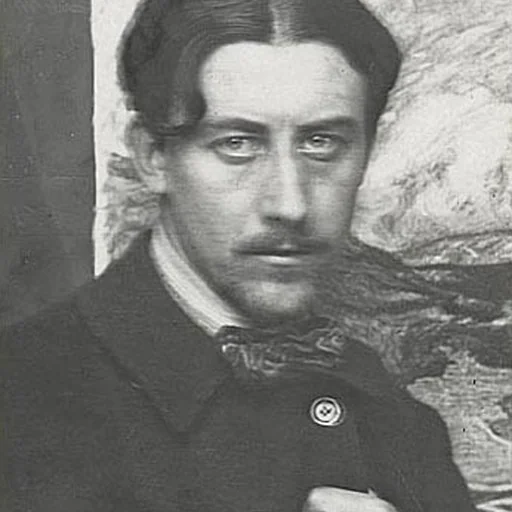
Per Leander Engström, sometimes denoted as The Elder (27 February 1886 – 6 February 1927) was a Swedish painter. He specialized in portraits and colorful wilderness scenes in the Expressionist style.