Artwork
Spinnerei und Weberei (Juli)
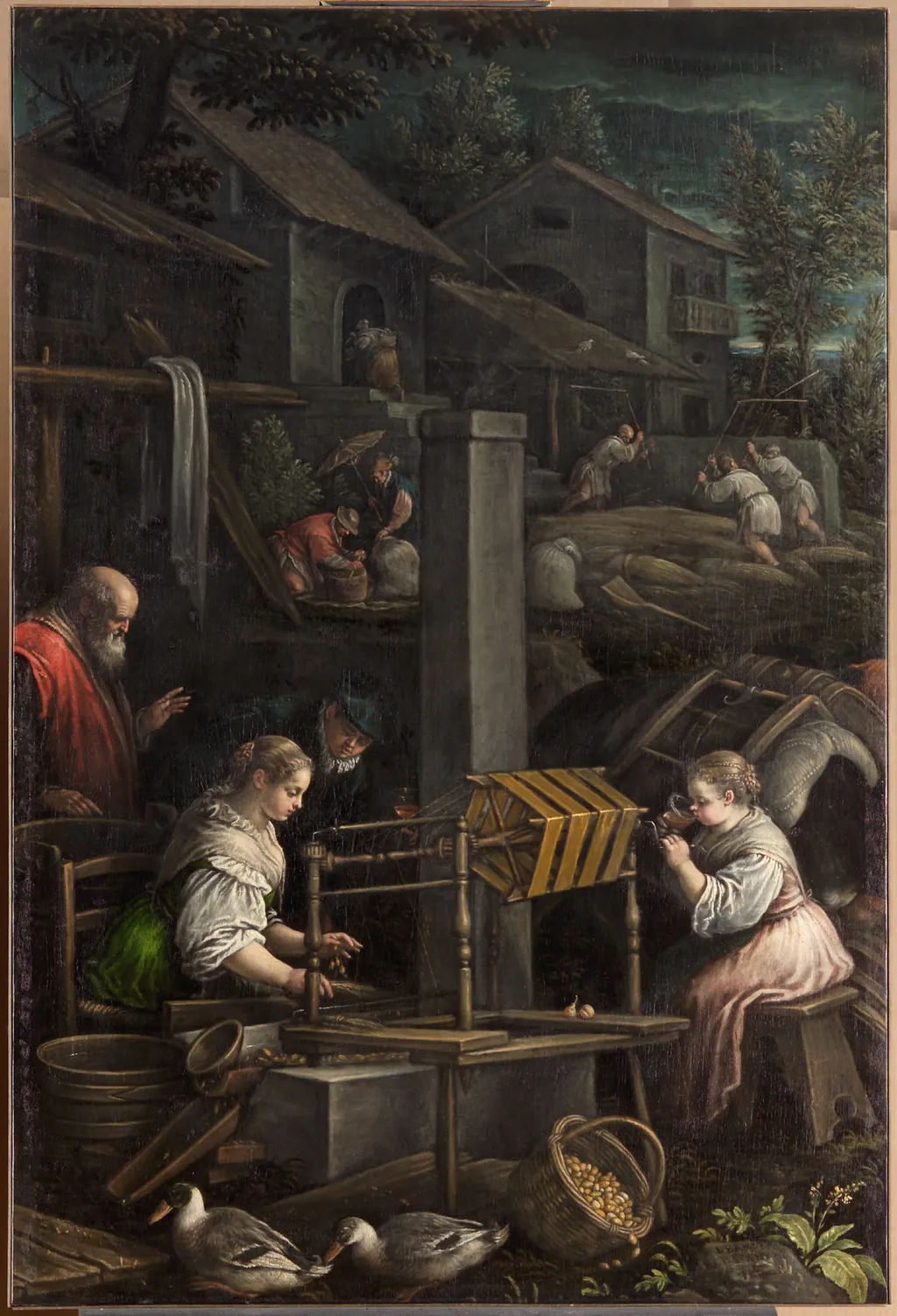
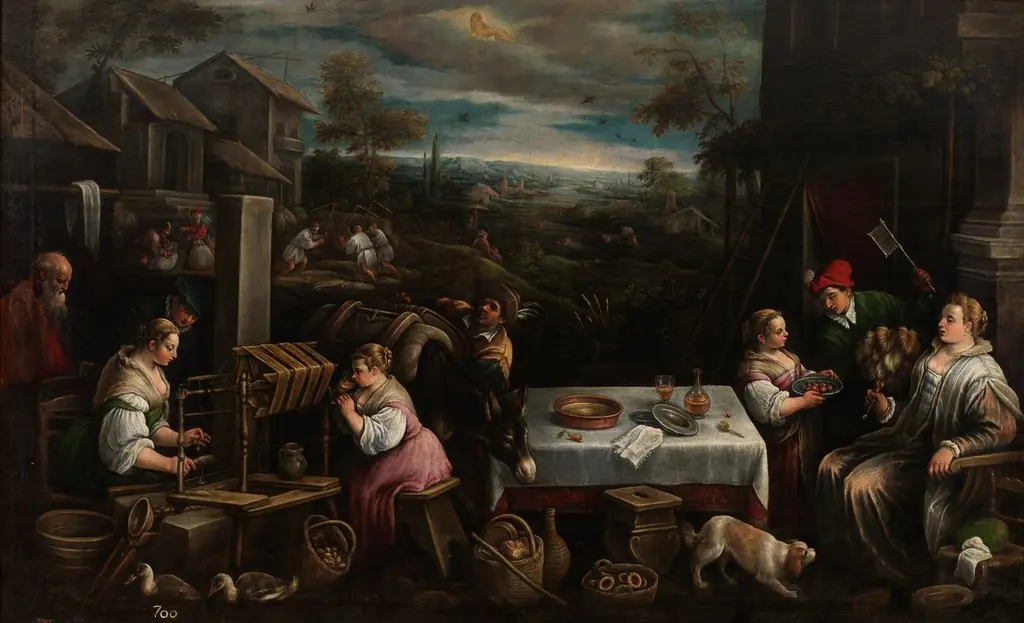
Spinnerei und Weberei (Juli) is an unspecified painting by the Early Baroque Italian artist Leandro Bassano. It dates from 1599 and is held in the collection of the Kunsthistorisches Museum.
About this work
Overview
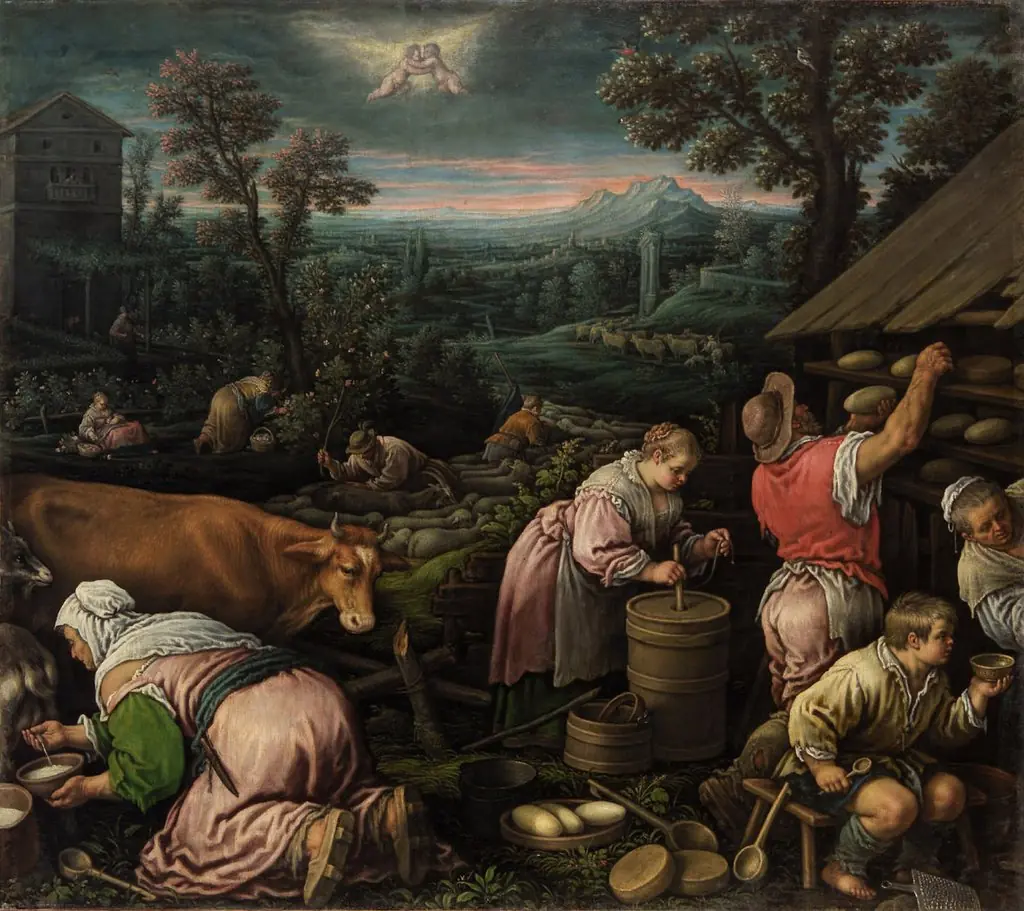
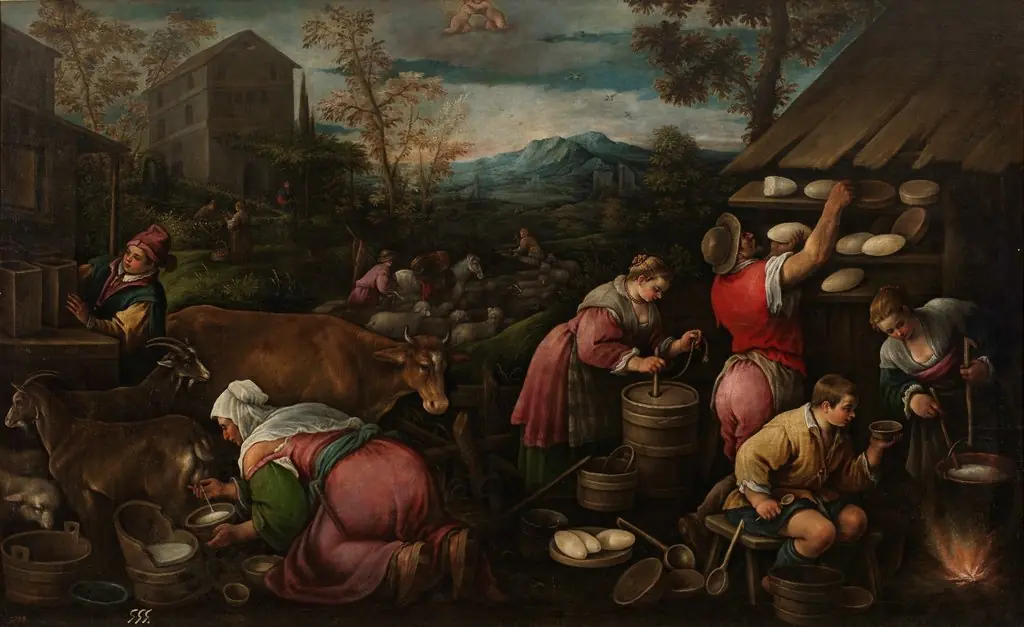
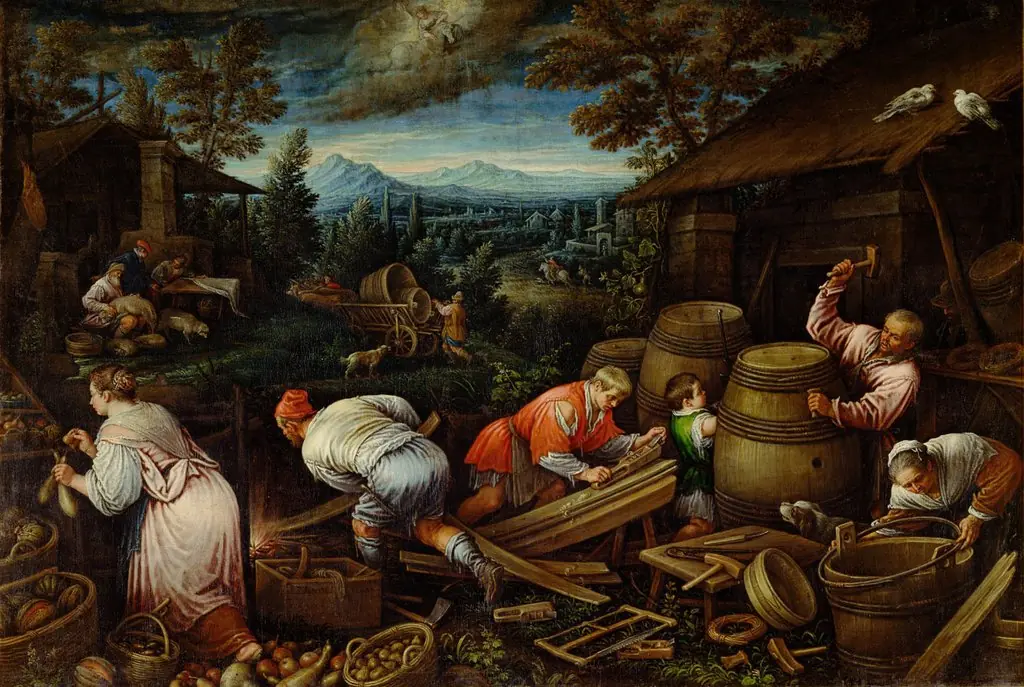
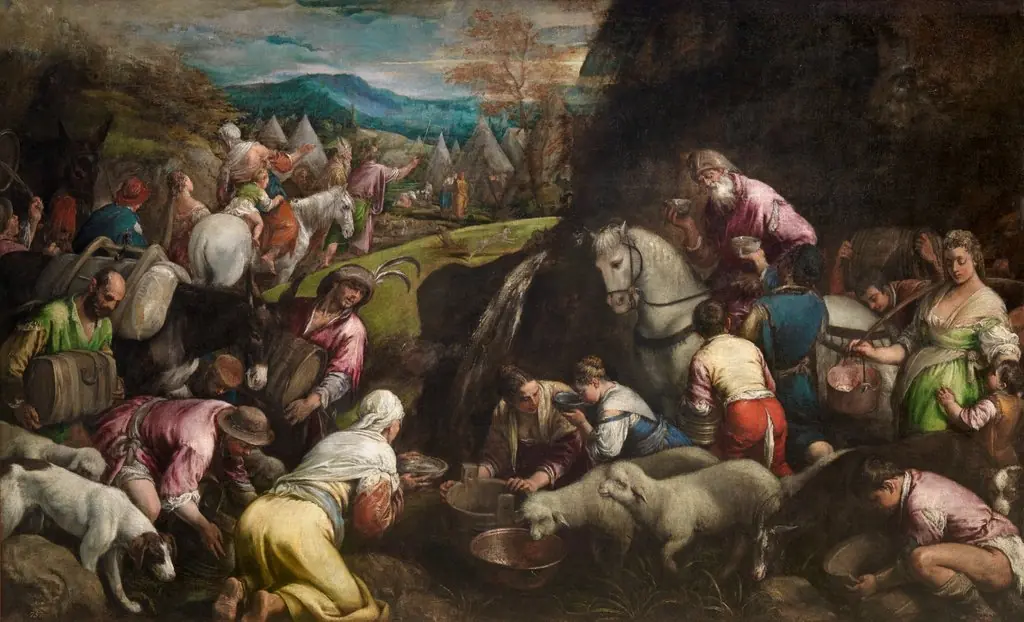
Painted in 1599 by Leandro Bassano, Spinnerei und Weberei (Juli) captures the labor of textile production during the summer month.
Painted in 1599 by Leandro Bassano, Spinnerei und Weberei (Juli) captures the labor of textile production during the summer month. A member of the Bassano artistic dynasty, Leandro was trained by his father Jacopo and later honored by the Doge of Venice. The work belongs to the Kunsthistorisches Museum’s collection and forms part of a seasonal series, reflecting daily rural industry in late 16th-century northern Italy.
Subject & Meaning
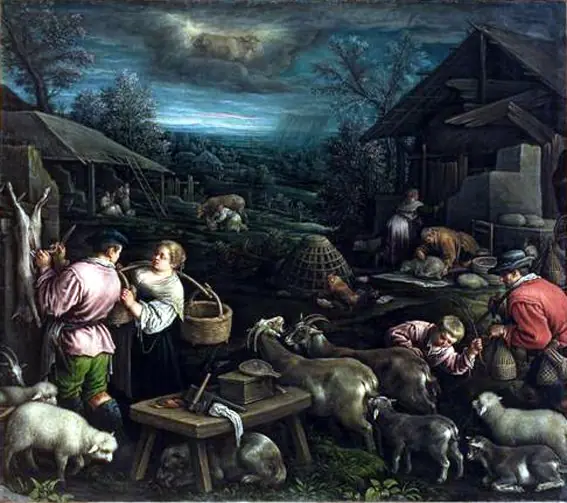
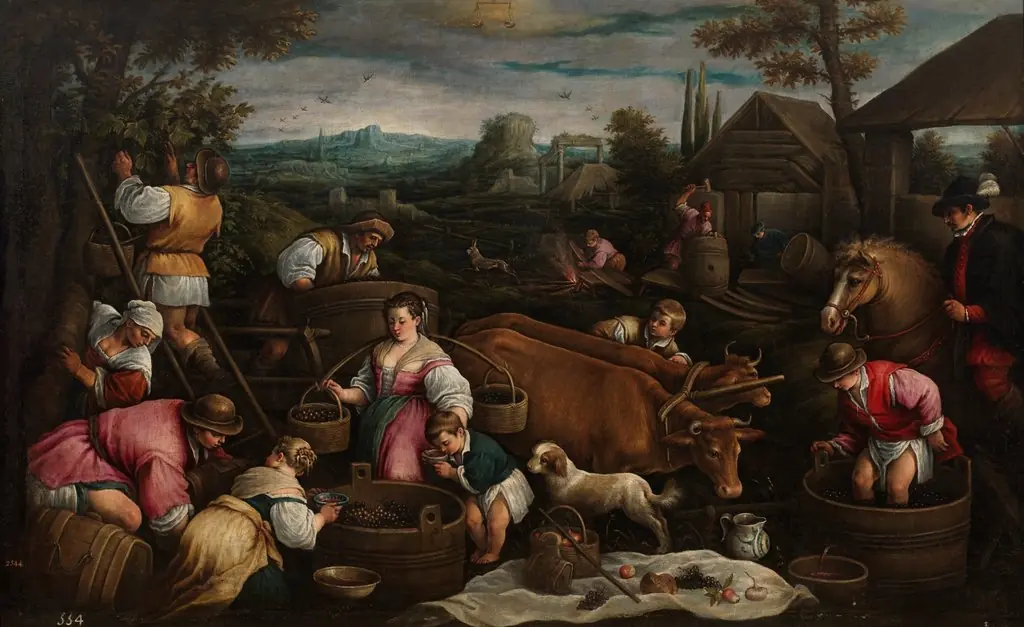
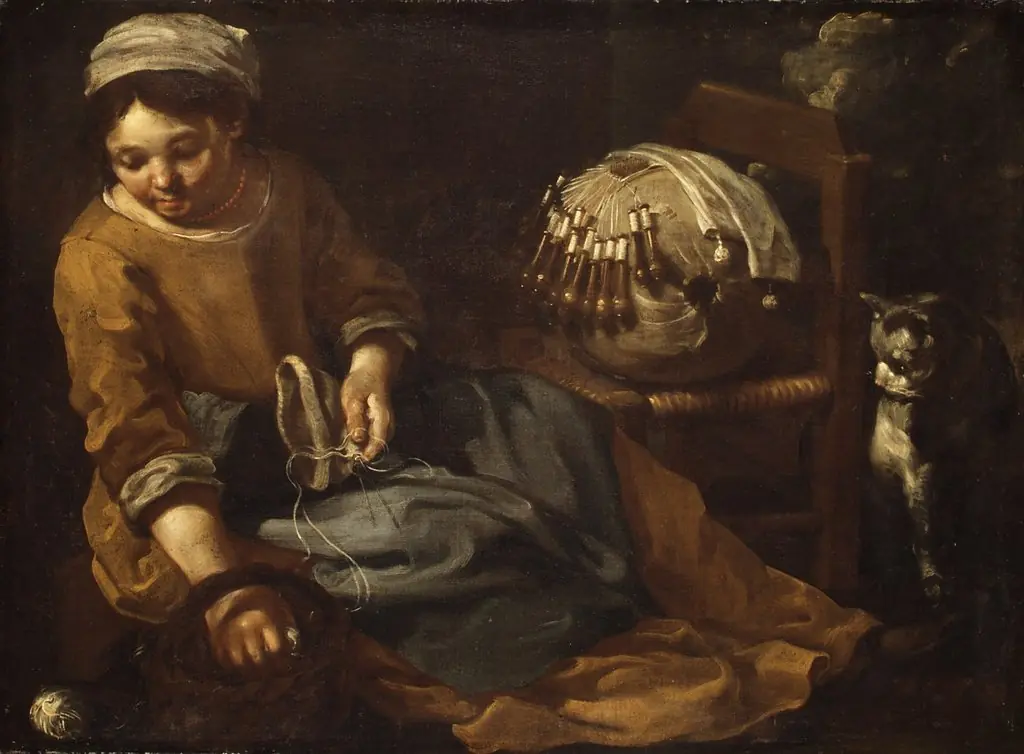
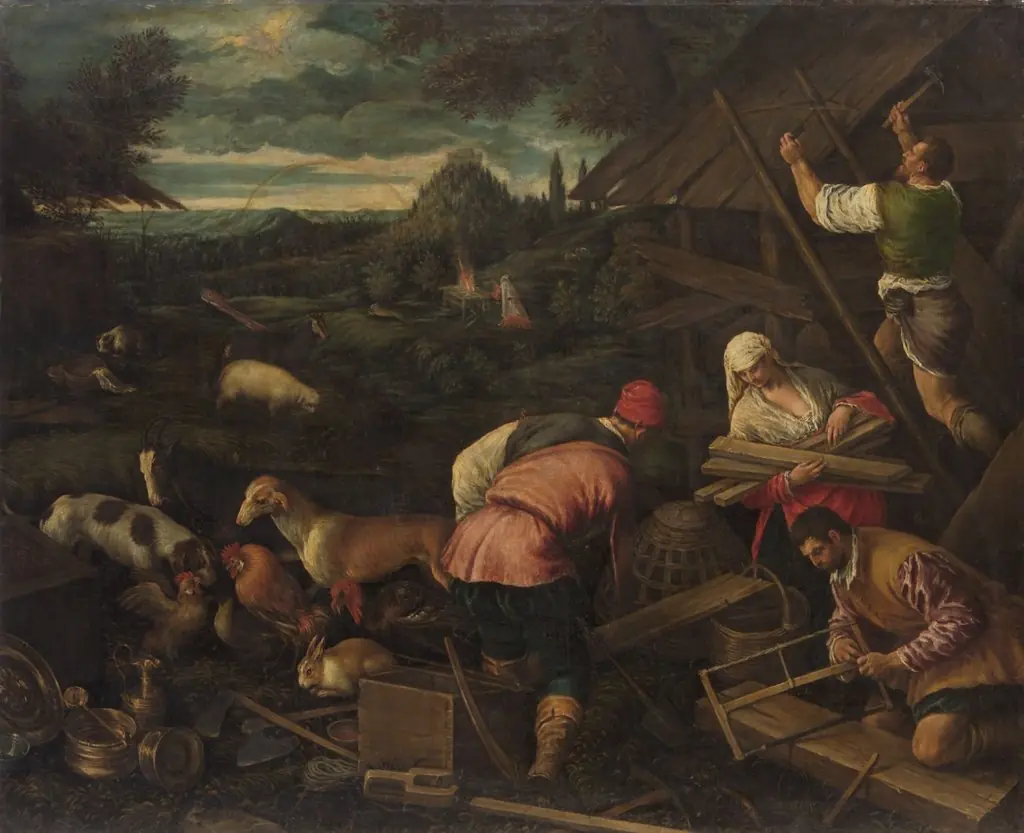
The scene portrays women engaged in spinning and weaving, surrounded by baskets, spindles, and looms, suggesting the seasonal rhythm of domestic labor. In the background, figures move near a substantial building, possibly a workshop or estate. The inclusion of a man in a red robe may indicate oversight or authority, subtly reinforcing social hierarchy within the agricultural economy depicted.
Technique & Style
Bassano employs chiaroscuro to model forms and suggest spatial depth, with light falling sharply across faces and textiles to emphasize texture and volume. The composition is densely populated, with careful attention to the arrangement of tools and garments. His brushwork remains precise yet unpolished, preserving the immediacy of observed labor rather than idealizing it.
History & Provenance
Created during the late Renaissance transition into early Baroque, the painting entered the Habsburg collections before being housed at the Kunsthistorisches Museum. Its survival as part of a seasonal cycle is rare; few such works from this period survive intact. Documentation links it to Leandro’s later output, following his father’s death and his own elevation to knighthood.
Context
In late 16th-century Veneto, textile production was a vital rural economy, often organized within family units or estate systems. Paintings like this served not as decoration alone but as records of labor, aligning with broader European interests in documenting everyday life. Leandro’s focus on work reflects a regional tradition rooted in his father’s genre scenes, distinct from Venetian grandeur.
Legacy
Though overshadowed by his father’s fame, Leandro’s seasonal works contributed to the development of Northern Italian genre painting. Spinnerei und Weberei (Juli) remains a documented example of how artists captured labor without romanticism, influencing later depictions of rural industry in Central Europe. Its preservation offers insight into pre-industrial work practices.
Own this work as a print
Artist & collection
Artist
Leandro Bassano (10 June 1557 – 15 April 1622), also called Leandro dal Ponte, was an Italian Renaissance painter from Bassano del Grappa who was awarded a knighthood by the Doge of Venice.