Artwork
Rest on the Flight into Egypt
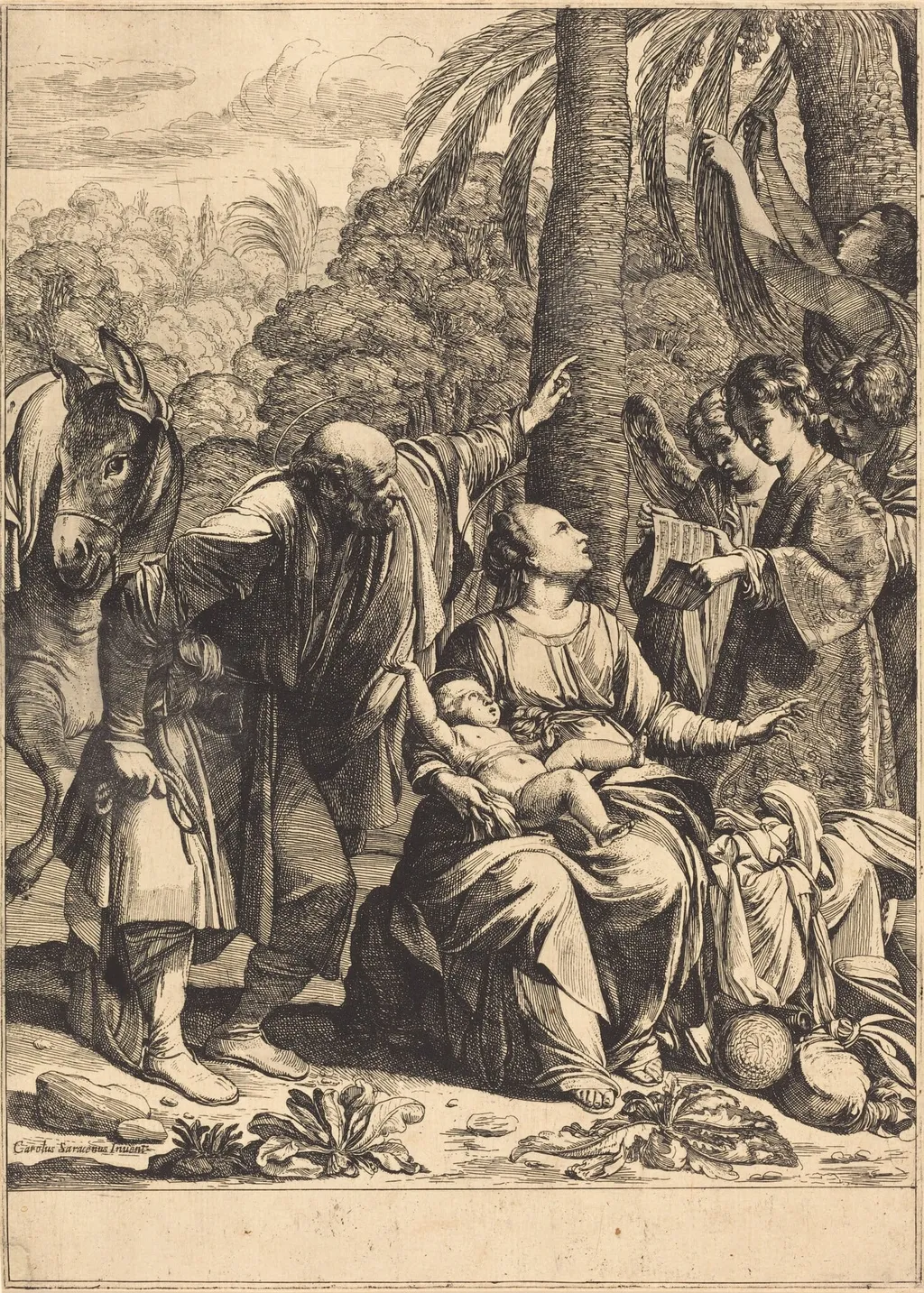
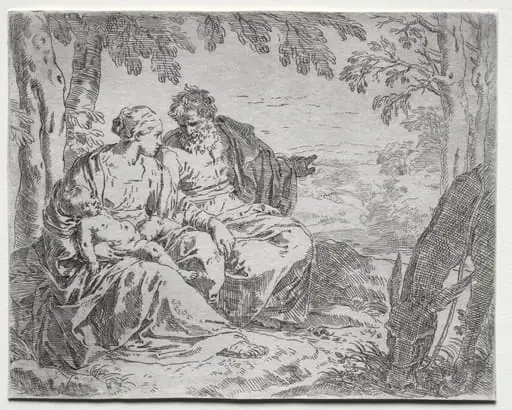
Rest on the Flight into Egypt is an ink print by the Baroque artist Jean LeClerc. It dates from 1619 and is held in the collection of the National Gallery of Art.
About this work
Overview
This piece exemplifies the artist's engagement with Northern Mannerist traditions, blending religious narrative with a keen observation of naturalistic detail.
Jean Leclerc's 1619 etching, Rest on the Flight into Egypt, depicts the Holy Family and companions pausing during their journey to Egypt. The composition centers on the Virgin Mary seated beneath a tree, holding the infant Jesus, while Joseph gestures upward, possibly indicating divine guidance or the direction of travel. A third figure stands beside a donkey, the traditional mount of the family, and a fourth figure holds an open book, likely referencing the scriptural prophecy of the flight.
Set within a detailed forest landscape featuring rocky outcrops and varied vegetation, the work utilizes Leclerc's characteristic etching technique to create depth through intricate cross-hatching and tonal shading. This piece exemplifies the artist's engagement with Northern Mannerist traditions, blending religious narrative with a keen observation of naturalistic detail. Produced during a brief but prolific period in Leclerc's career, the etching reflects the early 17th-century interest in combining devotional subjects with rich, atmospheric settings.
The work stands as a significant example of French printmaking from this era, demonstrating the artist's skill in translating complex groupings and textures into the linear medium of etching.
Subject & Meaning
The composition alludes to the biblical episode of the Holy Family’s escape to Egypt, emphasizing a pause in their arduous trek. The woman with the child represents Mary and the infant Jesus, while the pointing figure suggests divine guidance. The presence of a book hints at contemplation or the scriptural context of the journey.
Technique & Style
Executed in etching, Leclerc employs fine lines to delineate forms and subtle cross‑hatching to model volume, giving the figures a three‑dimensional presence. The delicate yet controlled strokes convey a sense of movement within the stillness, while the shading of foliage and rock creates depth in the forested setting.
History & Provenance
Created circa 1619, the print reflects the early seventeenth‑century French printmaking tradition. Although specific ownership records are scarce, the work is documented in catalogues of Leclerc’s oeuvre and appears in collections of early modern prints, indicating its circulation among collectors of religious imagery at the time.
Own this work as a print
Artist & collection


- Rest on the Flight into Egypt
 The Flight into Egypt
 The Adoration of the Shepherds
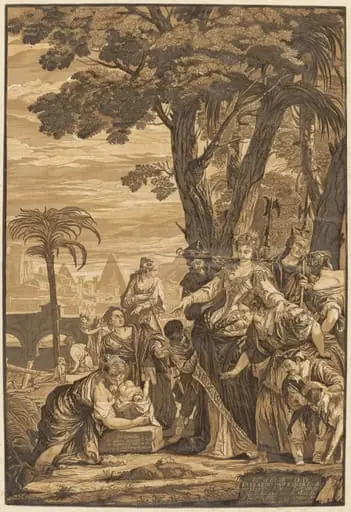 The Finding of Moses
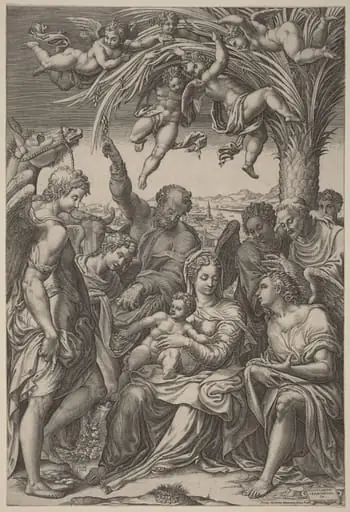 The Rest on the Flight into Egypt
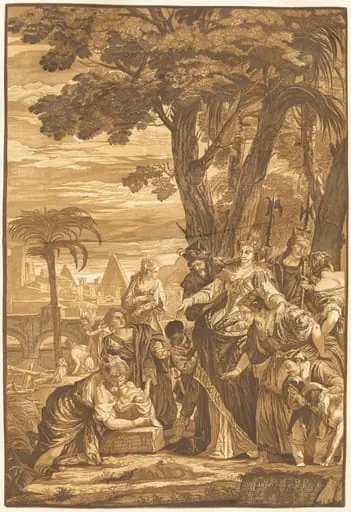 The Finding of Moses
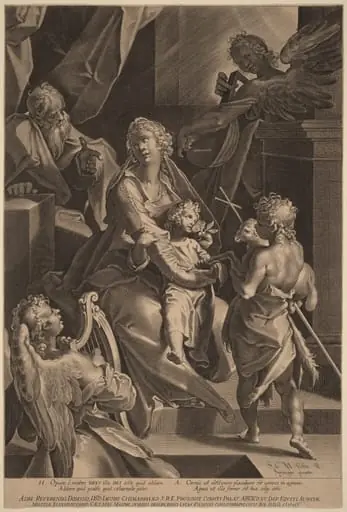 The Holy Family and Two Angels
 The Flight into Egypt
 The Holy Family with the Goldfinch
 Rest on the Flight in to Egypt
 Diogenes Casting Away His Bowl
 The Adoration of the Magi