Artwork
Apothéose de Voltaire (The Apotheosis of Voltaire)
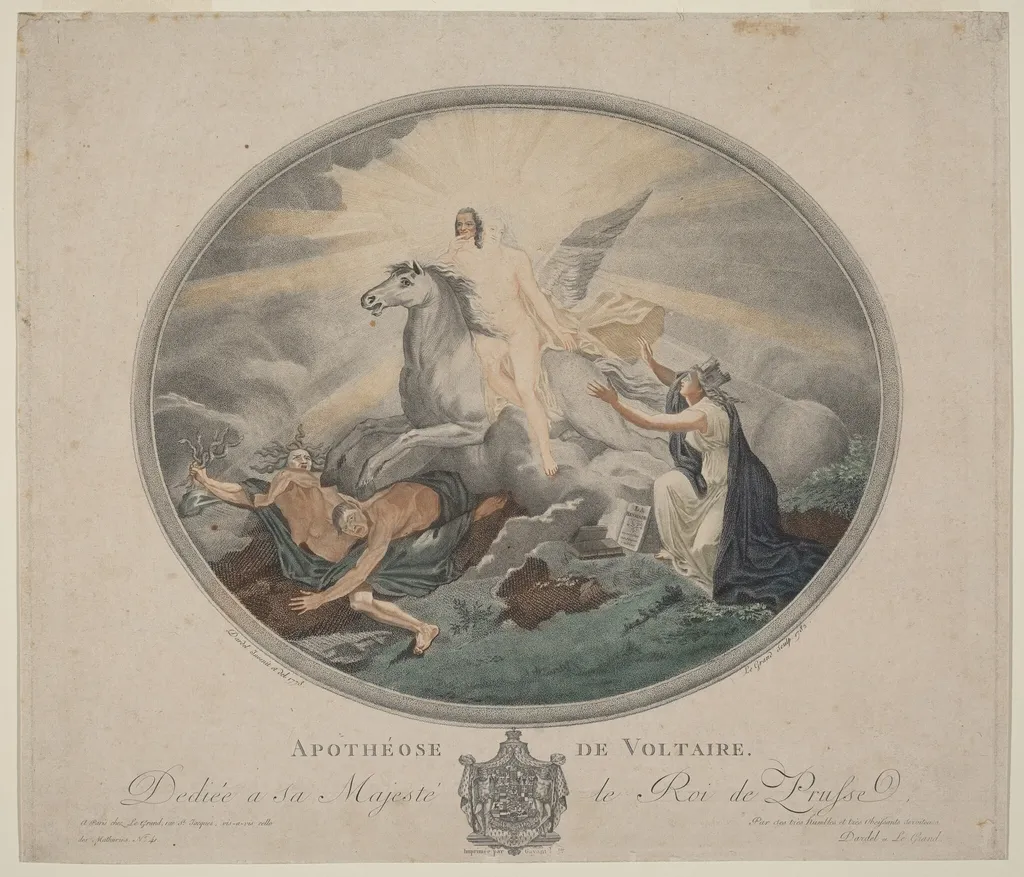
Apothéose de Voltaire (The Apotheosis of Voltaire) is a watercolor print by the Romanticist artist Pierre-François Legrand. It dates from 1782 and is held in the collection of the National Gallery of Art.
- Inscription
- Inscribed:lower left in plate: Dardel Invenit et del. 1778; lower fight in plate: Le Grand sculp. 1782; lower center in plate: APOTHÉOSE DE VOLTAIRE. / Dediée a sa Majesté le Roi de Prusse / A Paris chez Le Grand, rue St. Jacques, vis-a-vis celle / des Mathurins, No. 41 par ses très humbles et très Obeissants serviteurs, Dardel et Le Grand; Imprimée par Gayant ; by later hand, lower verso in graphite: Béraldi II. p. 642 / Robt Guillaume Dardel, sculptor / 1749 - Paris - 1821 / pupil of Pajou (did tomb of Frederick the Great) / Louis Le Grand, engraver, ca. 1730 - Paris - ca. 1784; by later hand, lower left in graphite: L. 270 / 675936 [crossed out]
About this work
Overview
Pierre‑François Legrand’s 1782 print, titled Apothéose de Voltaire, presents a celestial scene in which a nude, winged rider on a horse ascends amid fluffy clouds. Below, two kneeling figures, one bearing a crown, the other a tablet, gaze upward, framing the central figure’s upward gaze.
Subject & Meaning
The composition allegorically elevates the French Enlightenment writer Voltaire, depicting him as a divine messenger. The crown and tablet held by the terrestrial figures suggest honor and recorded achievement, reinforcing the notion of Voltaire’s intellectual ascent to a heavenly realm.
Technique & Style
Executed as a color stipple etching with watercolor on cream‑wove paper, the work combines delicate stippled lines with washes of gray, brown, and green. The stippling creates texture on the horse and figures, while the watercolor adds atmospheric lightness to the clouds and sky.
History & Provenance
Created in 1782, the print belongs to the late‑18th‑century French printmaking tradition. It reflects the period’s fascination with Enlightenment figures and anticipates Romantic interests in the sublime and heroic imagination, though specific ownership records beyond its initial publication are not documented.
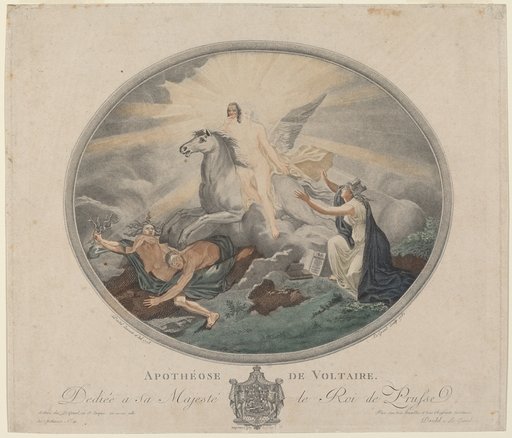
Own this work as a print
Artist & collection

- The Prima Macchina for the Chinea of 1743: Venus Genetrix
 The Chariot of Aurora
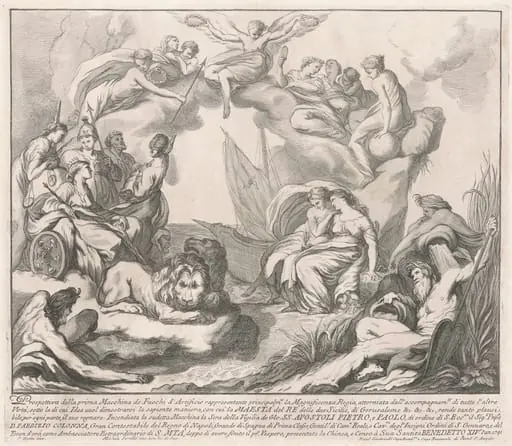 The Prima Macchina for the Chinea of 1741: Allegory of Regal Magnificence
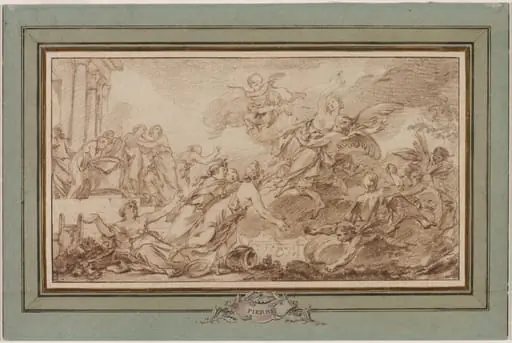 Boreas Abducting Oreithyia
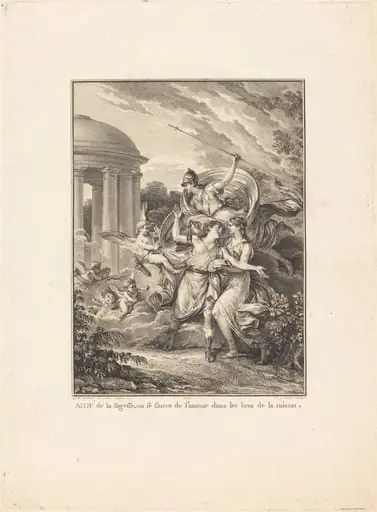 Frontispiece: Aidé de la sagesse, on se sauve de l'amour dans les bras de la raison
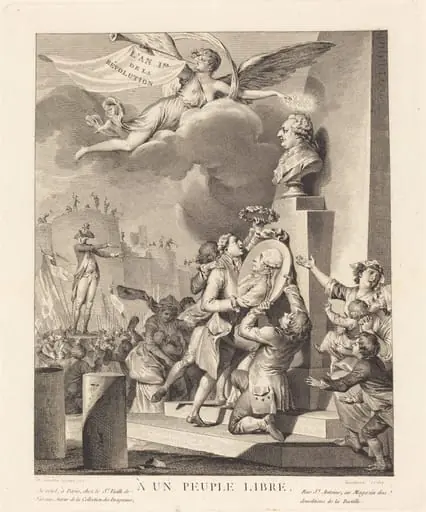 A un peuple libre
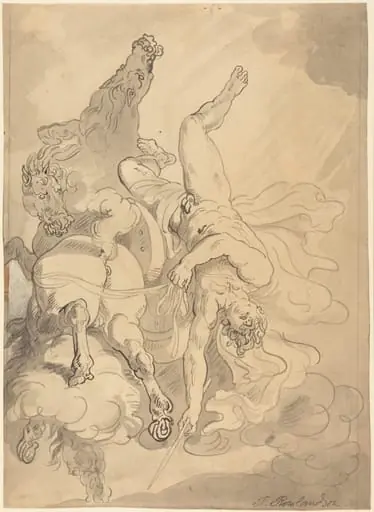 The Fall of Phaeton
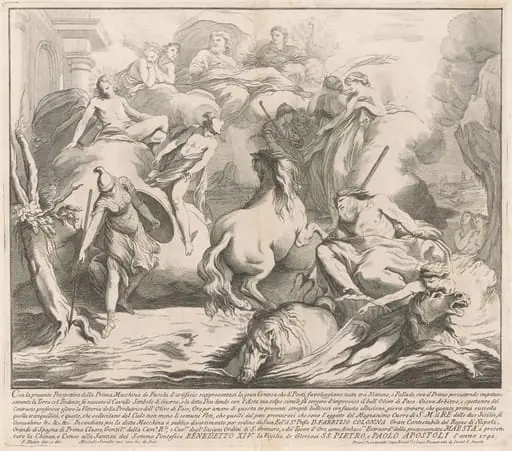 The Prima Macchina for the Chinea of 1742: The Contest of Neptune and Minerva
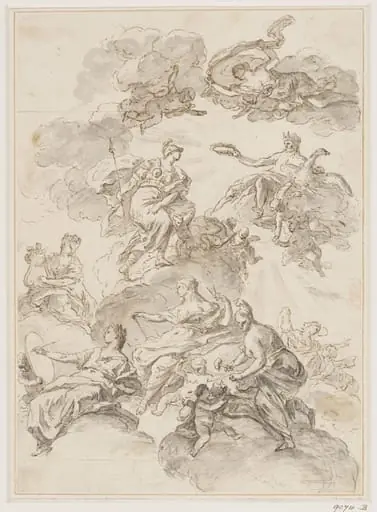 Minerva commending the arts of sculpture, architecture, painting and music to Jupiter
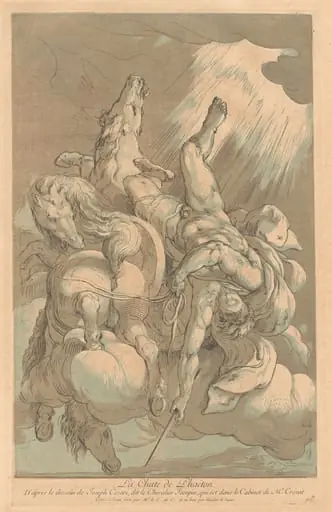 La Chute de Phaëton (The Fall of Phaeton)
 Angel Holding a Palm and a Crown
 Allegory in Honor of Henri IV