Artwork
Philosopher (Le philosophe)
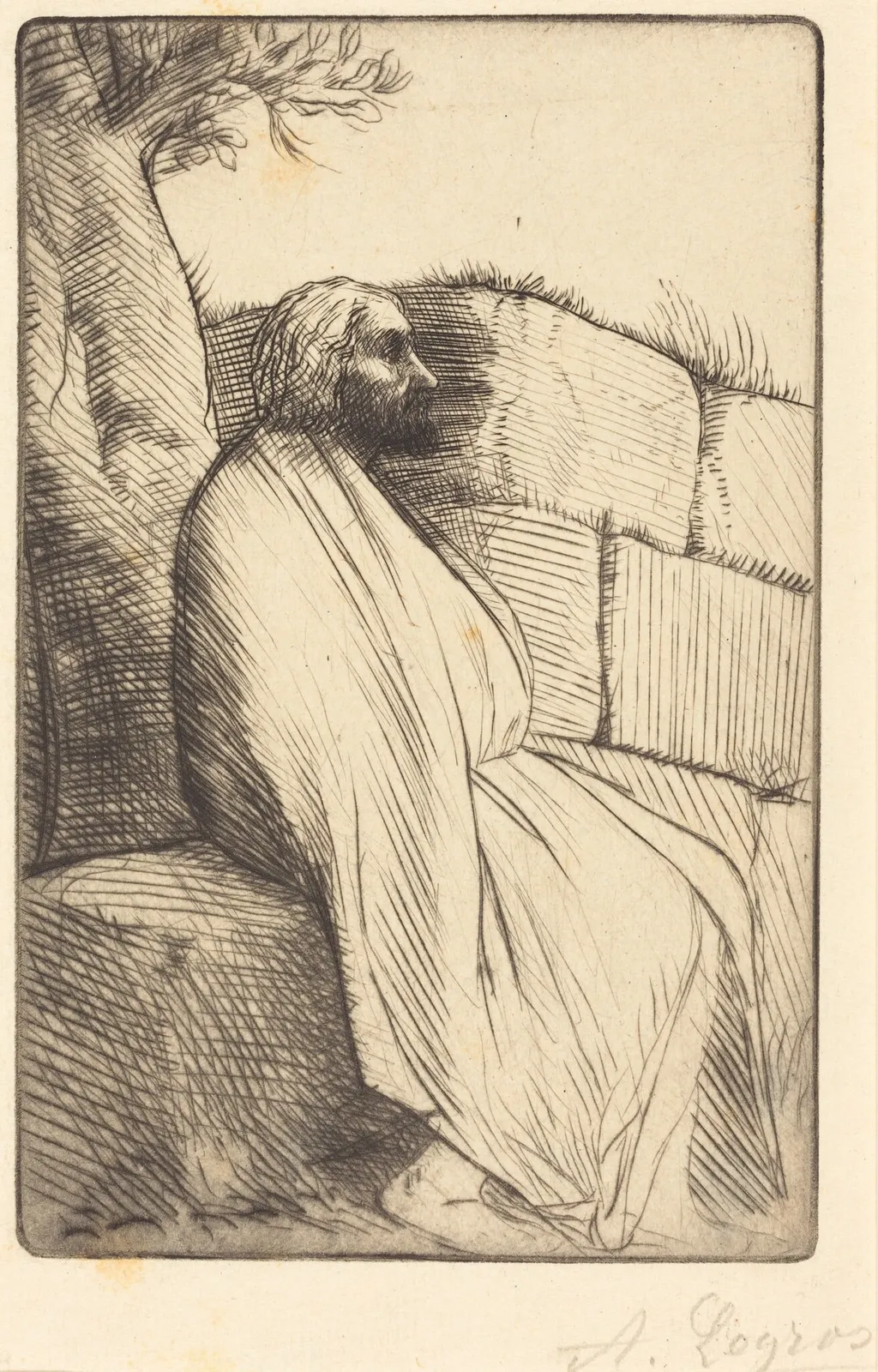
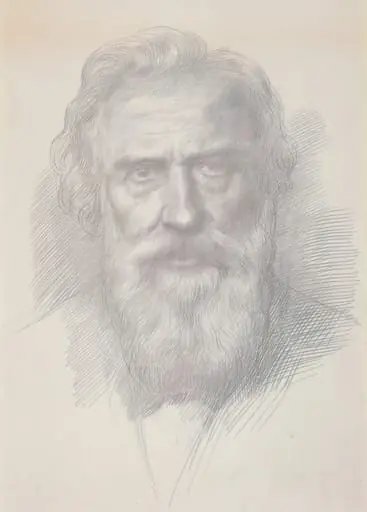
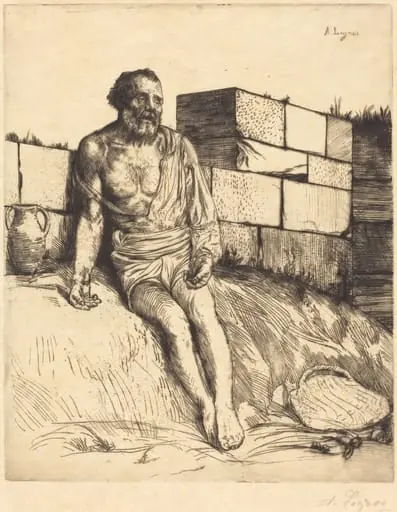
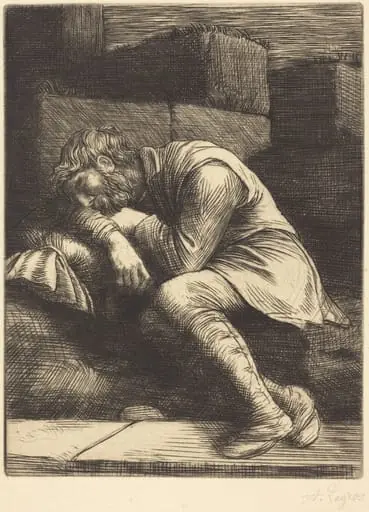
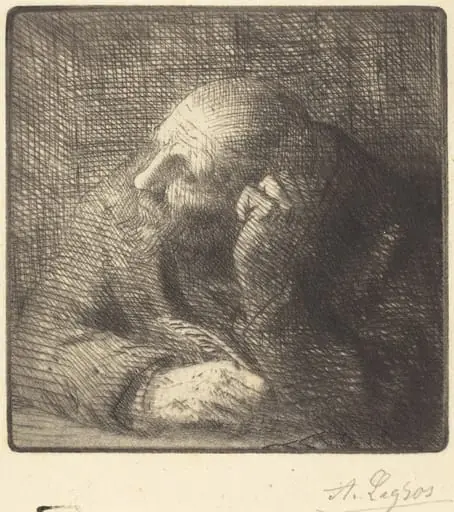
Philosopher (Le philosophe) is an ink print by the Romanticist artist Alphonse Legros. It dates from 1874 and is held in the collection of the National Gallery of Art.
About this work
Overview
Philosopher (Le philosophe) is a 1874 print by Alphonse Legros, created using drypoint and etching techniques. The work showcases a solitary figure immersed in thought, set against a natural landscape.
Subject & Meaning
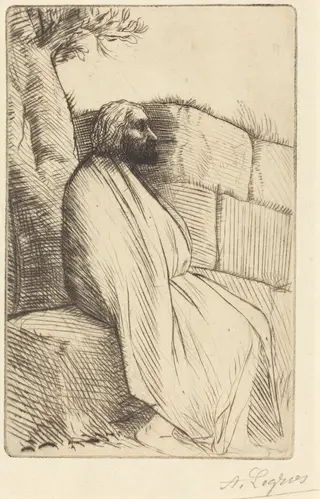
The print depicts a bearded man in a long robe, seated on a rock with his back against it, gazing to the left. The serene natural backdrop of grassy hills, a tree, and a distant sky emphasizes contemplation and harmony with the environment.
Technique & Style
Legros employed drypoint and etching to achieve textured depth in the image, characteristic of his contributions to the revival of etching in Britain after his 1863 relocation to London.
History & Provenance
Created in 1874 by French-born, British-settled artist Alphonse Legros, the print reflects his multidisciplinary practice spanning painting, printmaking, and sculpture.
Context
While Legros' work in Philosopher (Le philosophe) aligns with themes of solitude and nature, it is more accurately associated with the broader European artistic movements of the late 19th century, rather than strictly with Romanticism, which peaked earlier.
Legacy
As a key figure in Britain's etching revival, Legros' Philosopher (Le philosophe) contributes to the appreciation of late 19th-century printmaking, though its specific influence is more nuanced compared to his overall impact on the medium.
Own this work as a print
Artist & collection

Artist
Alphonse Legros (French pronunciation:; 8 May 1837 – 8 December 1911) was a French, later British, painter, etcher, sculptor, and medallist.