Artwork
Wreath of Laurel, Palm, and Juniper with a Scroll inscribed Virtutem Forma Decorat [reverse]
![Wreath of Laurel, Palm, and Juniper with a Scroll inscribed Virtutem Forma Decorat [reverse], by Leonardo da Vinci, oil, 1476](https://artifactworldgallery.com/img/leonardo-da-vinci--wreath-of-laurel-palm-and-juniper-with-a-scroll-inscribed-vi--4cdfe8467ad2438a-w1024.webp)
Wreath of Laurel, Palm, and Juniper with a Scroll inscribed Virtutem Forma Decorat [reverse] is an oil painting by the Early Renaissance artist Leonardo da Vinci. It dates from 1476 and is held in the collection of the National Gallery of Art.
- Inscription
- Inscribed:across bottom on scroll, the beginning of a hexameter: VIRTVTEM FOR/MA DECORAT (She adorns her virtue with beauty)
About this work
Subject & Meaning
The composition is recorded as depicting Ginevra de' Benci and a motto, and is classified as a still-life painting executed in tempera on panel in 1474.
The reverse of Leonardo da Vinci's panel features a still-life wreath composed of laurel, palm, and juniper, encircling a scroll inscribed with the Latin motto "Virtutem Forma Decorat," meaning "beauty adorns virtue." The painted wreath serves as a symbolic emblem tied to the sitter on the obverse, Ginevra de' Benci, whose name is evoked through the juniper ("ginepro" in Italian). Laurel traditionally signifies poetic and personal achievement, while palm denotes victory and steadfastness, and juniper, beyond its punning reference, conveys endurance and protection.
Together with the motto, the imagery frames the young woman's likeness as an allegory in which moral virtue, rather than physical beauty alone, is the true source of honor.
The composition is recorded as depicting Ginevra de' Benci and a motto, and is classified as a still-life painting executed in tempera on panel in 1474.
Technique & Style
The painting is executed in tempera on a wooden panel, measuring 42.7 cm in height and 37 cm in width, characteristics typical of early Renaissance panel painting. Its support is a single panel, and the work features a wreath of laurel, palm, and juniper surrounding a scroll inscribed with the Latin motto “Virtutem Forma Decorat”. The composition depicts the sitter Ginevra de’ Benci with a motto, a format that reflects the Italian Renaissance emphasis on portraiture and symbolic inscription.
The work’s formal qualities display restrained linear modeling and a balanced arrangement of botanical motifs, underscoring its still‑life genre within Leonardo’s early oeuvre.
History & Provenance
The painting, dated to 1474, is described as tempera on panel though other records note oil paint. It is thought to have been purchased in Florence by Prince Johann Adam Andreas I von Liechtenstein before 1712 and certainly appeared in the Liechtenstein collection by 1733, Vienna, as evidenced by a red wax seal bearing the family arms. The work remained in the princely line, passing by descent to Prince Franz Josef II, and was acquired by the National Gallery of Art, Washington, D.C., on 10 February 1967. No explicit commission is recorded in the sources.
Overview
This painting, titled Wreath of Laurel, Palm, and Juniper with a Scroll inscribed Virtutem Forma Decorat, is rendered in tempera on a wooden panel. It depicts a verdant wreath composed of various leaves and berries, encircling a small scroll. The scroll bears a Latin inscription, "Virtutem Forma Decorat," which translates to "beauty adorns virtue." The artwork subtly combines realistic botanical detail with layers of symbolic meaning, characteristic of its period.
Own this work as a print
Artist & collection

![Ginevra de' Benci [obverse], by Leonardo da Vinci](https://artifactworldgallery.com/img/leonardo-da-vinci--ginevra-de-benci-obverse--afb6ec3a3e65f392-w320.webp)
 Brooch with Table-Stones, Dragons at Top, andWinged Monsters Blowing Horns at Bottom
 Woman's Head on a Pedestal
 The Holy Sacrament of the Altar
 Brooch with Table-Stones, Butterflies at Top, and Peacocks and Hermes at Bottom
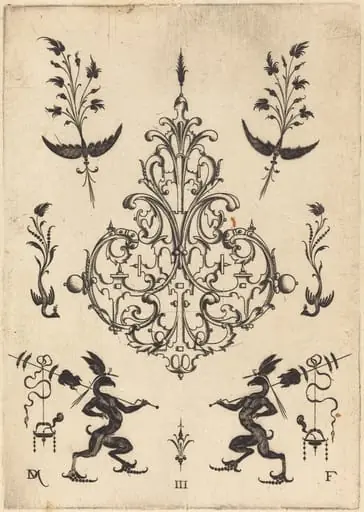 Brooch with Sprigs at Top and Griffins with Trophies at Bottom
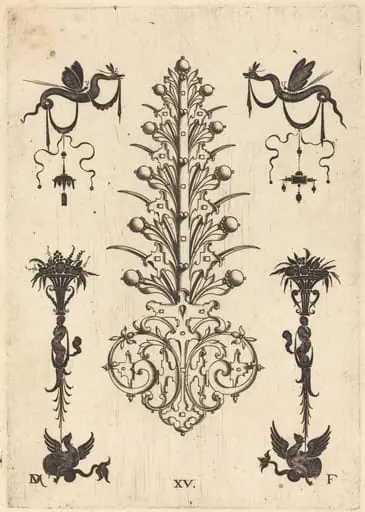 Hyacinth-Shaped Brooch with Winged Snakes at Top and Winged Animals at Bottom
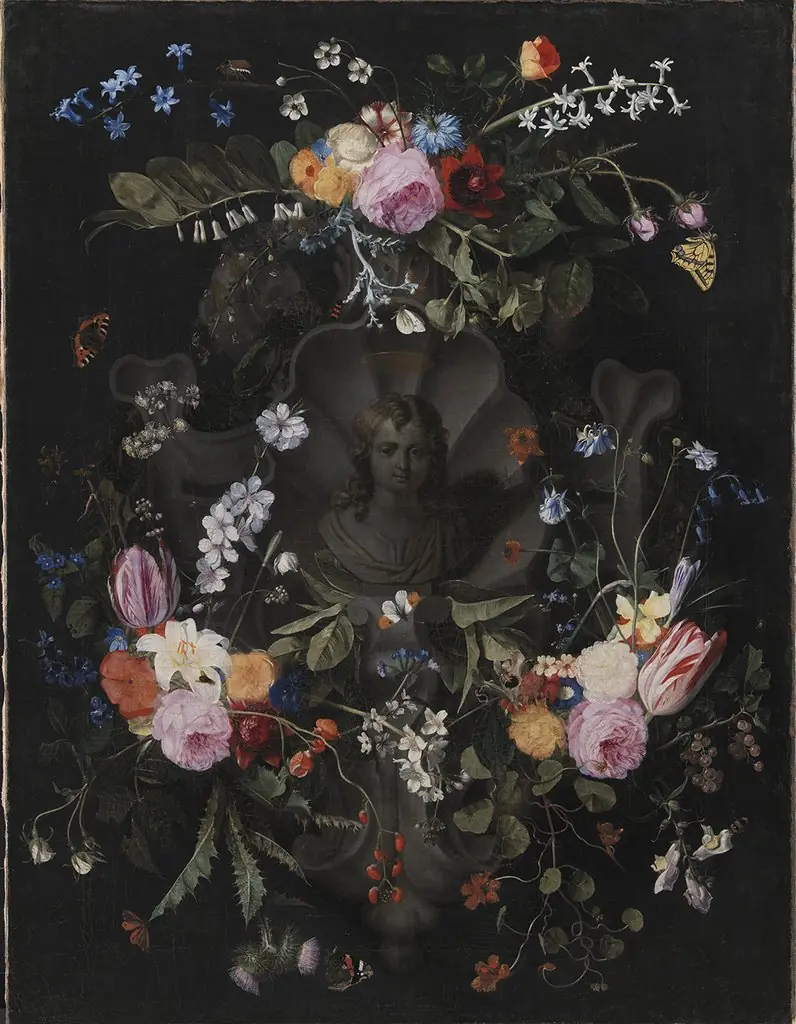 Cartouche with the bust of Jesus surrounded by festoons
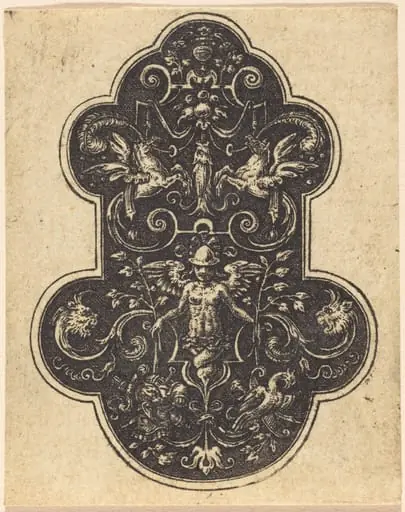 Female Figure
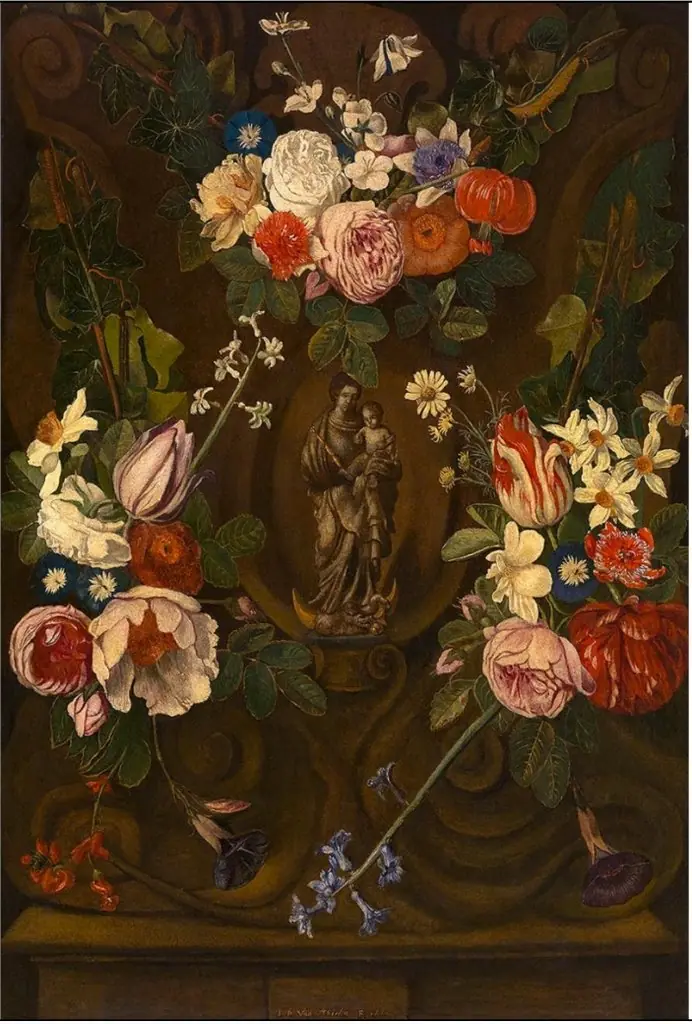 Madonna in a flower garland
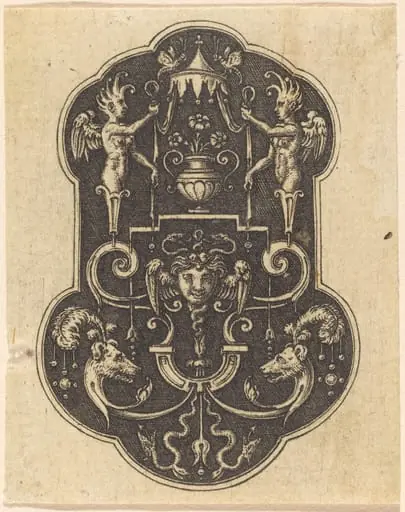 Head of Medusa
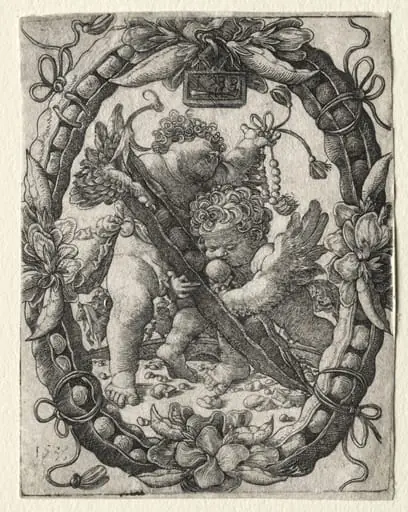 The Pea Pod
- Décor de putti sur palmier, projets de broderies de gilet, XVIIIème siècle