Artwork
Madonna Litta
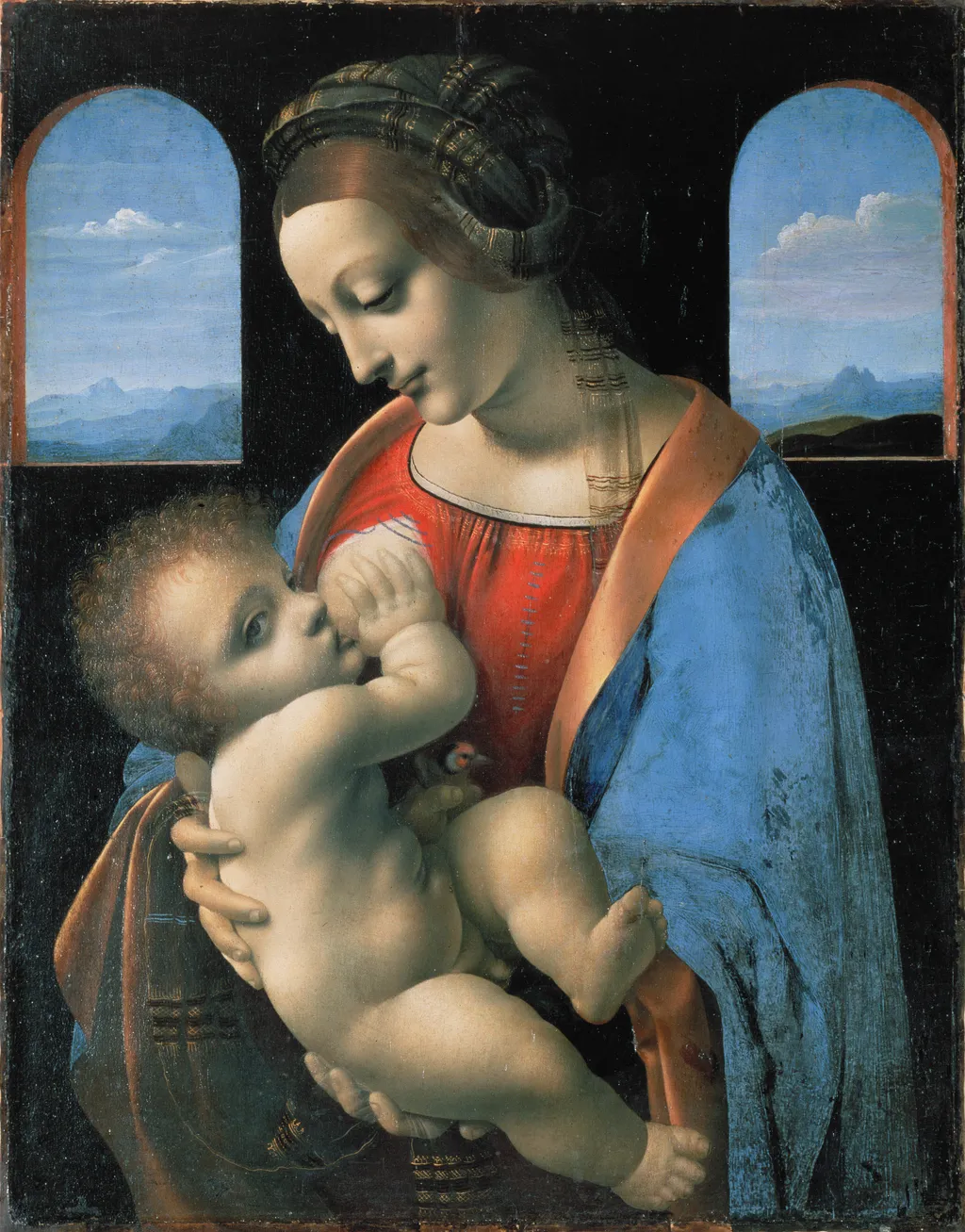
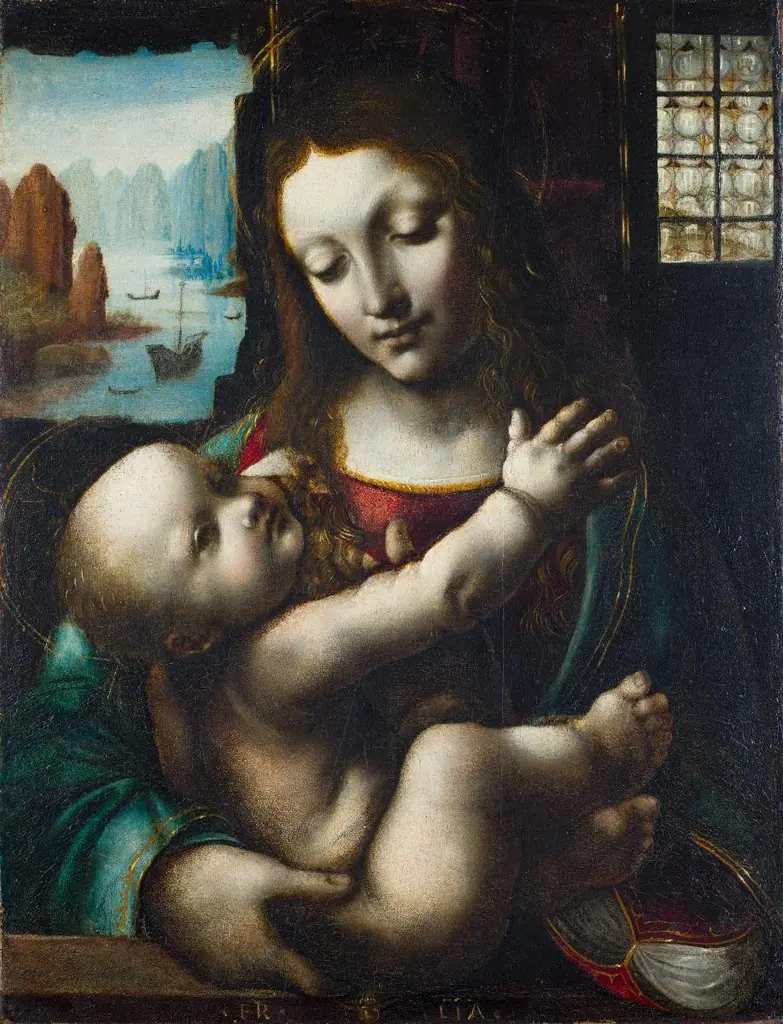
Madonna Litta is a tempera painting by the Early Renaissance artist Leonardo da Vinci. It is held in the collection of the Hermitage Museum.
About this work
Subject & Meaning
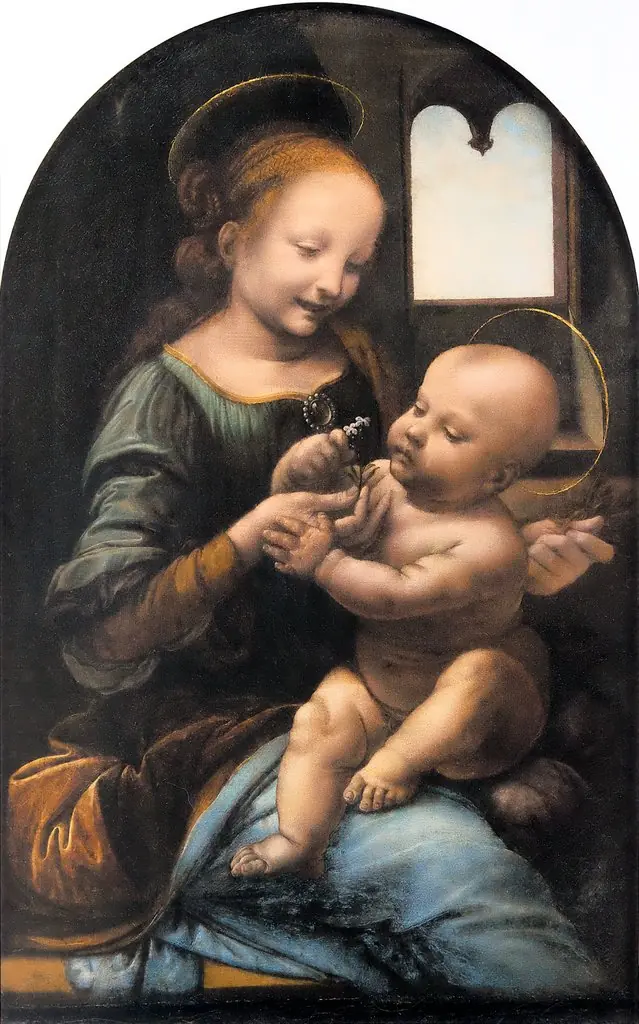
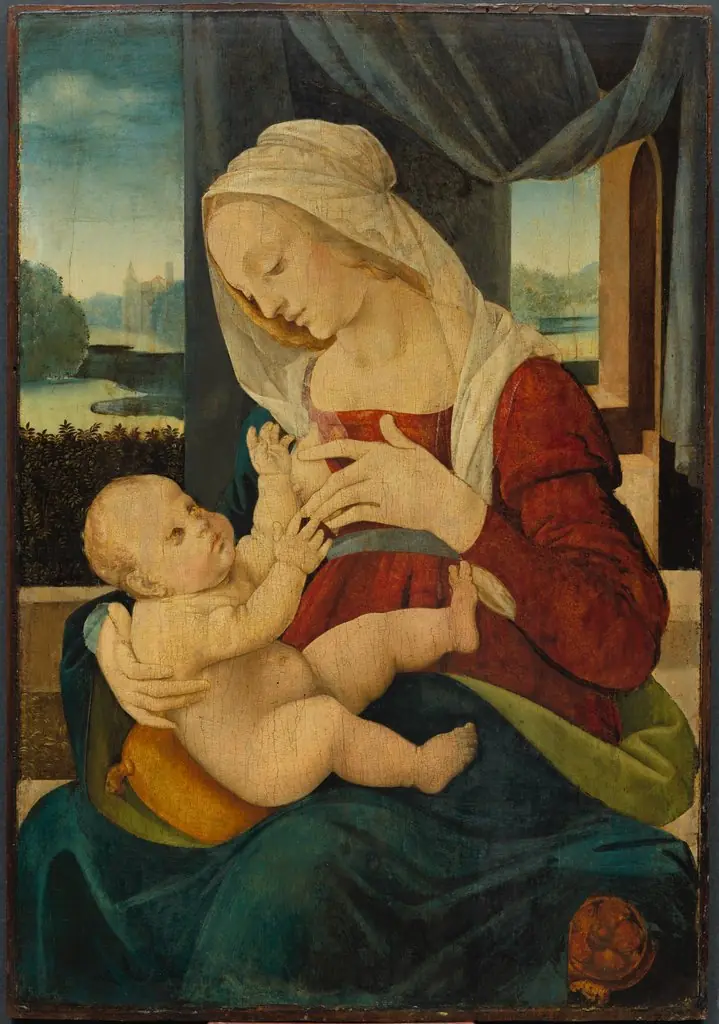
Mary is portrayed in a dark interior with two arched openings, while a mountainous landscape can be seen behind, rendered in aerial perspective.
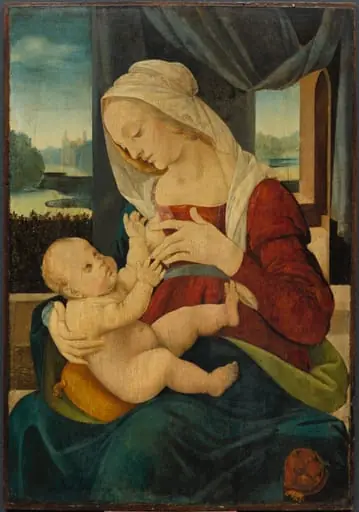
The work shows the Virgin Mary nursing the infant Jesus, a traditional Madonna lactans image. Mary is portrayed in a dark interior with two arched openings, while a mountainous landscape can be seen behind, rendered in aerial perspective. The child grasps a goldfinch, a symbol of the Passion.
The composition follows Leonardo’s stylistic traits, such as the profile head and delicate drapery, but scholars agree that the execution was largely carried out by a pupil, most often identified as Giovanni Antonio Boltraffio or Marco d’Oggiono. The painting thus embodies both a devotional focus on maternal care and a symbolic reference to Christ’s future suffering.
Technique & Style
The work is executed in tempera on a panel measuring 42 by 33 cm. Although originally painted on wood, the support was transferred to canvas by the Hermitage Museum upon its acquisition in 1865, a procedure that caused significant and irreparable damage to the painting's condition. The composition features the Virgin and Child set within a dark interior defined by two arched openings, through which a mountainous landscape rendered in aerial perspective is visible. Stylistically, the piece exhibits a sensitivity to finished detail (finito) and a dryness in the landscape execution that distinguishes it from Leonardo's characteristic sfumato, leading many scholars to attribute the actual painting to a pupil such as Giovanni Antonio Boltraffio or Marco d'Oggiono working from the master's design.
The Child holds a goldfinch, symbolizing the Passion, while the Virgin's face reflects an ideal of beauty associated with Andrea del Verrocchio.
History & Provenance
The Madonna Litta is traditionally dated to about 1490 and is associated with Leonardo da Vinci’s first Milanese period (c.1482–1499). Early records in Leonardo’s studio list two unfinished “Virgin Maries” in progress by late 1478 and 1482, and some scholars connect the composition’s conception to this phase, though the panel’s execution shows workshop participation. Scientific analysis indicates a single hand executed the painting, but attribution remains contested; the Hermitage Museum presents it as autograph by Leonardo, while others assign it to pupils such as Giovanni Antonio Boltraffio or Marco d’Oggiono.
The earliest secure link in its provenance is 1784, when Prince Alberico XII di Belgioioso purchased the panel from Giuseppe Rho. After his death in 1813 it entered the collection of the Litta family of Milan, from whom it takes its name. In 1865 Tsar Alexander II acquired it from Count Antonio Litta for the Hermitage, transferring the work from wood to canvas at that time.
The Madonna Litta is held in the collection of the Hermitage Museum in Saint Petersburg, where it has been exhibited since its acquisition in 1865. Although the museum currently displays the work as an autograph painting by Leonardo da Vinci, scholarly opinion remains divided, with many attributing the execution to pupils such as Giovanni Antonio Boltraffio or Marco d'Oggiono. The painting's provenance is securely documented from 1784, when Prince Alberico XII di Belgioioso purchased it from Giuseppe Ro.
Following the Prince's death in 1813, the work entered the collection of the House of Litta, from which it derives its name. In 1865, Count Antonio Litta sold the panel to Tsar Alexander II for the Hermitage. Upon acquisition, the museum transferred the image from its original wood panel to canvas, a process that caused significant damage and required repainting.
Legacy
The Madonna Litta achieved early fame, with Marcantonio Michiel recording a highly finished work by Leonardo in Venice as early as 1543. Its composition influenced subsequent art, inspiring an early 16th-century Venetian engraving and painted copies by the Venetian school. The painting's reputation has long been defined by a contentious attribution debate; while the Hermitage Museum displays it as an autograph work by Leonardo, most modern scholars attribute the execution to his pupils, Giovanni Antonio Boltraffio or Marco d'Oggiono, often based on the design of the master.
This scholarly division has persisted for over a century, with critics like Giovanni Morelli and Bernard Berenson challenging the Leonardesque authorship as early as the late 19th century. Despite the prevailing academic view that the work is largely by a follower, it remains one of the most recognized images of the Madonna lactans in the history of the Italian Renaissance.
Overview
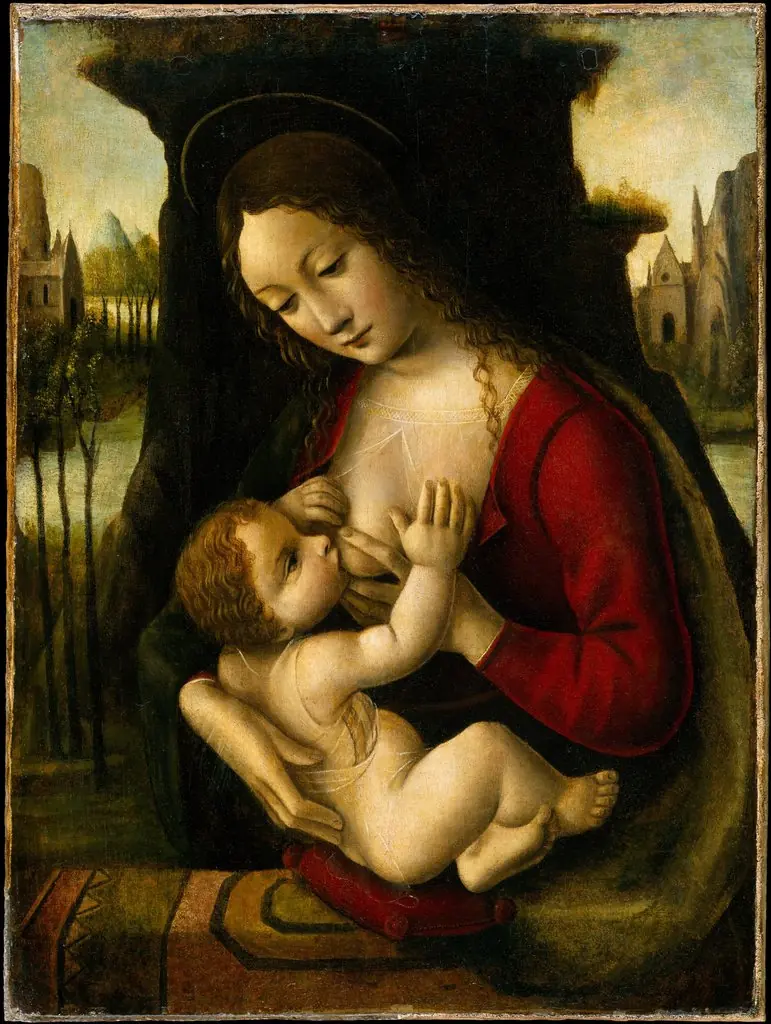
This late 15th-century tempera painting, known as Madonna Litta, is a prominent work within the Hermitage Museum's collection in Saint Petersburg. It portrays the Virgin Mary in the act of breastfeeding the Christ child, a devotional theme referred to as the Madonna lactans. The composition is characterized by its intimate depiction of the figures within a subtly rendered setting, inviting contemplation of the sacred bond.
Context
The authorship of Madonna Litta remains a subject of scholarly discussion. While the Hermitage Museum attributes the work directly to Leonardo da Vinci, some art historians propose that it may have been executed by one of his pupils, such as Giovanni Antonio Boltraffio or Marco d'Oggiono. This ongoing debate reflects the complexities of attributing works from Leonardo's workshop.
Own this work as a print
Artist & collection

![Ginevra de' Benci [obverse], by Leonardo da Vinci](https://artifactworldgallery.com/img/leonardo-da-vinci--ginevra-de-benci-obverse--afb6ec3a3e65f392-w320.webp)
![Wreath of Laurel, Palm, and Juniper with a Scroll inscribed Virtutem Forma Decorat [reverse], by Leonardo da Vinci](https://artifactworldgallery.com/img/leonardo-da-vinci--wreath-of-laurel-palm-and-juniper-with-a-scroll-inscribed-vi--4cdfe8467ad2438a-w320.webp)