Artwork
Self-portrait as a young man
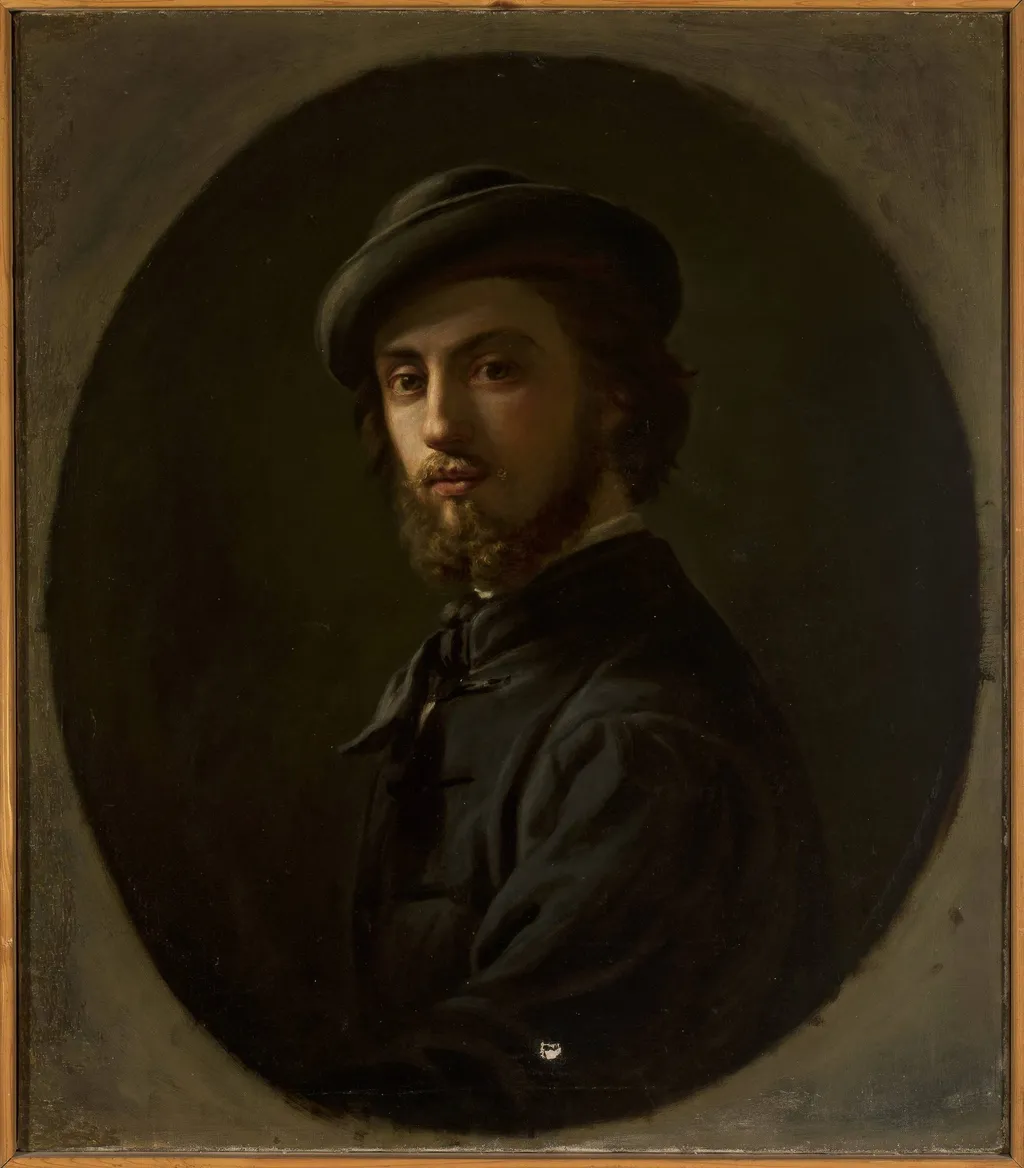
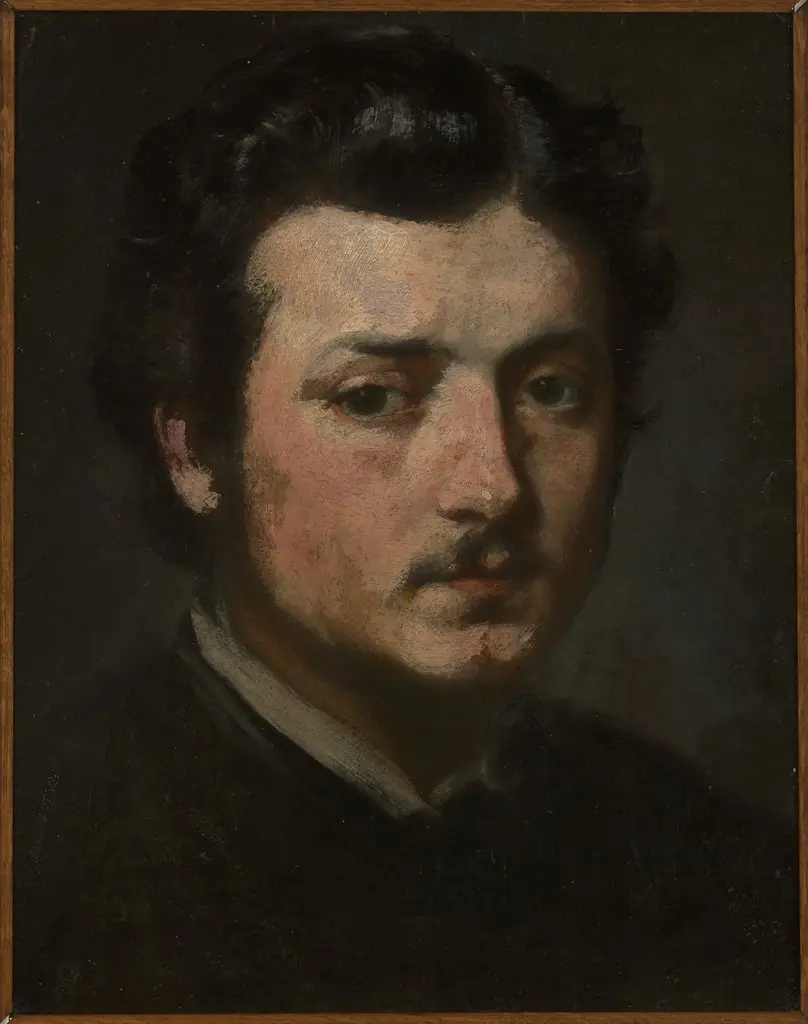
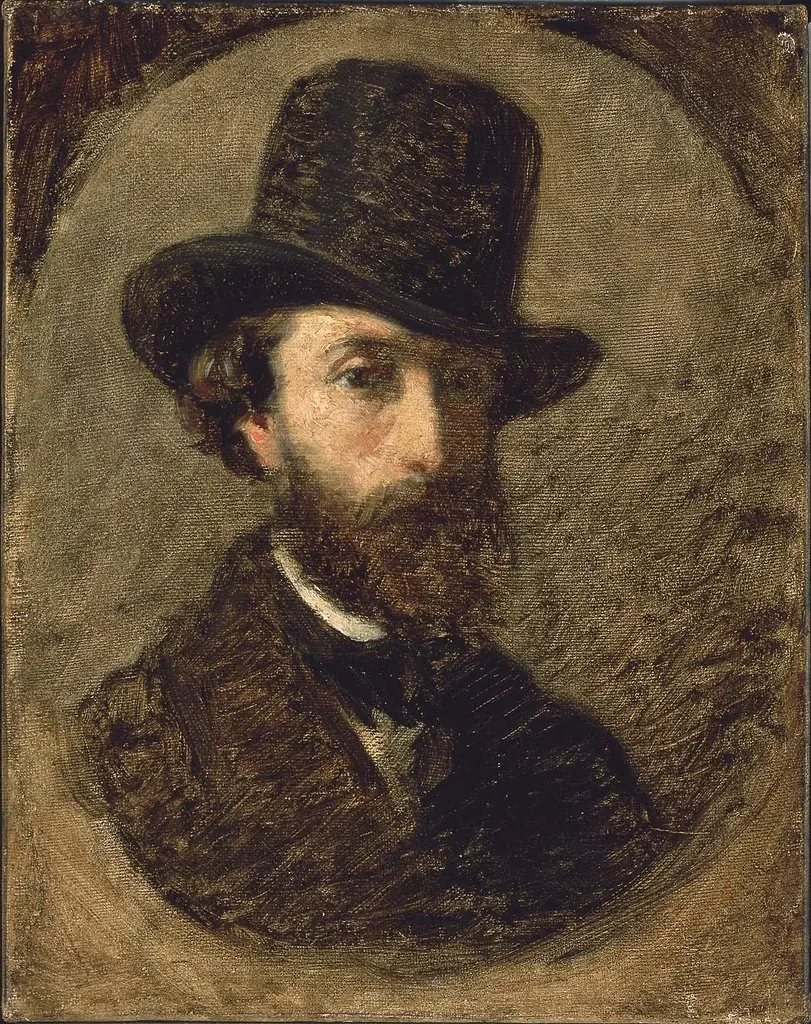
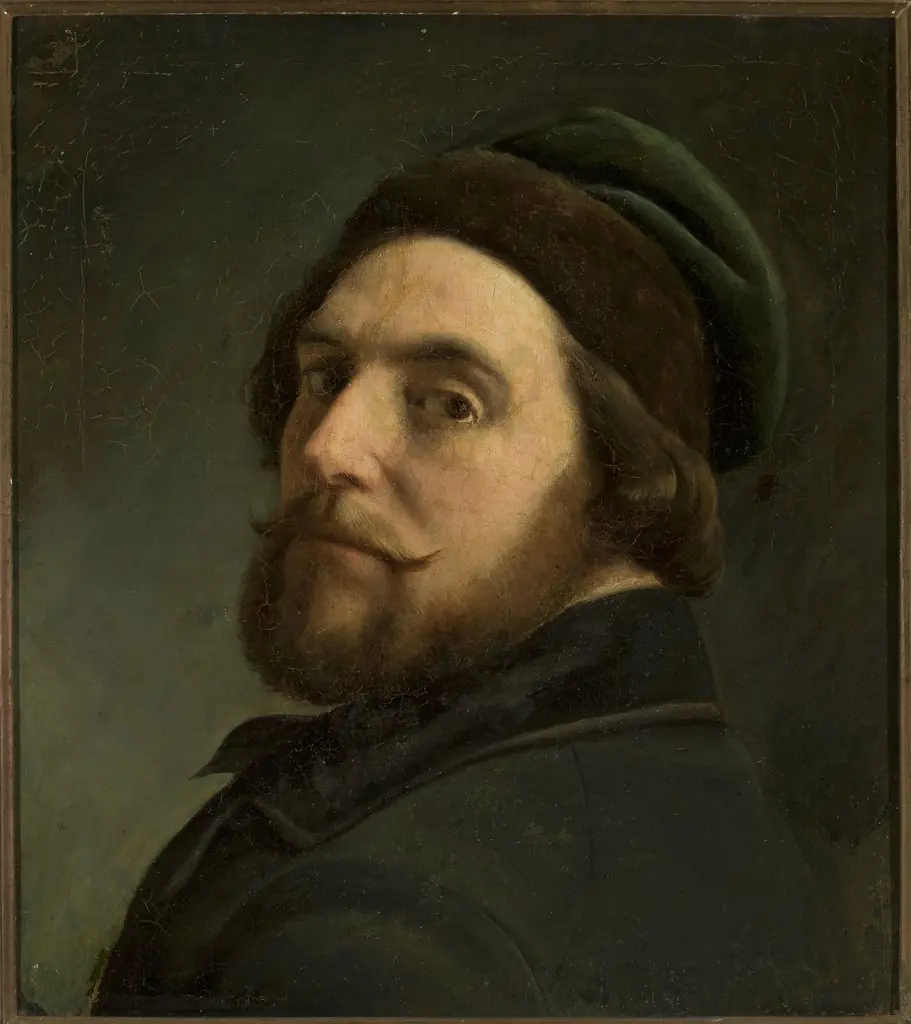
Self-portrait as a young man is an oil painting by the Biedermeier artist Leopold Horovitz. It dates from 1860 and is held in the collection of the National Museum in Warsaw.
About this work
Overview
Self-portrait as a young man is an 1860 oil on canvas painting by the Hungarian artist Leopold Horovitz.
Self-portrait as a young man is an 1860 oil on canvas painting by the Hungarian artist Leopold Horovitz. Measuring 74 by 63.7 centimeters, the work is held in the collection of the National Museum in Warsaw. Created when Horovitz was around twenty-two years old, the painting provides a direct and formal record of the artist early in his career, before he achieved widespread success as a society portraitist across Europe.
Subject & Meaning
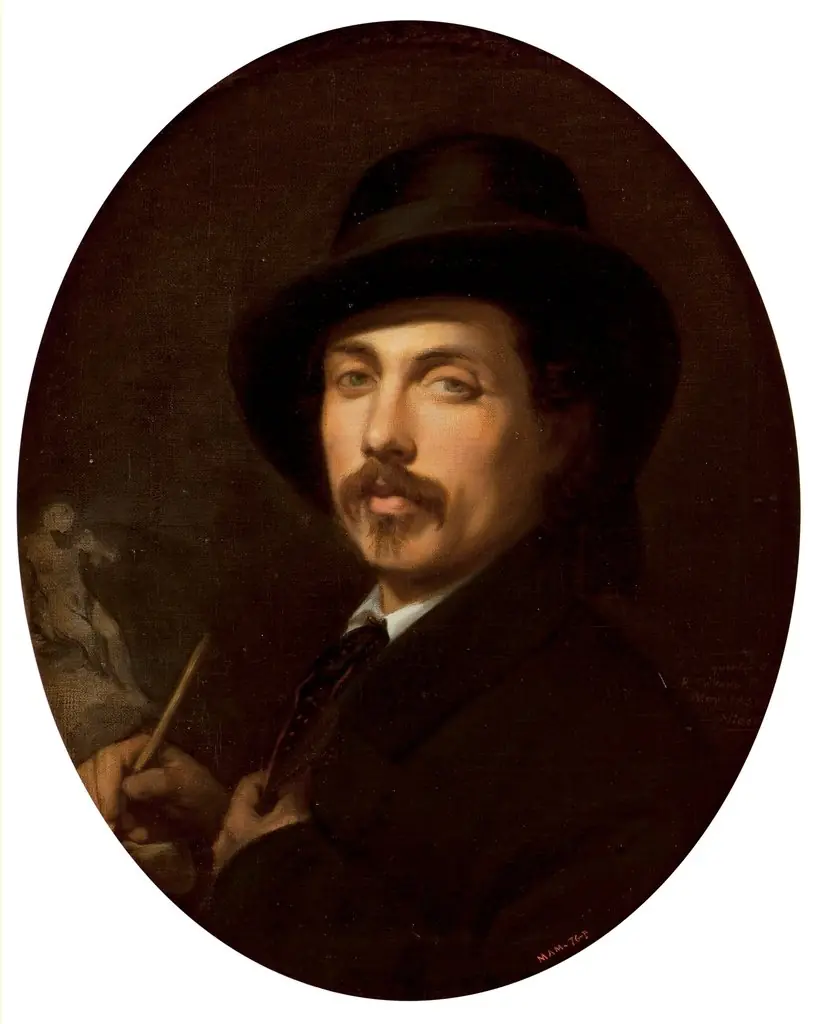
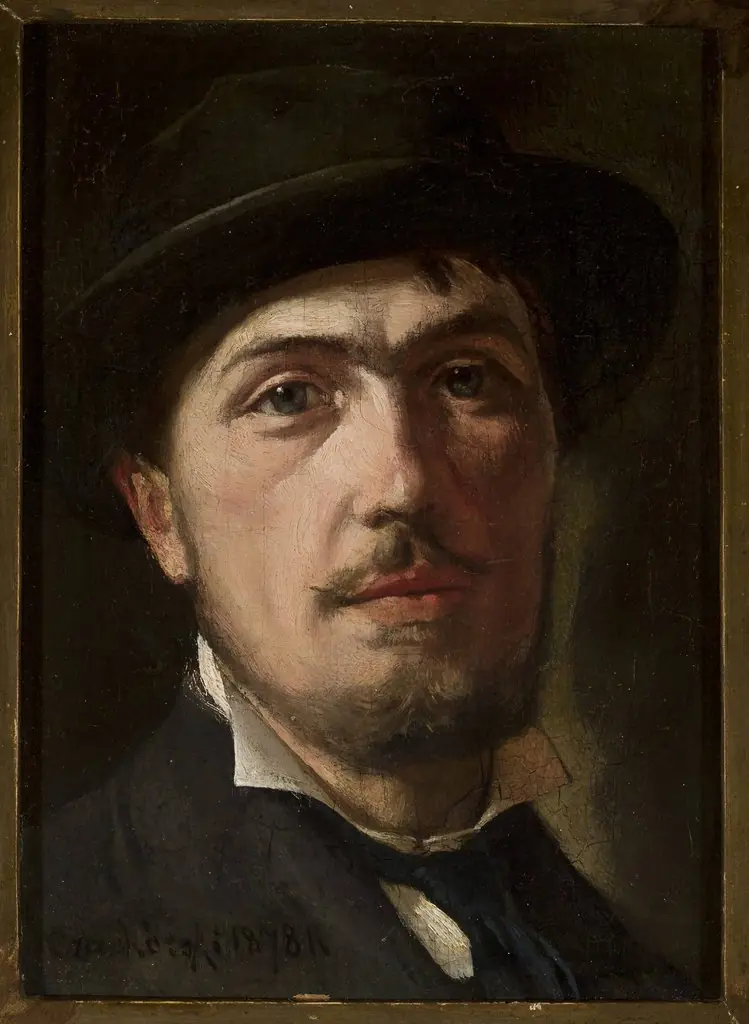
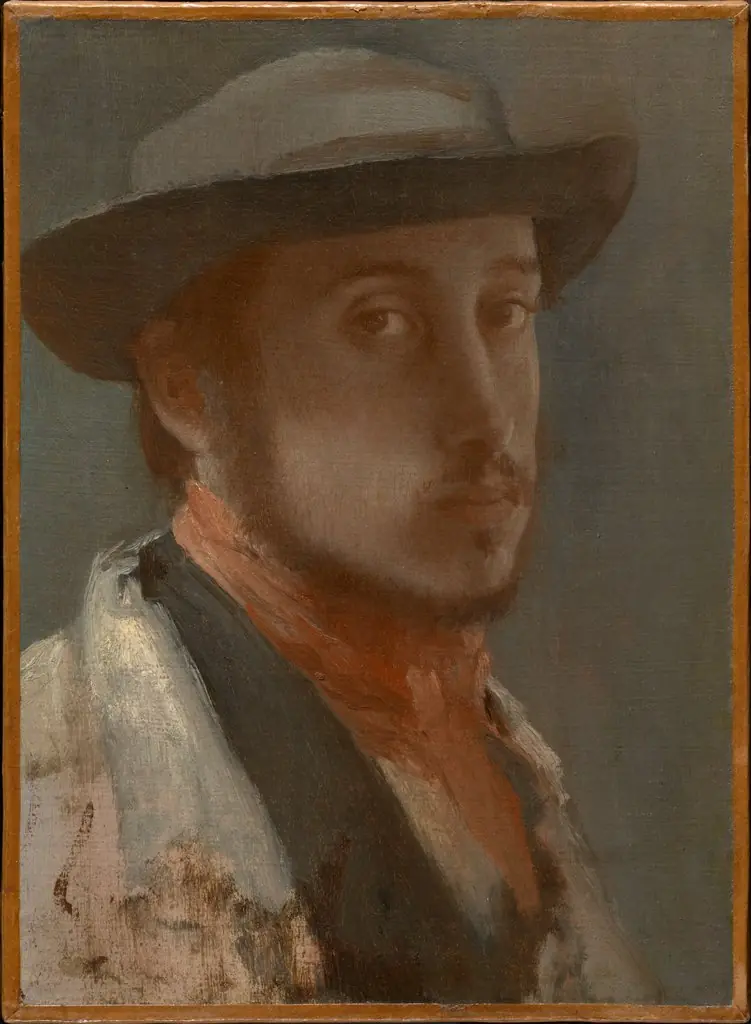
The painting depicts the artist himself in mid-nineteenth-century attire, turned three-quarters toward the viewer while returning the gaze directly. He wears a dark beret atop curly dark hair, with a full beard and mustache framing his face. His clothing consists of a dark coat with visible buttons and a tied neckcloth or cravat at the collar. The composition focuses on truthful, unidealized representation, emphasizing natural poses and straightforward presentation rather than symbolic or allegorical meaning. The direct gaze establishes an immediate, introspective connection between the artist and the viewer.
Technique & Style
Executed in oil paint on canvas, the portrait employs a restrained palette of deep browns, blacks, and muted flesh tones with subtle warm highlights on the cheekbones and forehead. Light falls from the left, illuminating the left side of the face while the right recedes into shadow, creating strong tonal contrast against the uniformly dark background. The brushwork is smooth and blended, particularly in the rendering of the face, while more visible texture appears in the background and clothing. The composition is centered within a painted oval that sits inside a rectangular canvas. A small area of paint loss near the bottom center of the oval indicates minor condition issues. Horovitz's meticulous technique and refinement are evident, aligning with his broader rejection of progressive movements like Impressionism in favor of careful, traditional handling.
History & Provenance
The artwork was painted circa 1860, during Horovitz's early period. While the specific commission or early ownership chain remains undocumented in the provided sources, the painting is now part of the collection of the National Museum in Warsaw. Documentation of the artist's work has been compiled in the Frick Art Reference Library, which holds an assembled artist file containing study photographs, reproductions, and accompanying documentation spanning from 1920 to 2000, though specific exhibition history for this particular self-portrait is not detailed in those records.
Context
Leopold Horovitz was born in Rozhanovce, Slovakia, on January 11, 1838, and died in Vienna on November 16, 1917. He studied in Vienna before living and working in Berlin, Dresden, Munich, and Paris. While this self-portrait captures him as a young man, he later found considerable success painting portraits and genre scenes for elite sitters. His clientele included Emperor Francis Joseph of Austria, the Danish essayist Georg Brandes, and various Hungarian and Polish magnates. Despite being a contemporary of the Impressionists, Horovitz showed no interest in their progressive aims, instead cultivating a style marked by meticulous technique, natural poses, simple backgrounds, and refined charm.
Own this work as a print
Artist & collection
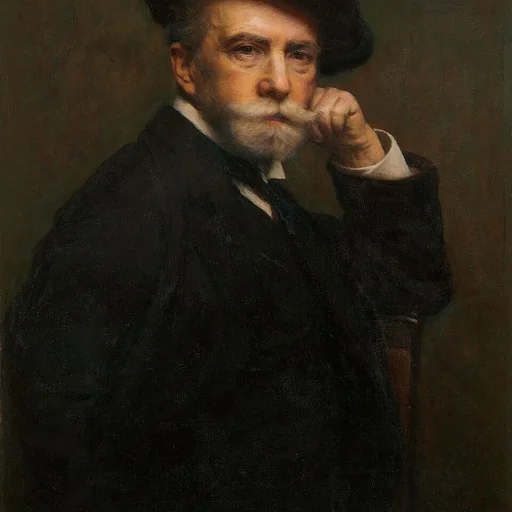

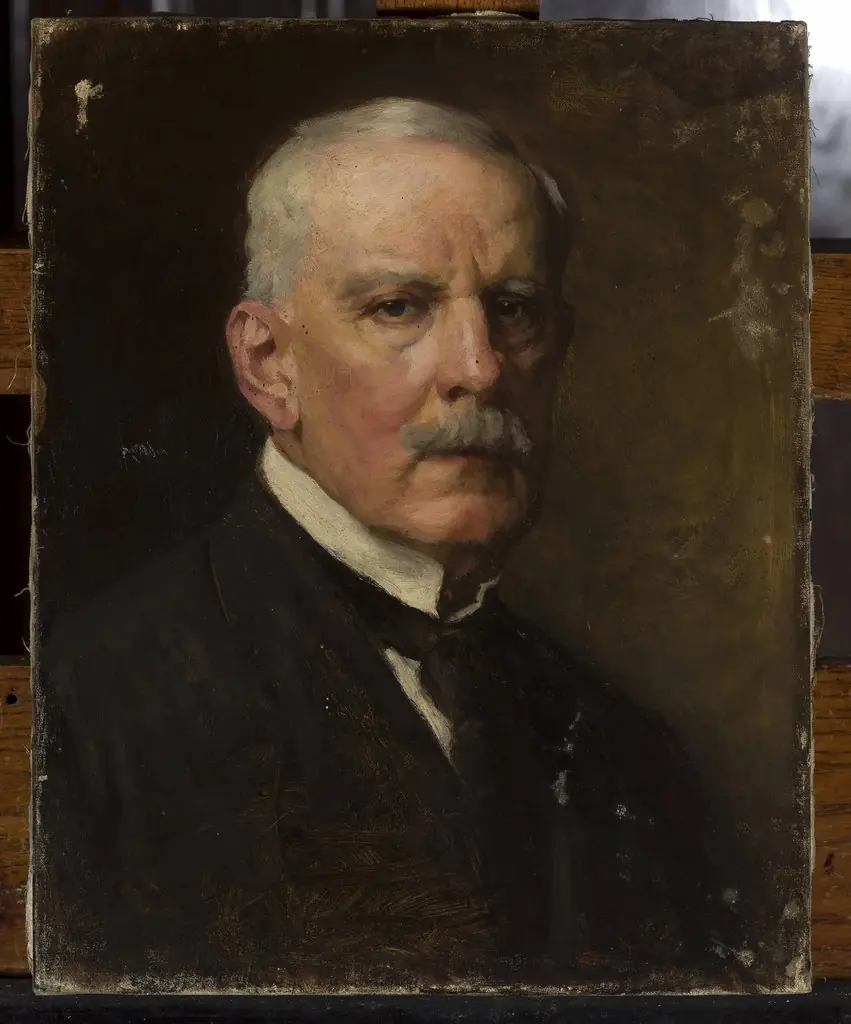 Portrait of an old man
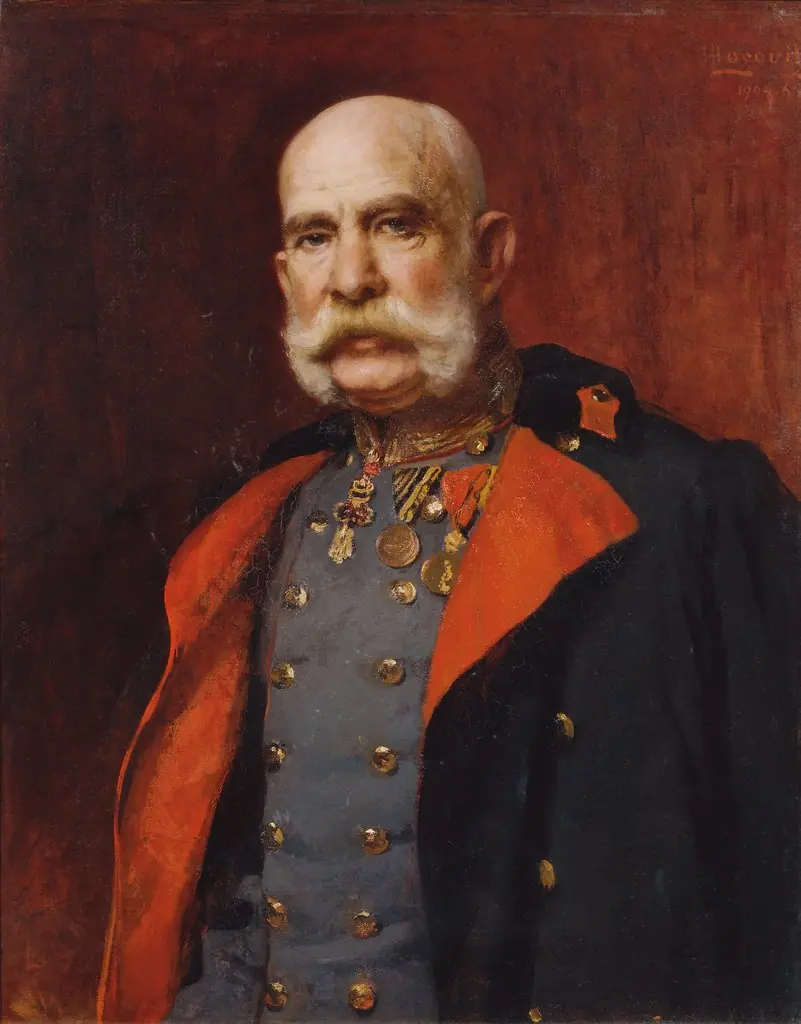 Emperor Franz Joseph of Austria-Hungary
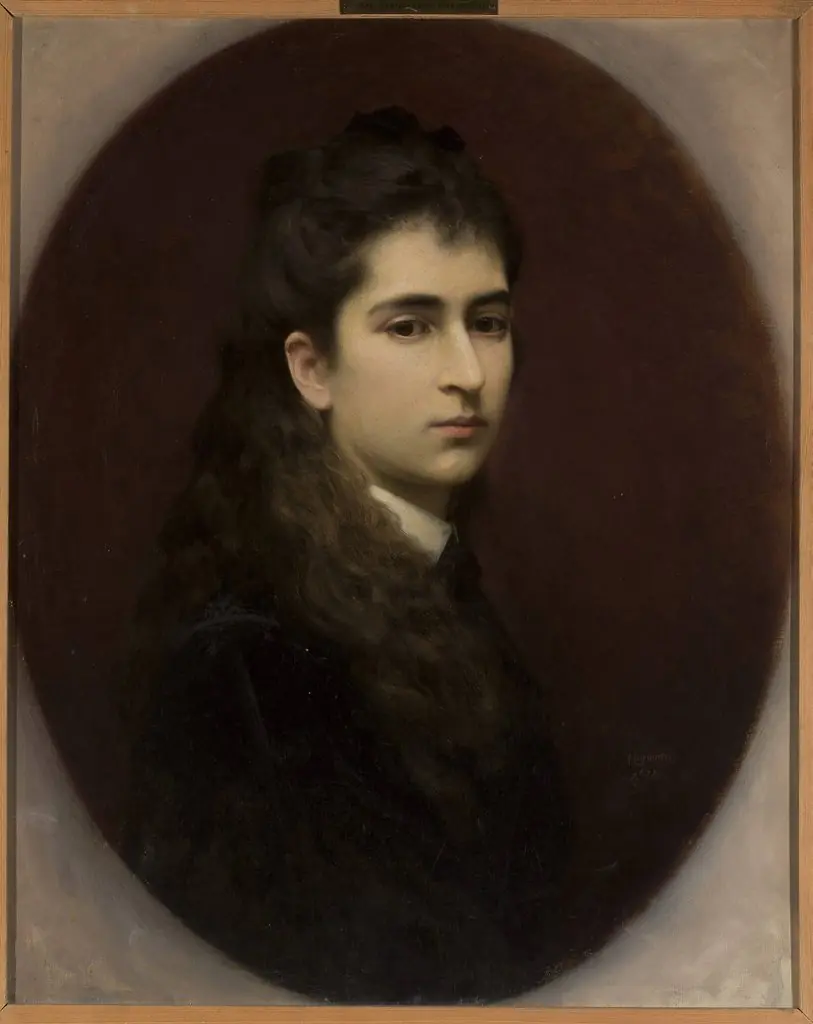 Portrait of a girl with loose hair
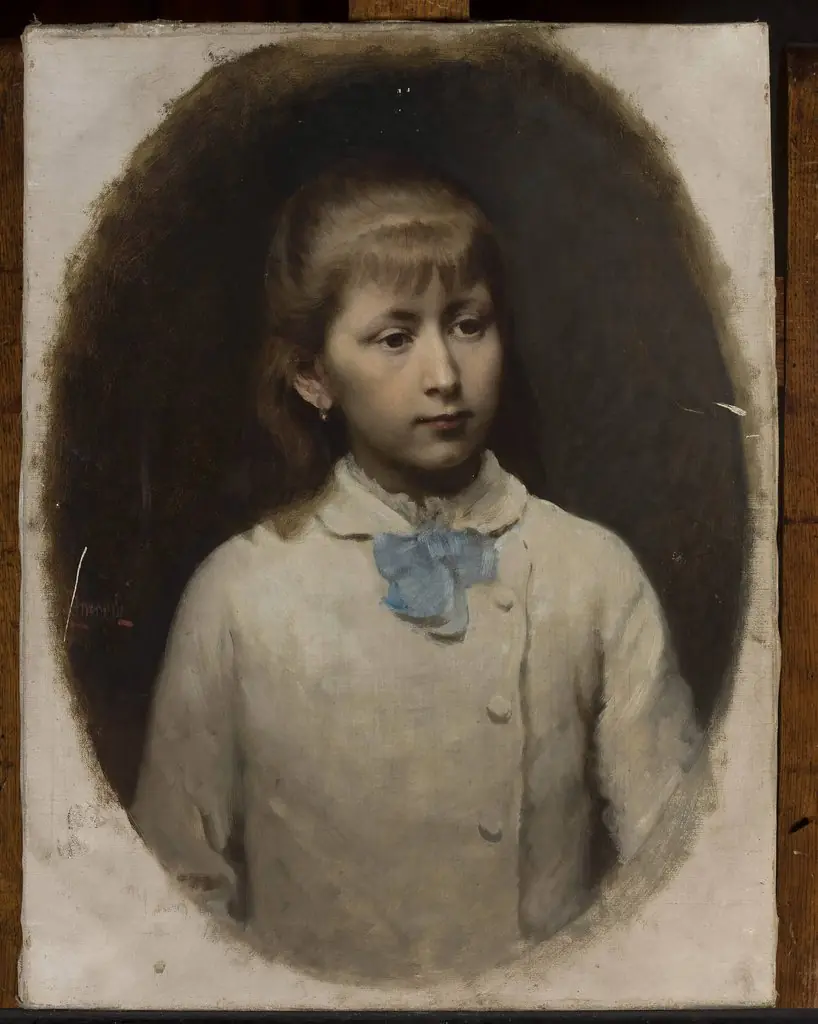 Portrait of Zosia Kraszewska (1863–?)
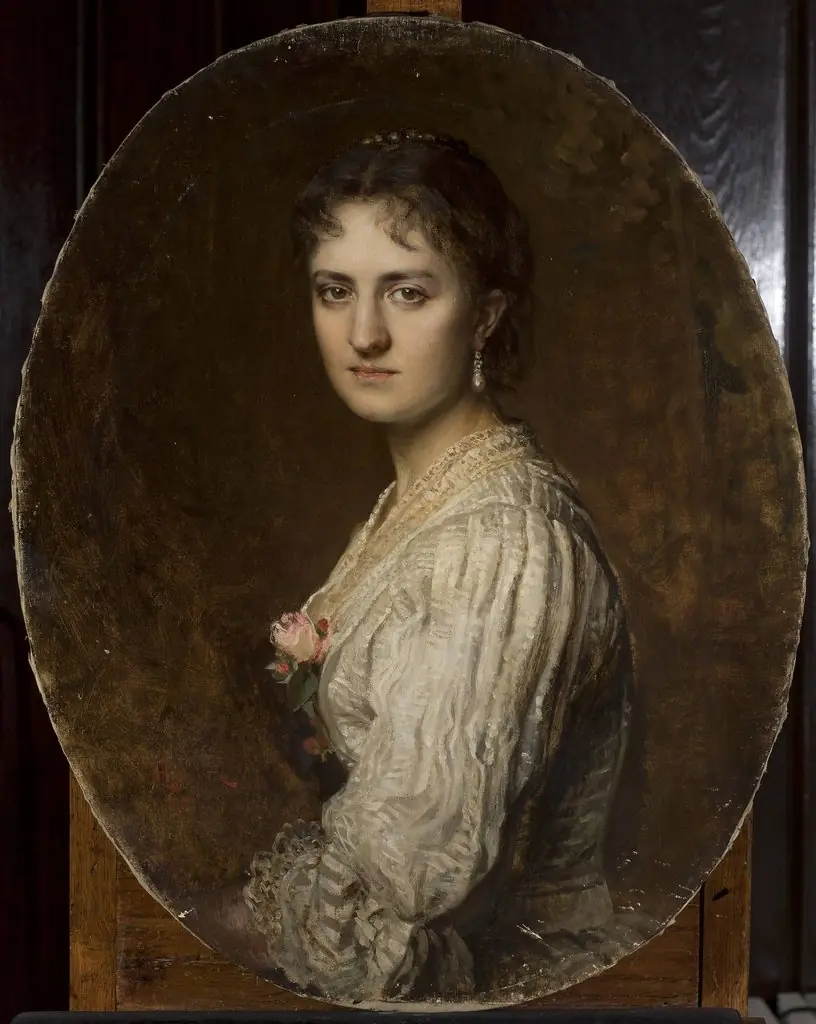 Portrait of Anna Branicka
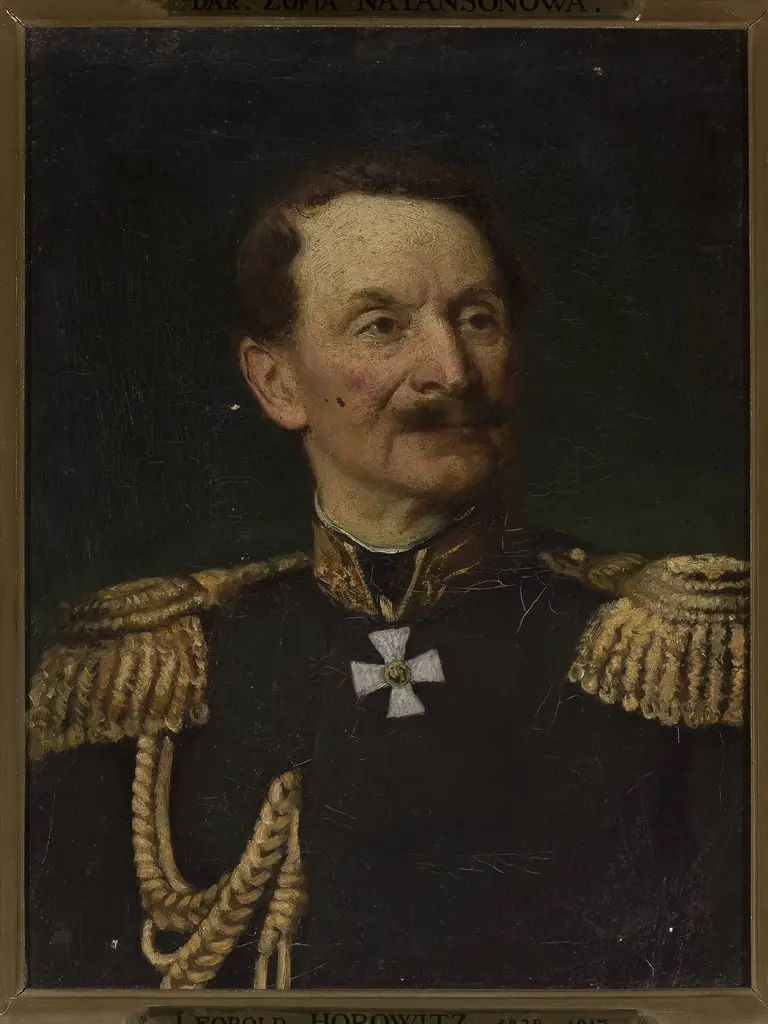 Portrait of count Friedrich Berg (1790–1874), Russian general, viceroy of the Kingdom of Poland
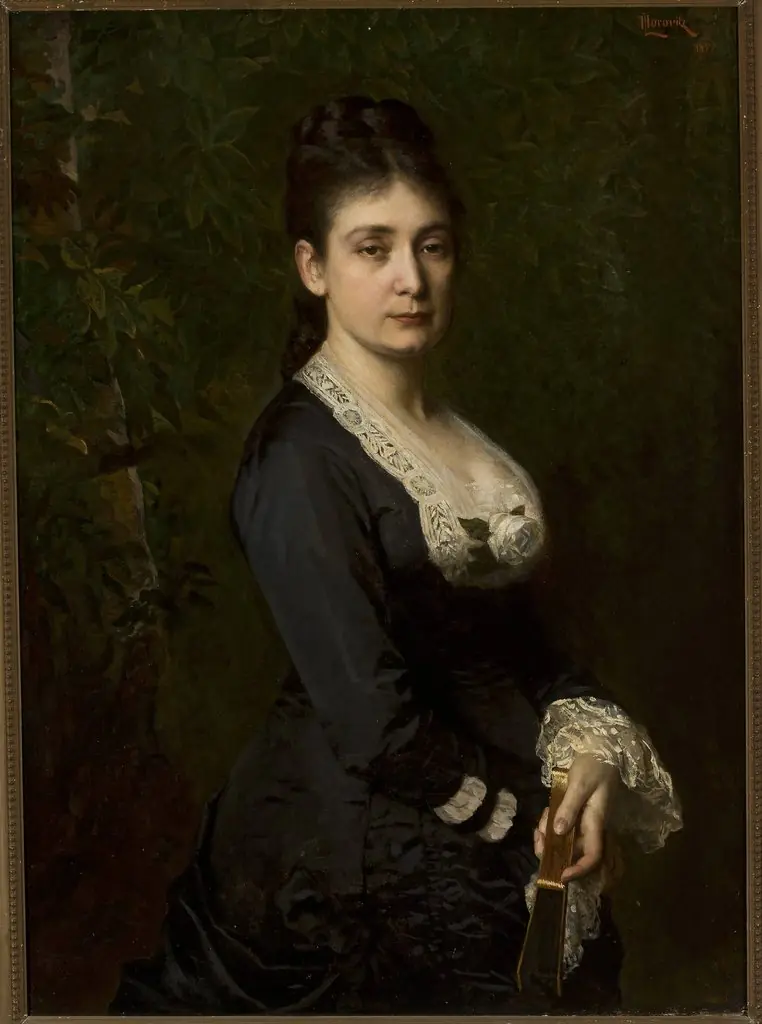 Portrait of Mina Fajans (1841–1933)
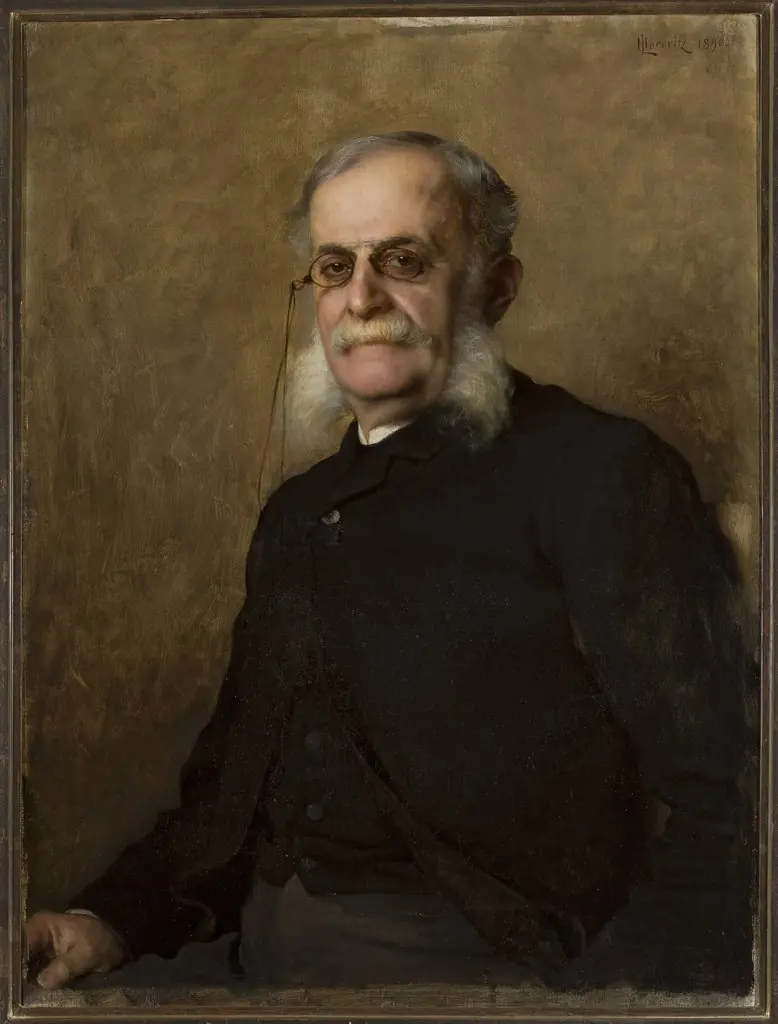 Portrait of Edward Leo (1829–1901), editor of “Gazeta Polska”