Artwork
Seated Figure of Death with an Hourglass
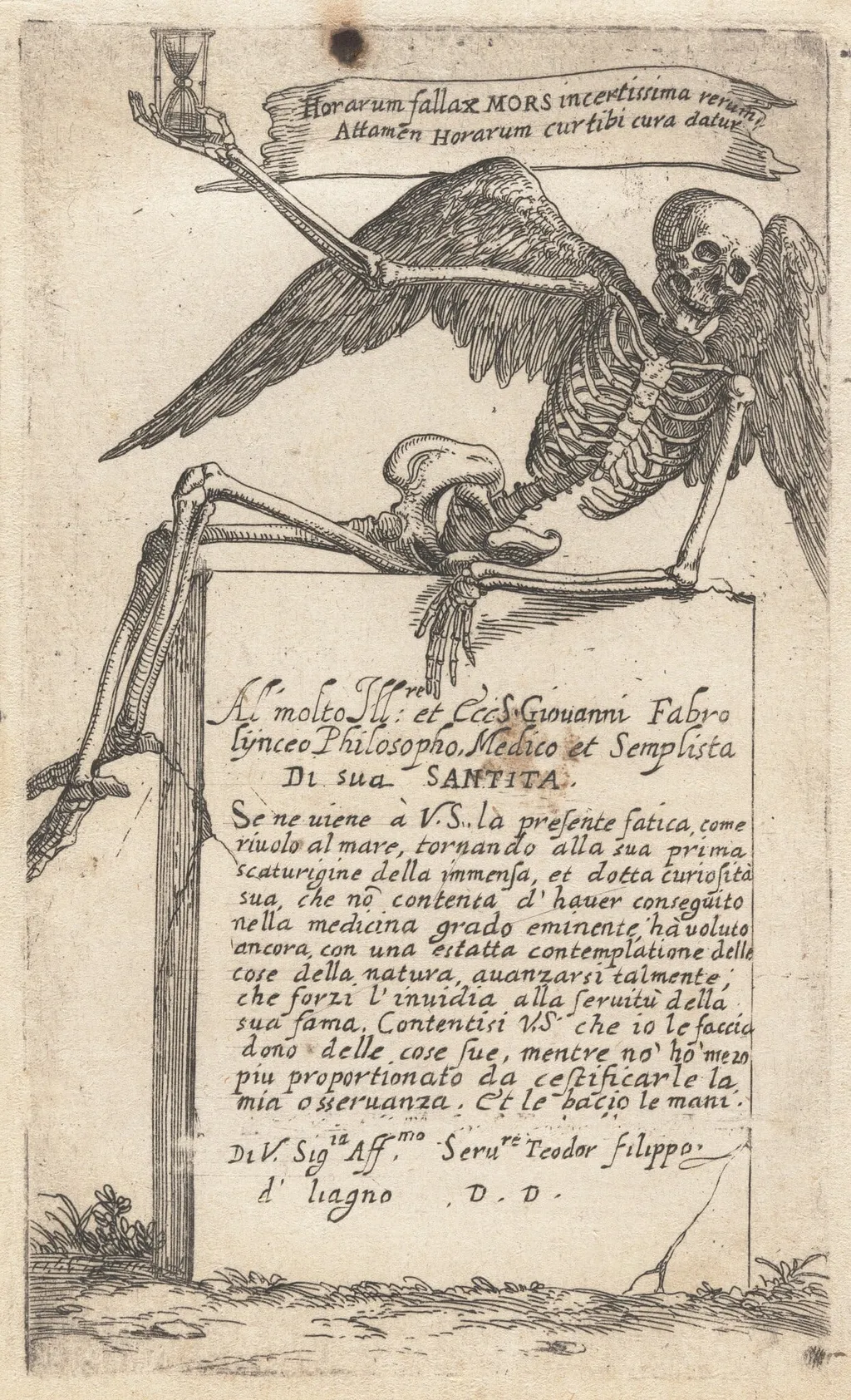
Seated Figure of Death with an Hourglass is an ink print by the Baroque artist Teodoro Filippo di Liagno. It dates from 1620 and is held in the collection of the National Gallery of Art.
- Inscription
- Inscribed:in plate, in image, on banner at top: Horarum fallax MORS in certissima rerum / Attamen horarum cur tibi cura datur; in plate, in image, on stone slab at bottom center: Al molto Ill.re et Ecc. S.Giovanni Fabro / lynceo Philosopho, Medico et Semplista/ Di sua SANTITA / se ne viene a V.S. la presente fatica, como / rivolo al mare, tornando all sua prima / scaturigine dll immensa, et otta curiosità / sua, che no[n] contenta d'haver conseguito / nella medicina grado eminente, hà volute / ancora con una estatta contemplatione delle / cose della natura, avanzarsi talmente / che forzi l'invidia alla servitù della / sua fama. Contentisi V.S. che io le faccia / dono delle cose sue, mentre no[n] ho mezo / più proportionato da cestificarle la / mia osservanza. Et le bacio le mani / di V. Sig.ia Aff.mo Serv.re Tedoro filiippo / d'liagno D.D.; bottom right corner of sheet, in pen and ink by a later hand: 15
About this work
Overview
Teodoro Filippo di Liagno’s etching Seated Figure of Death with an Hourglass (1620) is a black‑ink print on laid paper, presently in the collection of the National Gallery of Art in Washington. The work measures a modest size and presents a stark, monochrome composition that foregrounds a winged skeletal figure against a light beige ground.
Subject & Meaning
The central figure is a human skeleton, its skull grinning beneath hollow eye sockets, perched on a pole and supported by expansive wings. One leg is folded, the other extended, while the right hand grasps an hourglass, a classic emblem of fleeting time. The juxtaposition of death and the sand‑filled timer underscores the inevitability of mortality and the passage of life.
Technique & Style
Created by traditional intaglio etching, di Liagno incised the image into a copper plate, inked the recessed lines, and transferred the design onto laid paper. The stark black lines against the creamy background emphasize contour and texture, while the delicate cross‑hatching renders the skeletal anatomy and the feathered wings with a sense of depth and movement.
History & Provenance
The print dates to 1620, a period when allegorical representations of Death were common in European art. After its production, the work entered private collections before being acquired by the National Gallery of Art, where it has been displayed as part of the museum’s early modern prints holdings.
Artist & collection