Artwork
清 柳堉 幽谷深林圖 卷|Remote Valleys and Deep Forests
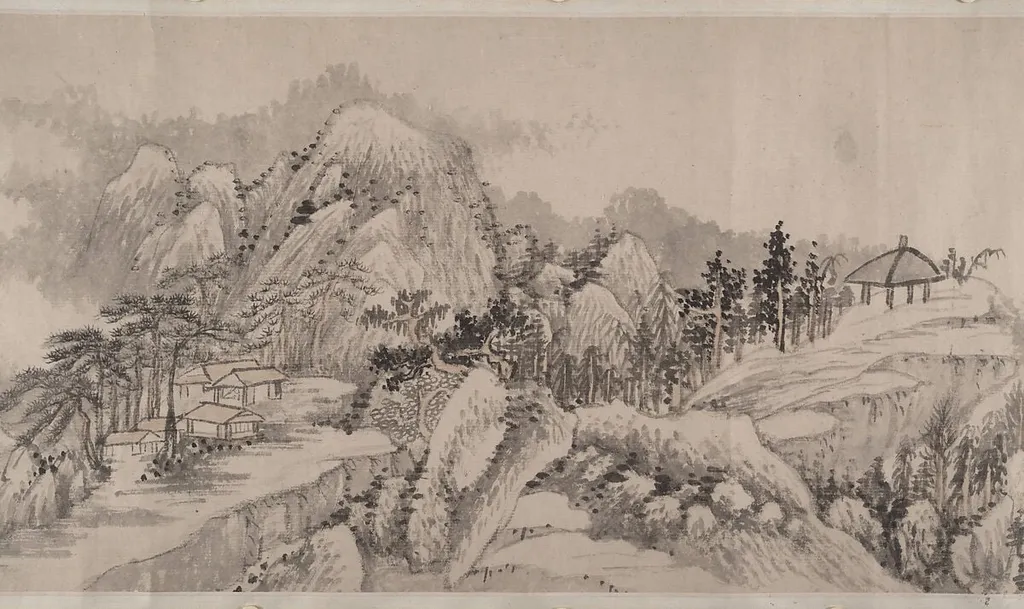
清 柳堉 幽谷深林圖 卷|Remote Valleys and Deep Forests is an ink painting by the Baroque artist Liu Yu. It dates from 1678 and is held in the collection of the Metropolitan Museum of Art.
About this work
Liu Yu painted this in 1678, late in the Qing dynasty, when artists often worked in quiet studios instead of outdoors.
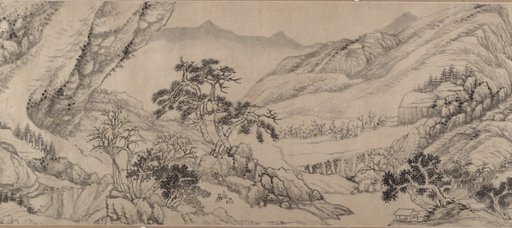
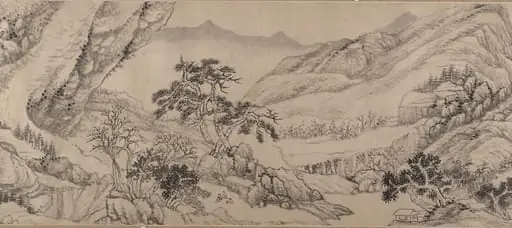
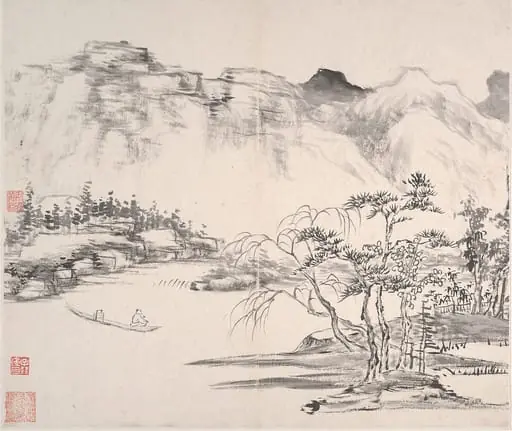
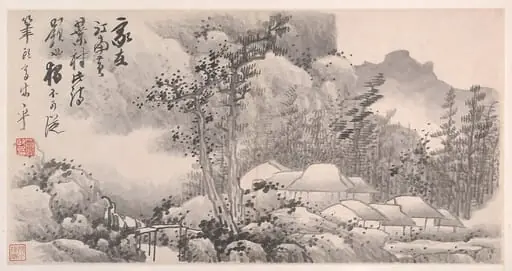
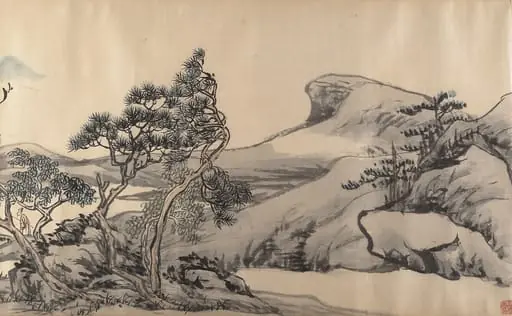
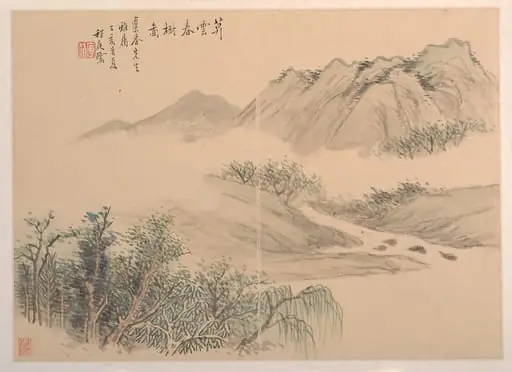
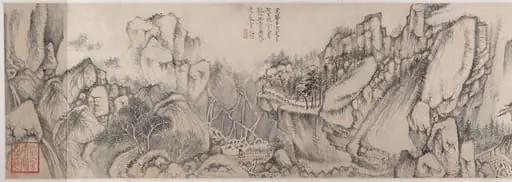
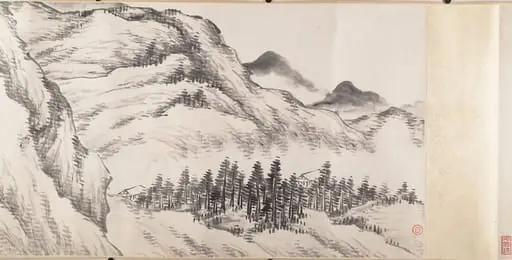
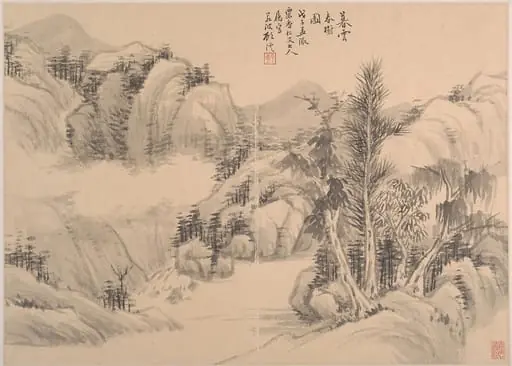
You see a long, narrow scroll of misty mountains, twisted pines, and empty valleys in soft ink washes and pale green.
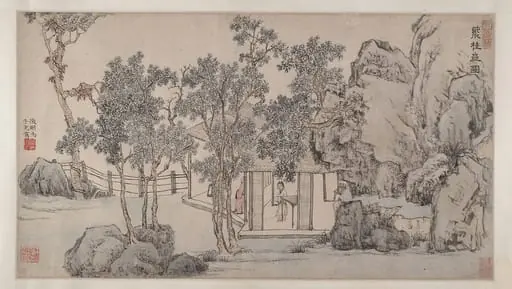
Liu Yu painted this in 1678, late in the Qing dynasty, when artists often worked in quiet studios instead of outdoors. The tiny figures walking the paths are barely there, just enough to show how big the land really is.
If you like this quiet kind of scene, look up landscape painting.
Technique & Style
The painting is presented as a handscroll, a traditional Chinese support, and is executed in ink with subtle polychrome washes on paper. Its dimensions measure roughly 27 cm in height and 366 cm in length, reflecting the elongated format typical of handscrolls. Created in 1678 in China, the work belongs to the landscape painting genre and portrays remote valleys and deep forests, employing layered brushstrokes and atmospheric perspective to convey depth. The composition integrates delicate color accents within a predominantly monochrome scheme, emphasizing the expansive natural scene.
History & Provenance
The handscroll titled Remote Valleys and Deep Forests was created by the artist Liu Yu in 1678 during the Qing dynasty. Executed in ink and color on paper, the work measures 27 centimeters in height and 366 centimeters in width. The painting is currently held in the collection of the Metropolitan Museum of Art in New York, where it is classified as a landscape genre piece.
While the specific commission details or the immediate chain of prior ownership are not detailed in the available records, the work's inception is firmly dated to 1678, establishing its place within late seventeenth-century Chinese art history. The piece depicts a landscape scene, consistent with the artist's known output in this medium and genre.
The handscroll Remote Valleys and Deep Forests by Liu Yu, dated 1678, is held in the collection of the Metropolitan Museum of Art, as recorded in its institutional metadata. Wikidata entries confirm the work's location at the Metropolitan Museum of Art and its placement within the museum's painting holdings. No specific accession number, acquisition date, or prior provenance details are documented in the available sources. Likewise, no exhibition history is recorded for this work in the provided references.
Overview
Liu Yu's "Remote Valleys and Deep Forests" is a handscroll painting from 1678, executed with ink and color on paper. This work exemplifies the landscape tradition prevalent in China during the late Qing dynasty. It presents a sweeping vista of natural grandeur, inviting contemplation through its detailed yet expansive depiction of mountains and woodlands.
Subject & Meaning
The scroll unfolds a panorama of misty peaks, gnarled pine trees, and secluded valleys. Within this vast natural setting, minute human figures traverse winding paths, their diminutive scale serving to underscore the immense power and solitude of the landscape. This compositional choice emphasizes humanity's place within a larger, overwhelming natural world, a common theme in traditional Chinese landscape art.
Context
Created in 1678, "Remote Valleys and Deep Forests" belongs to the late Qing dynasty, a period when many artists, including Liu Yu, often produced landscapes within the confines of their studios. This practice contrasted with direct observation of nature, leading to works that frequently drew upon established artistic conventions and personal interpretations rather than immediate outdoor sketching.
Artist & collection