Artwork
Moses and the Burning Bush
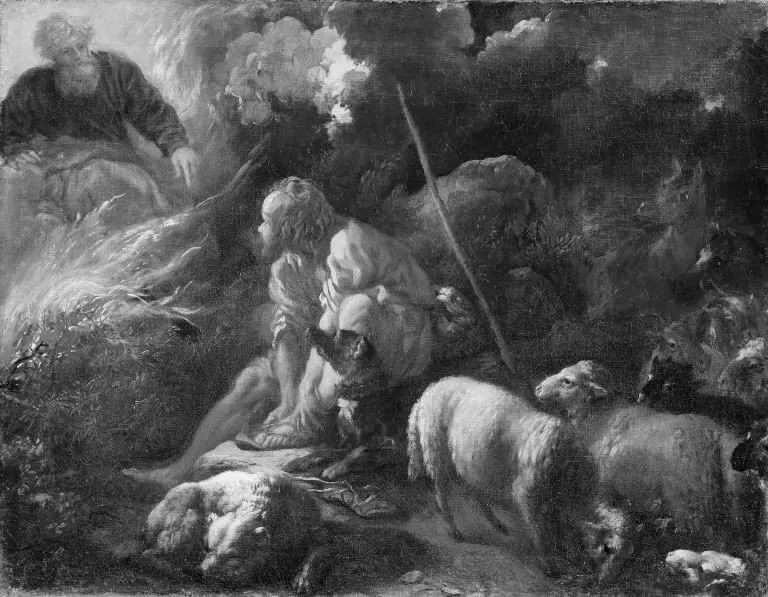
Moses and the Burning Bush is an oil painting by the Flemish Baroque painting artist Livio Mehus. It dates from 1668 and is held in the collection of the Statens Museum for Kunst.
About this work
Subject & Meaning
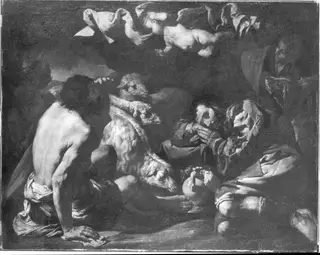
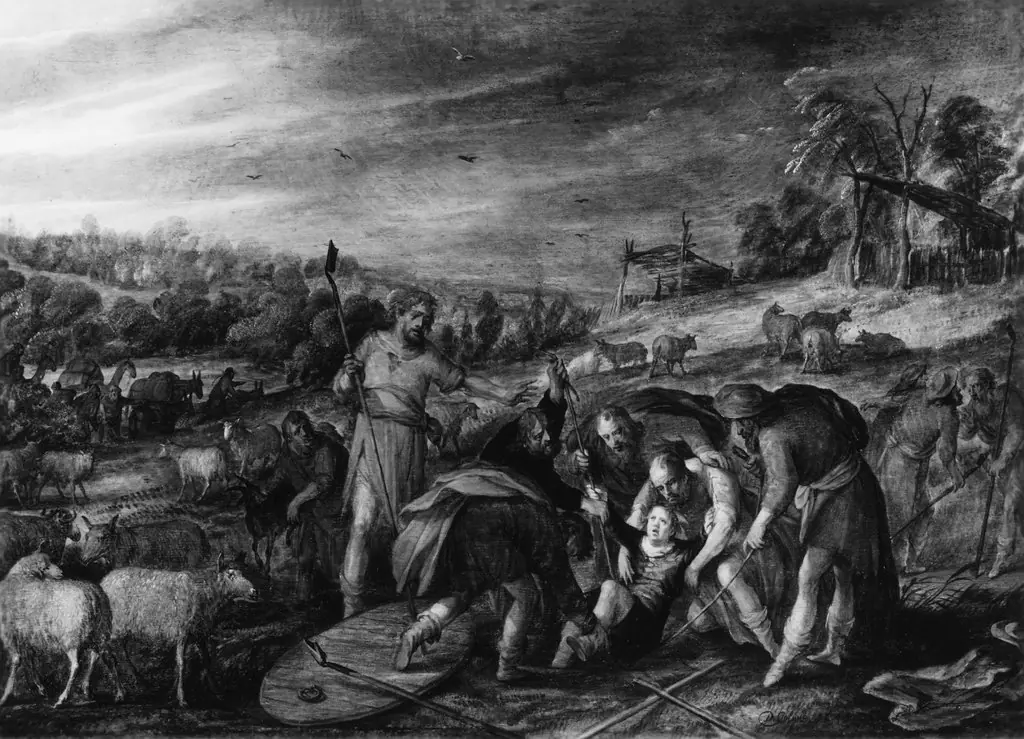
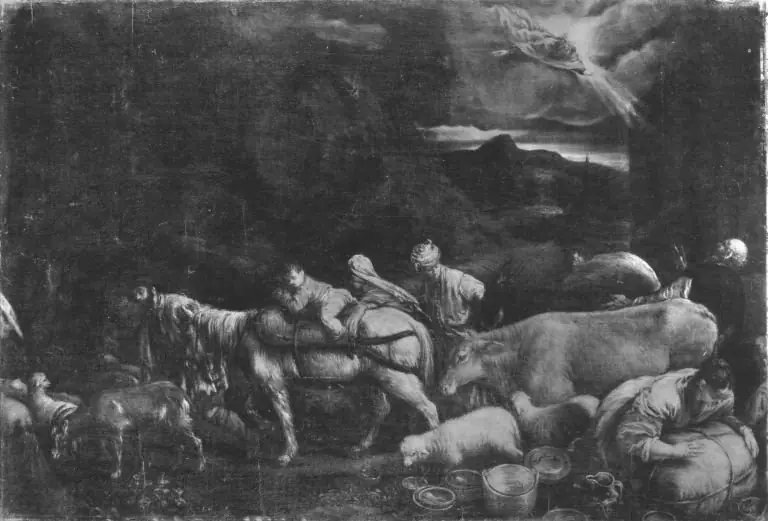
The composition visually identifies Moses alongside a flock of sheep, setting the scene in the pastoral landscape where the shepherd encountered the divine.
Livio Mehus's 1668 oil painting illustrates the biblical narrative of Moses and the Burning Bush. The composition visually identifies Moses alongside a flock of sheep, setting the scene in the pastoral landscape where the shepherd encountered the divine. Central to the iconography is the burning bush itself, which serves as the primary symbol of God's presence.
The work depicts Yahweh manifesting within the flames that do not consume the vegetation, representing the theological concept of a holy revelation that transcends natural laws. This religious genre piece captures the moment of divine calling, emphasizing the intersection of the human and the sacred through the specific attributes of the unconsumed fire and the attentive figure of Moses.
Technique & Style
Moses and the Burning Bush is an oil painting executed on canvas, a combination of materials consistent with mid-seventeenth-century Flemish practice. The work is classified within the religious genre, with its principal subject being the biblical episode of the Burning Bush. Painted in 1668, it belongs to the oil-on-canvas tradition that allowed for the layered handling and tonal modeling typical of devotional compositions of the period.
The canvas support and oil medium place the work firmly within the standard technique for religious history paintings of the era, supporting the detailed rendering required for figures such as Moses, the divine presence, and the accompanying sheep.
History & Provenance
The painting Moses and the Burning Bush by Livio Mehus is dated to 1668, as recorded in internal documentation and corroborated by the work’s Wikidata entry.
The work entered the collection of the Statens Museum for Kunst, Copenhagen, where it remains located. Its provenance prior to acquisition by the museum is not documented in the provided sources.
Legacy
The painting's legacy is anchored in its continued presence at the Statens Museum for Kunst, where it remains part of the institution's collection and exhibition history. Its religious genre and iconography of Moses, Yahweh, and the burning bush have contributed to scholarly discussions of 17th-century devotional art, though specific later exhibitions or critical receptions are not documented in the provided sources.
Overview
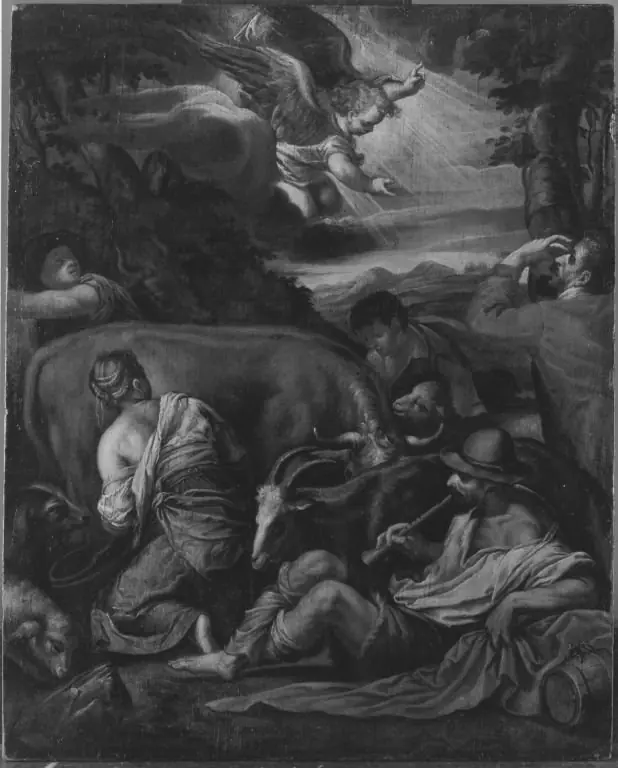
Livio Mehus’s oil painting Moses and the Burning Bush (1668) presents a dramatic biblical episode in which Moses, while shepherding his flock, encounters a luminous, flaming bush on a storm‑tossed hillside. The composition places a seated, cloaked figure beside a standing companion holding a staff, with a few tranquil sheep nearby. Dark, swirling clouds dominate the sky, while the fiery bush emits a stark, radiant light that illuminates the central figures.
Context
Mehus’s oeuvre includes religious narratives alongside allegorical, mythological, and portrait commissions. This painting reflects the Counter‑Reformation’s emphasis on vivid, emotionally charged biblical scenes, while also showcasing the cross‑cultural influences of a Flemish artist working within an Italian court environment, merging northern realism with Italian Baroque dynamism.
Artist & collection
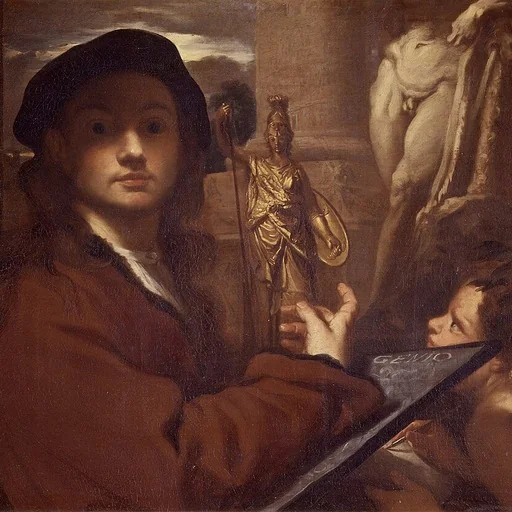
Artist
Lieven Mehus or Livio Mehus (1630, in Oudenaarde – 7 August 1691, in Florence) was a Flemish painter, draughtsman and engraver of the Baroque period, who trained and worked in Italy.