Artwork
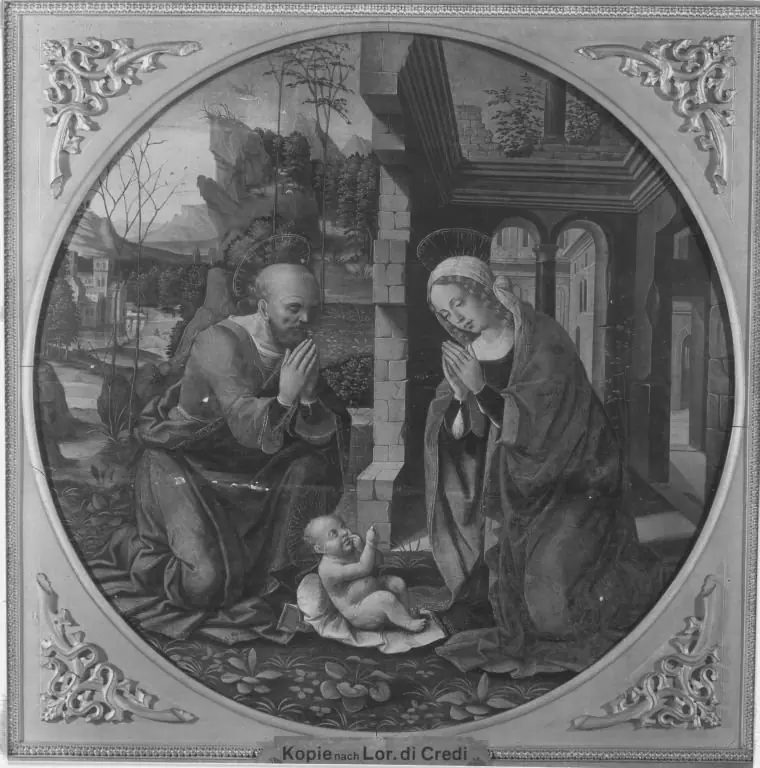
The Holy Family and Infant St. John
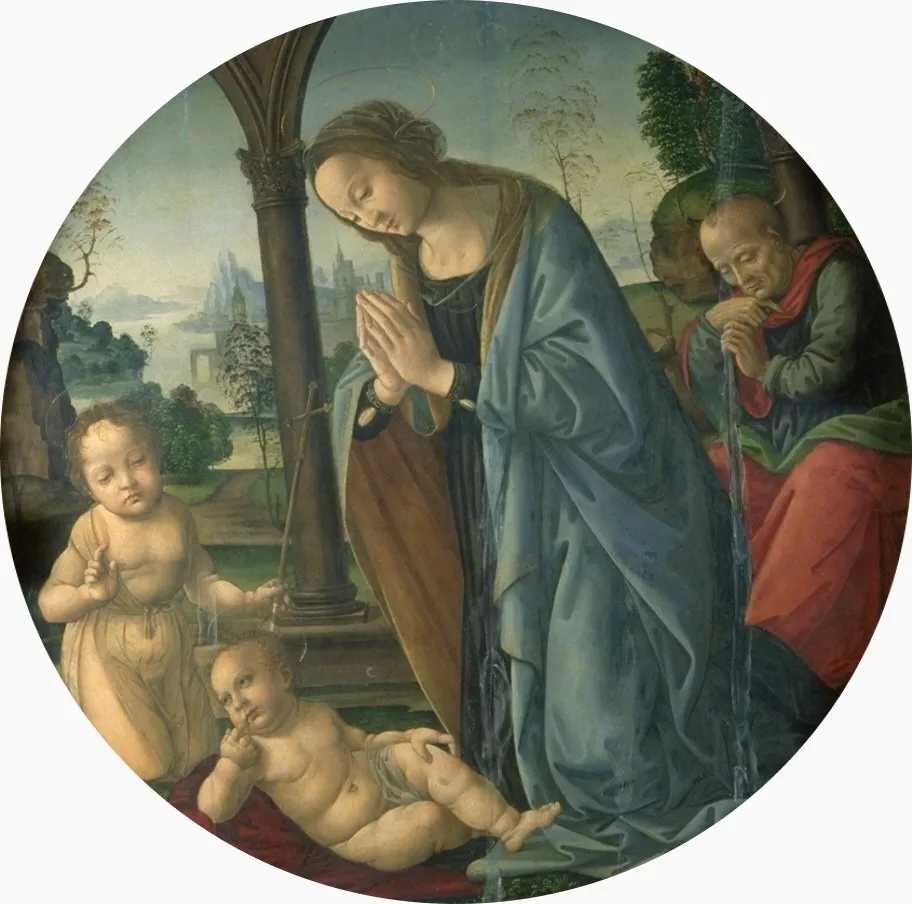
The Holy Family and Infant St. John is a paint painting by the High Renaissance artist Lorenzo di Credi. It dates from 1508 and is held in the collection of the Gemäldegalerie Berlin.
About this work
Subject & Meaning
Iconographically, the tender interaction among the figures conveys both human affection and divine purpose, embodying the spiritual unity of the family unit.
The painting shows the Holy Family, Mary, Joseph, and the infant Christ Child, alongside Saint John the Baptist as a child, forming a devotional grouping typical of early sixteenth‑century Florentine religious art. The intimate domestic setting underscores the familial bonds and the sacred humanity of the figures, while the presence of John the Baptist adds a prophetic dimension, linking the family to the larger narrative of salvation. This composition reflects the theological emphasis on the Holy Family as a model of piety and domestic virtue within the Catholic tradition of the period.
The work was created by Lorenzo di Credi for the Gemäldegalerie Berlin, where it remains part of the Kaiser Friedrich Museumsverein collection.
Iconographically, the tender interaction among the figures conveys both human affection and divine purpose, embodying the spiritual unity of the family unit.
Technique & Style
The painting is executed in oil on poplar panel, consistent with Florentine practice of the late fifteenth and early sixteenth centuries.
Handling shows smooth, fine modeling of faces and drapery with delicate glazes, while the landscape background employs atmospheric recession. Subtle tonal shifts and softly blended transitions characterize the figures, particularly in the Child’s flesh and the Virgin’s mantle. A restrained palette, punctuated by touches of vermilion in the Virgin’s robe and the Christ Child’s cloth, focuses attention on the central group.
No specific condition report is provided in the cited sources; the work is recorded as part of the Gemäldegalerie Berlin’s holdings.
History & Provenance
The work was created by Lorenzo di Credi for the Kaiser Friedrich Museumsverein, which held it in its collection and displayed it at the Gemäldegalerie Berlin. It is a religious painting on poplar panel depicting the Holy Family with Mary, the infant Christ Child, and Joseph. The painting entered the Gemäldegalerie Berlin's holdings through the ownership of the Kaiser Friedrich Museumsverein.
Dating and creation history are documented only by the artist attribution and genre classification within the source record, which identifies it as a work by Lorenzo di Credi in the religious genre.
The Holy Family and Infant St. John by Lorenzo di Credi is held by the Gemäldegalerie Berlin, where it forms part of the museum's collection. The painting was previously owned by the Kaiser Friedrich Museumsverein (KFMV), the association that historically supported acquisitions for Berlin's state museums. It is executed in paint on a poplar panel, consistent with the panel-painting tradition of the period.
No exhibition history is documented in the available sources.
Context
Lorenzo di Credi's The Holy Family and Infant St. John (c. 1500) exemplifies High Renaissance religious painting through its serene composition and devotional focus on Mary, Joseph, and the infant Christ. The work reflects di Credi's position within the Florentine workshop tradition, trained by Verrocchio and influenced by Leonardo da Vinci's early innovations, particularly in anatomical precision and emotional restraint. Its placement in the Gemäldegalerie Berlin's collection, acquired through the Kaiser Friedrich Museumsverein, underscores its significance within German museum acquisitions of Renaissance art, while scholarly analyses highlight its role in understanding devotional practices in early 16th-century Italy.
Overview
Lorenzo di Credi, a Florentine painter active in the early 1500s, produced the oil painting known as The Holy Family and Infant St John around 1508. The work presents a domestic religious scene in which a kneeling woman, identified as the Virgin Mary, holds the infant Christ while the young John the Baptist reaches toward them, observed by an older male figure, traditionally Joseph. The composition is set before a modest landscape featuring a stone fountain, a distant castle, and a tranquil sky.
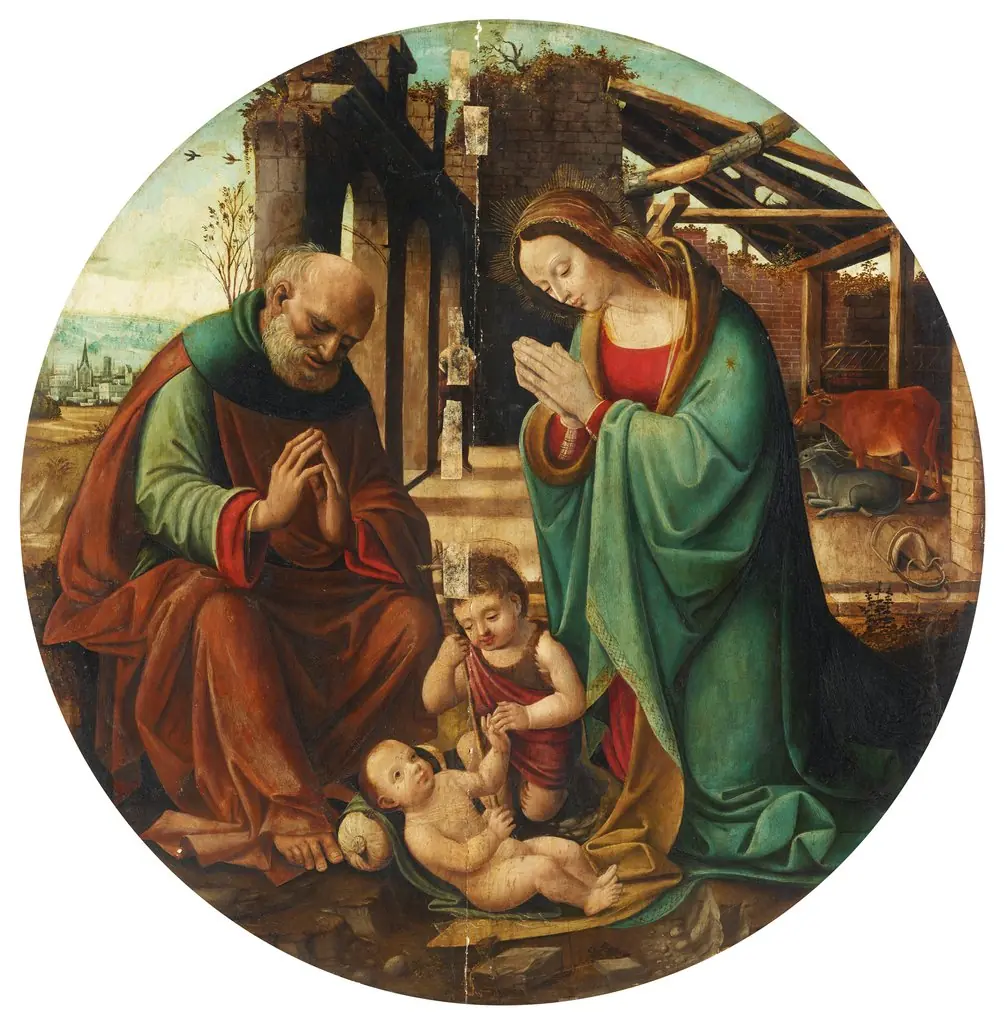
Artist & collection

Artist
Lorenzo di Credi (1456/59 – January 12, 1537) was an Italian Renaissance painter and sculptor best known for his paintings of religious subjects, and portraits.

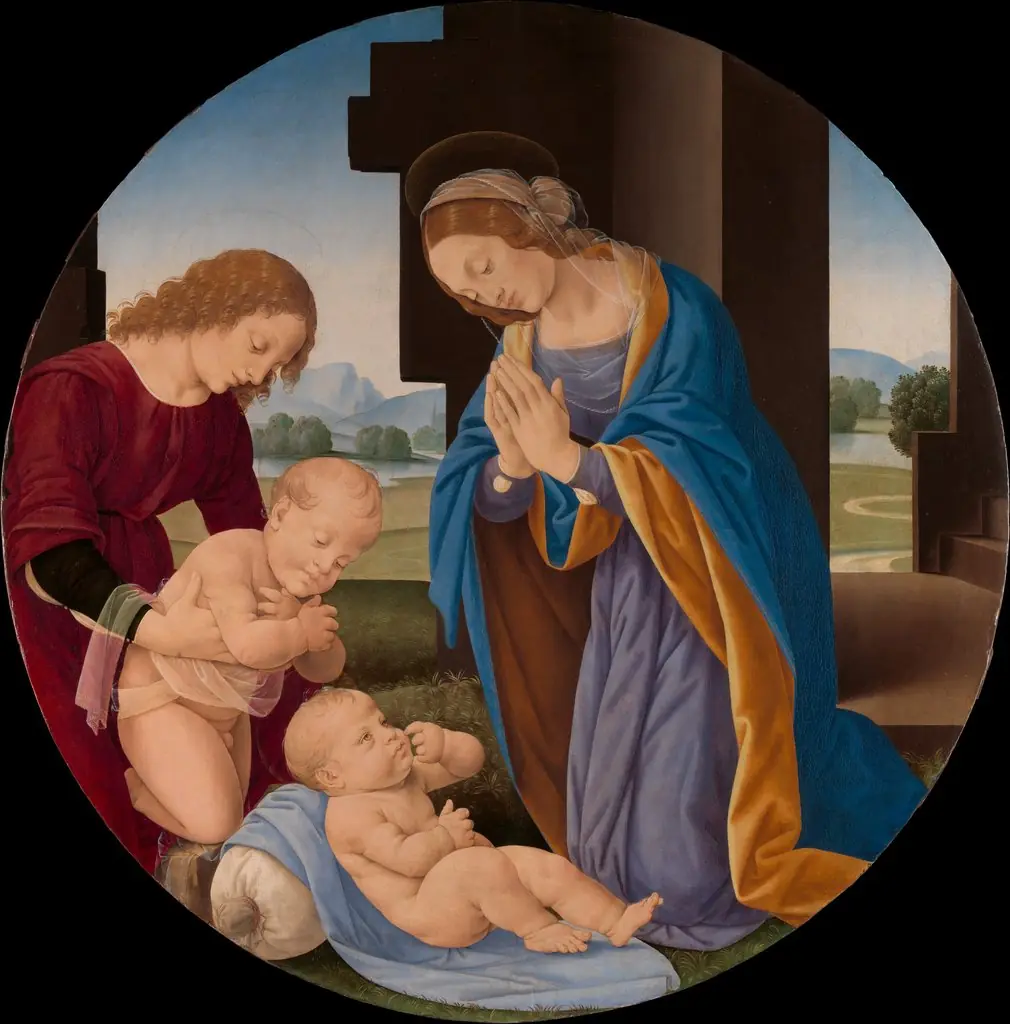
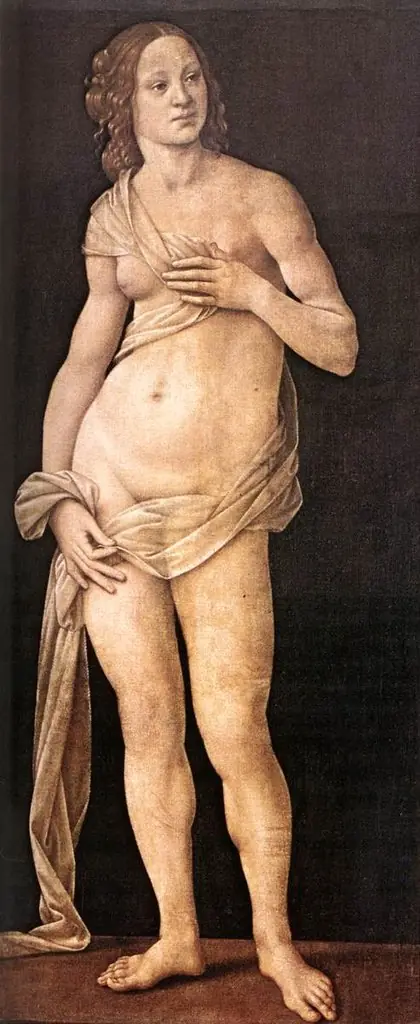
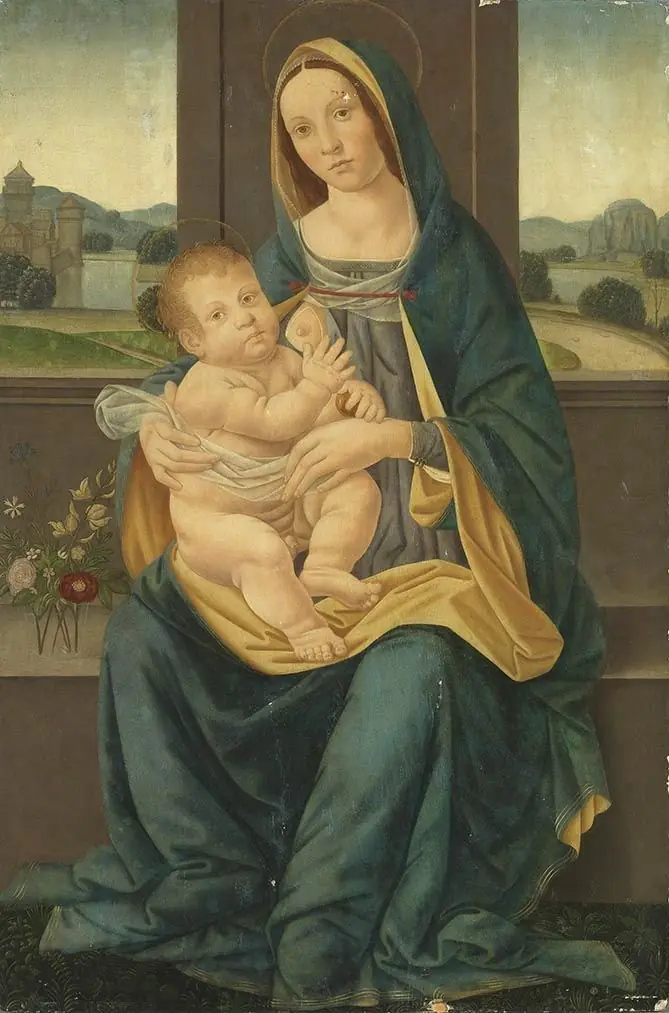
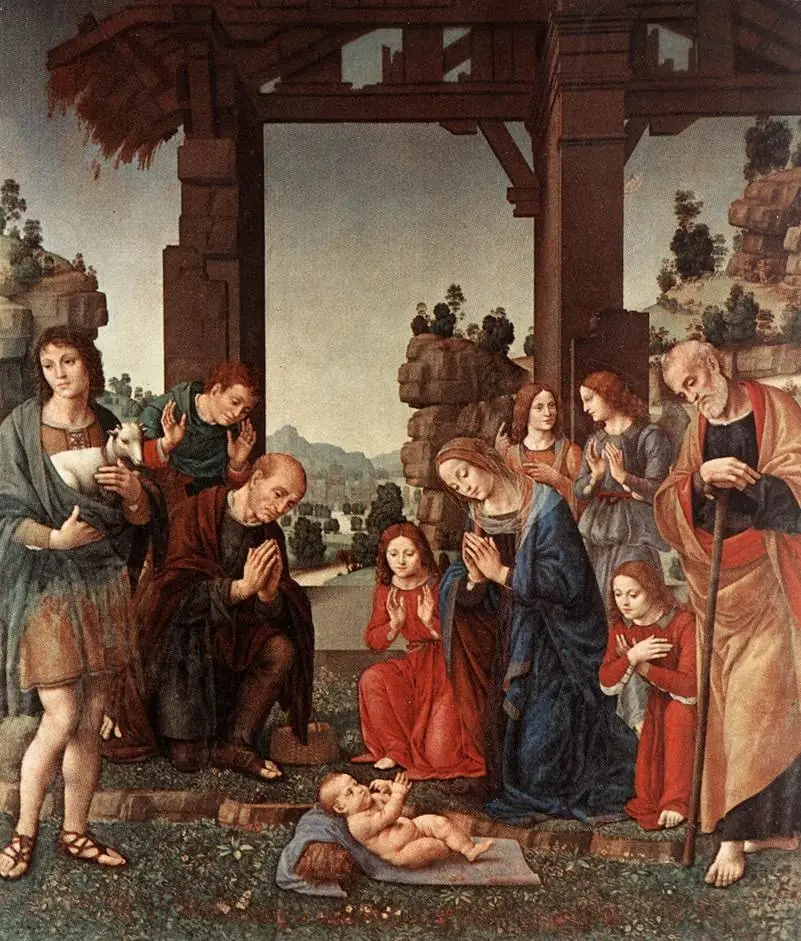
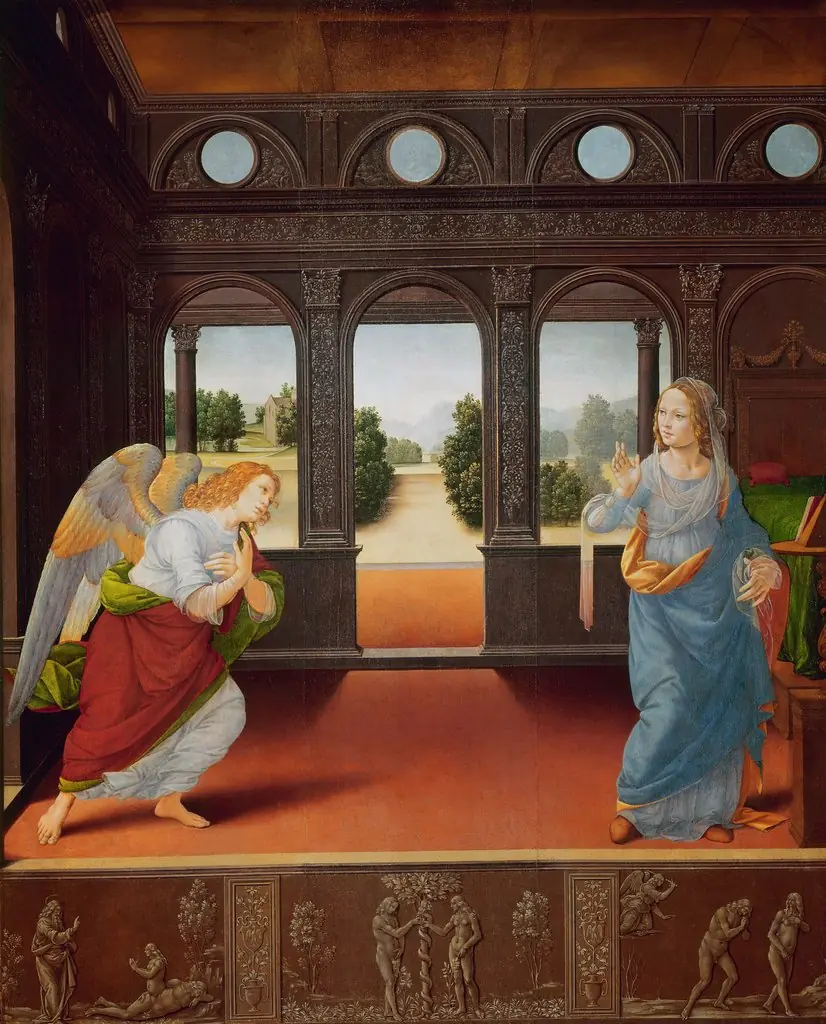
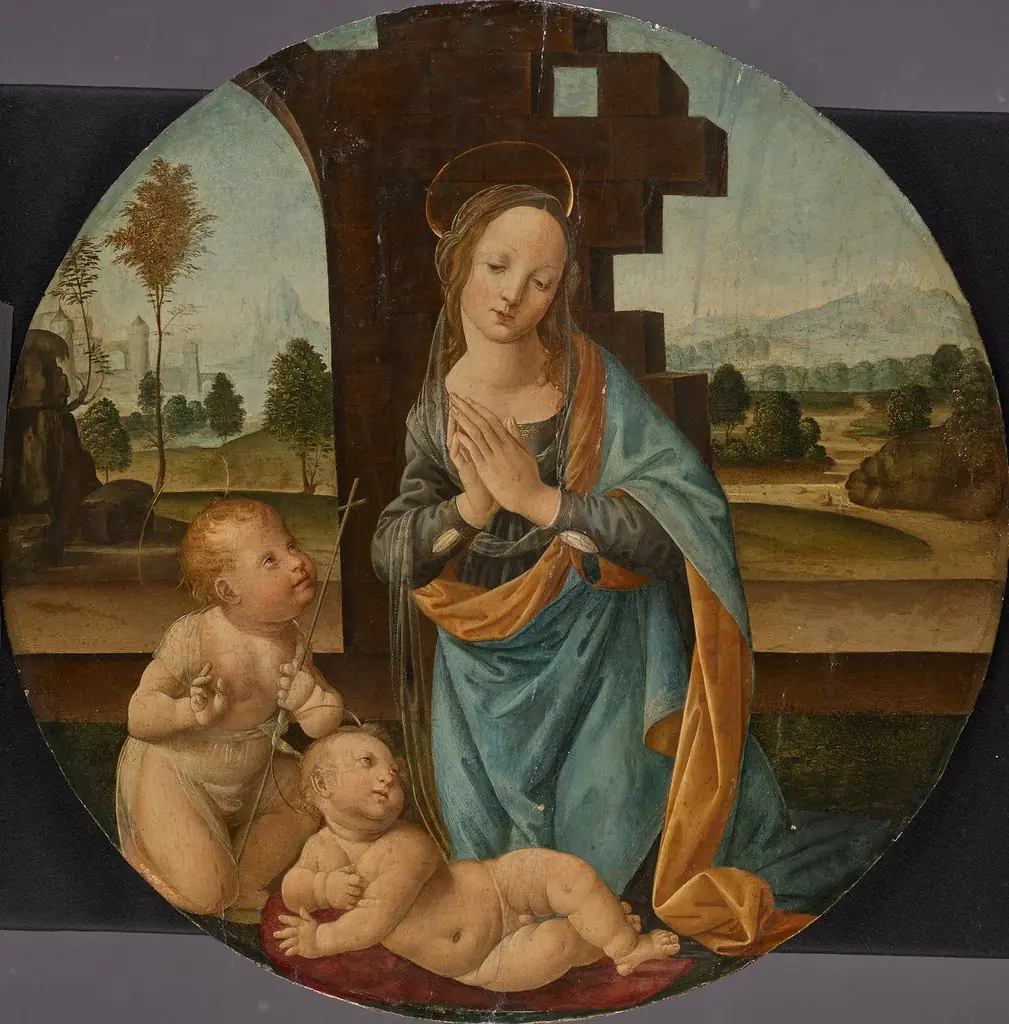 The Virgin and Child with the Young St. John
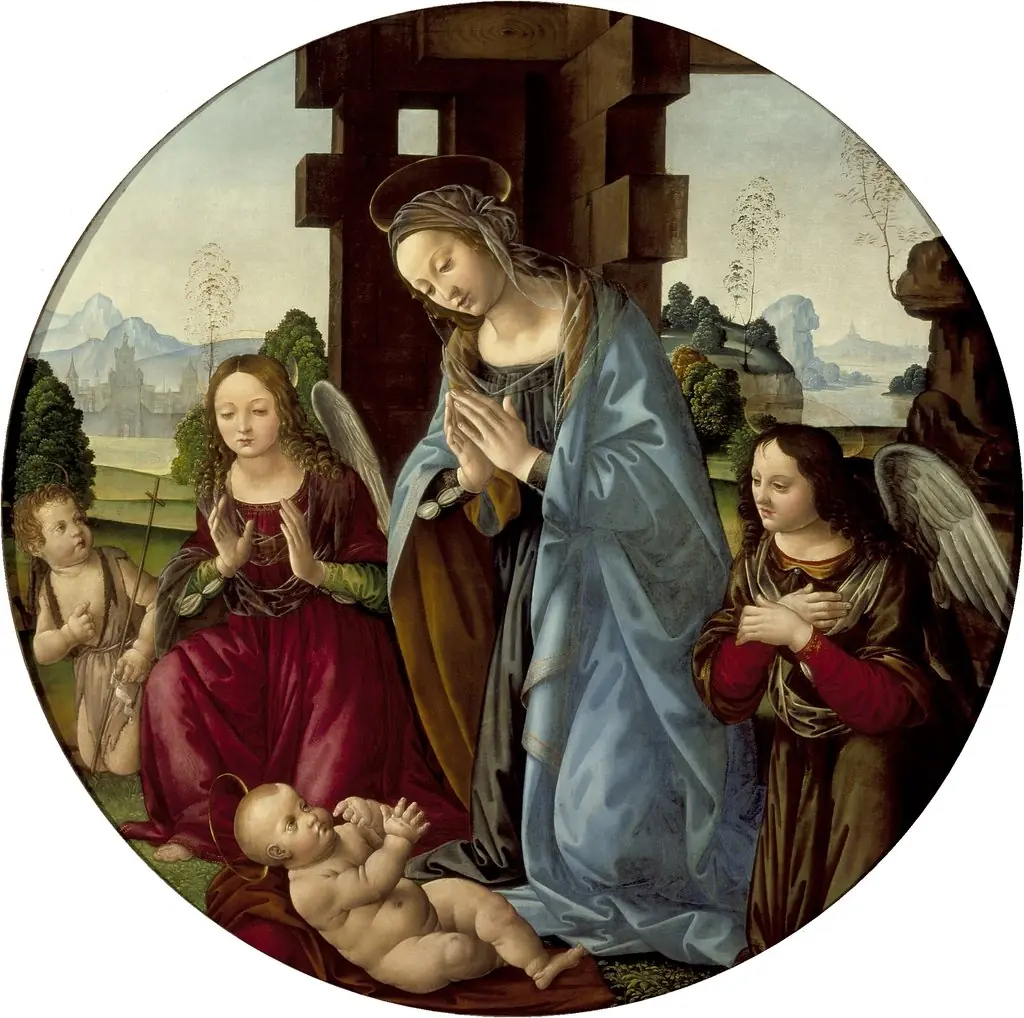 Virgin Adoring the Christ Child with St. John the Baptist and Two Angels
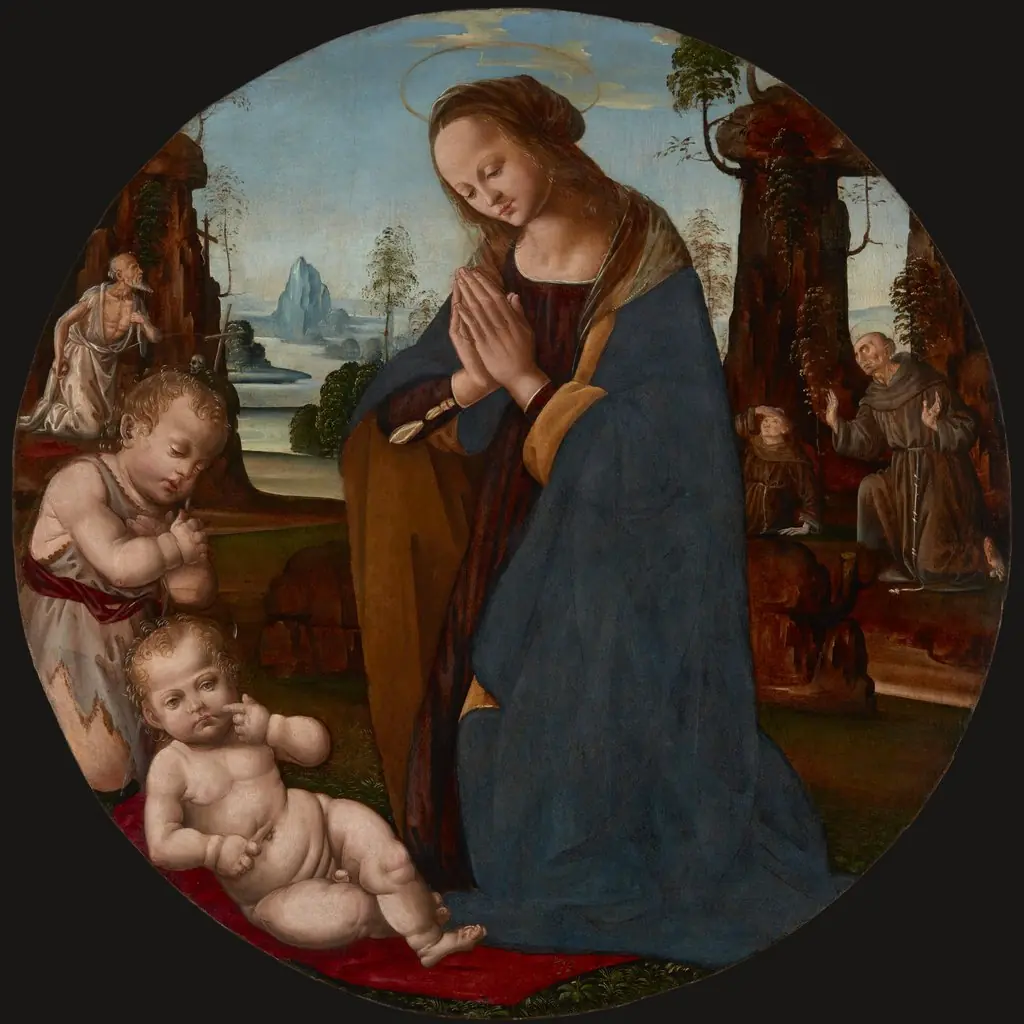 Adoration of the Child with Young St John the Baptist – Tondo
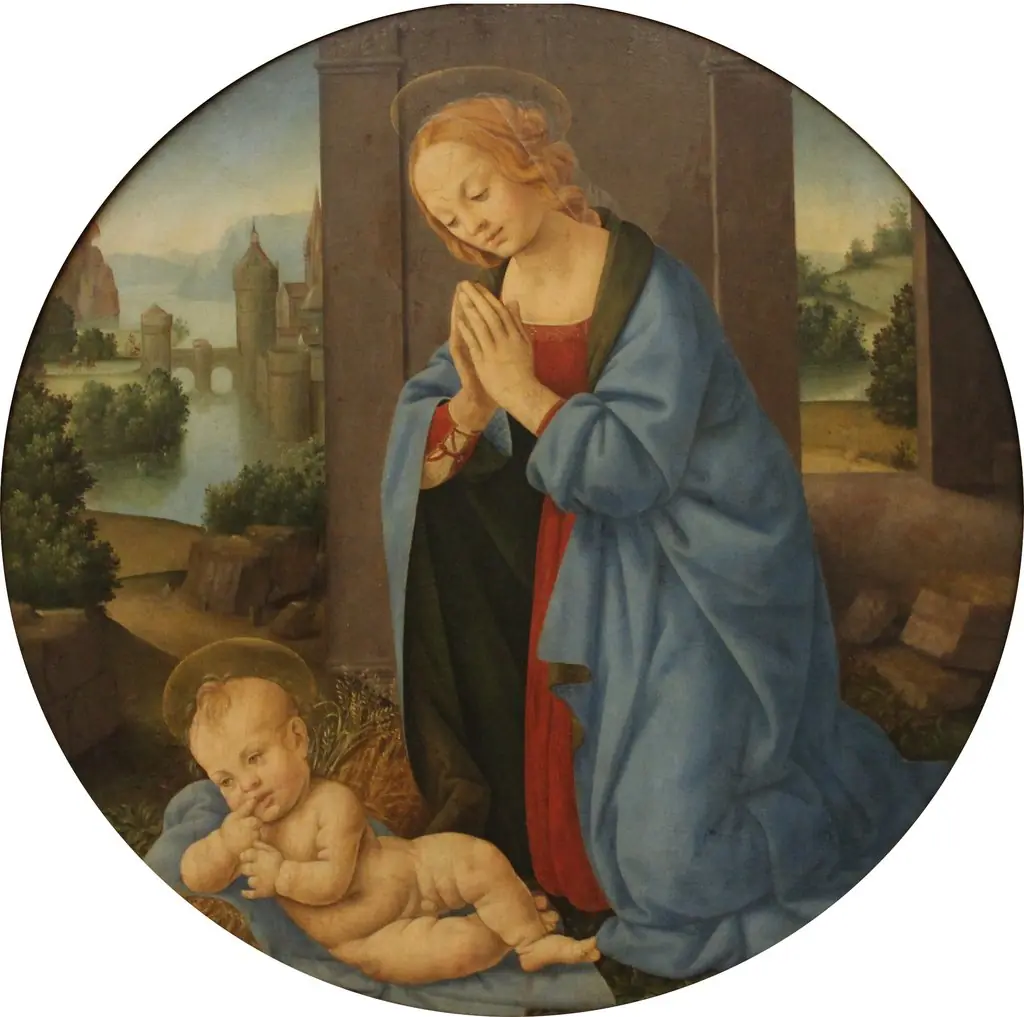 The Virgin adoring the Child
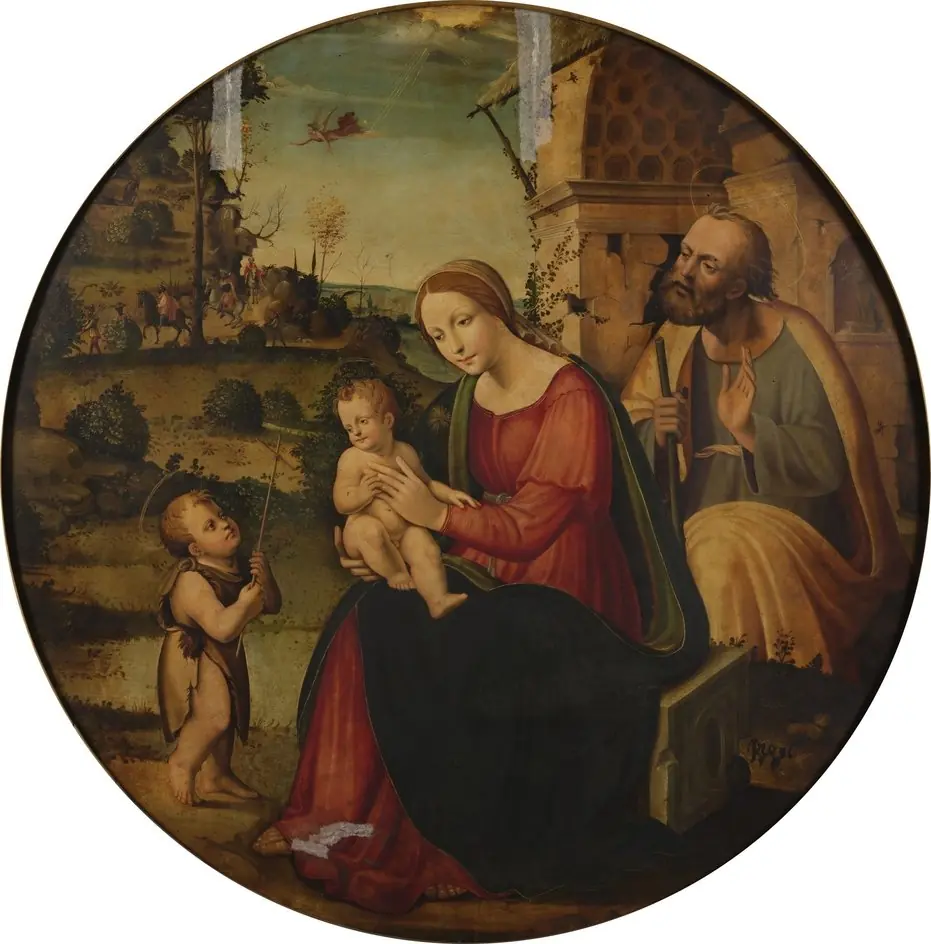 The Holy Family with the young St John the Baptist
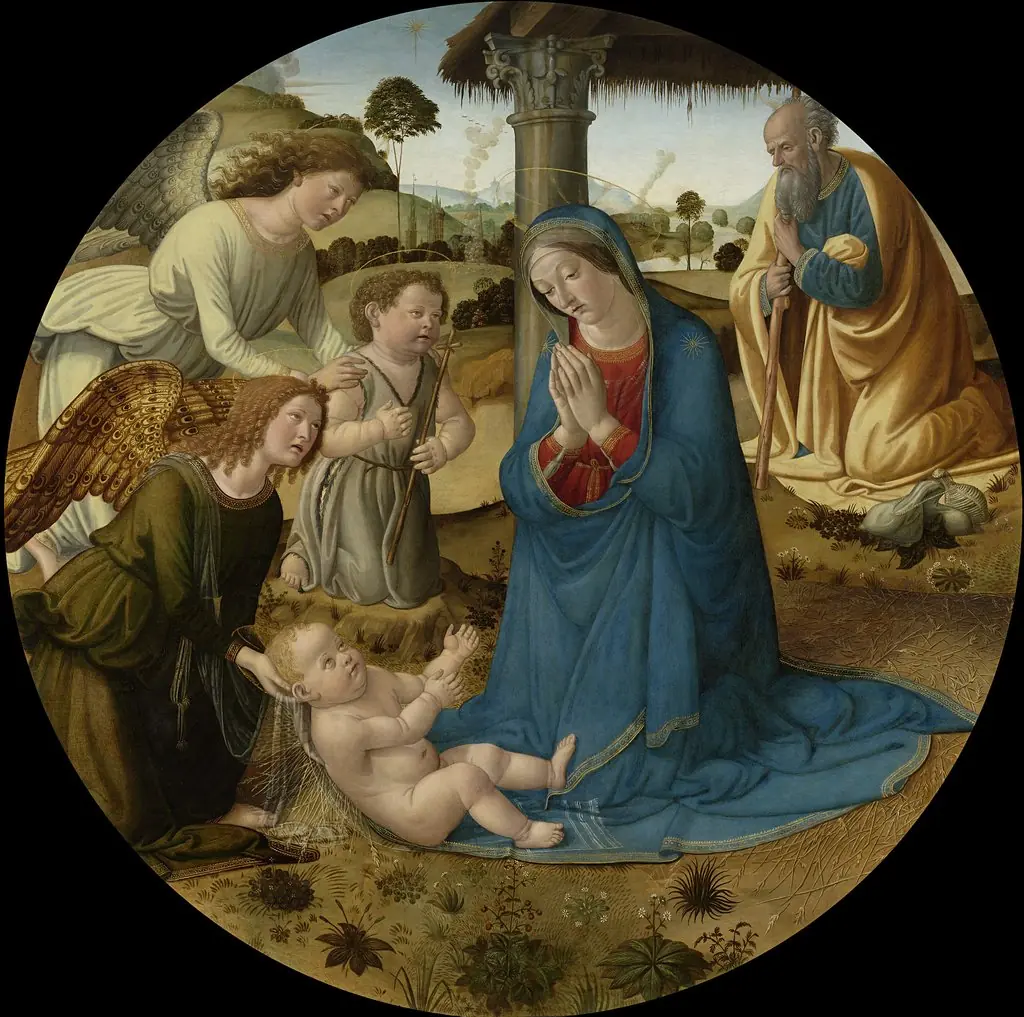 The Adoration of the Christ Child
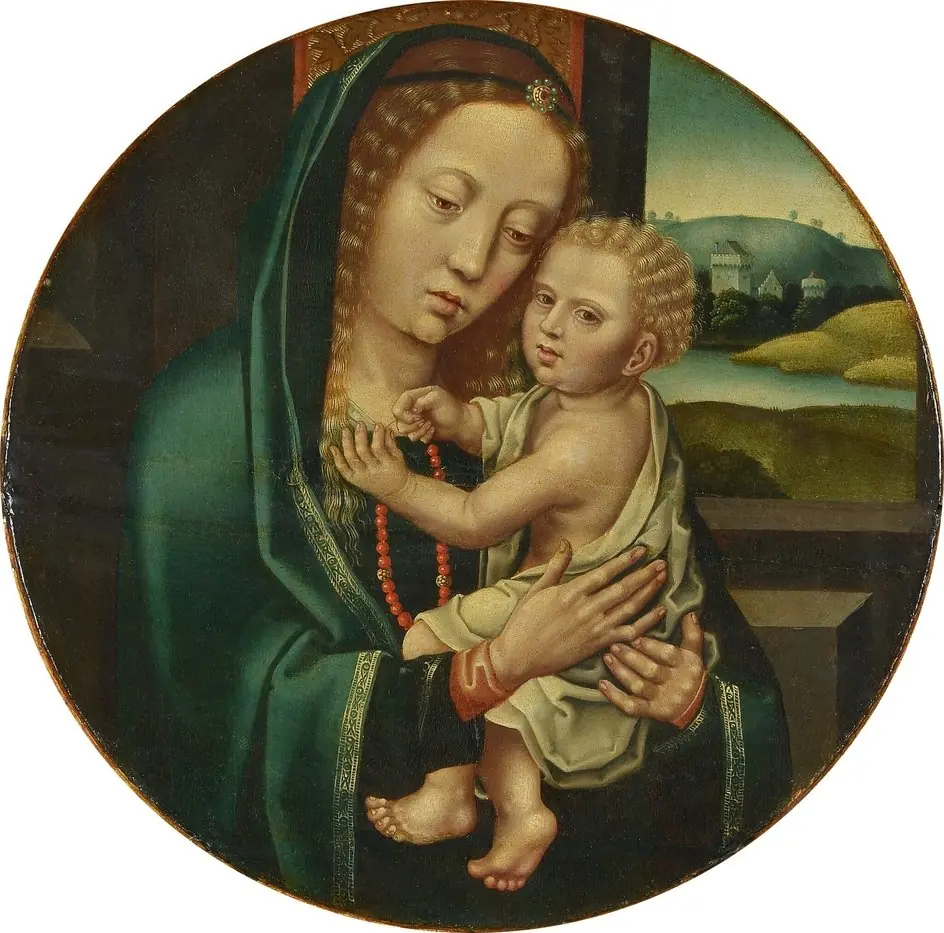 The Virgin and Child
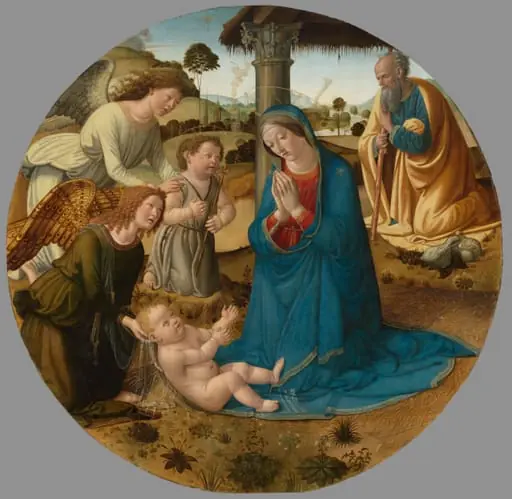 De aanbidding van het Christuskind
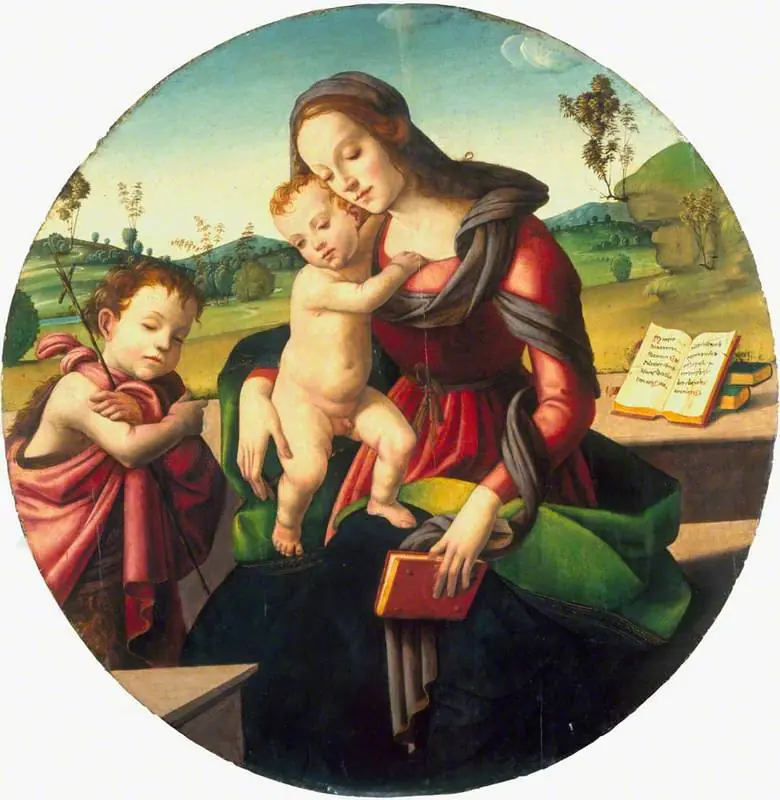 The Virgin and Child with the Infant Saint John the Baptist
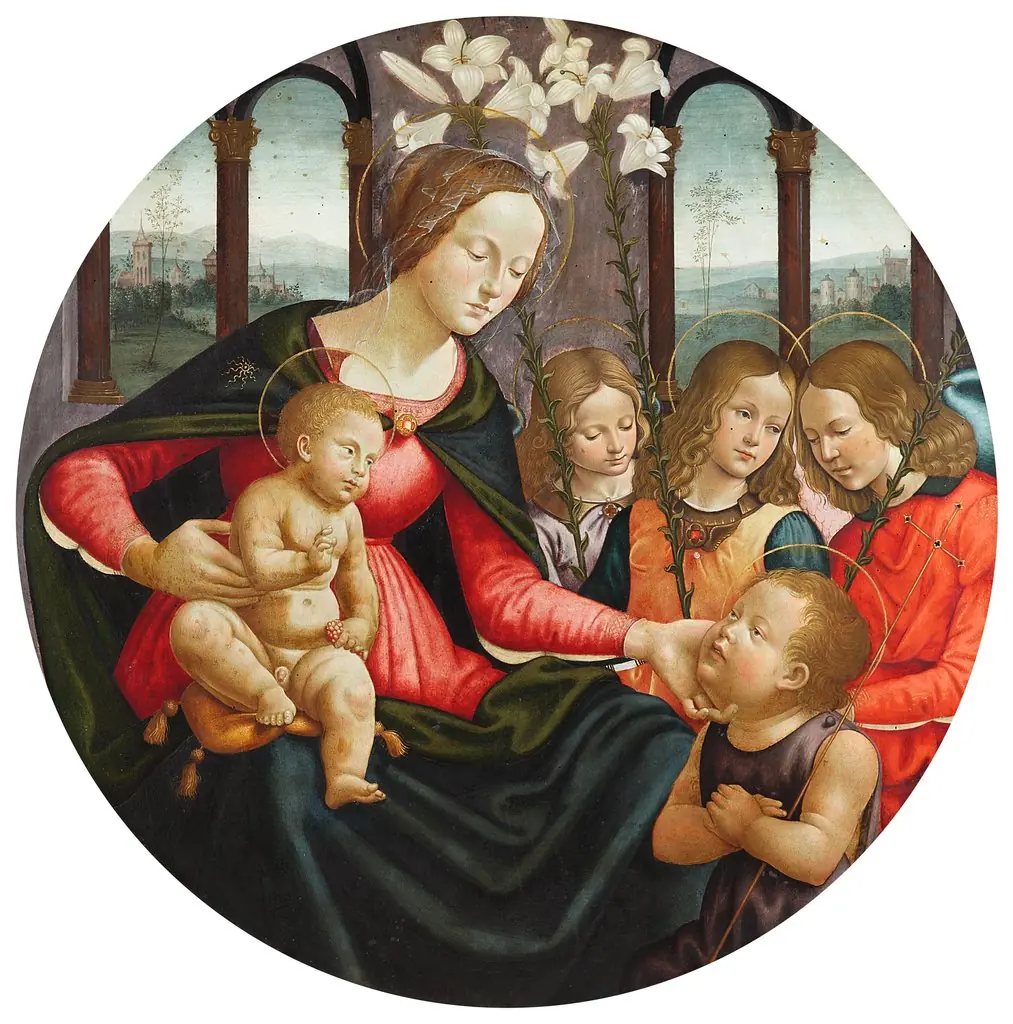 The Virgin and Blessing Child, Young St. John and three Angels
- The Holy Family with Young St. John, Adoring the Child