Artwork
The Annunciation
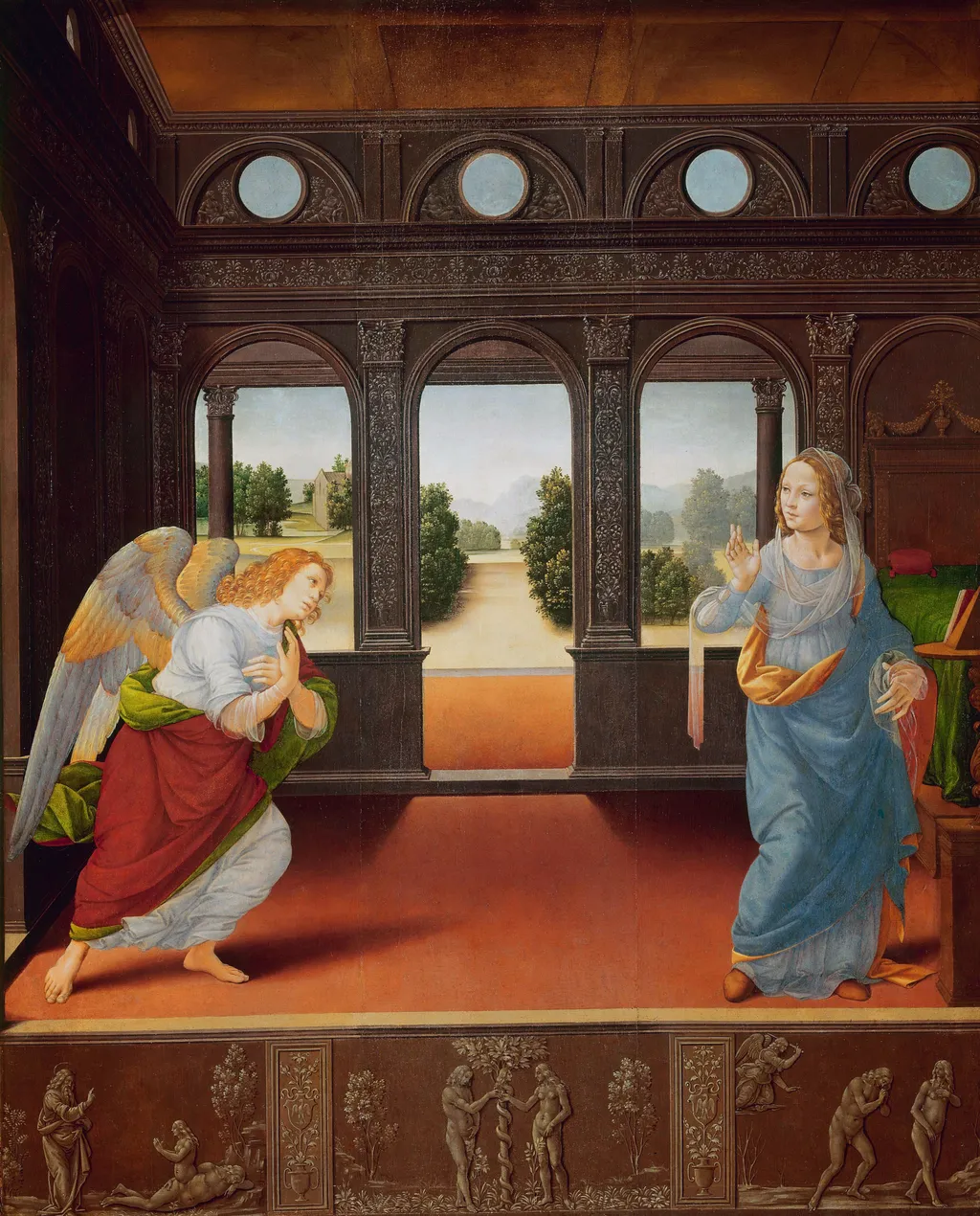
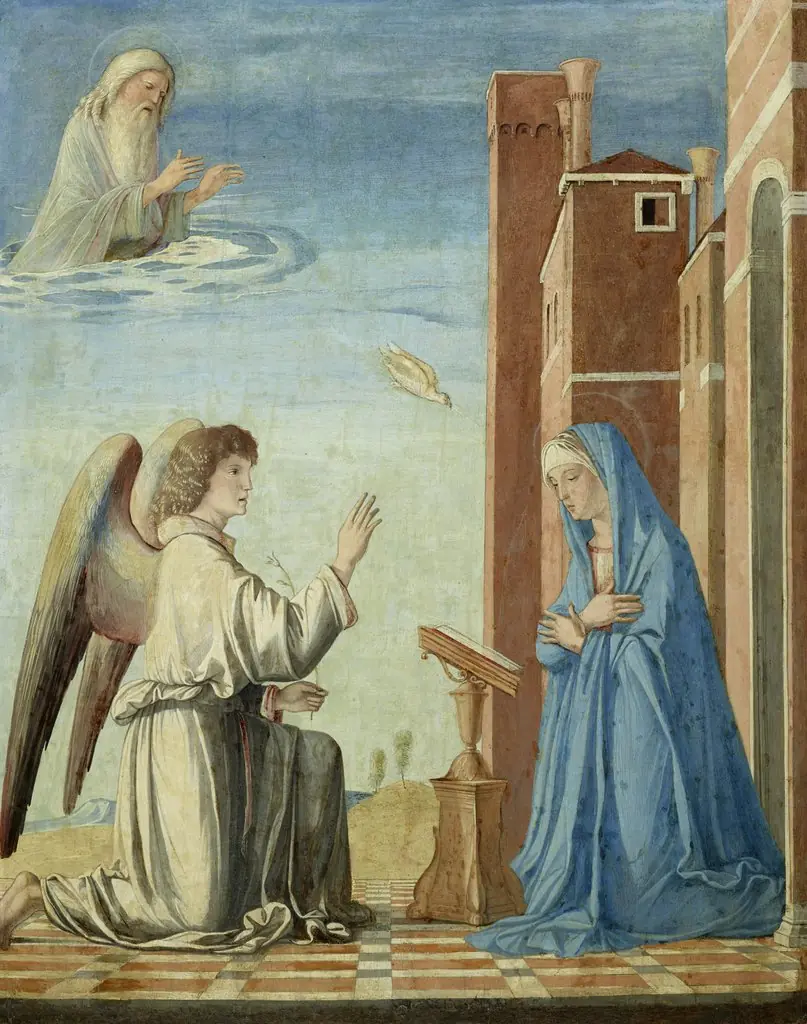
The Annunciation is an oil painting by the Early Renaissance artist Lorenzo di Credi. It dates from 1490 and is held in the collection of the Uffizi Gallery.
About this work
Subject & Meaning
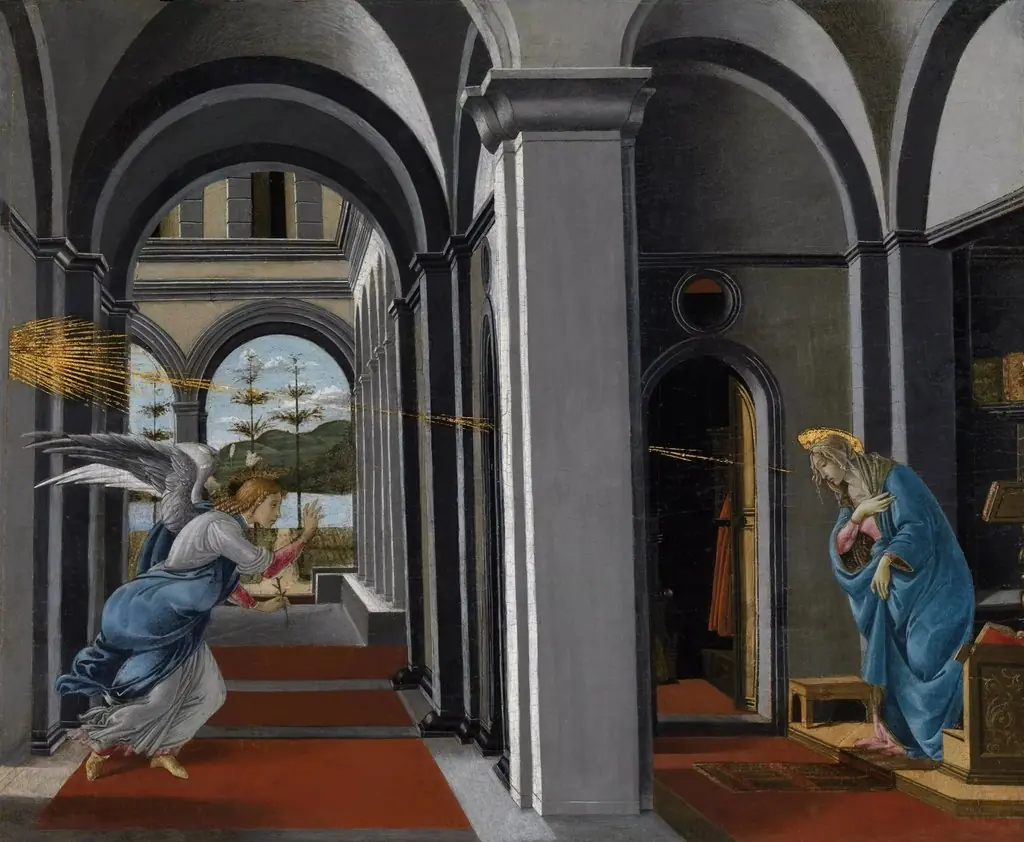
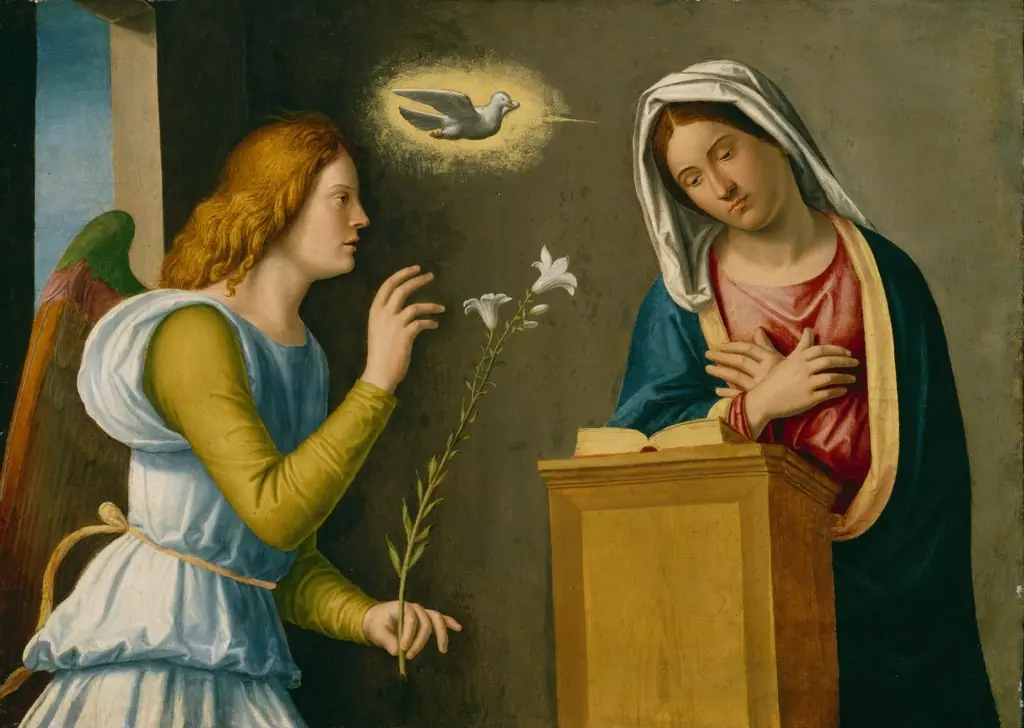
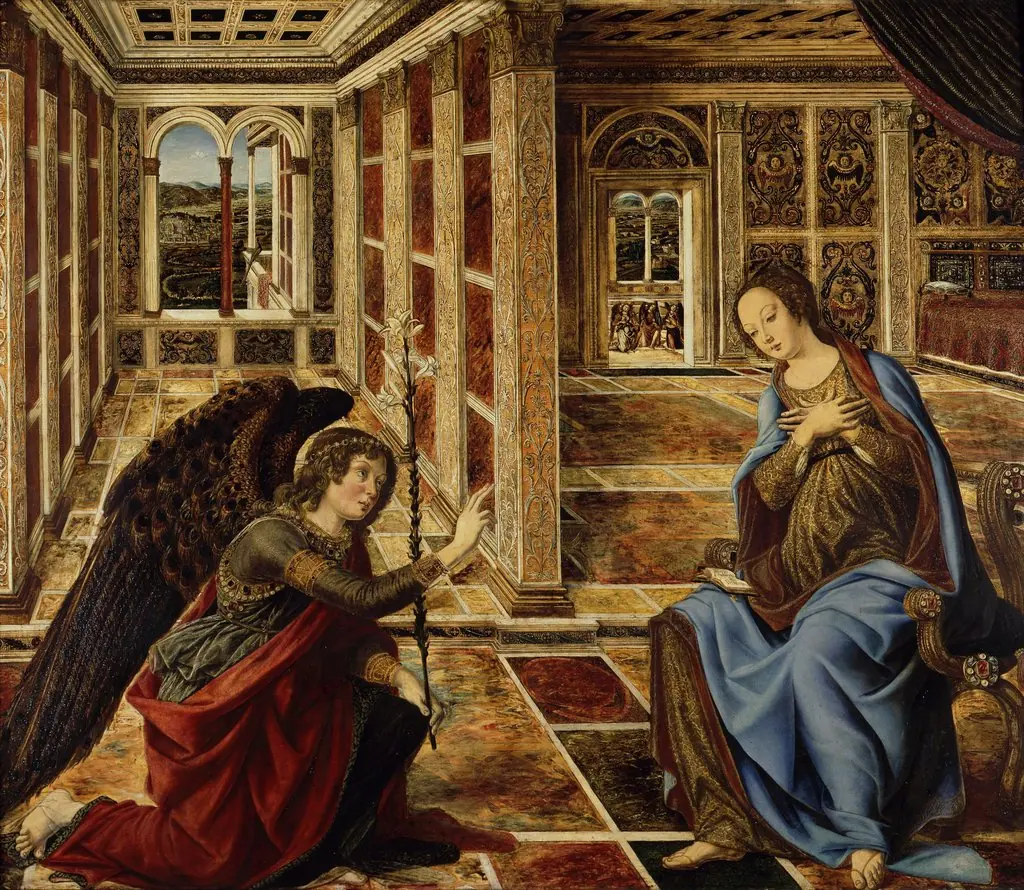
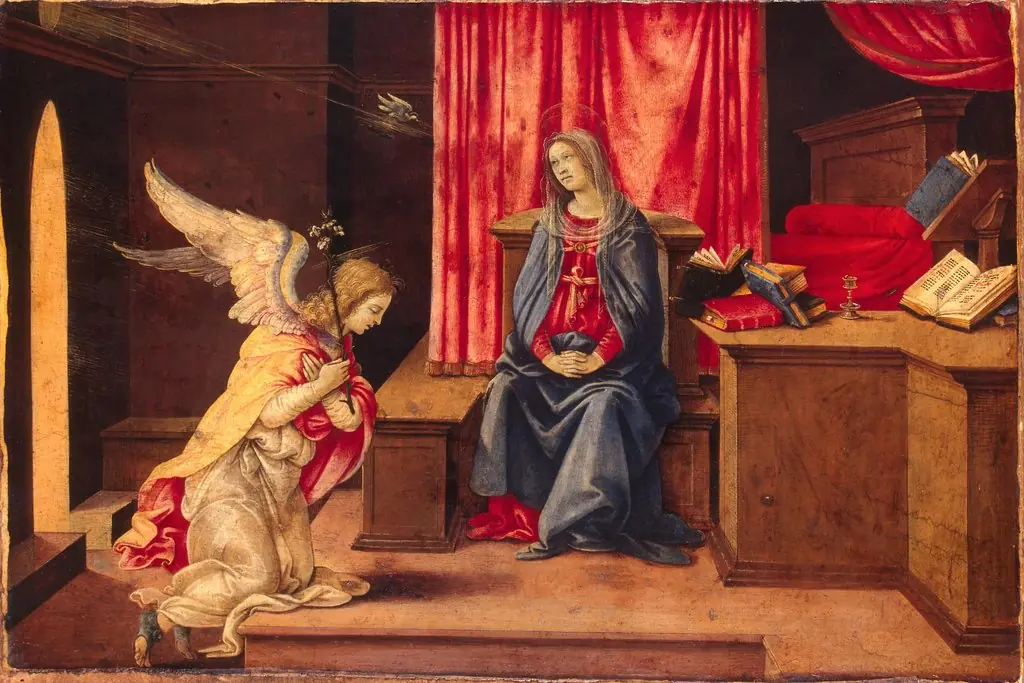
The painting depicts the Annunciation, the moment when the Archangel Gabriel announces to the Virgin Mary that she will conceive and bear the Son of God.
The painting depicts the Annunciation, the moment when the Archangel Gabriel announces to the Virgin Mary that she will conceive and bear the Son of God. Mary stands near a tall lectern, interrupted from her reading, while Gabriel enters from a door on the left.
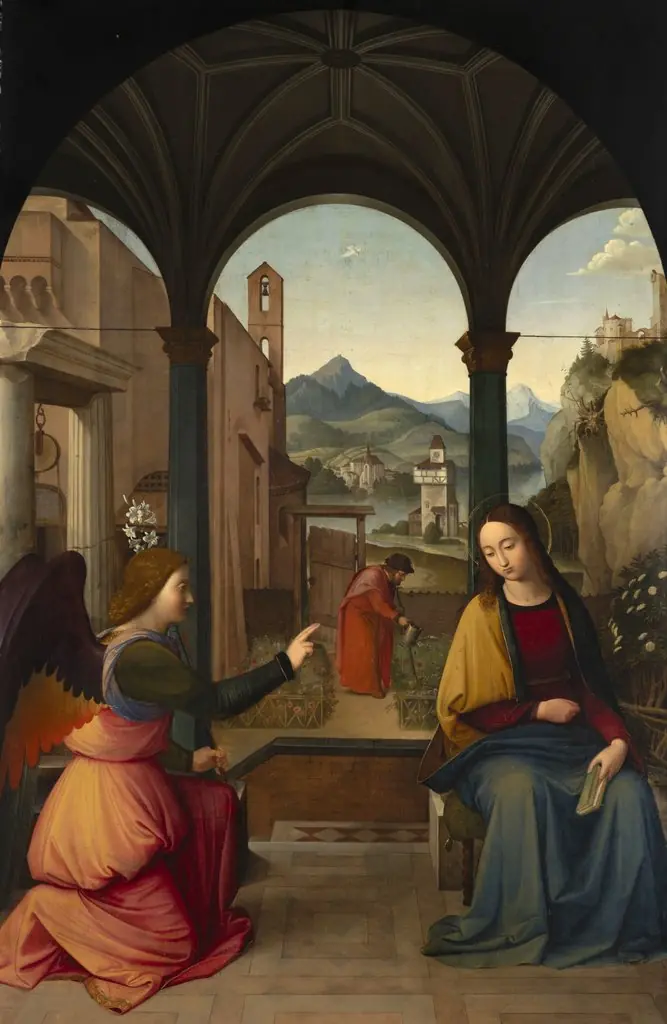
The setting carries layered symbolic meaning. The hortus conclusus, or enclosed garden visible through the central arcade, is a traditional emblem of Mary's virginity. The tripartite architecture opening onto a serene landscape evokes a sacred threshold between earthly and divine realms.
At the bottom, a monochrome faux predella depicts three Genesis scenes, the Creation of Eve, the Original Sin, and the Expulsion from Paradise, linking Mary's fiat to the redemption of humanity's fall.
The work's experimental optical effects, such as transparent veils that reveal the floor beneath, reflect the investigative climate of Leonardo da Vinci's circle, though the figures remain more artificially juxtaposed against their setting than in Leonardo's own atmospheric compositions.
Technique & Style
The Annunciation is executed in oil on panel, measuring 88 × 71 cm. Compositionally, the work is organized around a rigorously symmetrical architectural setting of three central arches framed by antique-style pilasters with rich reliefs, surmounted by an ornate frieze and a row of lunettes with open oculi.
Light enters from multiple sources, creating crisp contrasts between the sharply lit figures and the dark architectural frame, while the distant landscape is rendered in luminous, crystalline tones. The figures, Gabriel in red and green drapery with iridescent wings, and the Virgin in translucent veils over a blue mantle, are articulated with delicate optical refinements characteristic of the Verrocchio circle.
The lower register is treated as a faux predella in monochrome, depicting Genesis scenes in relief-like illusion: from left, the Creation of Eve, the Original Sin, and the Expulsion from Eden, separated by pilasters adorned with floral motifs and heraldic shields bearing eagles.
History & Provenance
The Annunciation by Lorenzo di Credi is dated to circa 1480–1485 and is held in the Galleria degli Uffizi, Florence. Its early provenance traces to the collection of Cardinal Leopoldo de’ Medici by 1675; the painting entered the Uffizi in 1798. The original commission remains unidentified and is not documented by Vasari.
The lower predella-like section features three monochrome Genesis scenes, Creation of Eve, the Fall, and Expulsion from Paradise, interspersed with pilasters bearing floral motifs and heraldic shields with eagles, suggesting a possible noble patron.
The Annunciation by Lorenzo di Credi is held in the Galleria degli Uffizi, Florence, with inventory number 1890, catalogued as 1890 inv. 1759.
It entered the Uffizi in 1798 after having been part of the collections of Cardinal Leopoldo de’ Medici by at least 1675. The painting’s original destination is not documented, and it is not mentioned by Vasari.
Context
Lorenzo di Credi's Annunciation is situated within the experimental climate of the Verrocchio workshop, where the artist worked alongside Leonardo da Vinci. The painting's treatment of light, featuring multiple sources and transparent veils, reflects Flemish influences absorbed by this circle. However, scholarship distinguishes Credi's approach from Leonardo's; while the work displays a harmonious architectural structure and refined figures, critics note that the protagonists appear juxtaposed against the scenery rather than immersed in an atmospheric unity, lacking the aerial perspective that characterizes Leonardo's mature style.
The work's early history remains obscure, as it is not mentioned by Giorgio Vasari and its original destination is unknown. It entered the Uffizi Gallery in 1798 from the collection of Cardinal Leopoldo de' Medici, where it had been recorded since at least 1675. Heraldic eagles depicted in the illusory monochrome predella provide the sole clue regarding its original patronage.
Overview
The Annunciation, a painting by Lorenzo di Credi, dates to around 1490. Created in the early Renaissance style, it is a representation of the biblical annunciation scene, now housed in the Uffizi Gallery.
Own this work as a print
Artist & collection

Artist
Lorenzo di Credi (1456/59 – January 12, 1537) was an Italian Renaissance painter and sculptor best known for his paintings of religious subjects, and portraits.