Artwork
Madonna and child with Saint Catherine, Saint James the Greater, and an angel
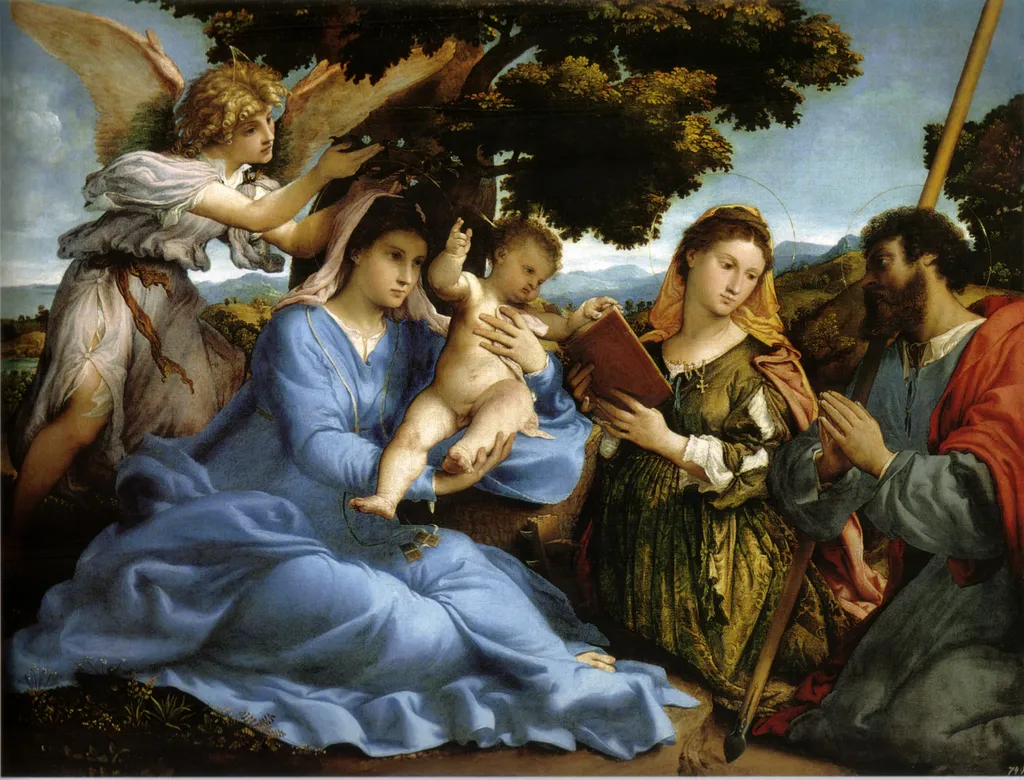
Madonna and child with Saint Catherine, Saint James the Greater, and an angel is an oil painting by the Mannerist artist Lorenzo Lotto. It dates from 1527 and is held in the collection of the Kunsthistorisches Museum.
About this work
Subject & Meaning
A youthful angel crowns the Virgin with a wreath of leaves and flowers, creating an intimate group dynamic where gazes and gestures link the figures diagonally.
The painting depicts a sacra conversazione set within an open rural landscape rather than a traditional architectural church setting. Central to the composition are the Virgin Mary and the Christ Child, seated informally in the shade of a tree. To their right stand the martyr saints Catherine of Alexandria and James the Great, identifiable by their specific attributes: Catherine holds a book and stands near a broken wheel, while James is shown with a pilgrim's staff in a prayerful pose.
A youthful angel crowns the Virgin with a wreath of leaves and flowers, creating an intimate group dynamic where gazes and gestures link the figures diagonally. This arrangement emphasizes a personal, devotional connection among the holy figures, reflecting a shift from static hierarchies to a more fluid, emotional interaction typical of the artist's style.
Technique & Style
The work is executed in oil on canvas, measuring 95.5 × 69.5 cm, and depicts a sacra conversazione arranged in an open landscape rather than a church interior.
The figures form a dynamic, interconnected group through glances and gestures, with the angel crowning the Virgin in the background and Saint Catherine presenting a book to the Christ Child. Lotto’s handling emphasizes fluid, restless drapery and sharply observed light effects, departing from the static pyramidal compositions associated with Palma il Vecchio’s models. His palette remains cool and restrained, aligning with northern influences such as Dürer, while the expressive postures and abrupt tonal contrasts reflect early Mannerist tendencies tempered by a persistent realism.
History & Provenance
The painting was created by Lorenzo Lotto around 1527, shortly after his arrival in Venice, and is likely a private devotional commission rather than a church commission.
The earliest documented reference appears in 1660 in Marco Boschini’s Carta del navigar pittoresco, where it is described as already part of the Habsburg collections in Vienna and attributed to Palma il Vecchio. Boschini praised the work as splendid and memorable, noting its refined composition.
The painting entered the Kunsthistorisches Museum in Vienna, where it remains in the collection.
The painting is held in the Kunsthistorisches Museum in Vienna, where it has resided within the Habsburg collections since at least 1660. Its presence in Vienna was first documented that year by Marco Boschini in his Carta del navigar pittoresco, though he incorrectly attributed the work to Palma il Vecchio. The sources provided do not list a specific inventory or accession number for the artwork, nor do they detail any specific exhibition history beyond its long-term residence in the museum. The work remains part of the permanent collection of the Kunsthistorisches Museum.
Context
First documented in 1660 by Marco Boschini, the work was initially misattributed to Palma il Vecchio, though scholars now recognize it as a Lotto composition utilizing a Palma-derived design. Boschini praised the painting as splendid and memorable, noting its presence in the Habsburg collections by that time. Art historical analysis positions the piece as a significant example of sacra conversazione that departs from traditional static, hierarchical arrangements in favor of an intimate group set within an open landscape.
While reflecting the influence of Palma il Vecchio and Lotto's Venetian return, the work retains distinctive features of the artist's Bergamasque period, such as cool color palettes and expressive dynamism linked to early Mannerism. Critics observe that Lotto avoids the placid elegance of Giorgione's followers, instead creating a composition defined by diagonal lines, restless drapery, and sudden luminous effects.
Legacy
The painting’s reputation in later centuries was shaped early by Marco Boschini’s 1660 account, which praised the work as “splendid... well-thought-out and memorable” and noted its place in Habsburg collections. Boschini’s misattribution to Palma il Vecchio endured until modern scholarship reaffirmed Lotto’s authorship, grounding the work’s identity in Venetian and Lombard contexts. Its compositional innovations, an intimate sacra conversazione set in an open landscape rather than a church interior, helped distinguish Lotto’s approach from contemporaries and anticipate later developments in devotional imagery.
The painting’s survival in a major public collection has sustained scholarly attention, though its influence remains localized within studies of Lotto and early sixteenth-century Venetian sacred art rather than broader art-historical canons.
Overview
Lorenzo Lotto's oil painting, Madonna and Child with Saint Catherine, Saint James the Greater, and an angel, dates to approximately 1527. This canvas, now housed in the Kunsthistorisches Museum in Vienna, depicts a sacred gathering. The composition features the Virgin Mary holding the Christ Child, flanked by two prominent saints and a celestial attendant, set within a serene landscape.
Own this work as a print
Artist & collection
Artist
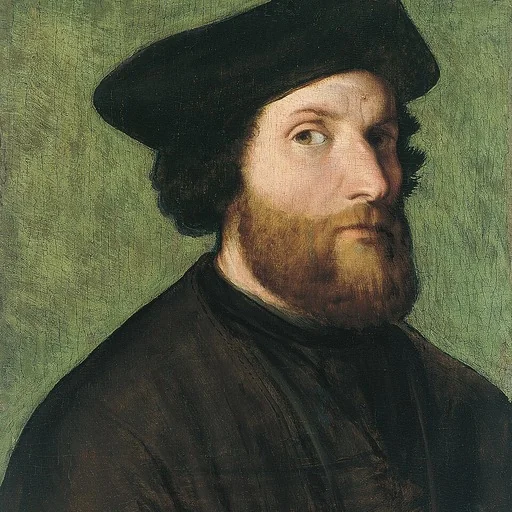
Lorenzo Lotto (c. 1480 – 1556/57) was an Italian Renaissance painter, draughtsman, and illustrator, traditionally placed in the Venetian school, though much of his career was spent in other north Italian cities. He…


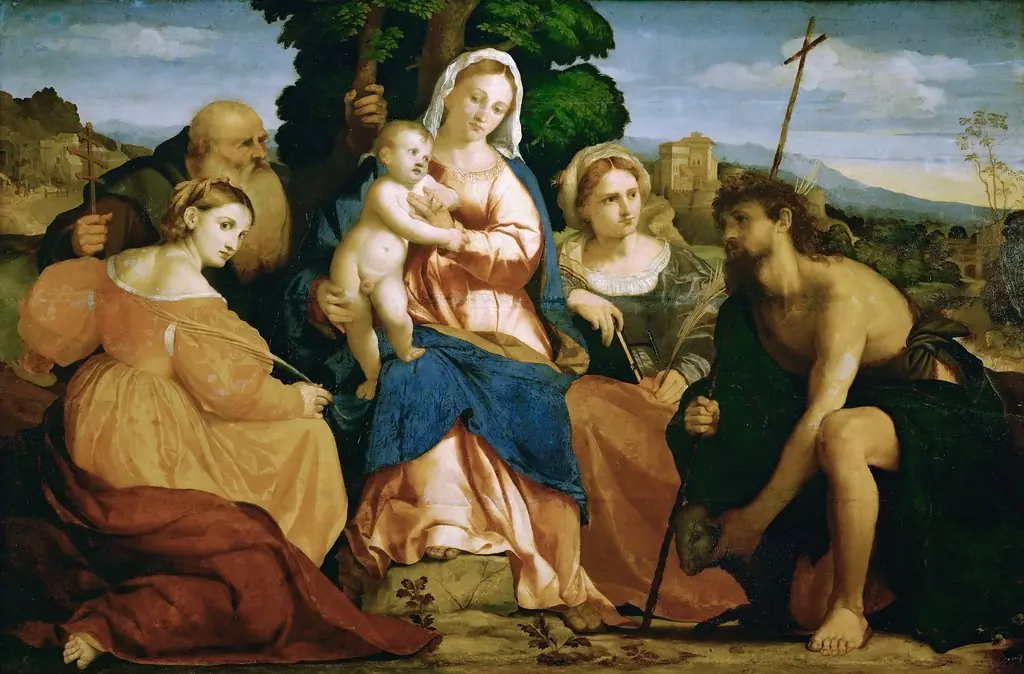 Sacred conversation
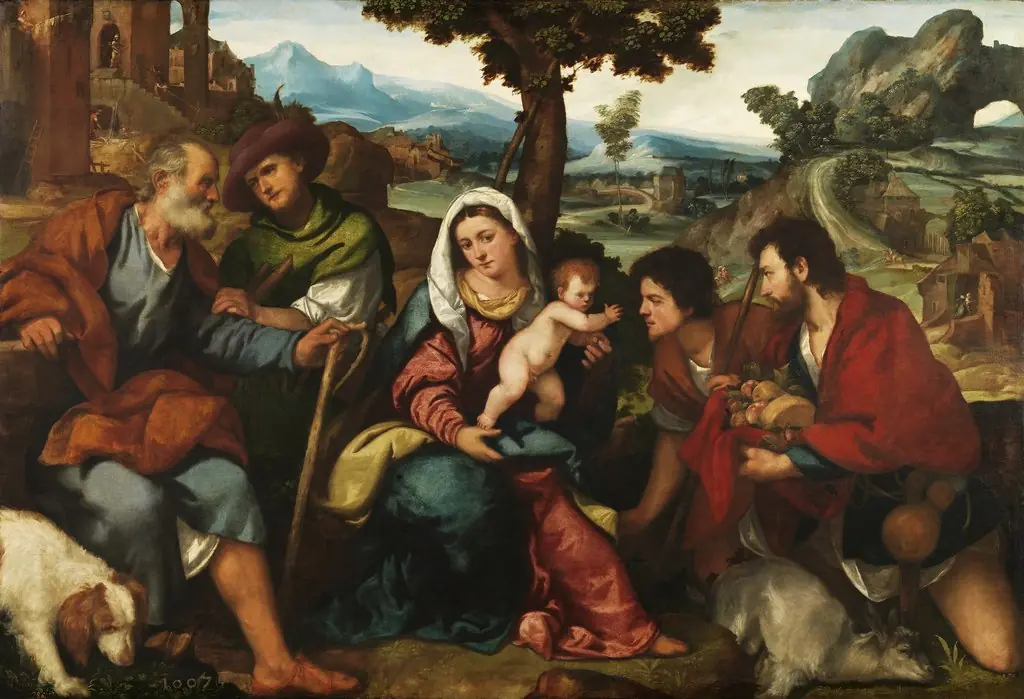 The Adoration of the Shepherds
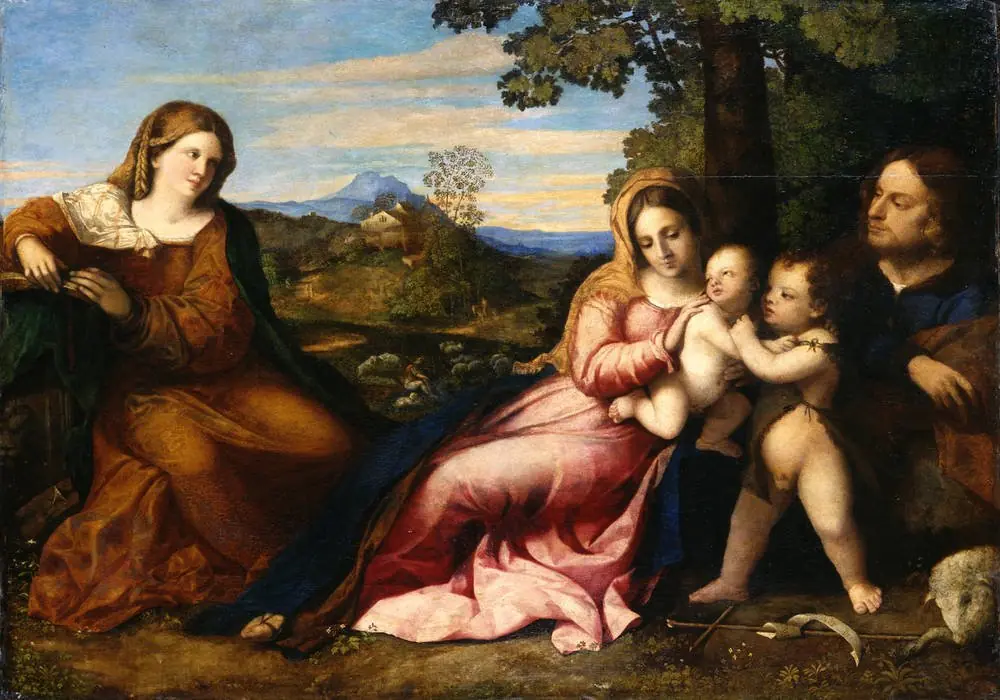 Die Heilige Familie mit der heiligen Katharina
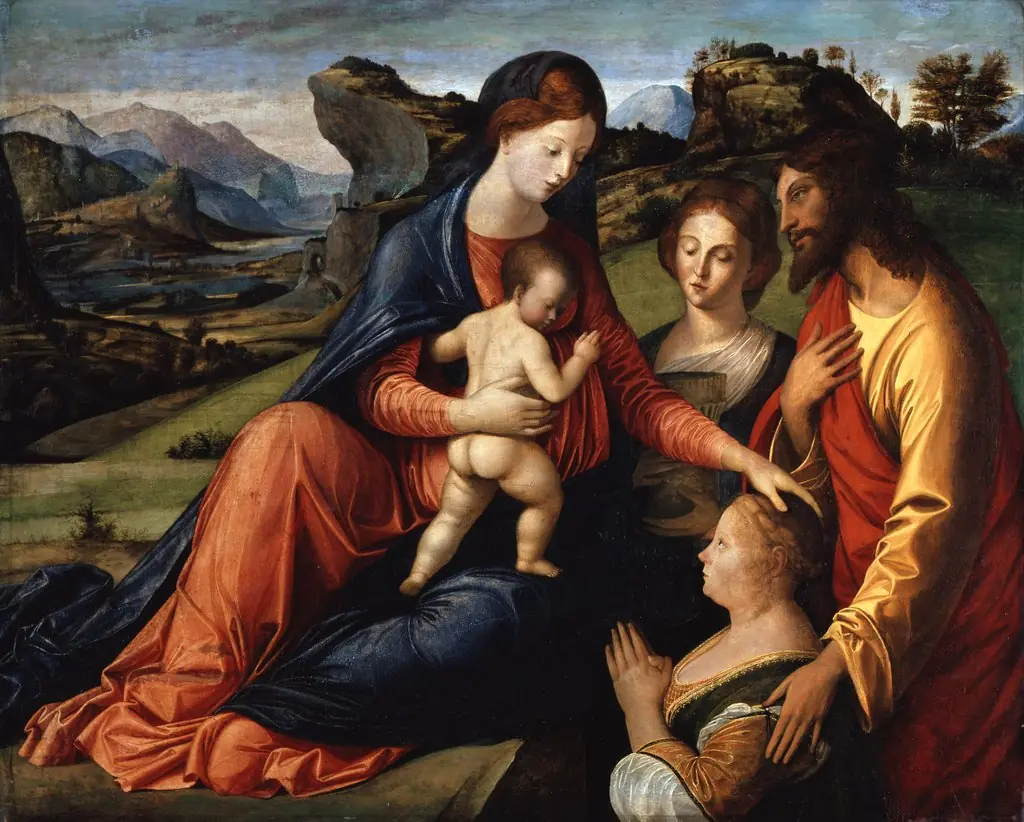 Virgin and Child with Saint Barbara, Saint John the Baptist and a female donor
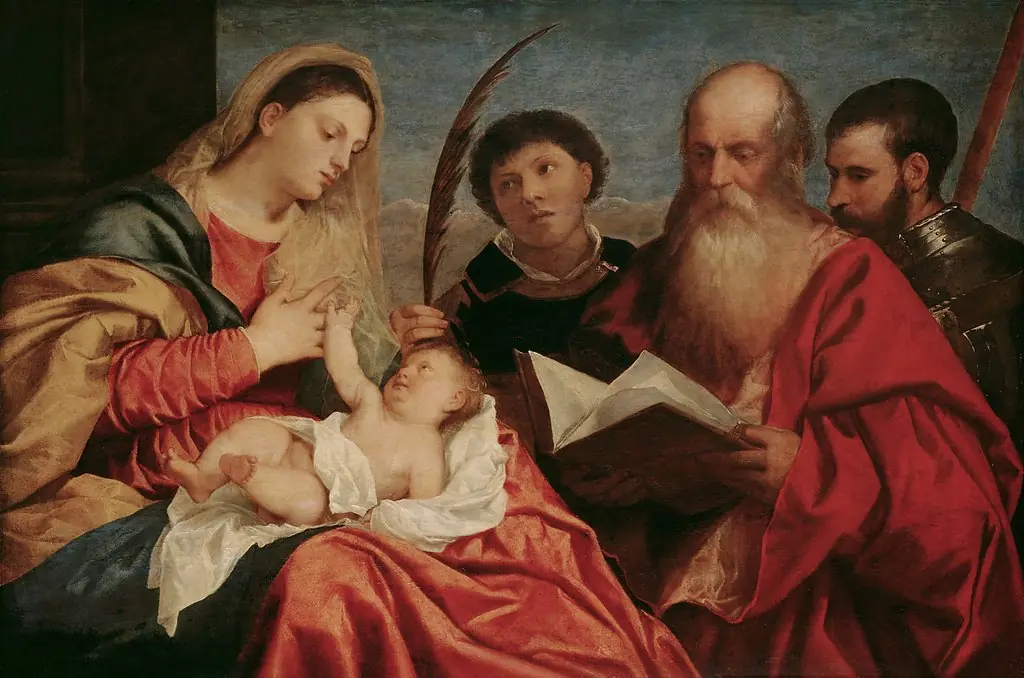 Virgin and Child with Saints Stephen, Jerome and Maurice
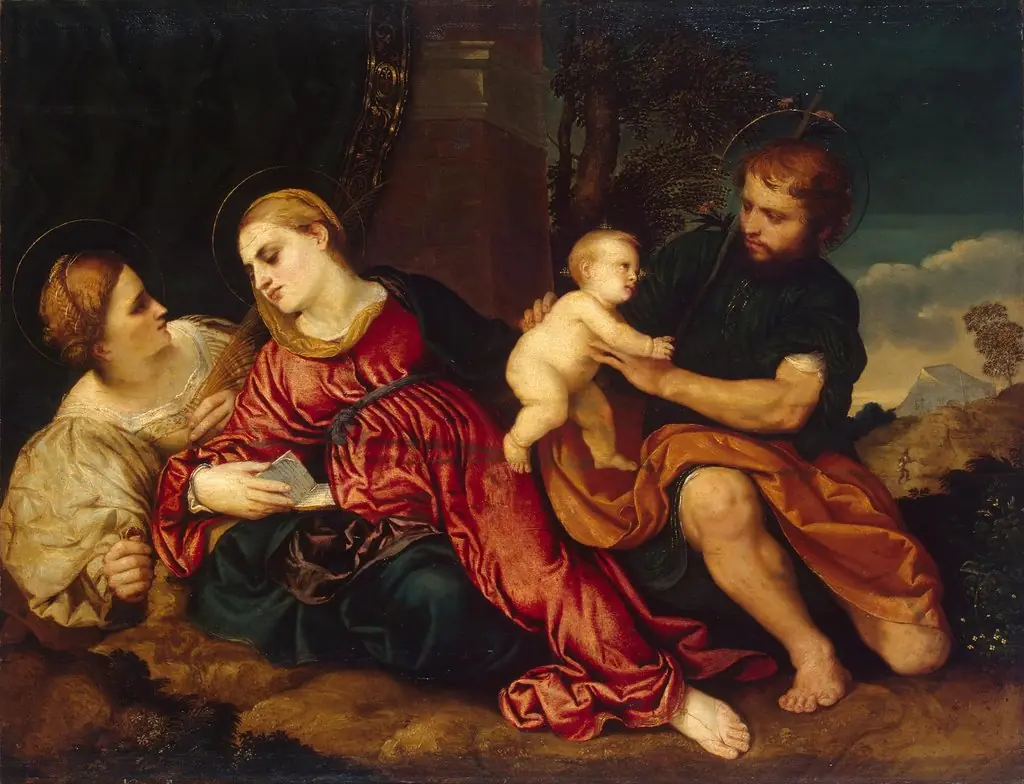 Holy Family with St Catherine
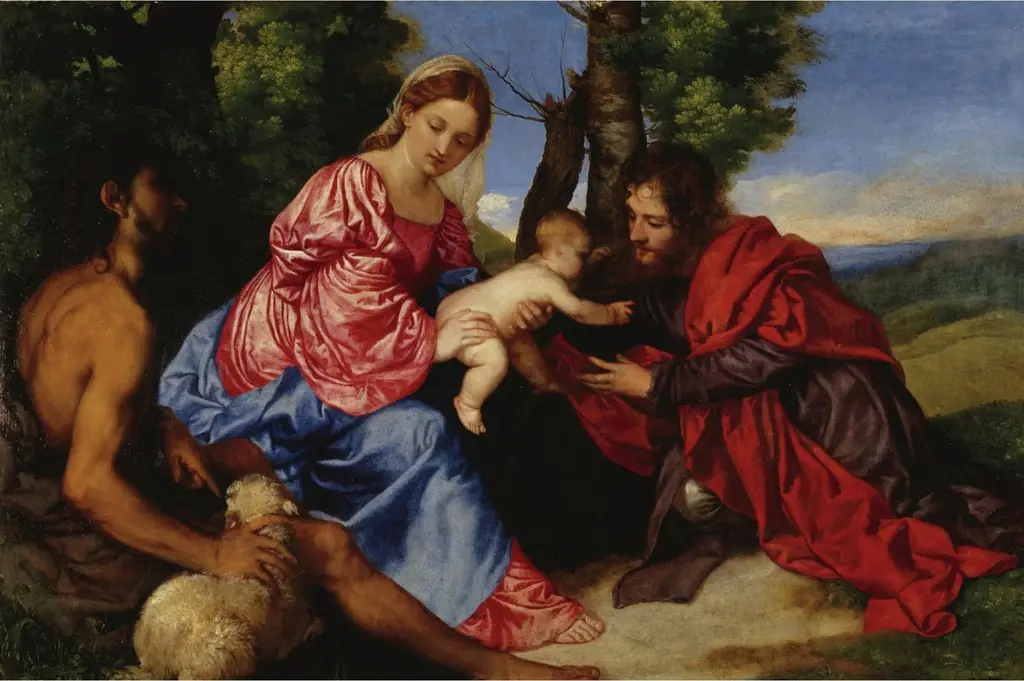 The Virgin and Child with St John the Baptist and an Unidentified Saint