Artwork
Saint Francis Receiving the Stigmata
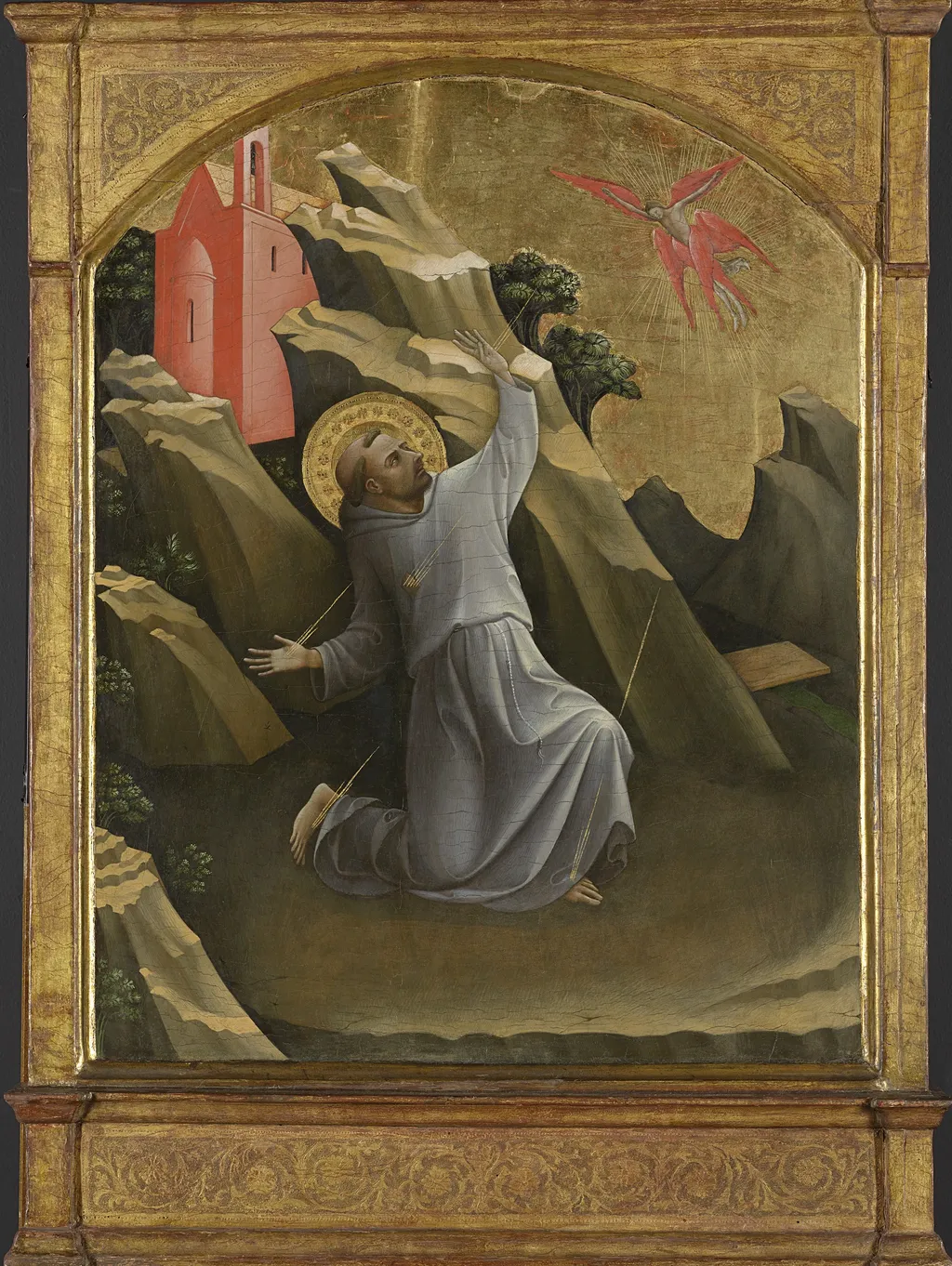
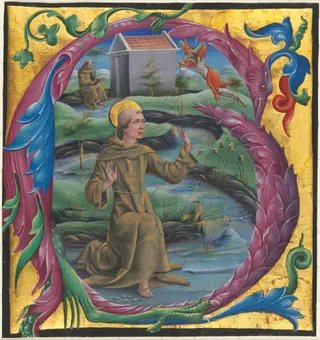
Saint Francis Receiving the Stigmata is a tempera painting by the Italo Byzantine artist Lorenzo Monaco. It dates from 1420 and is held in the collection of the Rijksmuseum.
About this work
Subject & Meaning
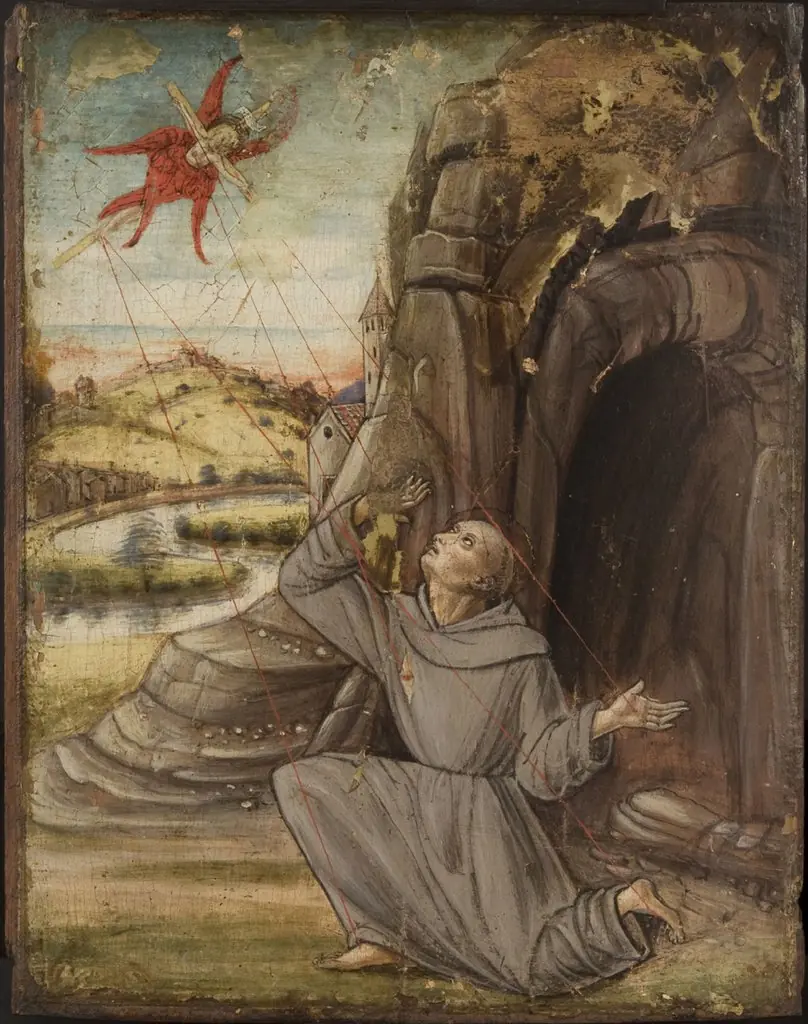
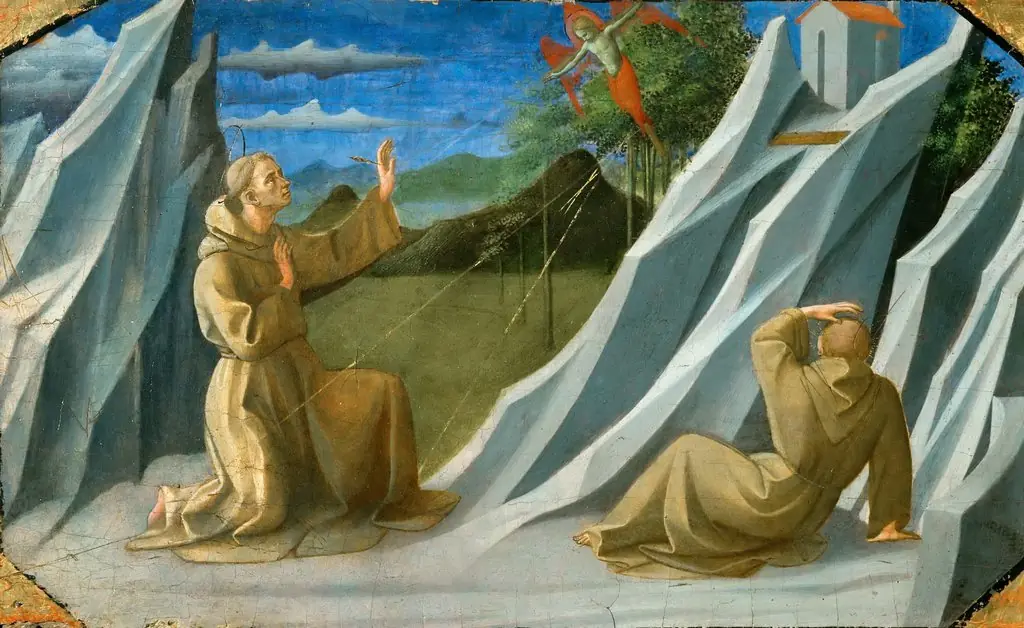
The artwork depicts Saint Francis of Assisi receiving the stigmata, a pivotal event in Franciscan religious history where the saint bears the wounds of Christ.
The artwork depicts Saint Francis of Assisi receiving the stigmata, a pivotal event in Franciscan religious history where the saint bears the wounds of Christ. Created by Lorenzo Monaco in 1420, the painting serves as a visual narrative of this mystical experience, focusing on the moment of divine communion between the saint and the crucified figure. As a work of religious art, the piece functions as an object of devotion, illustrating the sanctity of Francis and the theological significance of the stigmata as a mark of spiritual union.
The composition centers on Francis of Assisi as the main subject, capturing the specific iconography of the stigmata reception without extraneous narrative elements.
Technique & Style
Created in Florence in 1420, this religious panel painting by Lorenzo Monaco utilizes tempera as its primary medium. The work is executed on a wooden support, measuring 87 cm in height and 61.5 cm in width. Stylistically, the composition focuses on the depiction of Saint Francis of Assisi receiving the stigmata, adhering to the iconographic conventions of early 15th-century devotional art.
The application of tempera on panel allows for the precise linear definition characteristic of the artist's late Gothic style, though specific details regarding surface condition or handling history are not documented in the available records.
History & Provenance
The Saint Francis Receiving the Stigmata was painted by Lorenzo Monaco in 1420, as indicated by the work’s canonical dating and medium of tempera on panel.
The painting is recorded in the collection of the Rijksmuseum, Amsterdam, where it remains housed today. Its dimensions are 87 cm in height and 61.5 cm in width, consistent with the work’s documented physical characteristics.
The work is held in the Rijksmuseum collection and is cataloged under the inventory number SK-A-1559. It has been exhibited in the museum's 'Early Netherlandish Painting' gallery as part of the permanent display of religious works. Exhibition records indicate its inclusion in the 1955 retrospective of Lorenzo Monaco at the Rijksmuseum and its feature in the 1988 exhibition 'Italian Painting of the 15th Century' at the Gemeentemuseum Den Haag.
Overview
Lorenzo Monaco’s tempera panel, dated to around 1420, portrays the moment Saint Francis of Assisi receives the stigmata. The composition places a kneeling, robed figure on a stark, rocky terrain, his hands outstretched and marked with bleeding wounds. Above him hovers a vivid red angel clutching a thorny branch crowned with a luminous cross, while a diminutive red chapel glows on a distant hill.
Context
The depiction aligns with a broader medieval fascination with mystic visions and the physical manifestation of Christ’s wounds. Saint Francis’s stigmata narrative was a popular subject for devotional art, intended to inspire piety among viewers. Monaco’s treatment reflects contemporary theological emphasis on personal identification with Christ’s suffering.
Own this work as a print
Artist & collection

Artist
Lorenzo Monaco was a Sienese painter and miniaturist of the late Gothic to early Renaissance age, active principally in Florence.