Artwork
The Nativity
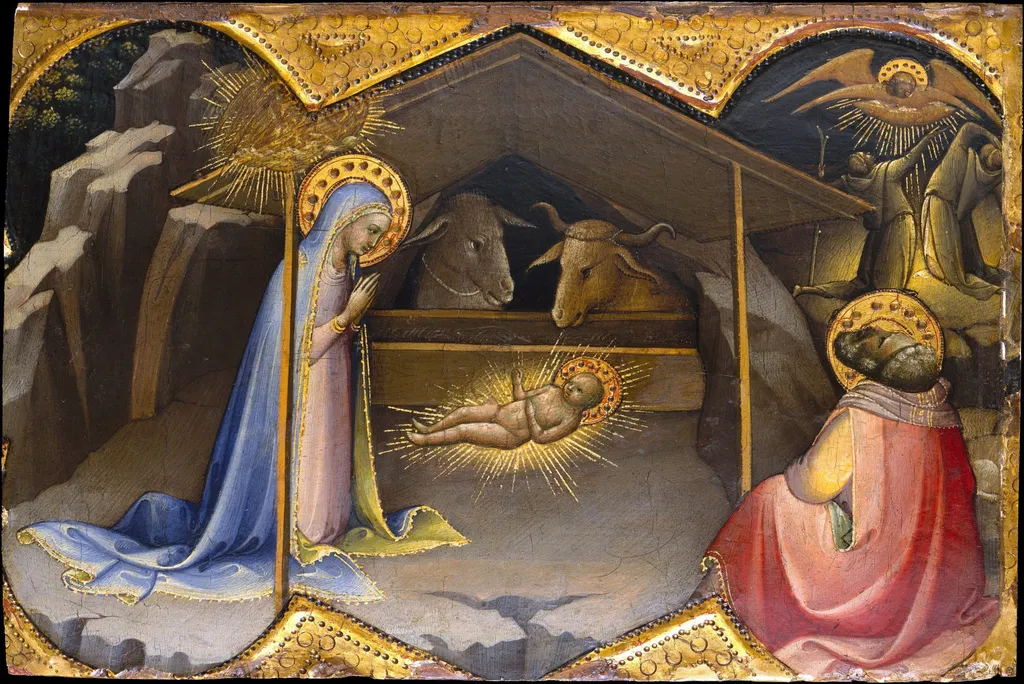
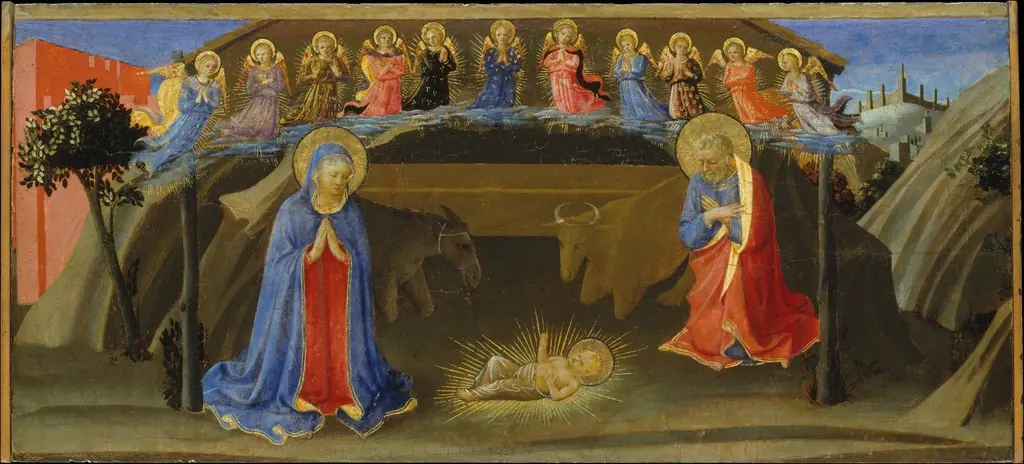
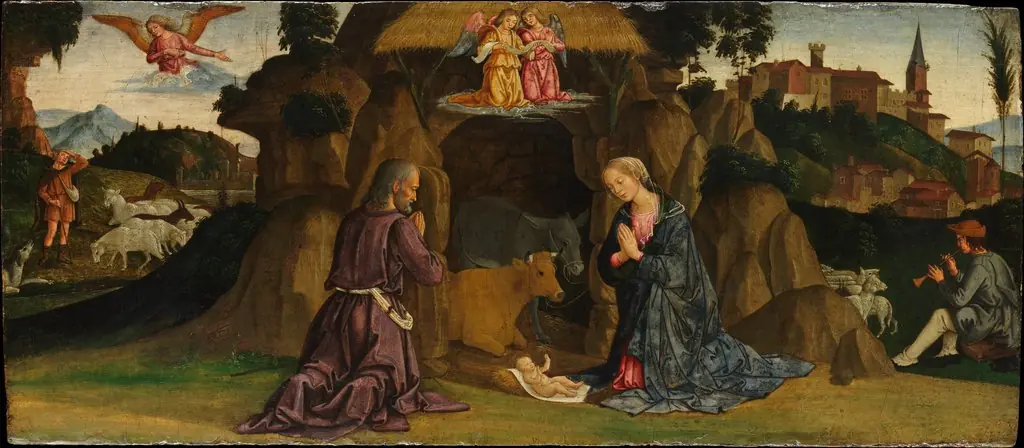
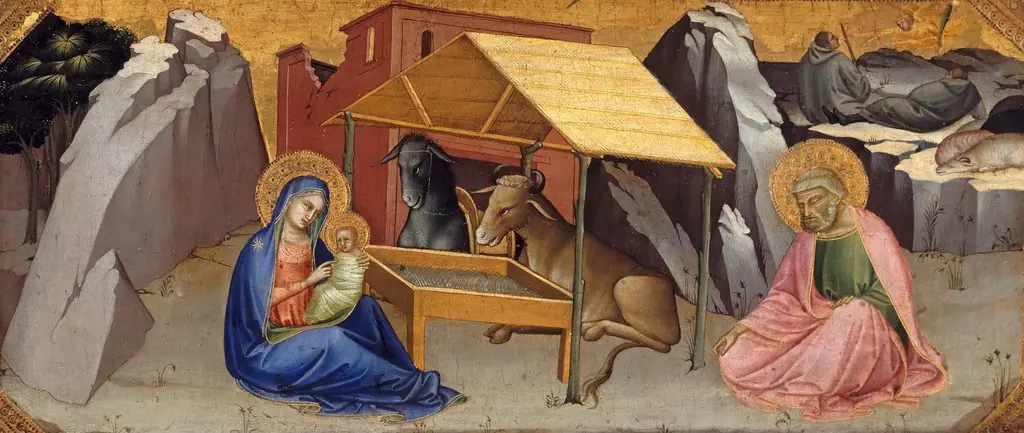
The Nativity is a tempera painting by the Early Renaissance artist Lorenzo Monaco. It dates from 1408 and is held in the collection of the Metropolitan Museum of Art.
About this work
Subject & Meaning
Classified within the genre of religious art, the work centers on the birth of Christ as its main subject.
Lorenzo Monaco's The Nativity, a tempera panel dated 1408, depicts the Nativity of Jesus, with the Holy Family and the Christ Child identified as the principal subjects of the composition. Classified within the genre of religious art, the work centers on the birth of Christ as its main subject. The painting belongs to the long tradition of devotional imagery portraying the Holy Family, and its religious iconography situates it within early fifteenth-century sacred art.
Held in the collection of the Metropolitan Museum of Art, the panel reflects the devotional function typical of Nativity imagery of the period, presenting the Christ Child and his family as objects of veneration.
Technique & Style
Created in 1408, The Nativity by Lorenzo Monaco is executed in tempera on a wooden panel support. The work measures 22.2 centimeters in height and 31.1 centimeters in width, presenting a compact, intimate format typical of the artist's devotional pieces. Stylistically, the painting adheres to the International Gothic tradition, characterized by refined linear elegance and a focus on the Holy Family and the Christ Child within a religious narrative.
The medium of tempera allows for the precise, luminous application of color that defines the artist's handling of the figures. As a religious artwork, its formal qualities emphasize spiritual clarity and decorative detail over naturalistic depth, reflecting the transitional aesthetic of early 15th-century Florentine art.
Overview
Lorenzo Monaco's 'The Nativity,' executed in 1408, is a tempera painting that exemplifies the transition from International Gothic to early Florentine Renaissance sensibilities. The composition centers on the infant Jesus lying in a manger, flanked by the Virgin Mary in blue and Saint Joseph in red, adhering to traditional iconography while introducing a heightened sense of spatial depth and emotional intimacy characteristic of the artist's mature style. Set within a rustic stable structure, the scene includes the ox and ass, along with an angel in the background, all rendered with the delicate linear grace and luminous color palette for which Monaco is renowned.
Created during a period when the artist was a leading figure in the Camaldolese monastery of Santa Maria degli Angeli in Florence, this work reflects the devotional intensity of the era while showcasing Monaco's unique ability to blend Gothic elegance with emerging naturalism. The painting stands as a significant example of early 15th-century Italian religious art, illustrating the artist's mastery in tempera technique and his role in bridging stylistic eras within the Florentine artistic tradition.
Own this work as a print
Artist & collection

Artist
Lorenzo Monaco was a Sienese painter and miniaturist of the late Gothic to early Renaissance age, active principally in Florence.