Artwork
Locomotive par temps de neige
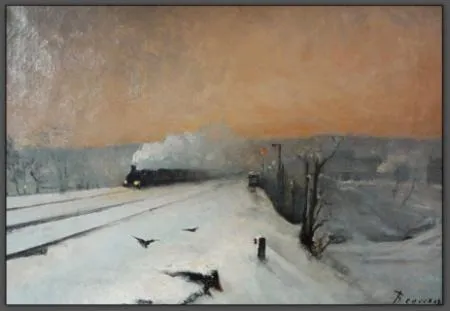
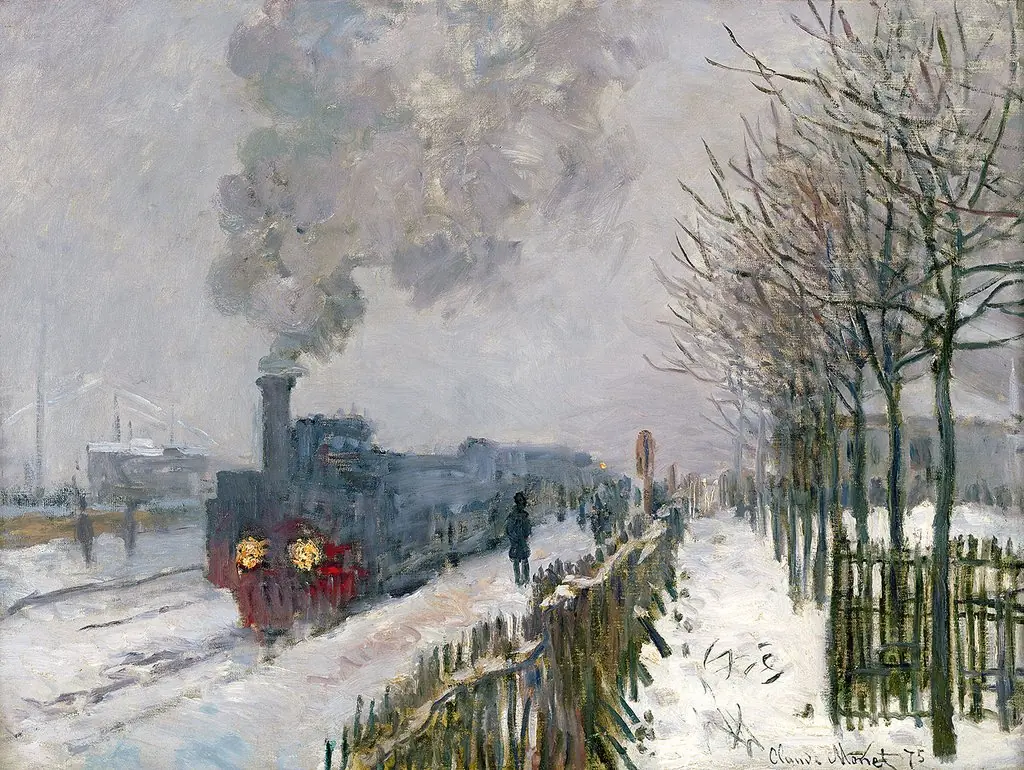
Locomotive par temps de neige is an unspecified painting by the Post-Impressionist artist Louis Beysson. It dates from 1896 and is held in the collection of the Museum of Fine Arts of Lyon.
About this work
Overview
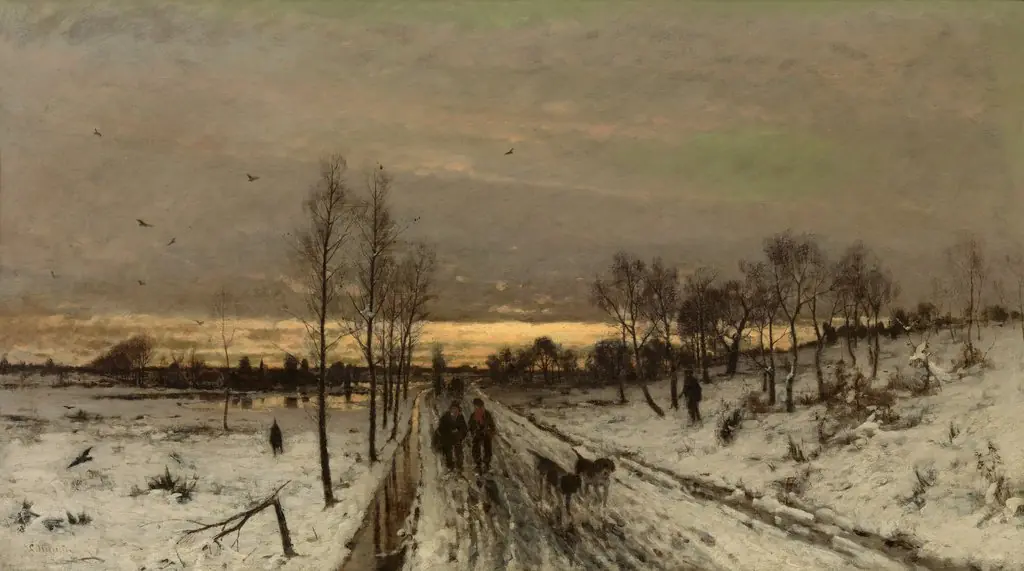
Painted in 1896 by Louis Beysson, this work captures a winter landscape featuring a steam locomotive moving along a snow-covered railway.
Painted in 1896 by Louis Beysson, this work captures a winter landscape featuring a steam locomotive moving along a snow-covered railway. The scene is quiet and unhurried, with the train’s smoke rising into a pale sky. Held in the collection of the Museum of Fine Arts of Lyon, the painting reflects a late 19th-century interest in industrial elements integrated into natural settings, rendered with restraint and subtlety.
Subject & Meaning
The locomotive, a symbol of modern progress, moves through a still, snow-draped countryside, suggesting a quiet coexistence between technology and nature. Birds in flight and bare trees reinforce the season’s stillness. The absence of human figures amplifies the solitude of the moment, inviting contemplation rather than narrative. The train does not dominate; it harmonizes with the landscape, evoking a sense of peaceful transit.
Technique & Style
Beysson employs a muted palette of grays, browns, and soft oranges to convey the hushed tones of a winter afternoon. Brushwork is delicate, with soft edges blending sky and snow, while the train’s smoke is rendered in loose, wispy strokes. The composition leads the eye along the track into the distance, enhancing spatial depth. Light is diffused, avoiding sharp contrasts, which contributes to the painting’s tranquil mood.
History & Provenance
Created in 1896, the painting entered the collection of the Museum of Fine Arts of Lyon shortly after its completion. Beysson, a lesser-known regional artist, produced works primarily focused on French rural and industrial landscapes. This piece remains one of his few documented paintings held in a public institution, suggesting it was recognized locally for its quiet observation of everyday life.
Context
In the late 19th century, railways expanded across France, altering both geography and perception of time and space. Artists increasingly depicted trains not as disruptive forces but as integrated elements of the landscape. Beysson’s work aligns with this trend, reflecting a broader cultural shift toward accepting industrialization as part of the natural rhythm, rather than opposing it.
Legacy
Though not widely exhibited beyond Lyon, the painting endures as a quiet example of regional French realism. It offers a counterpoint to more dramatic industrial scenes of the era, emphasizing harmony over disruption. Its preservation in a major museum underscores its value as a thoughtful, understated record of a moment when modernity moved gently through the winter countryside.
Artist & collection