Artwork
Snake Charmer at Tangier, Africa
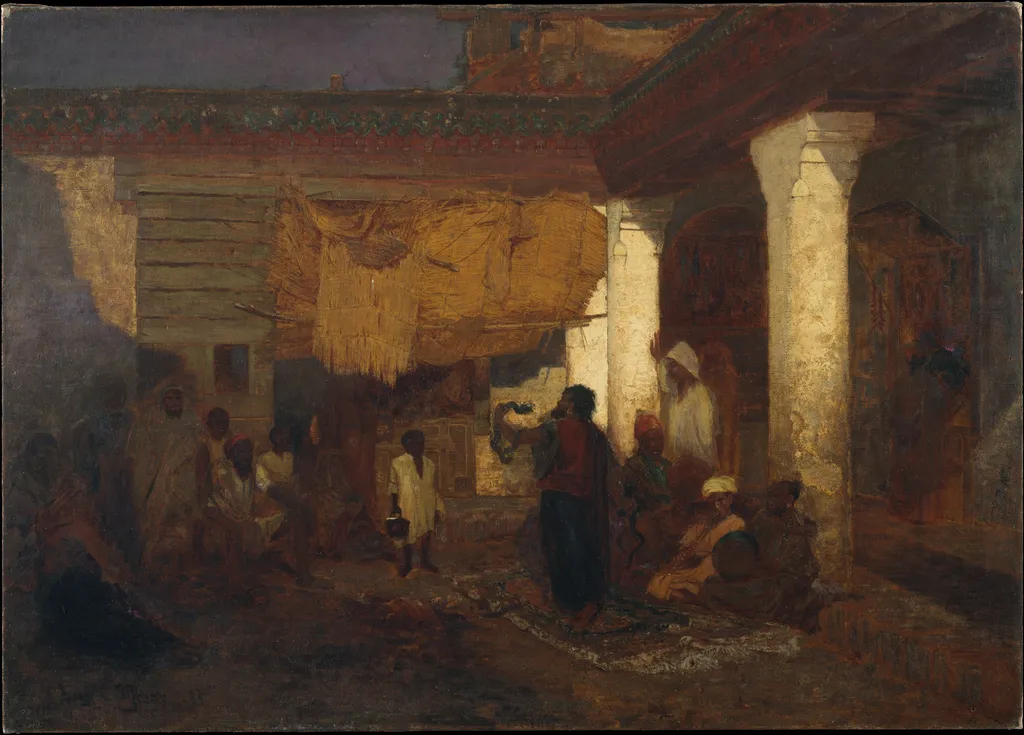
Snake Charmer at Tangier, Africa is an oil painting by the Orientalist artist Louis Comfort Tiffany. It dates from 1872 and is held in the collection of the Metropolitan Museum of Art.
About this work
Subject & Meaning
The painting titled 'Snake Charmer at Tangier, Africa' shows a boy, a man, and a snake, placing a reptile at the center of the composition.
The painting titled 'Snake Charmer at Tangier, Africa' shows a boy, a man, and a snake, placing a reptile at the center of the composition. Executed in oil on canvas in 1872, the work reflects the American artist Louis Comfort Tiffany’s fascination with North African subjects. The piece is part of the Metropolitan Museum of Art’s collection, where it remains on display.
By presenting an exotic scene from Tangier, the artwork engages with the 19th‑century Western interest in distant cultures, using the snake as a visual focal point that suggests both danger and mystique.
Technique & Style
Snake Charmer at Tangier, Africa is an oil painting on canvas, completed in 1872 by Louis Comfort Tiffany. The catalog entry specifies oil paint as the medium and identifies canvas as the support, confirming the traditional support employed for easel works of that era. As a listed painting in the Metropolitan Museum of Art’s collection, the composition remains an intact oil‑on‑canvas work; however, the sources do not provide further details on handling, condition, or explicit formal stylistic analysis beyond the documented material specifications.
History & Provenance
Louis Comfort Tiffany created the oil painting Snake Charmer at Tangier, Africa in 1872. Executed on canvas, the work measures 69.9 cm in height and 97.8 cm in width. The painting depicts a scene featuring a boy, a man, and a snake.
Since its inception on January 1, 1872, the artwork has been held in the collection of the Metropolitan Museum of Art. No specific details regarding the original commission, the identity of the initial owner, or the precise chain of custody prior to its arrival at the museum are provided in the available records. The work remains classified as a painting by the American artist, who lived from 1848 to 1933.
The painting Snake Charmer at Tangier, Africa, executed in oil on canvas in 1872 by Louis Comfort Tiffany, is part of the permanent collection of the Metropolitan Museum of Art in New York. The work is catalogued in the museum's records as a Tiffany piece, though specific inventory or accession numbers are not disclosed in the available documentation. The sources do not mention any documented exhibition history for this painting, indicating that its public display record is not detailed in the provided references.
Context
Snake Charmer at Tangier, Africa is an 1872 oil painting on canvas measuring 69.9 × 97.8 cm, depicting a boy, a man, and a snake. The work is classified as a painting and is housed in the Metropolitan Museum of Art, which catalogs it as part of Louis Comfort Tiffany’s oeuvre. Its subject matter reflects Tiffany’s engagement with North African motifs, placing the piece within his broader Orientalist output during the late nineteenth century.
While contemporary critical commentary is sparse, later scholarship situates the painting as an example of American artists’ fascination with exoticized Eastern landscapes, contributing to discussions of cultural representation in Victorian art.
Overview
Snake Charmer at Tangier, Africa is an oil painting created by Louis Comfort Tiffany in 1872. This work captures a public performance, depicting a figure engaging with a snake before an assembled audience. The piece is currently part of the collection at The Metropolitan Museum of Art, offering insight into Tiffany's early artistic interests before his renowned work in decorative arts.
Own this work as a print
Artist & collection


- The Corn Market, Tangier
 Tangiers
 The Slipper Merchant in Morocco
 Oriental Wedding
 At the Gate of the Seraglio
 Oriental Wedding
 Eastern genre scene under a palm tree
 Sketch for 'Arab Café'
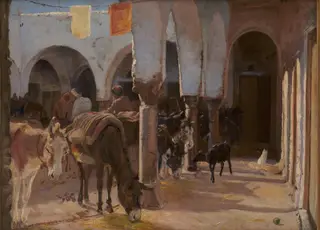 A Donkey House in Tunis
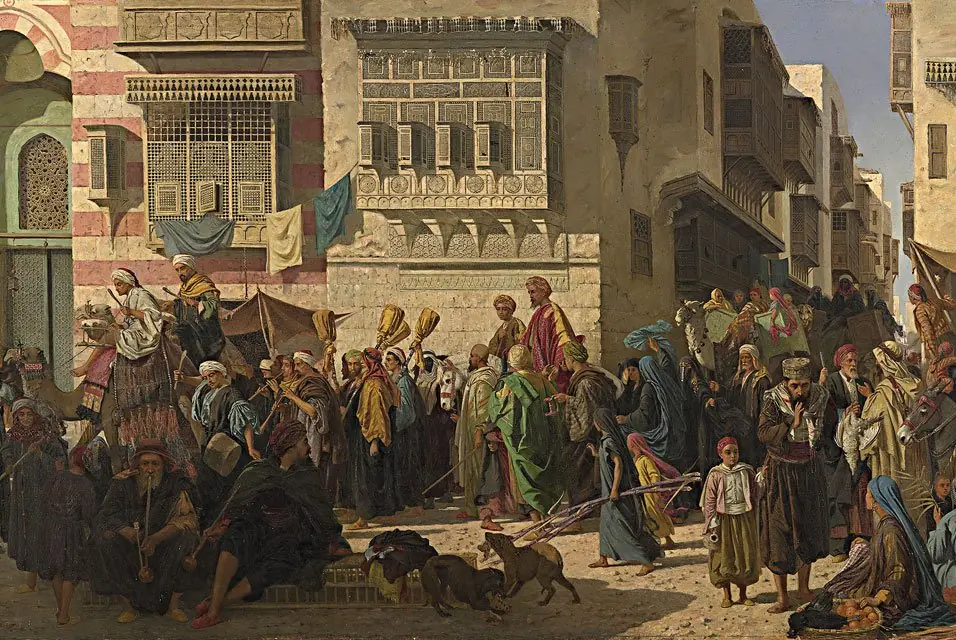 A Sheikh and his son entering Cairo on their return from a pilgrimage to Mecca
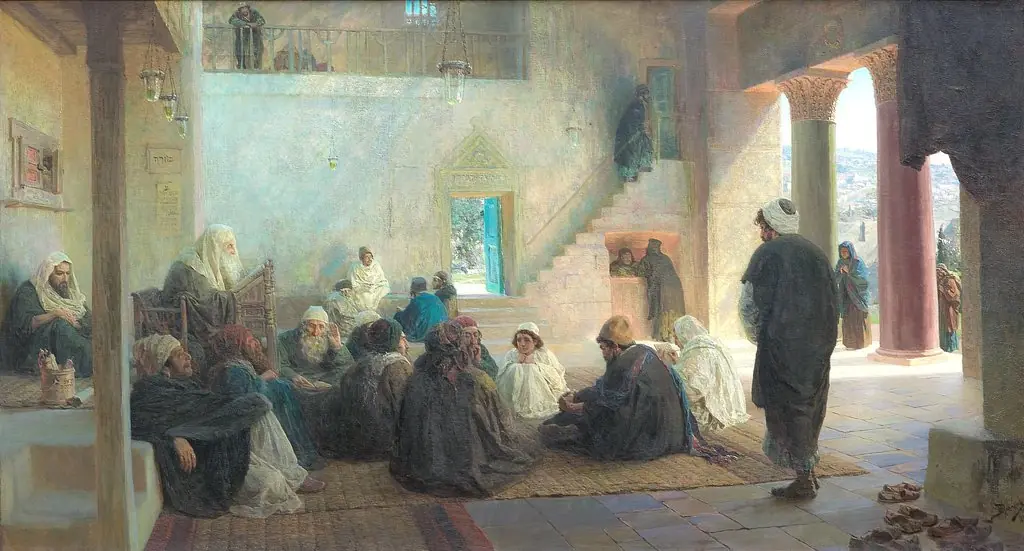 Christ among the doctors
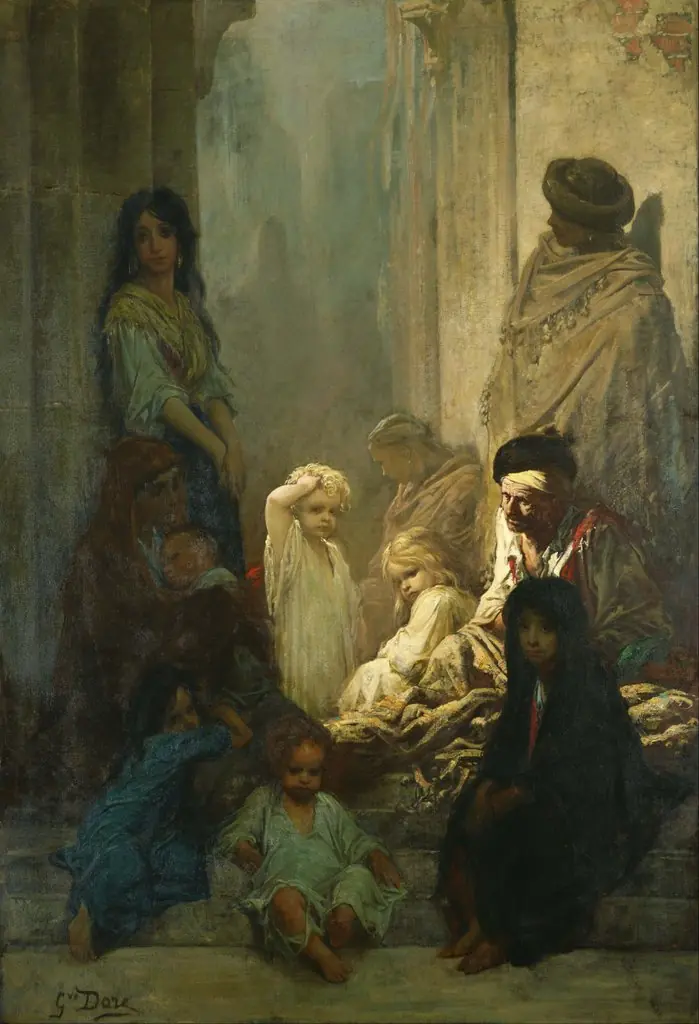 La Siesta, Memory of Spain