Artwork
Delaware Water Gap Village
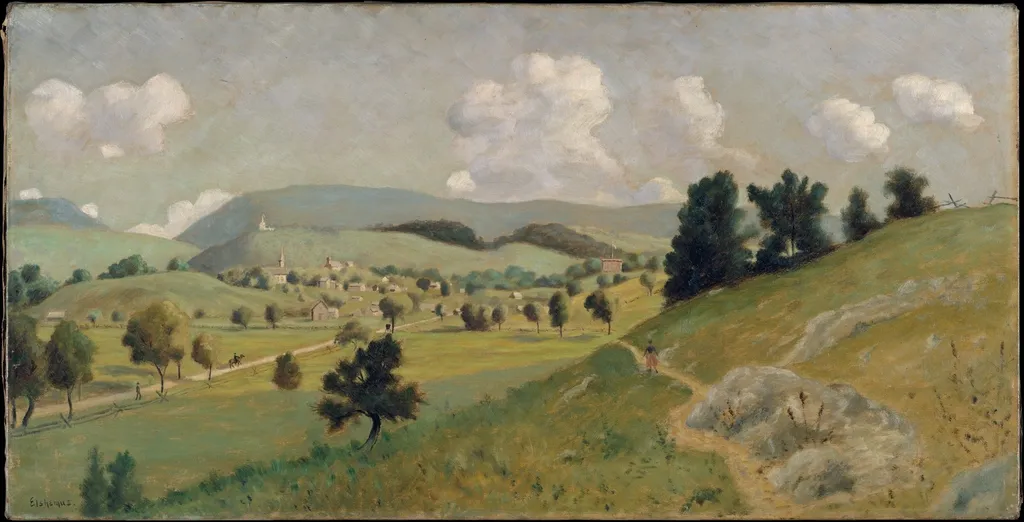
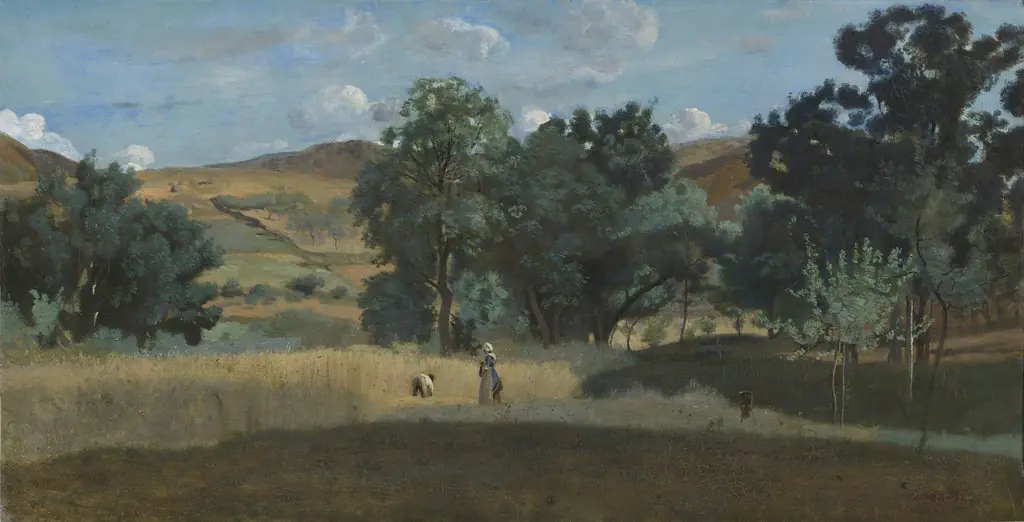
Delaware Water Gap Village is an oil painting by the American Impressionist artist Louis Eilshemius. It dates from 1898 and is held in the collection of the Metropolitan Museum of Art.
About this work
Subject & Meaning
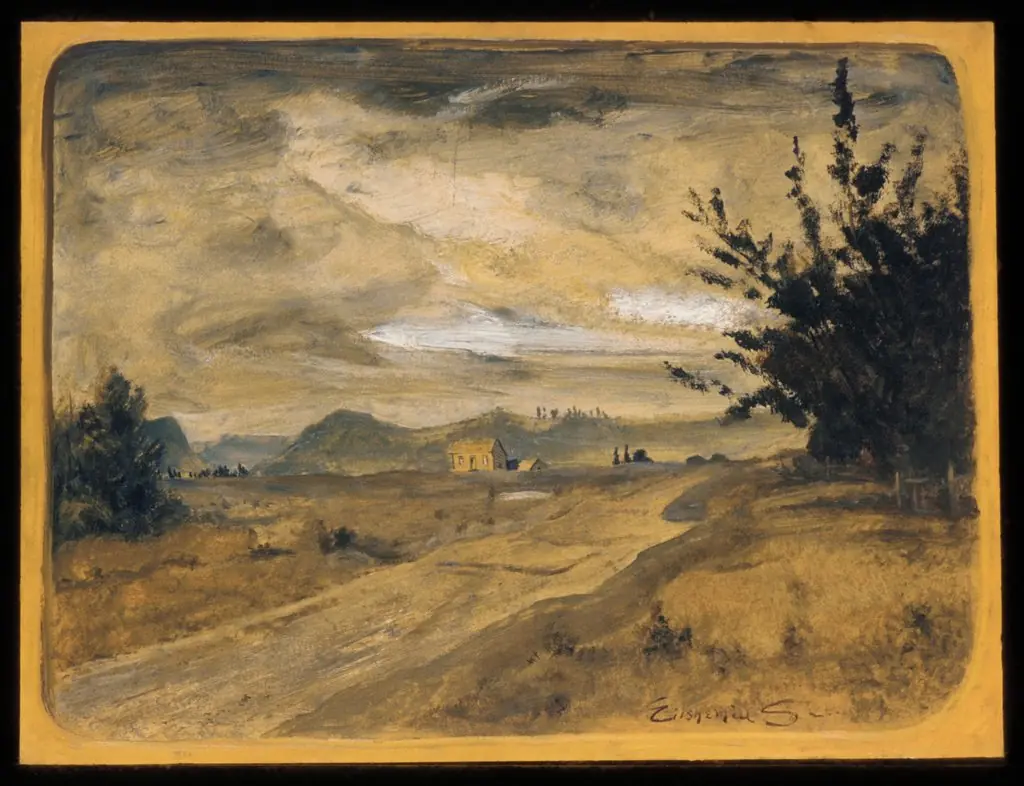
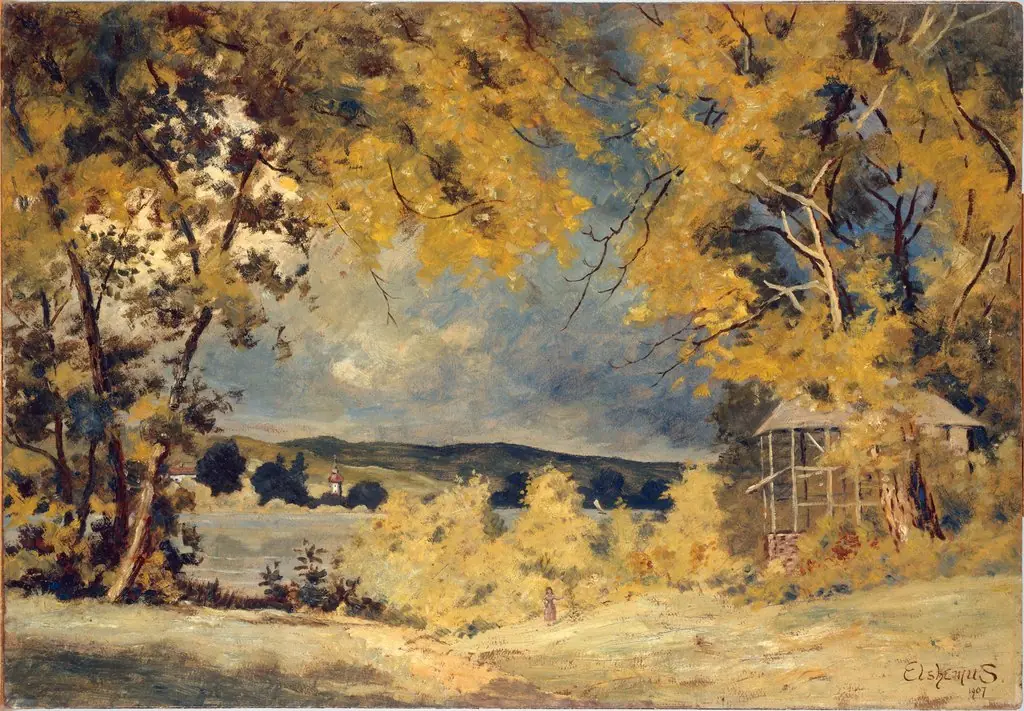
Louis Eilshemius's Delaware Water Gap Village (1898) depicts a tranquil rural settlement nestled within a lush, wooded landscape.
Louis Eilshemius's Delaware Water Gap Village (1898) depicts a tranquil rural settlement nestled within a lush, wooded landscape. The painting centers on a cluster of modest houses and buildings, framed by dense foliage and towering trees, evoking the idyllic charm of a 19th-century American village. The Delaware Water Gap, a scenic geological formation, serves as the backdrop, reinforcing the work's emphasis on the harmonious coexistence of human habitation and untamed nature.
While the composition lacks overt symbolism, its serene, almost idealized portrayal of rural life reflects the artist's romanticized vision of pastoral simplicity, contrasting with the rapid urbanization of the era. The work embodies a nostalgic reverence for pre-industrial landscapes, celebrating their quiet beauty and timelessness.
Technique & Style
Delaware Water Gap Village is an oil painting executed on canvas by Louis Eilshemius in 1898. The work measures 45.7 centimetres in height and 89.2 centimetres in width, classifying it as a landscape painting. As an oil-on-canvas work, the piece adheres to traditional painting techniques of the late 19th century, utilizing pigments bound in oil to render the scene.
The composition focuses on the interplay between the built environment of the village and the surrounding natural elements, consistent with the landscape genre. The physical support of canvas provides the foundation for the oil paint application, creating a durable surface that has been preserved within the collection of the Metropolitan Museum of Art.
History & Provenance
The work titled Delaware Water Gap Village was painted by Louis Eilshemius in 1898 using oil on canvas. Its dimensions measure 45.7 × 89.2 cm, confirming a landscape format. The painting entered the collection of the Metropolitan Museum of Art, where it has been catalogued under accession number 32.168 and displayed as part of the museum's landscape holdings.
No record of a specific commission or prior sale is documented in the available sources, and no exhibition history is recorded beyond its institutional holding.
Overview
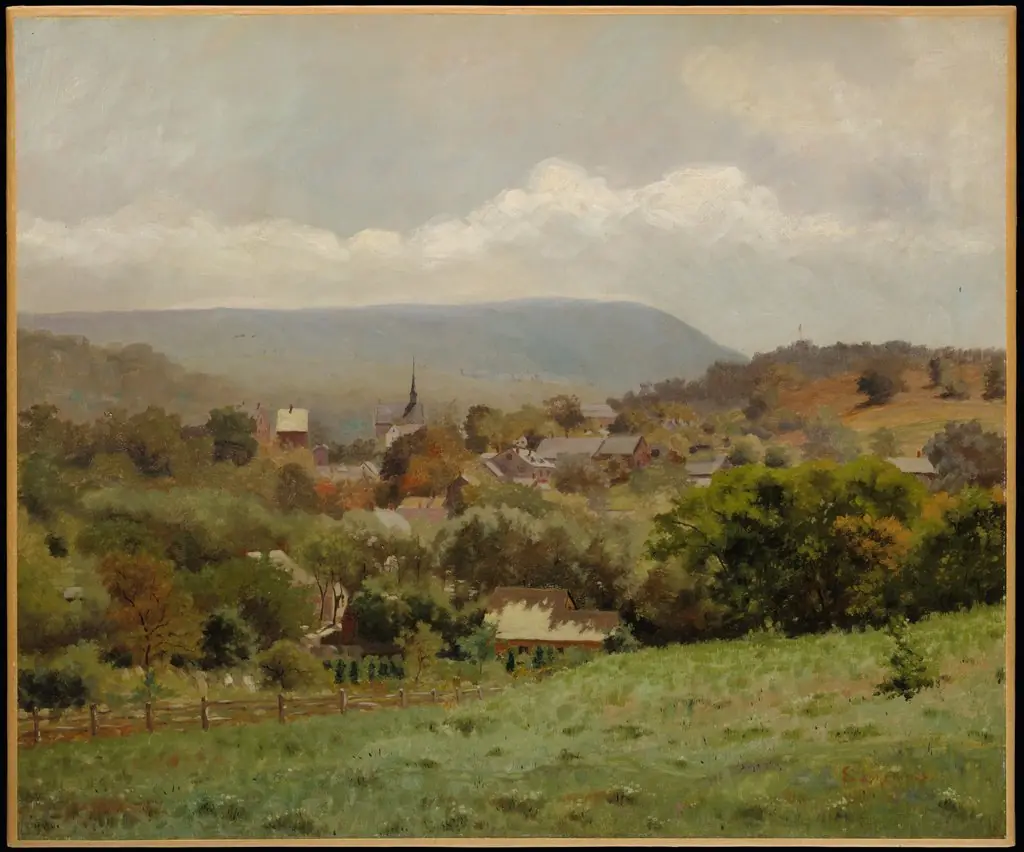
Louis Eilshemius, an American artist recognized for his landscapes and figural works, completed Delaware Water Gap Village in 1898. This oil painting captures a tranquil landscape, featuring a small settlement nestled within a valley. The work exemplifies aspects of American Impressionism and is now part of the collection at The Metropolitan Museum of Art. It presents a serene view of nature and human habitation.
Artist & collection
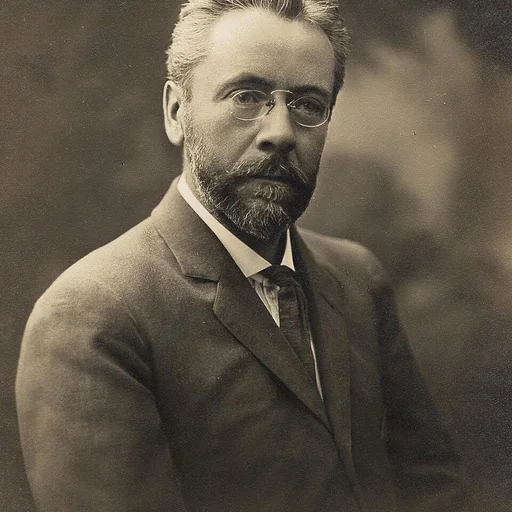
Artist
Louis Michel Eilshemius (February 4, 1864 – December 29, 1941) was an American painter, primarily of landscapes and nudes. He also wrote musical compositions, verse, novels, short stories, and published periodicals.