Artwork
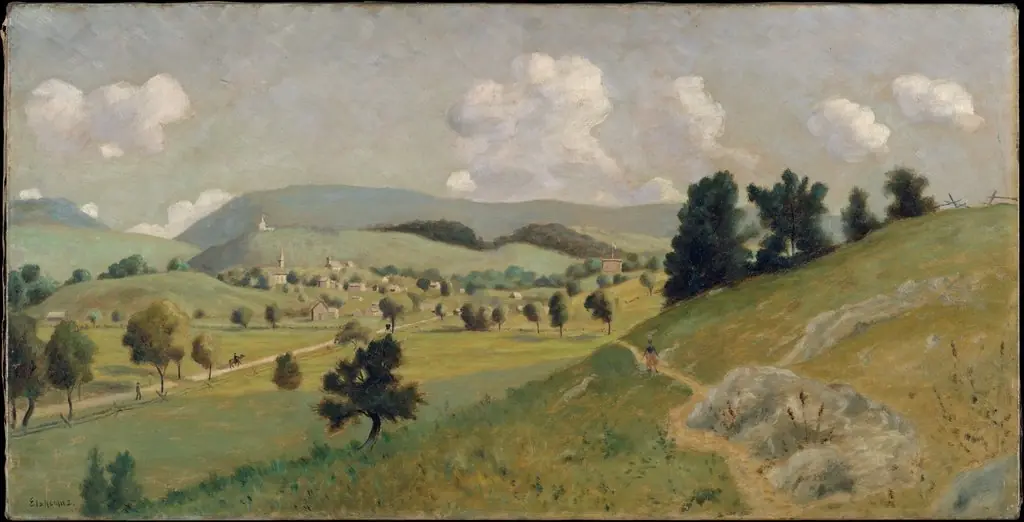
Landscape, Binghamton, New York
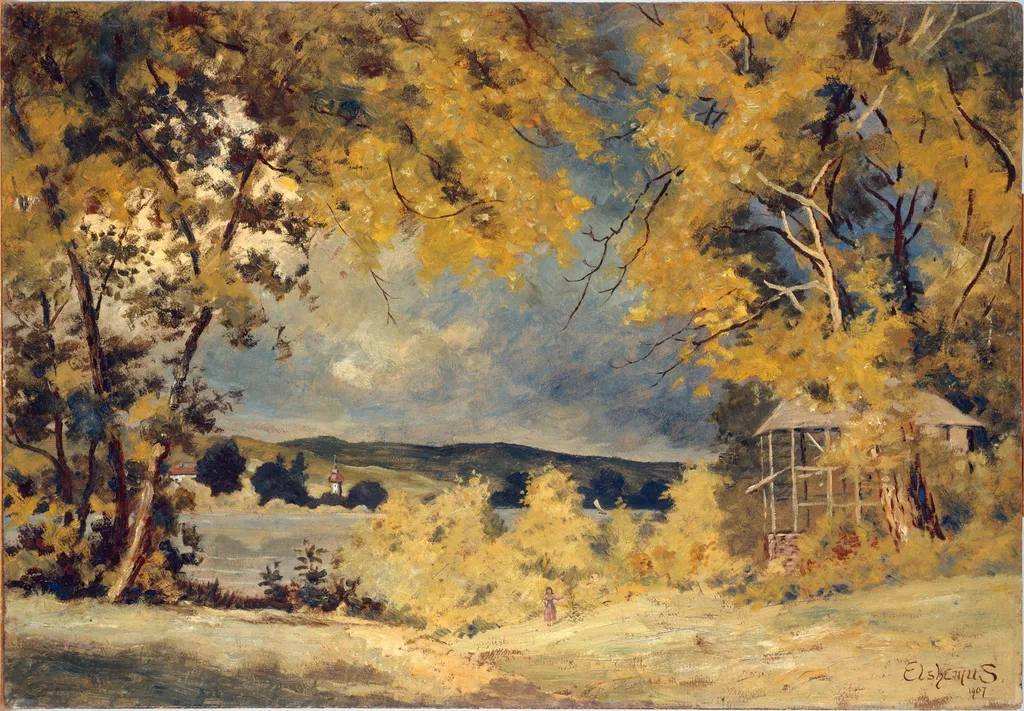
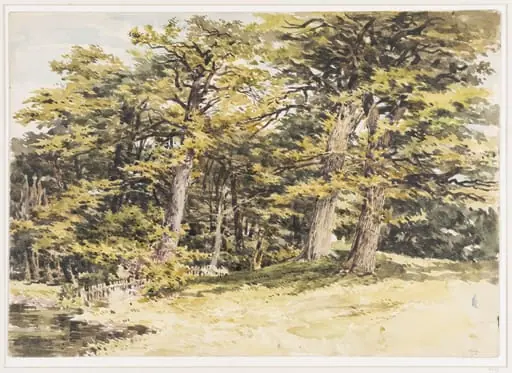
Landscape, Binghamton, New York is an unspecified painting by the Post-Impressionist artist Louis Eilshemius. It dates from 1907 and is held in the collection of the Metropolitan Museum of Art.
About this work
History & Provenance
9 centimeters in width, and its creation date is recorded as 1907, establishing its place within the artist's early 20th-century output.
The landscape painting titled Landscape, Binghamton, New York was created by Louis Michel Eilshemius in 1907. The work depicts a natural scene featuring trees and is classified within the landscape genre. While the specific commission details or original ownership chain are not detailed in the available records, the painting is currently held in the collection of the Metropolitan Museum of Art.
The artwork measures 66.7 centimeters in height and 95.9 centimeters in width, and its creation date is recorded as 1907, establishing its place within the artist's early 20th-century output.
Context
Louis Eilshemius completed Landscape, Binghamton, New York in 1907, a work that exemplifies his early commitment to realist yet lyrical American scenery. The painting, recorded in the Metropolitan Museum of Art's collection, reflects the genre of landscape painting popular in the early twentieth-century United States and often features solitary trees within broader topographical settings. As part of Eilshemius's oeuvre, it situates him within a generation of artists who balanced naturalistic observation with a personal, almost poetic sensibility, preceding later modernist experiments.
Its provenance at the Met underscores institutional recognition of the piece as a representative example of his contribution to American landscape art.
Legacy
Louis Eilshemius's 1907 painting Landscape, Binghamton, New York entered the Metropolitan Museum of Art's collection, a placement that reflects sustained scholarly and curatorial interest. The work's inclusion alongside other American landscape paintings of the early twentieth century highlights its role in documenting regional scenery and the artist's experimentation with light and form, contributing to discussions of American realism and the evolution of the landscape genre in museum narratives.
Overview
Louis Eilshemius's 1907 painting, Landscape, Binghamton, New York, exemplifies his contribution to American post-impressionism. This work captures a tranquil rural vista, featuring a distinctive tree and subtle human presence. It is now part of The Metropolitan Museum of Art's collection. Eilshemius was also a polymath, exploring writing and music alongside his visual art.
Subject & Meaning
The canvas presents a serene rural expanse, characterized by a blend of sparse, bare trees and occasional green foliage. A swirling sky of blues and yellows hovers above dry grasses and scattered bushes. In the background, a modest wooden building stands by a body of water, while two diminutive figures traverse a distant path, suggesting human interaction within the vast natural setting.
Technique & Style
Executed with thick, visible brushstrokes, the painting possesses a textured, almost unfinished quality. This technique contributes to a dynamic surface, characteristic of post-impressionist approaches. The palette employs warm, earthy tones, evoking the subdued light of a late afternoon. The overall impression is one of immediate observation, rendered with a direct and expressive hand.
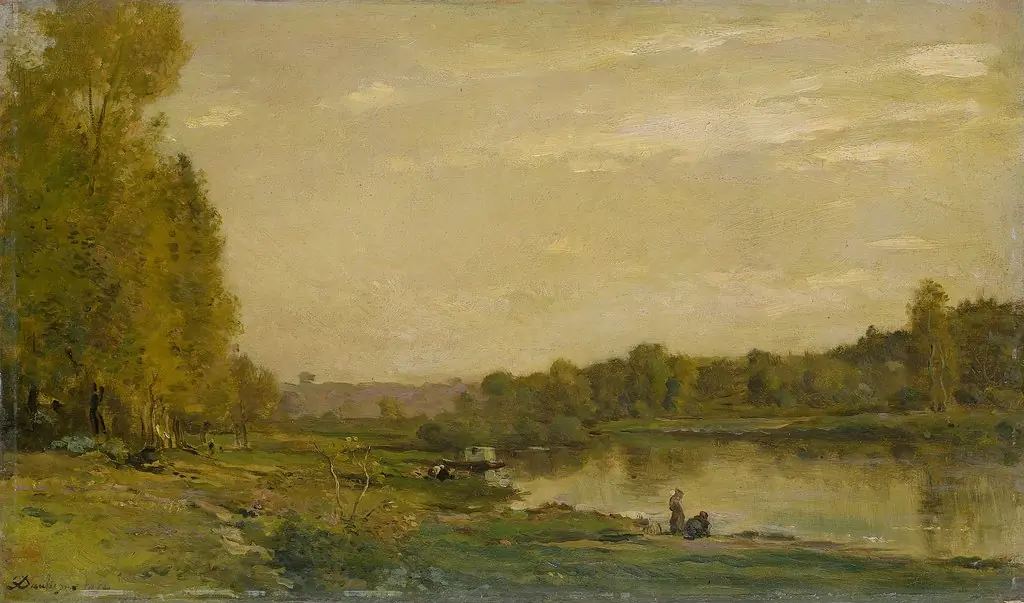
Own this work as a print
Artist & collection

Artist
Louis Michel Eilshemius (February 4, 1864 – December 29, 1941) was an American painter, primarily of landscapes and nudes. He also wrote musical compositions, verse, novels, short stories, and published periodicals.

- Landscape on the River Oise
 A View of Lake Vejl near Silkeborg, Jutland
 Eashing, near Godalming
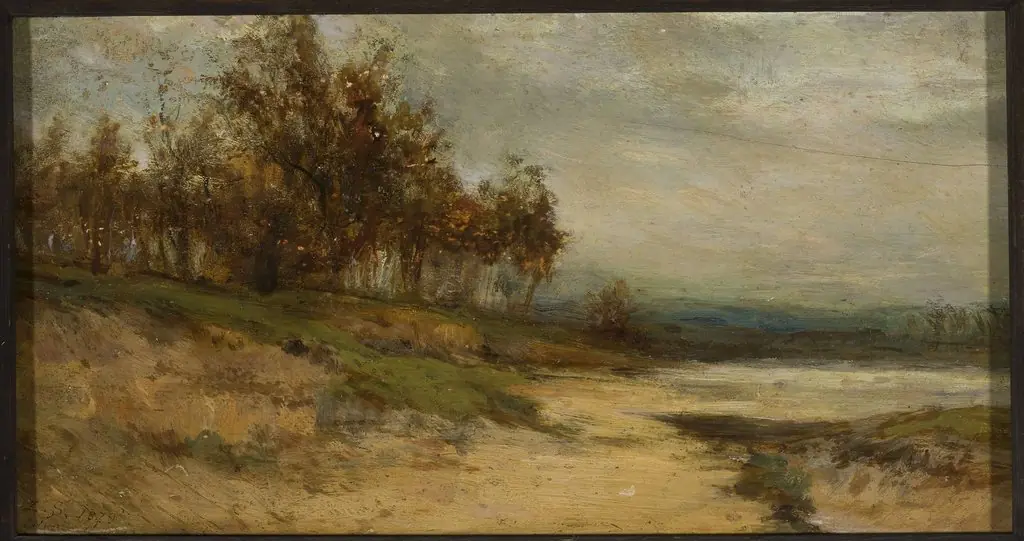 Landscape with a bunch of trees
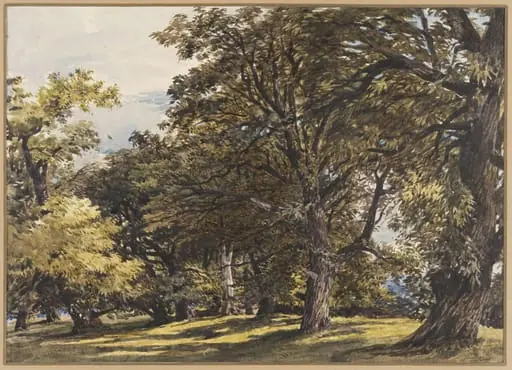 Study of Chestnut Trees
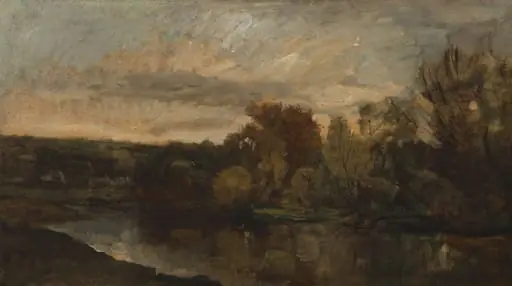 Le Bas Meudon (A Curve of the Seine near Paris)
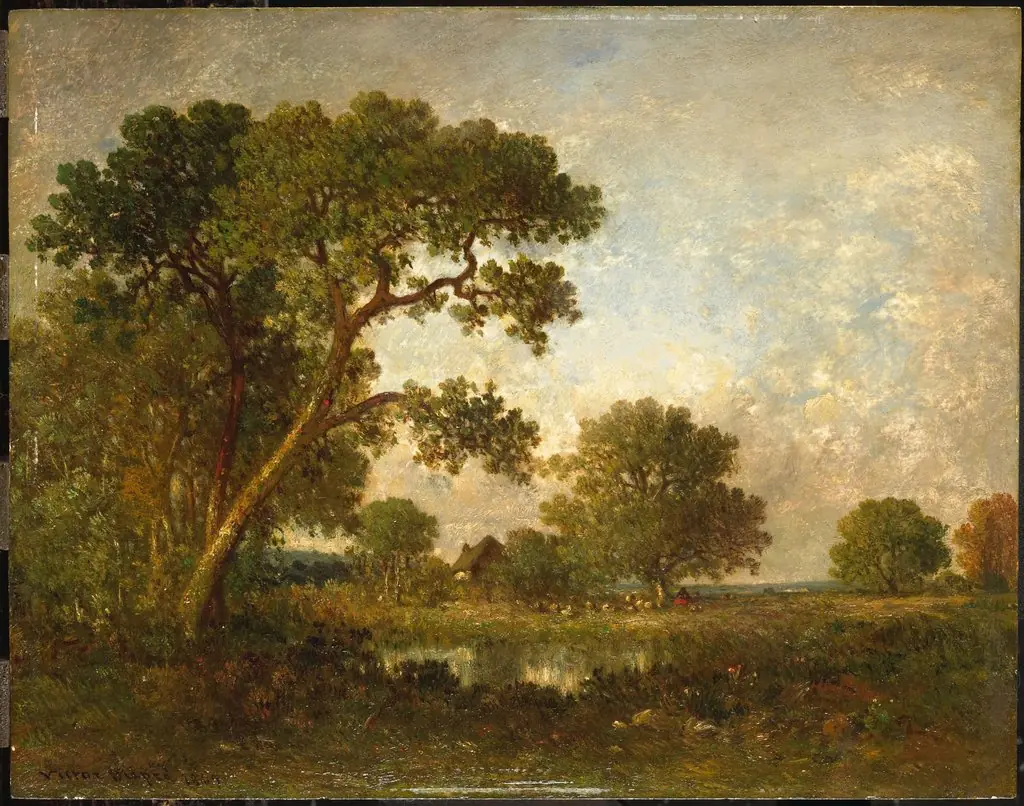 Landscape
 Landscape
 Reminiscence of the Beach of Naples
 Landscape with cows
 Sketch at Hampstead, Evening
 Stoke Park, Guildford