Artwork
View of Ornans
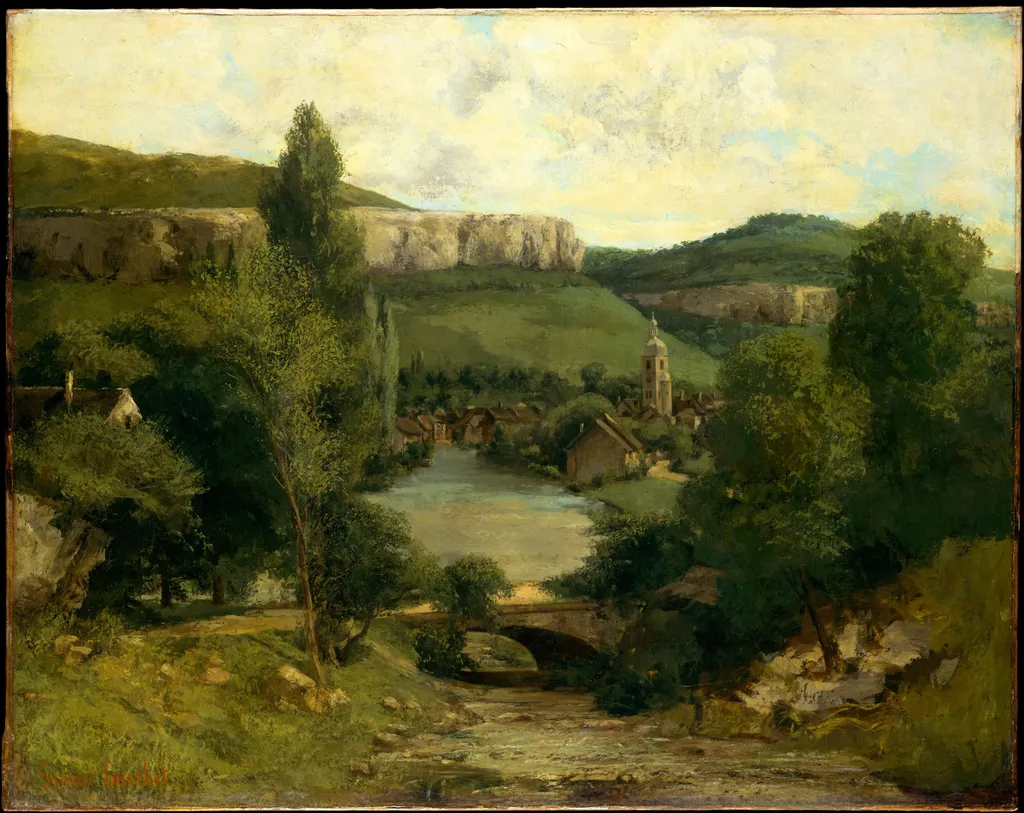
View of Ornans is an oil painting by the Realist artist Gustave Courbet. It dates from 1855 and is held in the collection of the Metropolitan Museum of Art.
About this work
Subject & Meaning
The composition features the Bonneille stream crossed by a bridge in the foreground, leading the eye to the Loue River and the town itself in the center.
Painted around 1855, this landscape offers a faithful depiction of Ornans, the artist's hometown in the Doubs region. The composition features the Bonneille stream crossed by a bridge in the foreground, leading the eye to the Loue River and the town itself in the center. Key architectural and natural landmarks include the distinctive bell tower of the Saint-Laurent Church and the distant Roche du Mont cliff.
While the Metropolitan Museum of Art's records have traditionally identified the foreground bridge as belonging to the nearby village of Scey-en-Varais, historical maps indicate no such structure existed there at the time. Instead, evidence suggests the bridge served the village of Chassagne. The work functions as a topographical record, capturing specific local geography prior to later infrastructural changes such as road expansions and bridge reconstructions.
Technique & Style
Executed in oil on canvas around the mid-1850s, View of Ornans adopts a horizontal format measuring approximately 73 × 92.1 cm. Courbet renders the scene with thick, tactile brushwork that builds up the landscape's varied terrain, from the foreground stream of the Bonneille to the central course of the Loue and the distant Roche du Mont. The handling combines broad, atmospheric washes for the sky and distant cliffs with more tightly controlled, descriptive strokes for the town's rooftops and the distinctive spire of Saint-Laurent church. The palette is earthy, ochres, umbers, and muted greens, anchoring the composition in the local light of Franche-Comté.
History & Provenance
View of Ornans was painted by Gustave Courbet in 1855 in oil on canvas, a horizontal landscape depicting the village of Ornans and the river Loue and reflecting the artist's mid-1850s series devoted to his native countryside. The painting entered the collection of the Metropolitan Museum of Art in New York, where, according to French-language sources, it has been on display since 1993. The museum's records identify the piece as an oil-on-canvas landscape created in 1855.
While a specific accession number is not detailed in the provided texts, the work's creation is linked to Courbet's interest in documenting his native landscape, a project undertaken without known patronage or commission.
Context
View of Ornans (1855) is an oil-on-canvas landscape by Gustave Courbet that portrays his native town of Ornans, the river Loue, and the surrounding bridge, as documented in contemporary descriptions. The work, classified as a painting in the landscape genre, entered the collection of the Metropolitan Museum of Art in 1993 and remains on view there. Scholars have examined the topographical accuracy of the scene, noting disputes over the identification of the bridge depicted and its relation to local infrastructure of the mid-19th century.
As a representative example of Courbet's realist approach to naturalistic scenery, the painting illustrates the artist's engagement with regional identity and the broader shift toward empirical observation in 19th-century French art.
Overview
Gustave Courbet created View of Ornans in 1855, an oil painting that captures a landscape of his native town. This work exemplifies his commitment to Realism, a movement he spearheaded in 19th-century France, by presenting an unidealized depiction of a familiar scene. The painting is currently part of the collection at The Metropolitan Museum of Art.
Legacy
Courbet's unwavering commitment to depicting the world as it appeared, rather than as it might be imagined or idealized, had a profound impact on subsequent art movements. His emphasis on direct observation and the materiality of paint laid groundwork for artists who would later develop Impressionism, with its focus on light and fleeting moments, and even contributed to the foundational principles explored by Cubism in its reinterpretation of visual perception.
Own this work as a print
Artist & collection
Artist
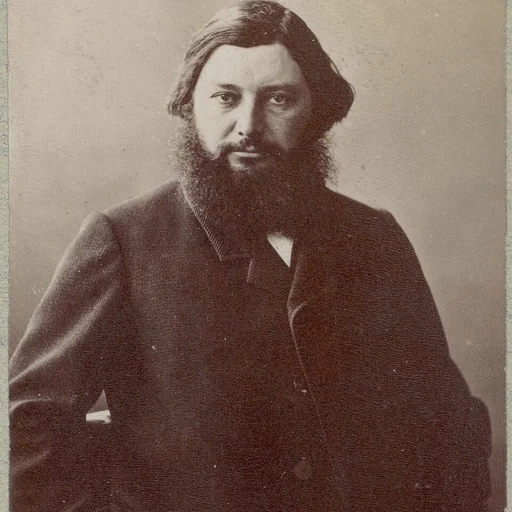
Jean Désiré Gustave Courbet (UK: KOOR-bay; US: koor-BAY; French:; 10 June 1819 – 31 December 1877) was a French painter who led the Realism movement in 19th-century French painting.

 The Village of La Celle-sous-Moret
 Delaware Water Gap Village
 The Hidden Brook
 The Stream of the Black Well
 River and Rocks
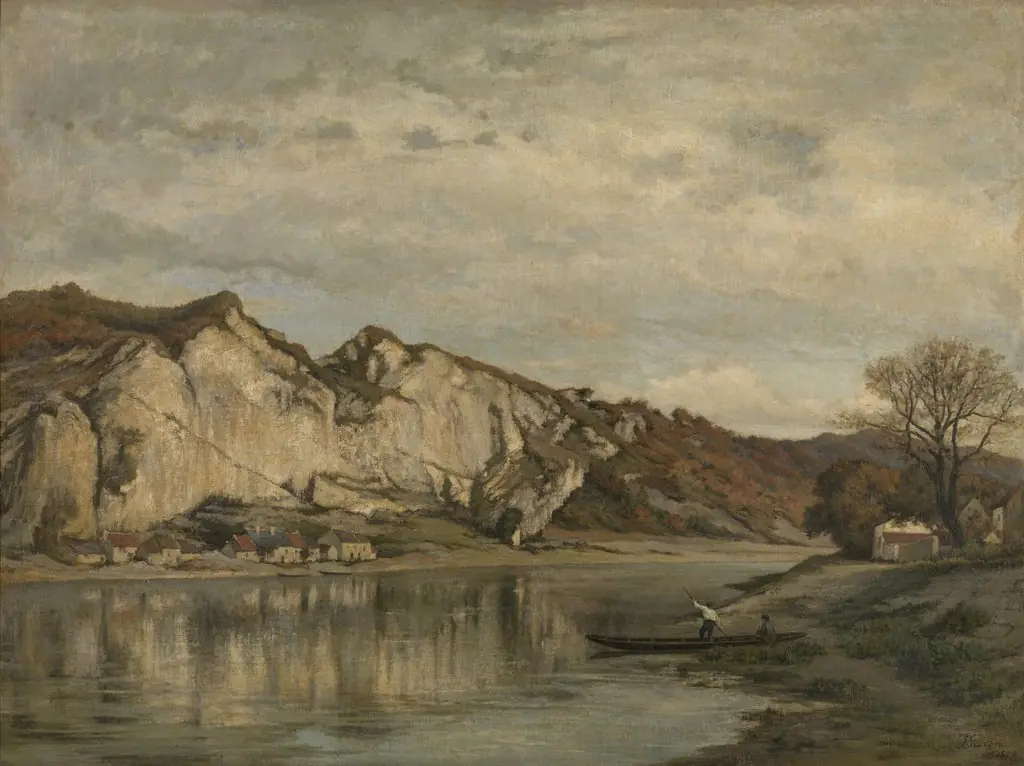 Rocher de Frêne near Profondeville
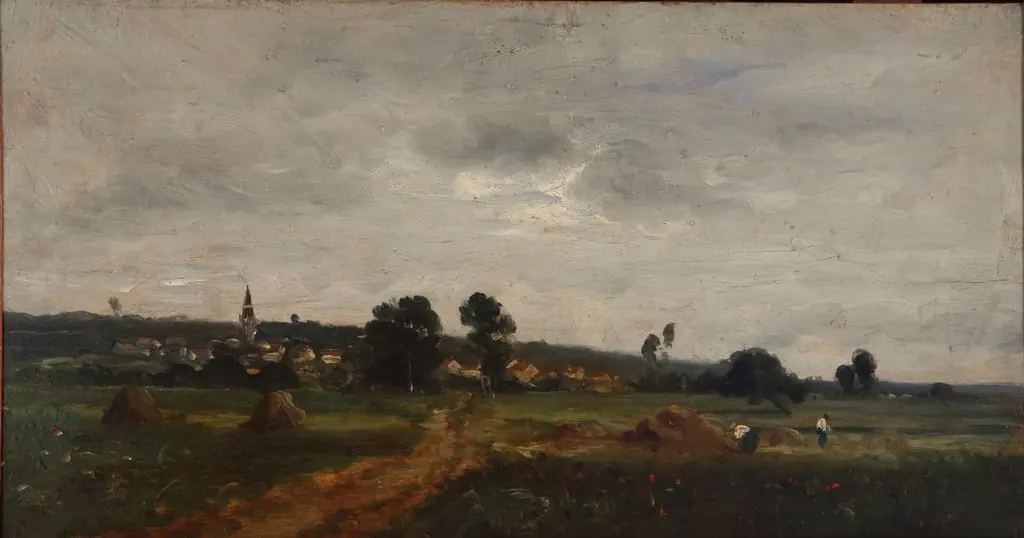 Landscape 2
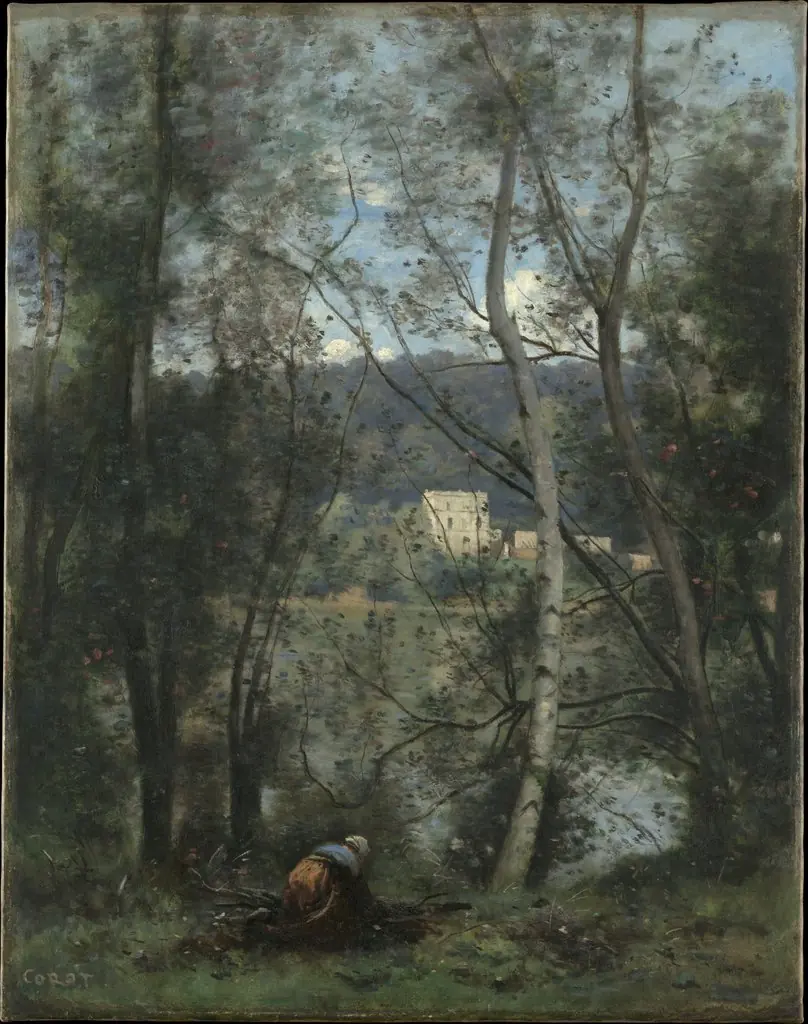 A Woman Gathering Faggots at Ville-d'Avray
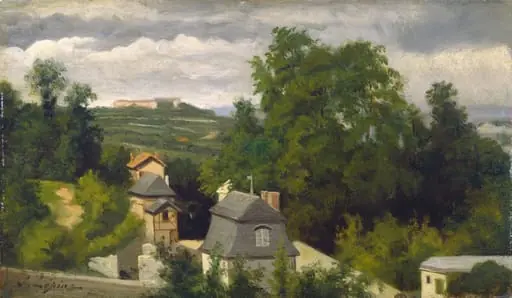 View on the Outskirts of Caen
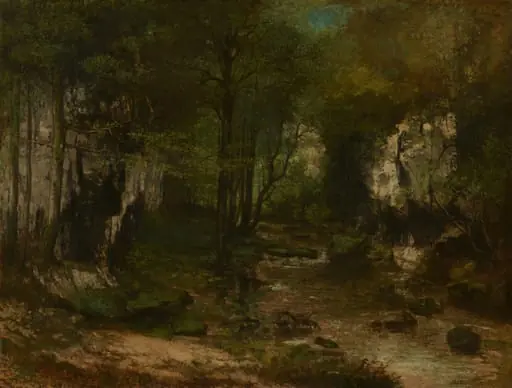 The Stream (Le Ruisseau du Puits-Noir; vallée de la Loue)
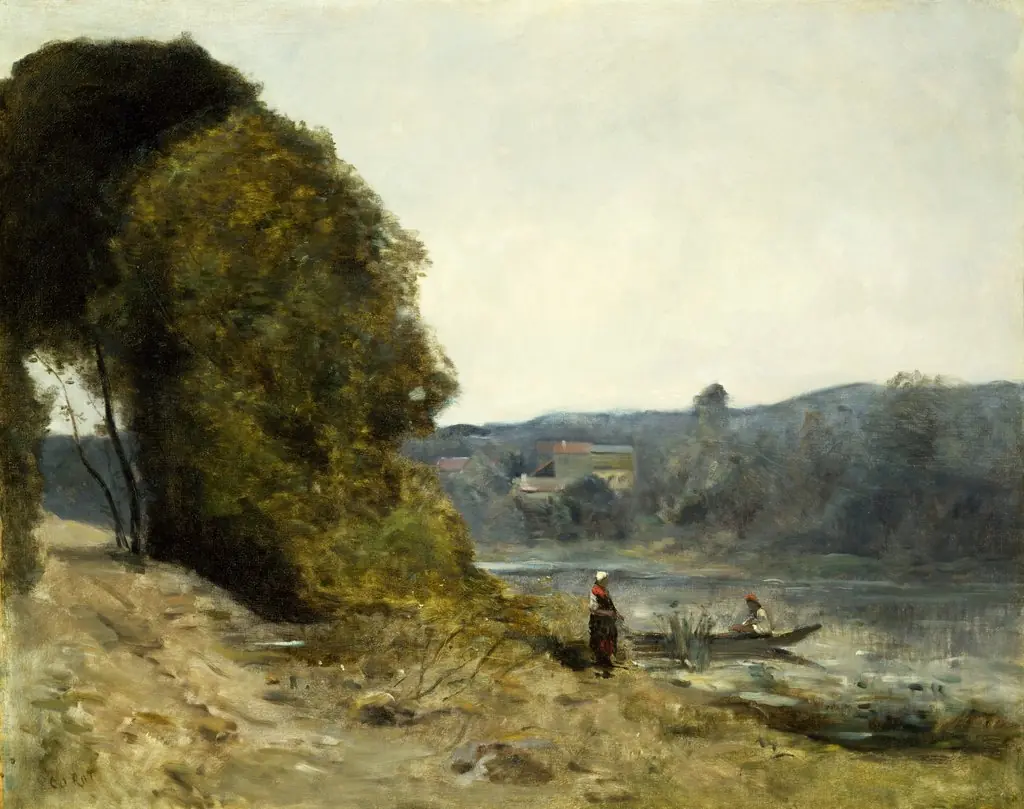 The Departure of the Boatman
- Rocks near Ornans