Artwork
Landscape
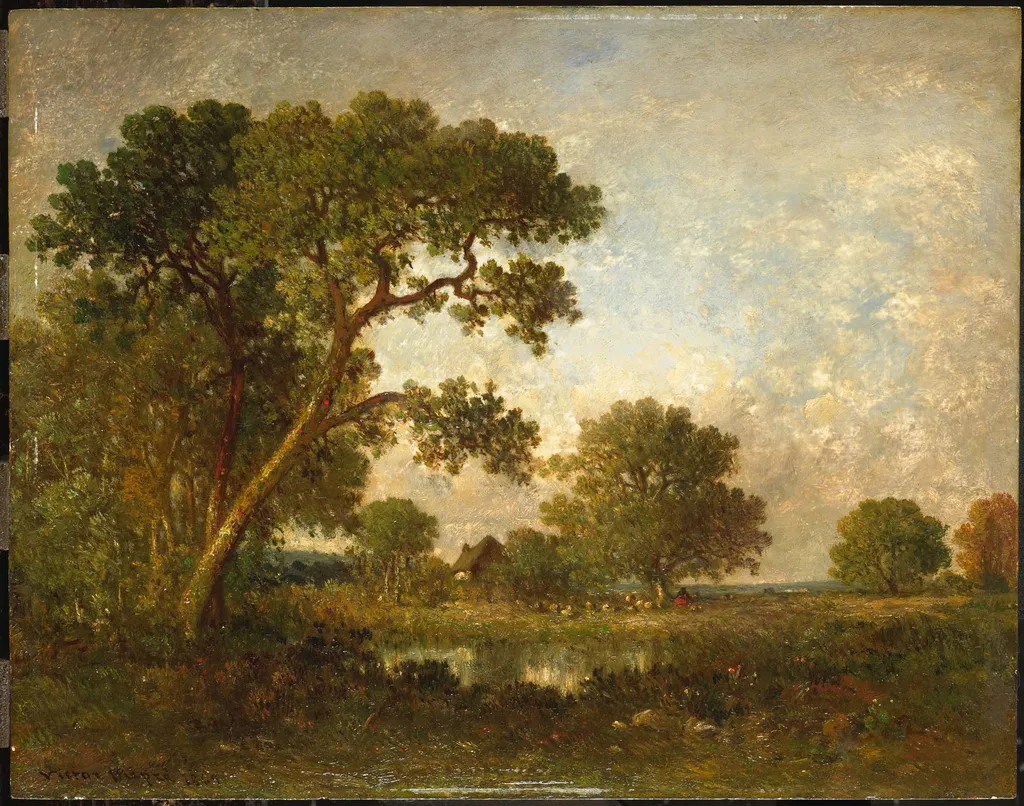
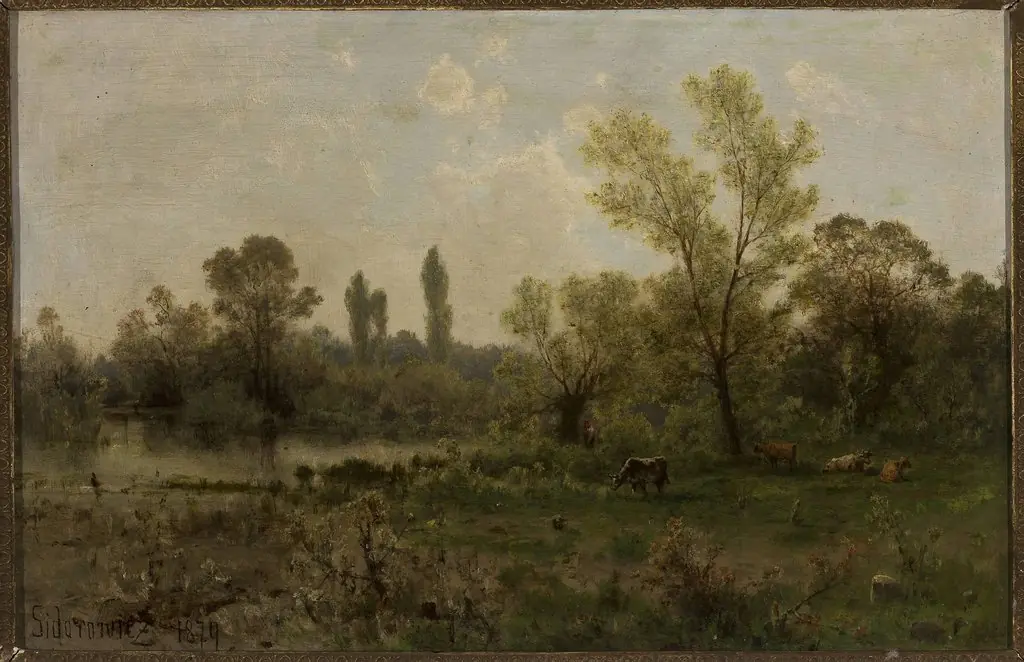
Landscape is an oil painting by the Barbizon school artist Léon-Victor Dupré. It dates from 1869 and is held in the collection of the Rijksmuseum. Created in 1869, this oil painting by French artist Léon‑Victor Dupré presents a tranquil rural scene.
About this work
Technique & Style
Léon-Victor Dupré's Landscape (1869) is executed in oil paint on a panel support. The work measures 32 cm in height and 41.5 cm in width. As a landscape painting, the composition depicts a tree, reflecting the artist's focus on natural subjects. The piece is currently held in the collection of the Rijksmuseum.
History & Provenance
Landscape was created in 1869 by the French painter Léon‑Victor Dupré, executed in oil on panel measuring 32 cm in height and 41.
Landscape was created in 1869 by the French painter Léon‑Victor Dupré, executed in oil on panel measuring 32 cm in height and 41.5 cm in width. It depicts a tree and is classified as a landscape painting. The work entered the Rijksmuseum collection and is recorded as having been owned by Maria Catharina barones van Pallandt; no earlier owners or commission details are documented in the available sources according to the Rijksmuseum's provenance records.
Context
Léon-Victor Dupré's 1869 oil painting Landscape, measuring 32 cm by 41.5 cm, depicts a solitary tree and belongs to the landscape genre. It was created during a period when Dutch artists increasingly focused on naturalistic rural scenes, reflecting broader 19th-century shifts in European landscape painting. The work was owned by Maria Catharina barones van Pallandt and is part of the Rijksmuseum's collection, underscoring its significance within Dupré's oeuvre and the evolution of Dutch landscape art.
Scholarly attention to this painting highlights its role in documenting the transition from Romantic to more structured naturalistic approaches in 19th-century Dutch art, though specific critical reception details remain sparse in available records.
Overview
Created in 1869, this oil painting by French artist Léon‑Victor Dupré presents a tranquil rural scene. A solitary, robust tree dominates the composition, its leafy canopy spreading over a grassy bank beside a modest stream. In the background, a small structure and a few figures sit quietly, while a pale sky stretches overhead, conveying a calm, natural atmosphere.
Subject & Meaning
The central tree serves as a focal point, symbolising the enduring presence of nature within the French countryside. The modest human activity near the distant building suggests a harmonious coexistence between people and landscape, reflecting the Barbizon School’s interest in portraying everyday rural life without romanticisation.
Own this work as a print
Artist & collection
Artist
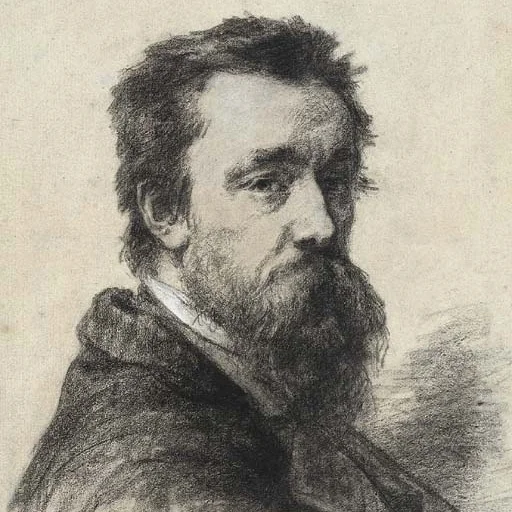
Léon-Victor Dupré, a French landscape painter, was born at Limoges in 1816, and studied under his brother, Jules Dupré.

- The Oak Tree
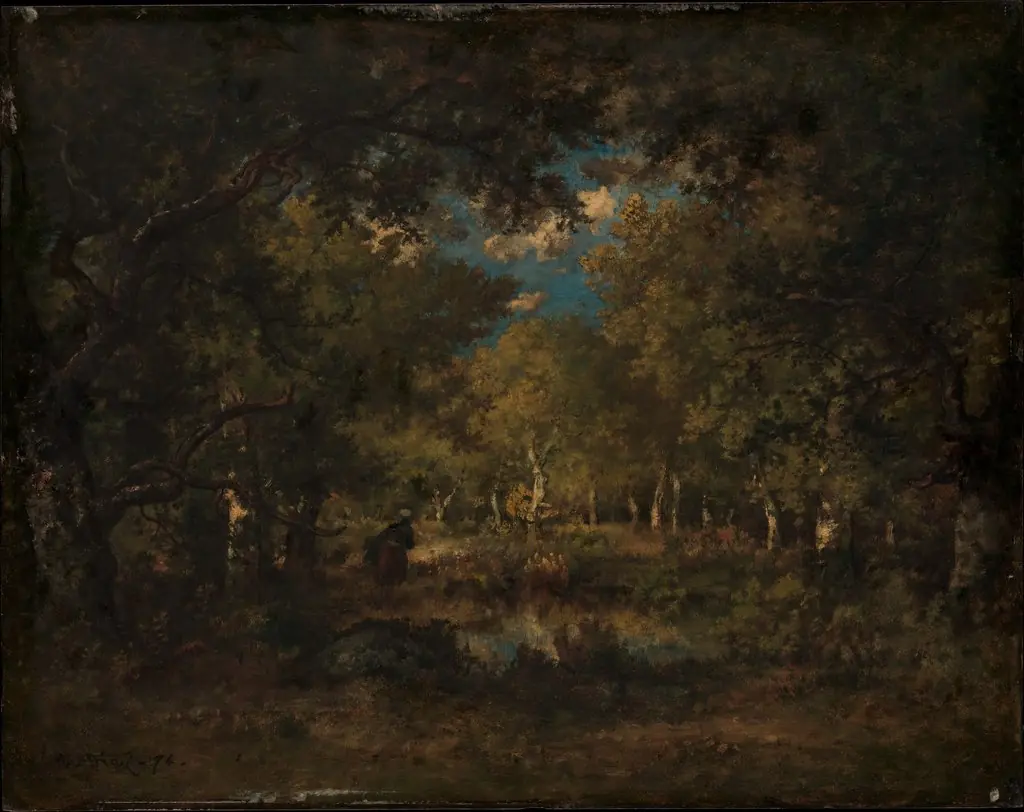 The Forest of Fontainebleau
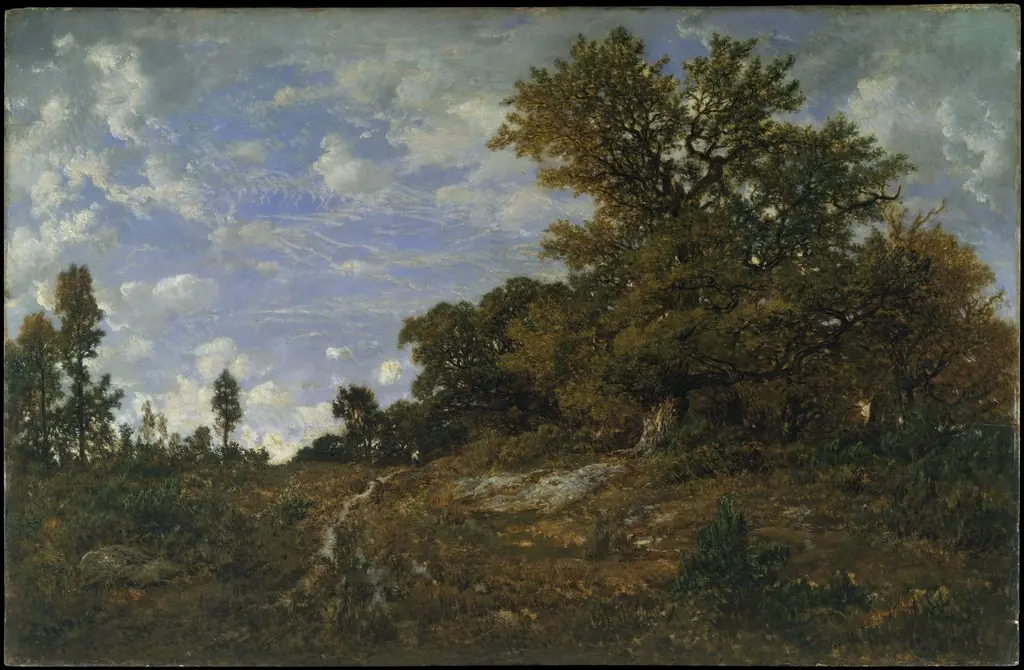 The Edge of the Woods at Monts-Girard, Fontainebleau Forest
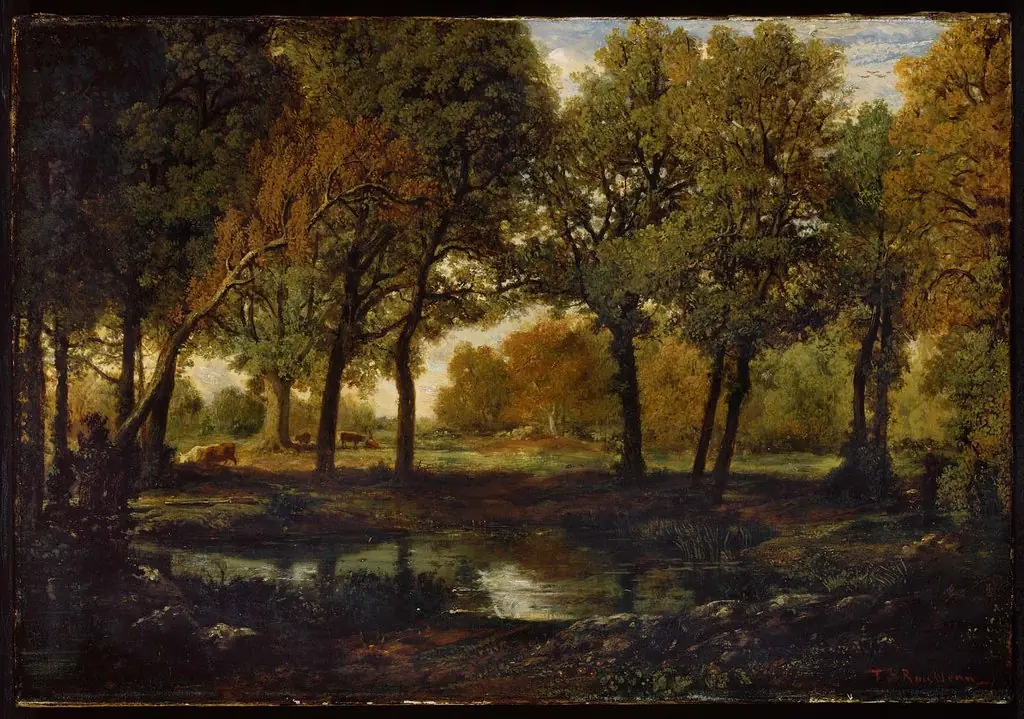 Pool in the Forest
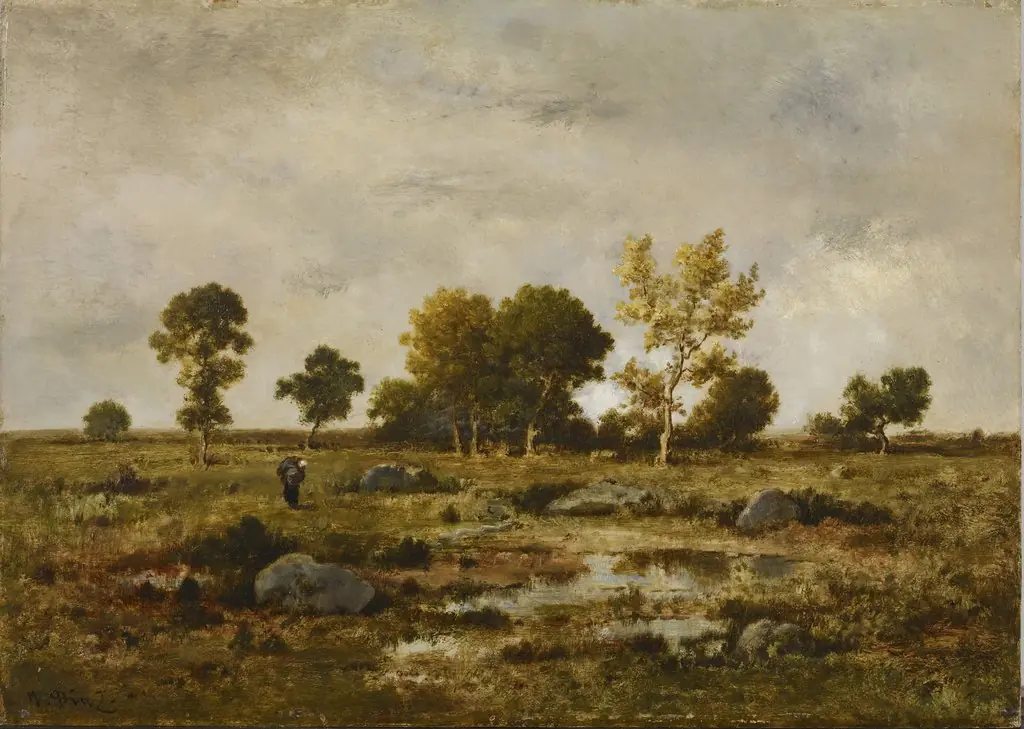 Effect of Autumn, Fontainebleau
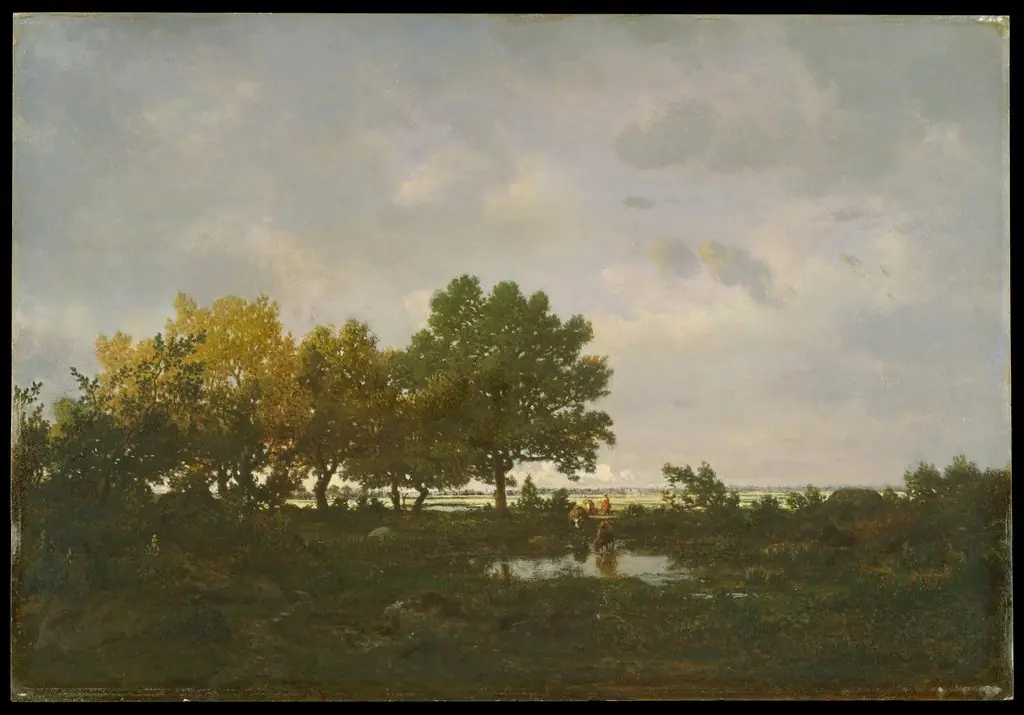 The Pond (La Mare)
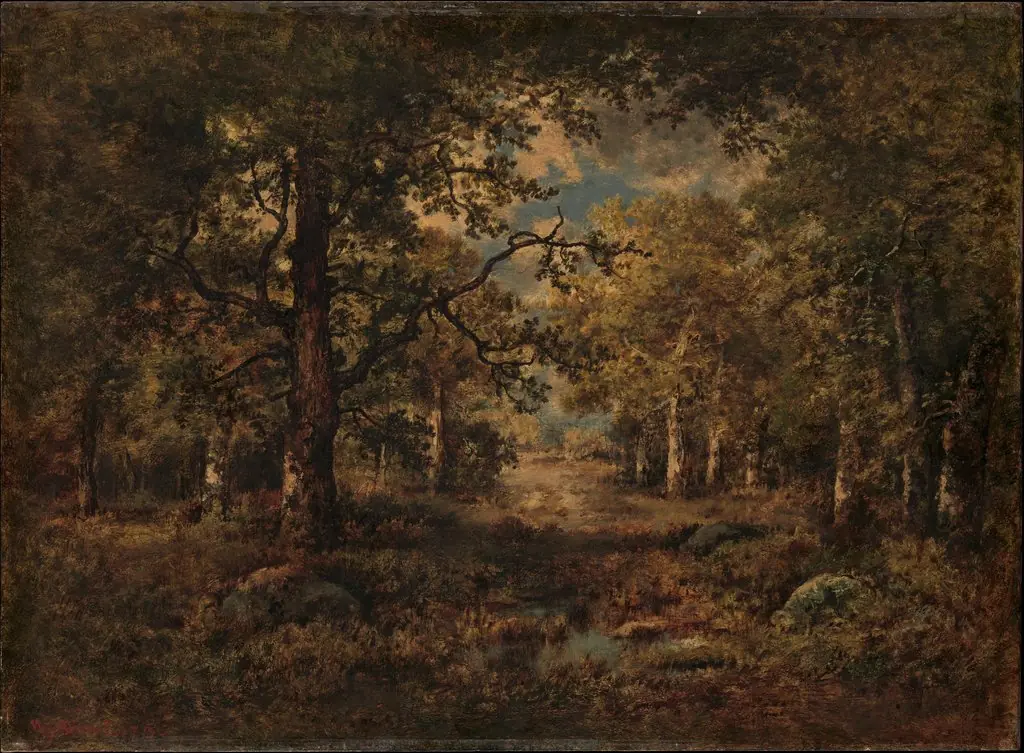 A Vista through Trees: Fontainebleau
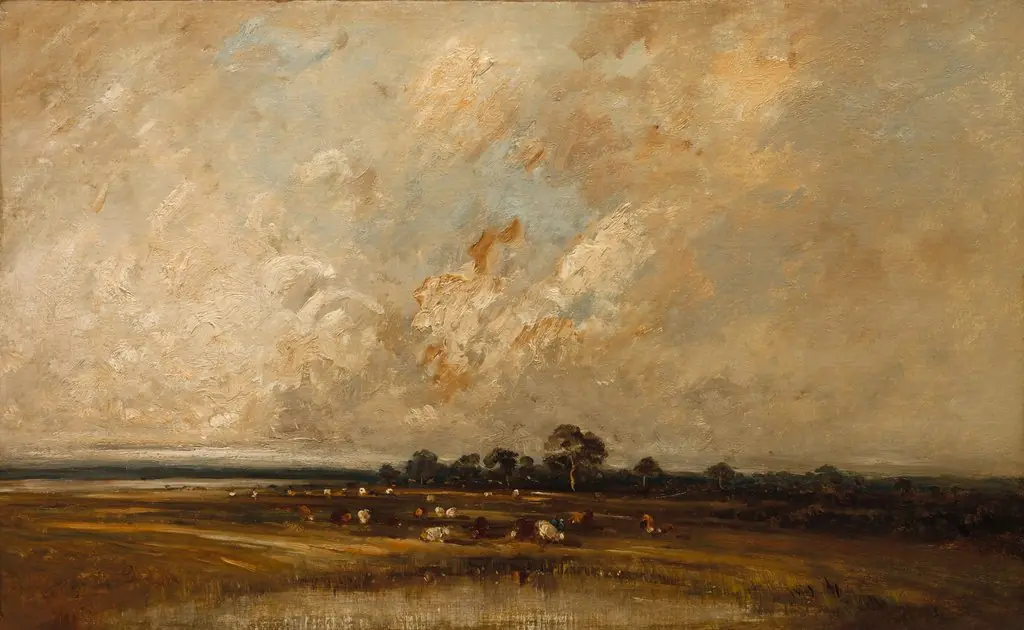 Marshland
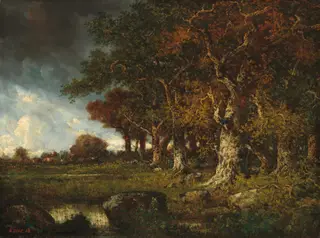 The Edge of the Forest at Les Monts-Girard, Fontainebleau
 Landscape
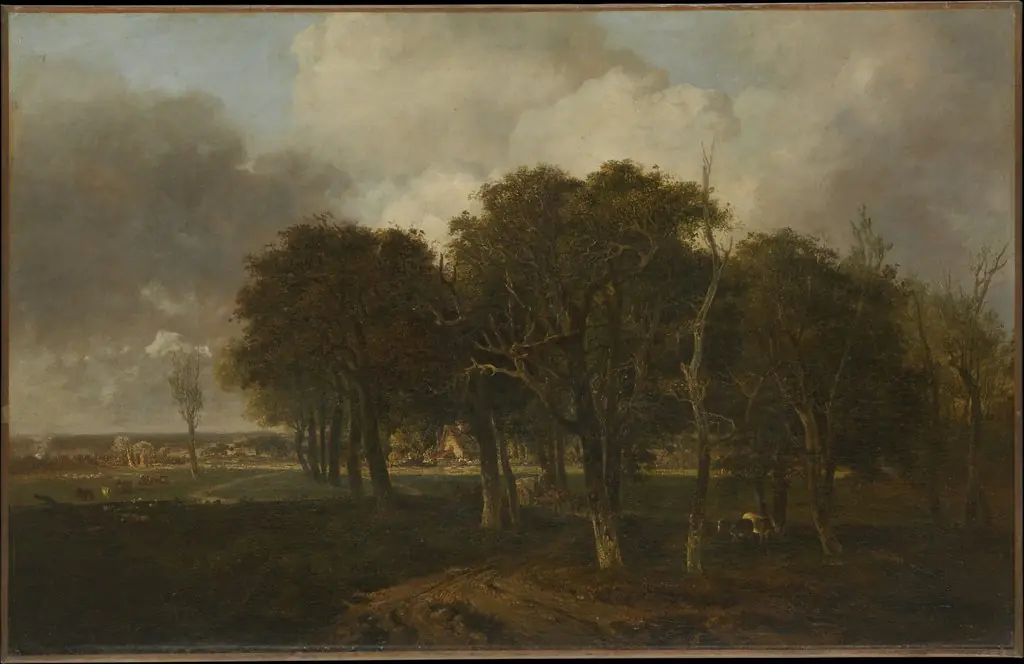 Hautbois Common, Norfolk
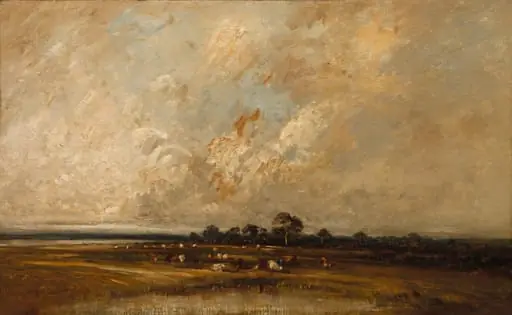 Marshland