Artwork
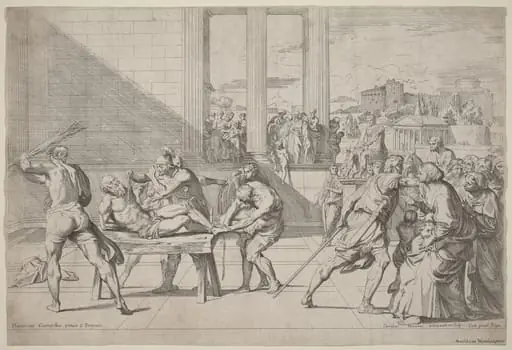
Samson Taken by the Philistines in Delilah's House
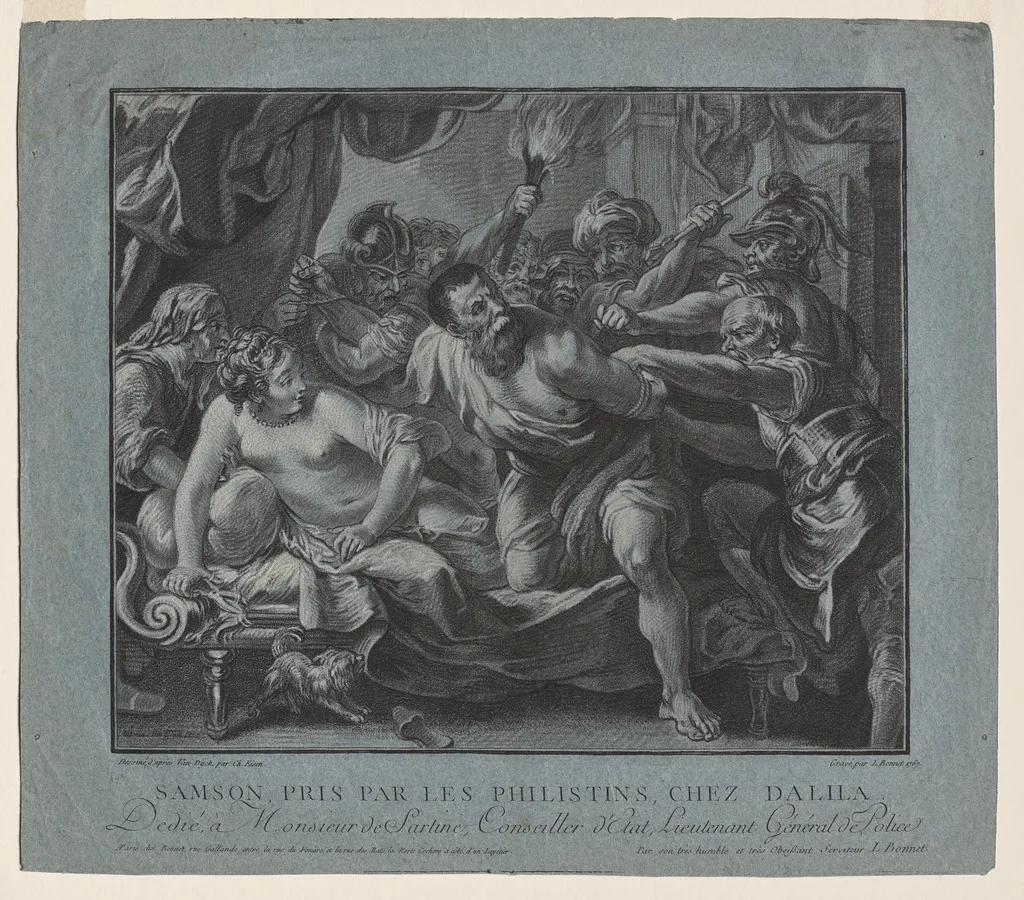
Samson Taken by the Philistines in Delilah's House is a print by the Romanticist artist Louis-Marin Bonnet. It dates from 1767 and is held in the collection of the Cleveland Museum of Art.
- Accession no.
- 2001.47
- Credit line
- John L. Severance Fund
About this work
Overview
Louis-Marin Bonnet’s print, titled Samson Taken by the Philistines in Delilah’s House, reproduces a scene originally painted by Peter Paul Rubens. Executed as an engraving, the work depicts a bound Samson, his long hair gathered, a woman in a blue dress supporting his arm, and two armored figures observing the capture.
Subject & Meaning
The composition illustrates the biblical episode in which Samson, the Israelite strongman, is seized by the Philistines after Delilah’s betrayal. The figures’ gestures and attire convey the drama of his defeat and the looming threat posed by his captors.
Technique & Style
Bonnet employed the fine lines and tonal gradations characteristic of mid‑18th‑century French engraving to translate Rubens’s vigorous Baroque brushwork into a printable medium. The print’s careful rendering of textures, fabric, armor, and hair, demonstrates the era’s skill in reproducing painterly effects through intaglio.
History & Provenance
The engraving bears an inscription dedicating it to Antoine de Sartine, who served as Lieutenant General of Police under Louis XV and was elevated to State Councilor in 1766. The dedication marks the work as a tribute to Sartine’s recent promotion within the French monarchy’s upper echelons.
Context
In Parisian society of the 1760s, the circulation of printed copies of celebrated paintings was a common practice, reflecting both the educational role of the graphic arts and the status of collecting such reproductions. Bonnet’s print thus functioned as both a homage to a master painter and a fashionable item for connoisseurs.
Legacy
The piece exemplifies the broader trend of disseminating Rubens’s oeuvre beyond the original canvases, contributing to the artist’s lasting influence across Europe. It also illustrates the intersection of art, patronage, and political recognition in the pre‑revolutionary French cultural landscape.
Own this work as a print
Artist & collection


- The Unmerciful Servant Brought before the King
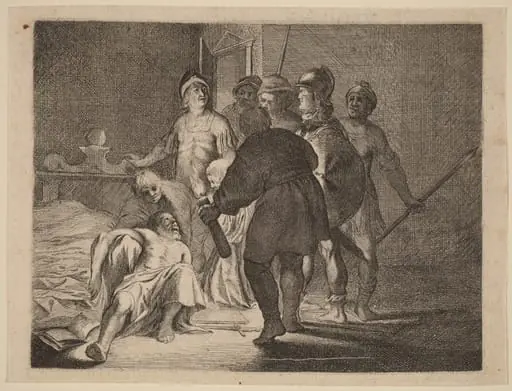 The Death of Cato
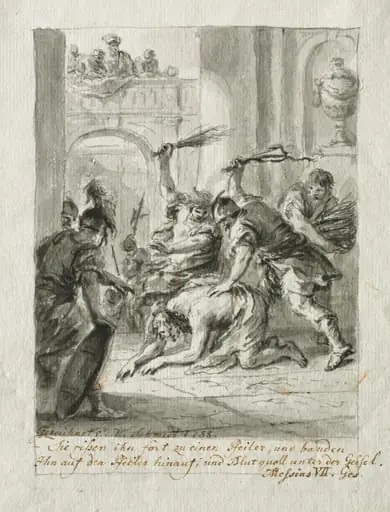 The Flagellation
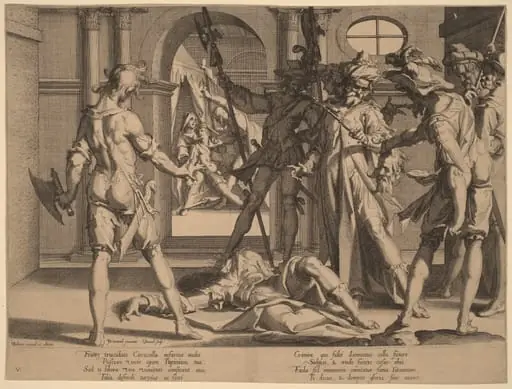 Beheading of the Roman Judge Papinian
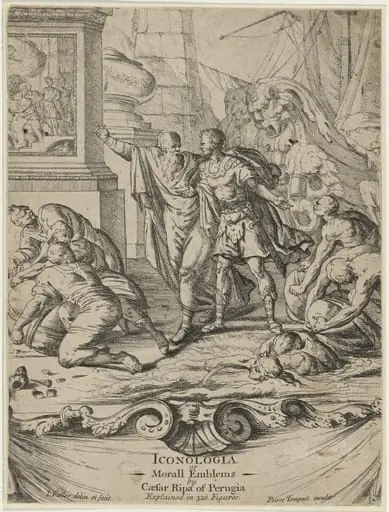 Iconologia or Morall Emblems by Caesar Ripa
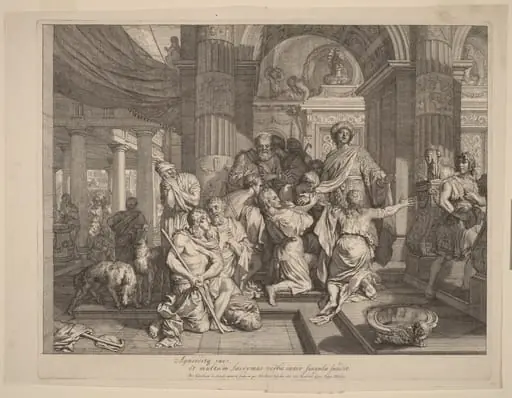 Joseph Reveals Himself to His Brothers
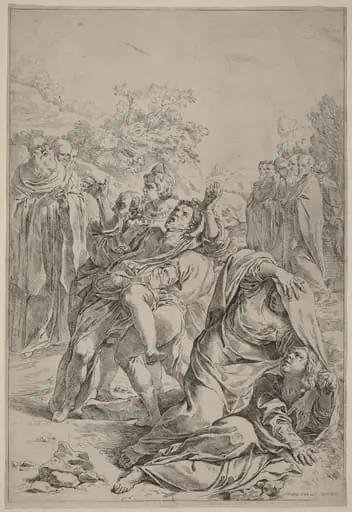 Saint Benedict Healing the Possessed
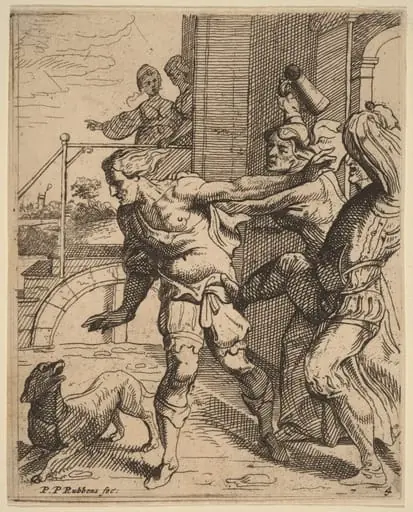 The Prodigal Son Driven from the Tavern
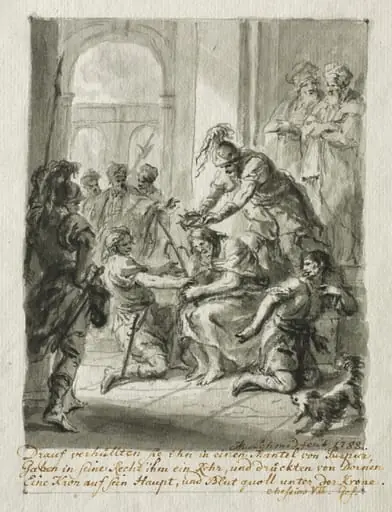 Christ Crowned with Thorns
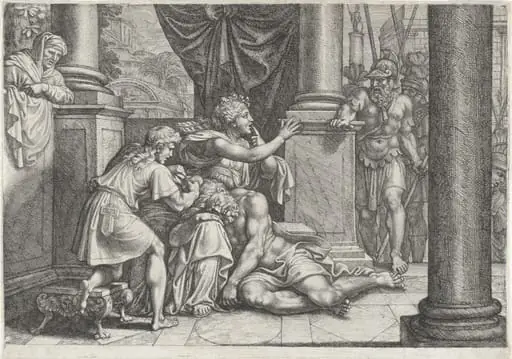 Samson and Delilah
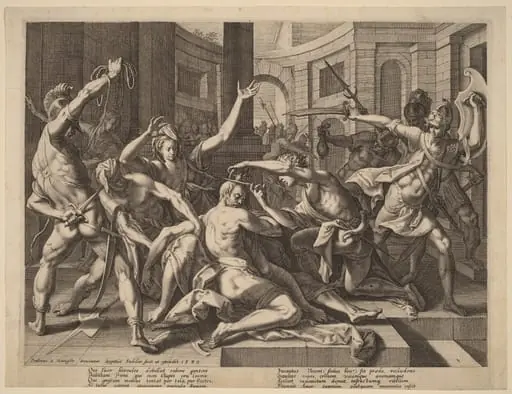 Delilah Cutting Samson's Hair
 Martyrdom of Saint Andrew