Artwork
Tomb of the Emperor Togluck, Togluckabad
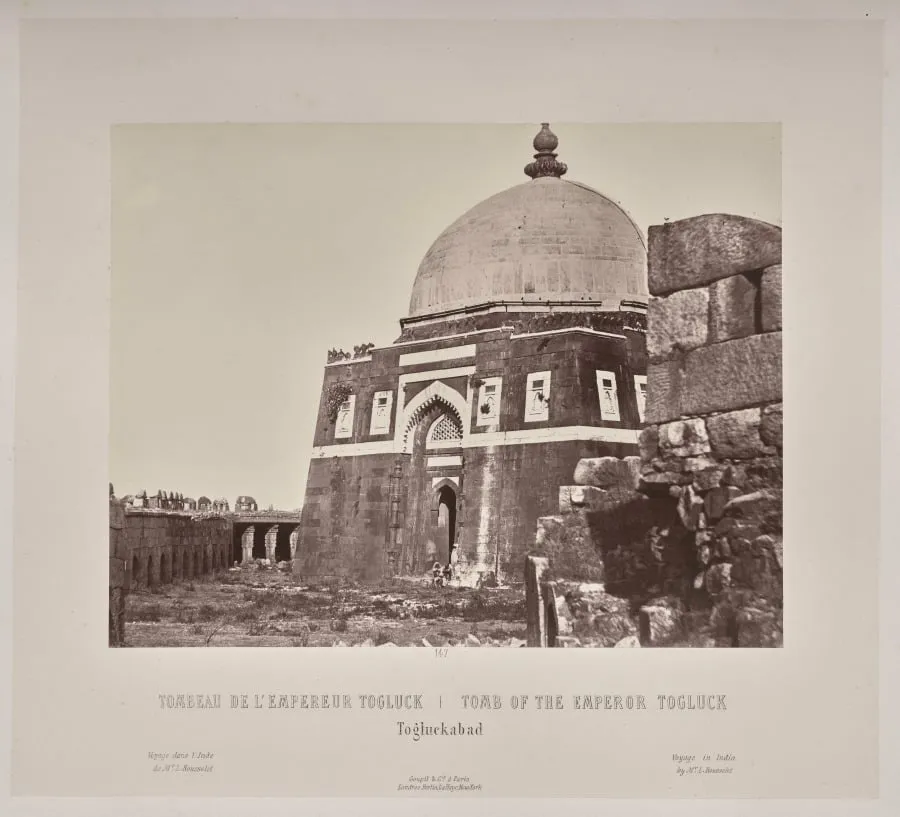
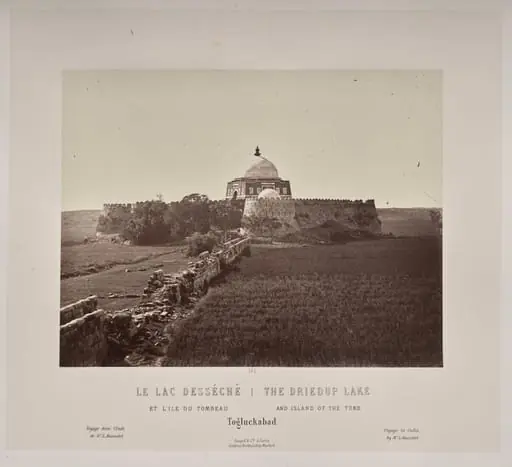
Tomb of the Emperor Togluck, Togluckabad is a photography by the Impressionist artist Louis-Théophile Marie Rousselet. It dates from 1866 and is held in the collection of the Cleveland Museum of Art.
- Accession no.
- 2022.58.26
- Credit line
- Alma Kroeger Fund
About this work
If you like quiet ruins, look up the subject “france, 19th century” for more travel sketches from the same era.
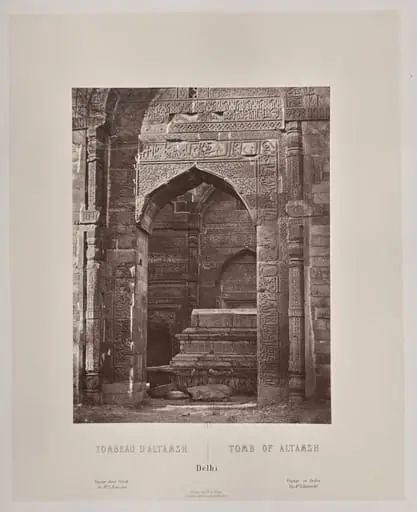
A crumbling stone tomb rises in the middle of a dry plain, its domes and arches half-swallowed by time. Dusty light slants across the ruins, picking out cracks in the walls.
Rousselet sketched this in 1866 while traveling through India. He worried his drawings weren’t enough, so he taught himself photography there, no easy feat back then. The photo-like detail in this print comes from that switch.
If you like quiet ruins, look up the subject “france, 19th century” for more travel sketches from the same era.
Overview
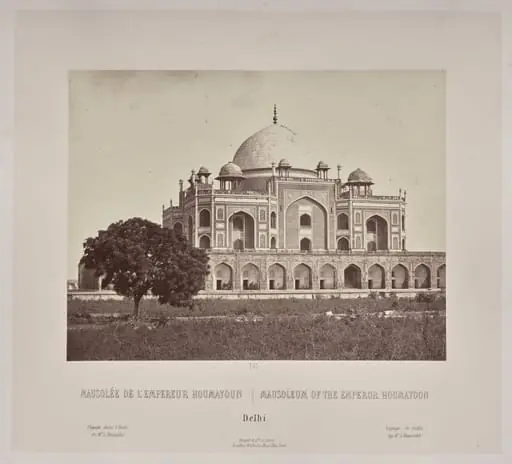
This photograph captures the Tomb of the Emperor Togluck in Togluckabad, depicting a crumbling stone monument set amidst a desolate, dry plain. The image conveys the passage of time through the partially ruined structure, with slanting dusty light accentuating the cracks and wear on the domes and arches.
Subject & Meaning
The tomb, a relic of imperial legacy, stands as a testament to the transience of power and the inevitability of decay. The photograph's focus on a forgotten, deteriorating monument may reflect Rousselet's fascination with the contrast between past grandeur and present neglect.
Technique & Style
Rousselet's self-taught photography skills, acquired in India to better capture the region's architectural splendor, are evident in the photograph's compositional sophistication and detailed rendering of the tomb's textures and structural deterioration.
History & Provenance
Originally sketched by Rousselet in 1866 during his Indian travels, the tomb was later photographed by him after he learned photography in India the same year, driven by a desire to more accurately represent the country's monumental beauty.
Context
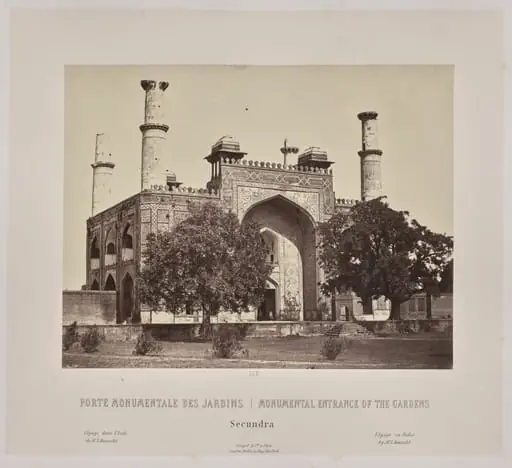
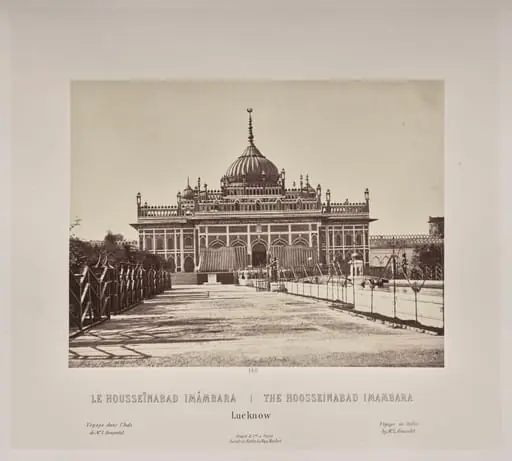
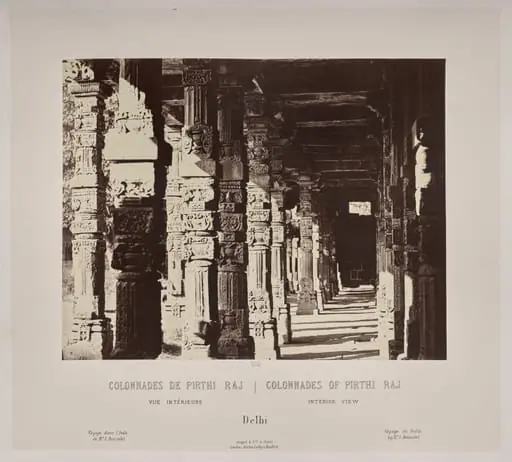
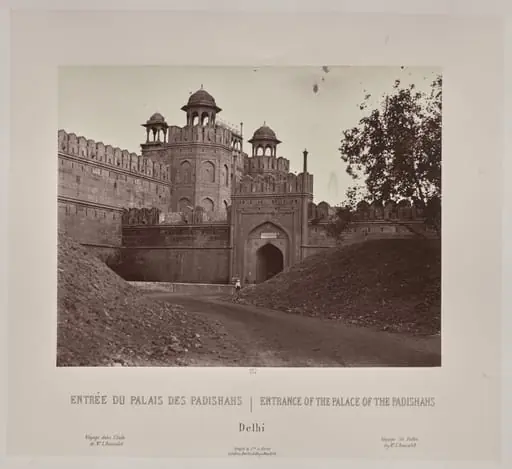
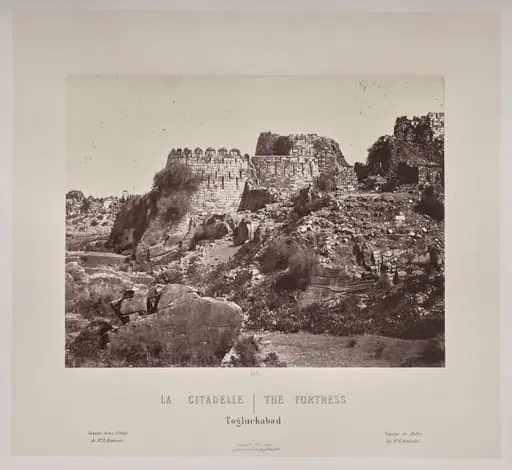
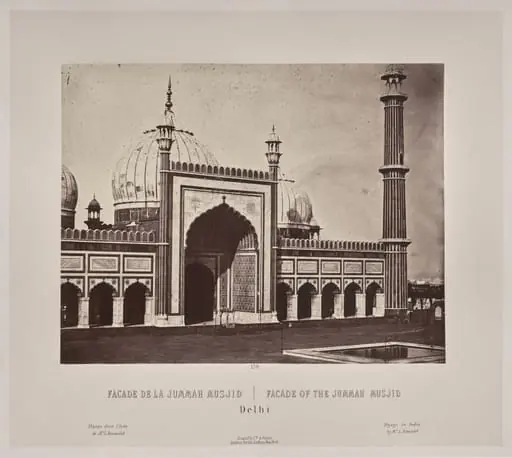
Part of a broader collection documenting northern India's diverse architectural heritage (including Sultanate, Rajput, and Mughal sites), this photograph situates the Tomb of Emperor Togluck within a panoramic view of the region's historical and cultural landscape.
Artist & collection
Artist
Louis-Théophile Marie Rousselet
Louis-Théophile Marie Rousselet (1845–1929) was a French artist.